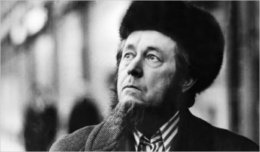
As late as Nov 29, 1988, well into the Gorbachev period of “glasnost,” Suslov’s successor and top party ideologist, Vadim Medvedev “confirmed Solzhenitsyn would remain on the Soviet Union’s blacklist of forbidden writers,” saying that “to publish Solzhenitsyn’s work is to undermine the foundation on which our present life rests.”’[1] As Edward Ericson and Daniel … Continue reading Alexander Solzhenitsyn’s Overcoming Personal, Political, and Historical Amnesia Through Literary-Aesthetic Anamnesis
