History and Historicism
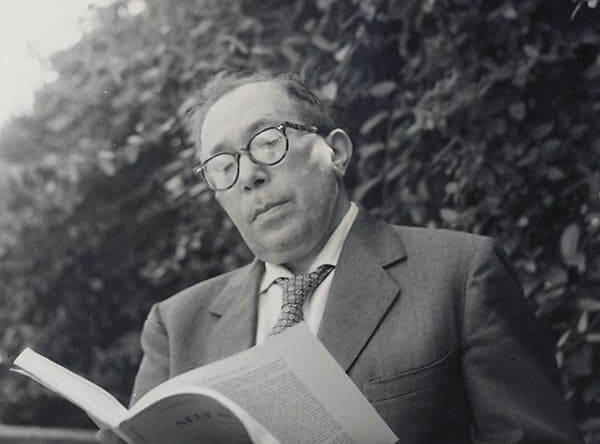
The thinking of Leo Strauss and Karl Popper is by no means identical. It is enough to mention that Strauss was a great admirer of Plato, while Popper in his famous-infamous book considered Plato as a source of totalitarianism. Eric Voegelin considered this idea a nonstarter, and expressed this, together with his strongly negative views on Popper, exactly in letters to Strauss. Yet, Strauss and Popper both agree in condemning in the strongest possible manner what they call “historicism”. They do this in a different way: Popper focuses on Hegel and Marx, while Strauss on Nietzsche and Heidegger; and while Popper is fully negative on both Hegel and Marx, Strauss accepts much of the critique of modernity by Nietzsche and Heidegger. Yet, concerning the destructive character of “historicism”, they are in full agreement.
Here terminology is quite important, and we should pay a close attention to it. The term “historicism” is technical and has a very specific meaning. It is associated with a specific branch of German thinking, particularly clear in figures like Ernst Troeltsch and Friedrich Meinecke, who explicitly used the term. However, “historicism” understood in this sense has nothing to do with Marx, nor with Nietzsche or Heidegger. It is rather connected in the thinking of Dilthey, and his concern with empathy. In this technical sense historicism means the idea that past historical periods should be understood empathically, in their own terms, and not by retro-jecting contemporary ideological or even theoretical concerns.
Given that both Popper and Strauss must have had a good knowledge of this technical meaning of historicism, one wonders the reason why they opted for using the word in this particular sense. One might conjecture that they did so by the analogy Marx and Marxism. But this is not acceptable, as while “Marx” is a concrete figure, to be identified with a specific branch of thinking, “history” is not the property of any approach. It is not correct to identify anybody who refers to the importance of historical events as “historicist.”
The central issue, thus, is that based on a very specific interpretation of the use of history, characteristic of Marx or Nietzsche, Strauss and Popper made the general point that any recurse to history is a philosophical or theoretical argument is wrong. This, however, is clearly unacceptable: first, because it is an unjustified generalization; second, because neither Marxist “historical materialism”, nor Nietzschean “genealogy” – while they are not simply quite different, but have very different values – can be considered as the uses of historical evidence; and finally, because the denial of the significance of history goes against the very heart of European culture, or Western civilization, in whatever way we understand such terms.
This is a quite important point, as both Popper and Strauss are widely considered as major defenders of Western civilization, whether through their involvement in neoliberalism (since the foundation of the Mont Pèlerin society), or in neoconservativism (through his students, Strauss is often considered as the “brain” behind the movement). But there is a very serious issue here: Western civilization cannot be conceived of without referring to Christianity, in one way or another, and Christianity is radically historical.
This means at least two points that simply cannot be ignored or circumvented. First, “Western civilization” is historically the outcome of Christianity. There is no way in which this term can be lifted into an abstract realm of the spirit, without acknowledging the vital role of Christianity. Such an effort can be best conceived of as a version of Hegelianism – but then, Hegel is considered, even by Popper!, as the paradigmatic figure of “historicism.”
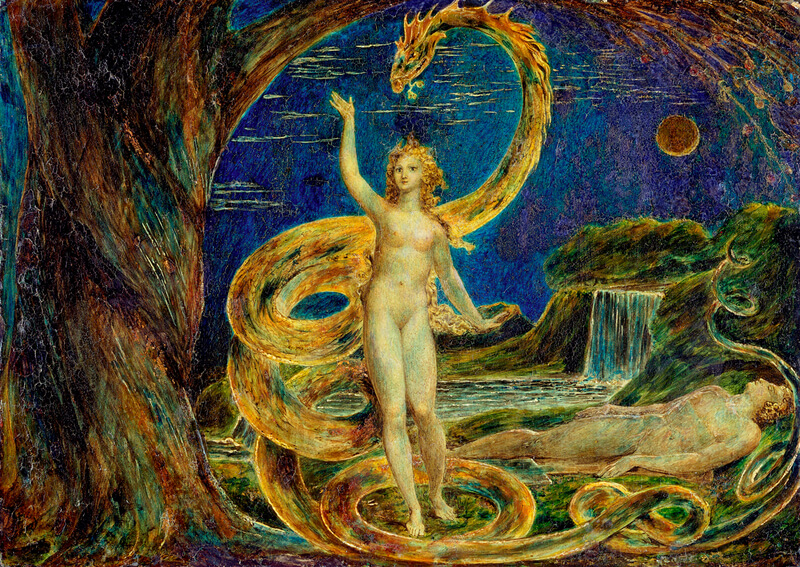
Second, and even more importantly, Christianity, including Christian theology and world vision, is simply a phenomenon of history. This is because the Trinity, heart of Christian religion, implies an overwhelming importance attributed to human history. This starts with the idea of the Fall – and, as this is an Old Testament idea, it implies, among many other reasons, that Judaism itself is strongly historical – but goes much further with the dogmas of the incarnation, crucifixion and resurrection, or the epiphany or theophany involved in the very existence of Jesus Christ, as Son of God, and not as a “prophet” of “monotheistic religions”, conceived of as concrete historical events. Christianity, everything that is relevant in the history of Christianity, is historical. This is not a matter of mere myths (much emphasized in the important works of René Girard); it is not the accidental realization of the universal. Any other perspective is not only not Christian but outright ignores the very “fact”, or rather “given”, that Christianity existed and exists historically. Such a perspective might be called a modality of Arianism – it is not accidental that Isaac Newton was anti-Trinitarian, or a modern-day Arian.
However, even apart from Christianity – as if it were possible to think outside the reality of Christianity! – there are tight connections between the importance attributed to the real events of concrete history and conservative thinking and attitudes, in any meaningful sense of the word. This is because being conservative means to assign value to the preservation or conservation of what exists – at least, of whatever is meaningful and valuable – but most of what exists demonstrated its meaningfulness and its right to exist. Most of the things that exist do so because they served their purpose; because they were considered as good or beautiful; because they were strong enough to assert themselves, their right to existence, not in some kind of universal struggle for existence, but because they successfully survived the forces of decay and destruction. This is what it means to attribute primary importance to history.
Such a perspective is by no means hostile to nature; quite on the contrary. In fact, everything in nature, nature understood as whatever that can be found on Earth, non-living and especially living, is also historical. This is the meaningful sense of Darwin’s ideas, and not the other way around. The “Nature” in which we live, the mountains and rivers, all the animals and plants, are the outcome of millions and millions of years of history – are not the “realization” of some kind of rational plan, or the supposed laws of science. It is quite important for the proper understanding and valorization of Nietzsche’s ideas that his “genealogy” was developed out of the geology of Lyell; or, the idea that the surface of the Earth consists of layers and layers accumulating upon each other, and so in this sense it is also historical. This is the idea that Nietzsche transposed to the history of cultures – and it is perfectly meaningful and quite right.
The idea that is completely incompatible with this vision of the importance of history, and thus conservative thinking, is “creative destruction”; or that the way forward, whether in economic, technological, or social “progress”, is to get rid of the old, in order to create something decisively new, unhindered by the ballast of whatever “just” exists. It is this idea which is technically nihilist: first, because it is hostile against everything that exists, and so the “world” as such; and second, because it proceeds through generating a vacuum, a void, or a nothingness. And this nihilism is incompatible with a conservative vision of the world, which starts from the need to preserve or conserve whatever exists, except if that is something deeply reprehensible. But the elimination of such things is not a “necessary step” towards progress, rather is the redressing of a wrong. And a meaningful conservative perspective could never assert that nothing in the world could possibly be wrong.
Attacking the idea creative destruction, and showing its incompatibility with genuine conservative thinking, is not a pointless undertaking, as the idea has become deeply entrenched in several parts of contemporary mainstream. It is, for e.g., widely and centrally taught in Business Schools. If not the invention, then the development and popularization of the idea can be traced back to Joseph Schumpeter, an economist whose thinking is considered as a main inspiration for neoliberal and also neoconservative thinking. Taking the paradox even further, it is widely acknowledged that Schumpeter developed this idea based on his reading of Marx and Nietzsche. Thus, the ultimate paradox about this, now dominant but deeply nihilistic idea, is that such downplaying of history and tradition was developed on the basis of the thinking of the two philosophers considered by iconic figures of (neo)conservativism as the main sources of the kind of historicism against which they developed their own ideas!
But support for the core ideas of creative destruction goes further than business schools; it is endemic. A particularly clear and influential version was formulated by Klaus Schwab, founder and until recently chairman of World Economic Forum. In 2020, at the height of the COVID hysteria he published one of his most influential works, entitled The Great Reset, in which he came to argue that such an epidemic, due to its destruction of habitual ways, offers a perfect way for moving forward. The very idea, captured in the title, is typical for the thinking of an engineer, especially in computer science: in order to solve a problem, you just erase memory, or go back to a zero point. This, however, clearly is not applicable for human beings, with their cultures. The work contains claims that simply defeat belief: for him Covid is not a disaster that brought, both directly (as an illness) and indirectly (through highly questionable policies, like almost compulsory vaccination), much suffering for humans, but like all deep crises, could “harbour the potential for transformation”, and so the “time for reinvention has come”, out of which a “new world will emerge” (p.17). Thus, it can result in “triggering innovations, redrawing national boundaries and often paving the way for revolutions” (p.20), accelerating changes, and even more, as “ beyond a mere acceleration” it could go on “by altering things that previously seemed unchangeable” (p.27). The limit between conjectures and sheer utopian madness was passed when Schwab claimed that World War Two was not just one of the most tragic events in the history of mankind, but as the anchorage point from which we can understand the opportunities we are now given, as it was “the quintessential transformational war” (p.25). In a Voegelinian language, expressed at the start of his late meditation ““Wisdom and the Magic of Extremes”, Schwab is certainly one of those “activist dreamers who want to liberate us from our imperfections by locking up in the perfect prison of their phantasy”. And Schwab, to make it clear, was not anyone, but easily one of the most influential persons in the world, for long decades – though, interestingly, rarely listed as such – perhaps, because he mostly operated in the background.
If conservative thinking is incompatible with the dominant contemporary vision of progress, creative destruction, does this mean that we must “go back”? Conserving things, considering it important that certain things must be kept intact, that their integrity must be preserved, does not necessarily mean that one should not go forward. In fact, the idea of “not going forward” is incompatible with living. However, it might happen to be the case that the only way of going forward is to move some steps backward. This is a basic wisdom of walkers and pilgrims – if you have lost the road, you must trace your steps back, as otherwise, in looking for a shortcut, you risk of only losing your way even more thoroughly.
And, arguably – I would certainly argue this way – we, now, all of us, are in such a situation.


Related Posts