
Soul Politics: Eric Voegelin and VoegelinView
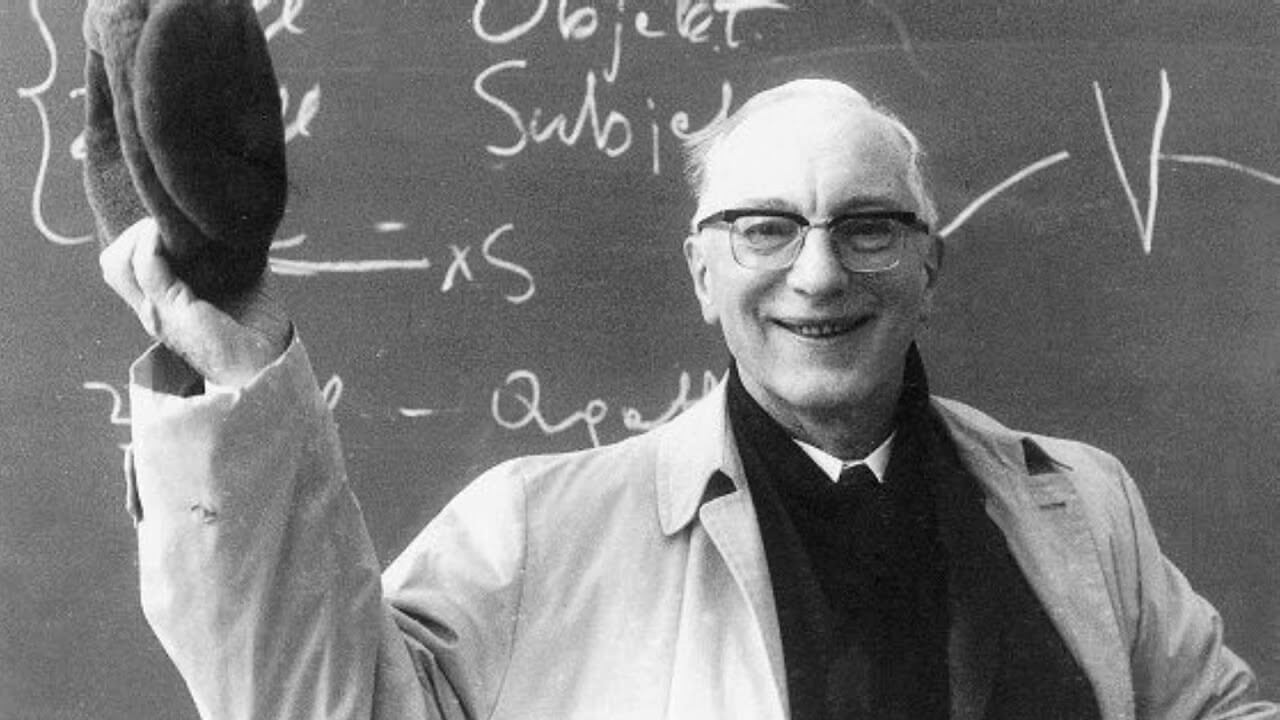
“The German Revolution, finally, in an environment without strong institutional traditions, brought for the first time into play full economic materialism, racist biology, corrupt psychology, scientism, and technological ruthlessness—in brief, modernity without restraint.” – Eric Voegelin
Eric Voegelin was a philosopher of the soul, the spirit, and how society is an outgrowth of the soul, its being, ordered and disordered. His critical deconstruction of totalitarianism as a disordered soul and defense of the importance of classical, Christian, and various Enlightenment intellectual traditions earned him praise from conservatives. Yet his insistence of the freedom of the soul from institutionalist dogmatism (including the Catholic Church), noetic spirituality that placed the individual over the community, and view of Scripture as a profound document of human consciousness—a “leap in being”—rather than a revelatory account of God to man, places him more firmly in the intellectual tradition of modern critical liberalism. For Voegelin, the soul is what matters and the soul is individual.
Over the past five years, VOEGELINVIEW has transformed into a global online journal of art, science, and the humanities. Our commitment to Eric Voegelin remains paramount, and in shaping a further identity and future for the journal we return to the importance of Voegelin and his work. He was a reader of literature, politics, science, and philosophy. This is well known to those involved in the stewardship and promotion of his work and ideas. As such, our commentary, while open to the breadth and scope of the social sciences and humanities as a source of wisdom, must also engage in what Voegelin equally saw as the disordered soul’s threat to civilization.
We exist to promote soul learning, critical reflection and dialectic with “the best which has been thought and said” (to quote Matthew Arnold) in order to both preserve and advance the cause of civilization: the freedom of the soul, not the power of an ideology, the mere preservation of groups, or the lamentation of a disordered civilization that, in its own disordered culture, brought forth its ruination. There are no golden ages. Civilization and History are, as Voegelin articulated and knew well, a perpetual struggle for. There were no golden ages past, there are no golden ages to come. The metaxy of existence, the freedom of the in-between finitude and the infinite, requires us to strive for hope and perfection but remain skeptical of the promise of its guarantee.
This, however, should prove exciting for the soul. We do, in fact, shape reality. The metaxy is something we participate in as active agents and not passive observers. We do, in fact, structure the world we live in through metaxological participation.
We participate in shaping a free soul through engagement with great ideas. We participate in shaping a free soul through engagement with politics—Voegelin, mind you, wasn’t really a pessimistic, a defeatist, or a-political; the metaxy of existence shows political reality to which we must participate. As such, we must also wrestle with the reality of our political climate which includes democratic backsliding, a growing desire for isolation, and the illusory dream of utopian perfection. All of these would be anathema to Voegelin and should be to us as well; for democratic backsliding prevents the freedom of the soul for many, isolationism and nativism refuse to acknowledge our international and globalized cosmopolis reality, and the dream of utopian perfectionism is but the continuation of the genocidal twentieth century. The skeptical, but participatory, politics of Voegelin should serve as a new center for the continuation of what is good, the building of what can enhance soul freedom, and the inclusion of the wisdom of the past and the great ideas of human thought to ensure a civilizational future where soul freedom is paramount.
Tomorrow, July 4, is the 250th anniversary of the independence of the United States of America. At the end of The New Science of Politics, Voegelin did defend the goodness and promise of American democracy. We give two cheers for this endeavor in the year 2026, but we mustn’t remain blind or passive to the challenges that face us. I invite you, as readers, and all who are contributors, to continue participating in the metaxy of the world, the metaxy of this journal, and to not be afraid of the demands of a participatory center that upholds the wisdom of past with the desire for a better, progressive, tomorrow. The “freedom of the soul” that Voegelin sought demands it as much as does this review of literature, philosophy, and politics, the great expressions of the “being of the soul.”


Related Posts