Sparta and the Scots
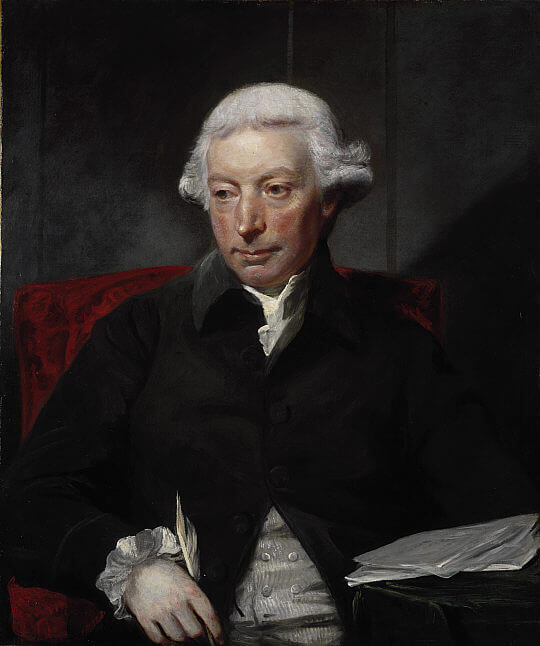
Adam Ferguson (1723-1816) is a lesser-known contemporary of his fellow Scots, Adam Smith (1723-1790) and David Hume (1711-1766). Though he shares much common ground with those two thinkers of greater fame, the purpose of this essay will be to emphasize the differences between them by way of investigating their competing accounts of ancient Sparta.
For Hume, the most serious concerns of life must turn private. This is a modern innovation. He tells the reader quite plainly that “sovereigns may not return to the maxims of ancient policy.” The ancient polis was “violent, and contrary to the more natural and usual course of things.” The “peculiar laws” of Sparta may have made it a “prodigy,” but it is an anomaly, particularly to those who have considered “human nature as it has displayed itself in other nations, and other ages.” That is, Sparta was an exceptional regime, a city that entirely resists imitation because of its almost miraculous circumstances and its narrow-minded people. In this light, Hume concludes on a note of doubt that Sparta as we know it existed at all: “Were the testimony of history less positive and circumstantial, such a government would appear a mere philosophical whim or fiction, and impossible ever to be reduced to practice.”[1]
For Hume, then, civic piety could only exist in ancient circumstances. The ancient republics “were free states; they were small ones; and the age being martial, all their neighbors were continually in arms.” And Greek freedom gave them naturally an unmatched “public spirit, an amour patriae, which Sparta brought about by way of what we would call a “state of emergency,” a “continual alarm” that obliged men at all times “to expose themselves to the greatest dangers for its defense.” Only war can blend citizen and soldier into one, and this is impossible to achieve in a state. For Hume, the citizen-soldier pays a “heavy tax,” felt little by a people “addicted to arms.” These men, he implies, were duped by notions of honor or revenge more than for pay. But since common sense has learned of “gain and industry as well as pleasure,” we see that ancient virtue is no longer possible.[2]
And though Sparta was “more powerful than any state now in the world,” its want of “commerce and luxury” is impossible to replicate in a world wherein the people have gained a taste for such things. The Helots have risen; the Spartan gentleman-soldier can no longer secure their loyalty because the mores which governed them have eroded. Just as technology can alter terrain in the construction of dykes and dams, so can commerce reshape the manners and mores of men. “Throughout all ancient history,” he writes, “it is observable, that the smallest republics raised and maintained greater armies, than states consisting of triple the number of inhabitants, are able to support at present.”[3] The Spartan will no longer fight for honor; the Helot will no longer labor for the city.
*
Adam Ferguson was a Scottish highlander, and his writing is infused with the sentiments of one who feels deep ties to his home and its traditions. The son of a Presbyterian minister, he took up a post as deputy chaplain for the Black Watch, and proved himself a man of military prowess at the Battle of Fontenoy in 1745. Thereafter, he succeeded Hume as the librarian at the Faculty of Advocates, eventually taking up a post teaching philosophy at the University of Edinburgh. In 1767, he published his great work, his Essay on the History of Civil Society, which catalogs the rise and fall of civil societies, premised upon his teaching of human nature as essentially prejudiced. Hume did not approve And while Ferguson, also an intellectual heir of Montesquieu, recognizes the radical change that Christianity brought to the world, he departs from the fatalistic tone that Hume adopts regarding the rise of commerce and its inevitable dominance over the globe. With respect to Sparta, Ferguson rejects Hume’s dismissal of the ancient city. He wishes to catch a glimpse of Sparta itself, free from the prejudices of the enlightenment. Hume overstates, in Ferguson’s view, the division between the ancient world and the modern. Hume’s criticism of Spartan institutions too cynically, and to the peril of political life, dismisses education in civic piety.
A republic, according to Ferguson, cannot be sustained by the bourgeois alone. For the bourgeois distinctly lacks civic piety. The predominance of men would be “a great danger to liberty” because they would easily be transformed into “the instruments of usurpation and tyranny.”[4] And while Ferguson recognizes, following Hume, that “singular institutions” which bind people together may be far more difficult or even less desirable to instill on a civic scale, he also sees the need for some to give up their right to their own private calculations. On these grounds he finds Spartan laws and customs to be instructive, maintaining that learning and enlightenment cannot cure mankind of its fundamental savagery, but might lead to its own unique sort of prejudice in turn. Even (or especially) the educated must learn to forget themselves in the struggle for freedom. In free states they are to achieve this by way of partisanship, by way of joining bands of friends, “all who feel a common interest.”[5]
For this reason, Ferguson considers institutional answers wholly insufficient. Good institutions can even pose problems for a regime. “Calculated for the preservation of liberty,” such institutions fail to call upon the citizen to act “for himself.” He will fail to give his own freedom “personal attention or effort.” Such institutional “perfection” might very well “weaken the bands of society” by separating and isolating those it was supposed to reconcile.[6] Men at such a time would turn to the “private dwelling” where they would begin to “hold in contempt” political life while “honoring the private.”[7] For Ferguson, this constitutes an age of politicized vanity.[8]
He finds a ground for this understanding of life in his political psychology. He asserts that man is by nature prejudiced, and that that prejudice–which Montesquieu seems to invariably consider “destructive”–is the basis of political and military life. The genius of Lycurgus was to give each Spartan the same prejudices with respect to the most fundamental questions. This had the effect of unifying affections among the Spartans. According to Ferguson, affection operates with the “greatest force” where it meets with the greatest difficulties. “[I]n the breast of the parent, it is most solicitous amidst the dangers and distresses of the child: In the breast of a man, its flame redoubles where the wrongs or sufferings of his friend, or his country, require his aide.” Nothing else can account for the “obstinate attachment of a savage to his unsettled and defenseless tribe, when temptations on the side of ease and of safety might induce him to fly from famine and danger to a station more affluent, and more secure.”[9]
Therefore, routine exposure to danger remains essential to securing freedom. Historically, this has been done through war and its legal analogue, politics. For, Ferguson writes, battle encourages “sentiments of generosity and self-denial that animate the warrior in defence of his country.” Ferguson sees this particularly among the natives of North America, where “the military leader is pointed out by the superiority of his manhood and valour.” The civilized parallel, the statesman, “is distinguished only by the attention with which his counsel is heard.”[10] But, Ferguson warns, one cannot simply rely on man’s war-making nature to overcome the difficulties presented by the modern state, which erodes the bonds of affection that naturally binds men together. The state denatures men, who “may be supposed to have experienced, in its full extent, the interest which individuals have in the preservation of their country.” Only in such a regime might man be found “a detached and solitary being,” magnanimously granted a small role in the “mighty engine” which churns by and for “the sake of profits” while setting its members “at variance” with each other by systematically breaking “the bands of affection.”[11]
In contrast to Hume, Ferguson emphasizes that necessity demands political participation. He notices that for modern soldiers, “a discipline” must be “invented” to “inure the soldiers to perform, from habit, and from the fear of punishment, those hazardous duties” because the “love of the public, or a national spirit” no longer inspire.”[12] Civic piety is required precisely because the public will appear to need no defense while it is all the while manipulated by private interests. So, under the guise of neutrality, the state nonetheless offers a moral and theological teaching, rendering impossible Adam Smith’s “impartial spectator,” who is to remain allegedly agnostic; in human things, there is no objective approach.
Men in commercial societies, therefore, may forget the “common danger” which always lurks, whether at home or abroad.[13] For this reason, Ferguson’s noble savage utters a telling line: “For my part, I do not think that merchants should be permitted to live in any country.”[14] In contrast to Montesquieu and Hume, Ferguson in a limited way praises the Spartan regime, especially insofar as Montesquieu’s and Hume’s economically-oriented political move undercuts the possibility of piety on the ground that education in piety is no longer viable. Further, he insists that refocusing human life upon economic concerns might become the very transformative ideology that Hume is so eager to avoid. For “we complain of a want of public spirit,” but when public spirit is redefined as “nothing but the increase of [the nation’s] stock,” we express ourselves as a mere “company of merchants,” deliberating on “profit and loss,” and, above all, entrusting the nation’s protection a force that all men “do not possess in themselves.”[15]
Lest Ferguson be accused of nostalgic attachment to the ancient city, it must be noted that he recognizes a positive good of the modern age: the end of widespread slavery, the very institution which made Sparta possible. For “the entire effects of the institution were obtained, or continued to be enjoyed for any considerable time, at Sparta alone.” He continues:
We feel its injustice; we suffer for the helot, under the severities and unequal treatment to which he was exposed: but when we think only of the superior order of men in this state; when we attend to that elevation and magnanimity of spirit, for which danger had no terror, interest no means to corrupt; when we consider them as friends, or as citizens, we are apt to forget, like themselves, that slaves have a title to be treated like men.[16]
Despite this, the creative imitation of Spartan ways in his world, Ferguson believes, is far from the most disastrous imaginable political arrangement. Inherent in Hume’s system of political liberty may be something more nefarious than ancient slavery. Ferguson envisions as an all-too-near possibility the rise of a nation of helots.
The politics of perpetual peace, which begins with the weakening of bonds of friendship via commercial intercourse, is not politics at all, but a prejudice in itself that comes at the expense of freedom. It is a cheap and imitative performance of politics without the substance of political life, freedom. The great mass of men are enslaved to the law of fashion, which is increasingly magnified as the power of mass culture waxes. Freedom becomes a luxury reserved for the few who make the same “cruel distinction” as the Spartan elites, this time under the guise of humanitarian empathy and economic efficiency,[17] and the rest become “a nation of helots,” wherein they are rendered “equally servile and mercenary.” As Adam Smith warns in his Wealth of Nations, every man will become “in some measure a merchant.”[18] To be sure, Ferguson is no principled opponent of liberal democracy; but without any form of civic piety, he warns, a new form of tyranny will arise: for “in every commercial state, notwithstanding any pretension to equal rights, the exaltation of a few must depress the many.”[19]
NOTES:
[1] Hume, Essays: Political, Moral, and Literary, 258-9.
[2] Hume, Essays: Political, Moral, and Literary, 259.
[3] Hume, Essays: Political, Moral, and Literary, 257.
[4] Ferguson, An Essay on the History of Civil Society, 157.
[5] Ferguson, An Essay on the History of Civil Society, 156. Emphasis mine.
[6] Ferguson, An Essay on the History of Civil Society, 182.
[7] Ferguson, An Essay on the History of Civil Society, 182.
[8] Ferguson, An Essay on the History of Civil Society, 182.
[9] Ferguson, An Essay on the History of Civil Society, 182.
[10] Ferguson, An Essay on the History of Civil Society, 84.
[11] Ferguson, An Essay on the History of Civil Society, 24.
[12] Ferguson, An Essay on the History of Civil Society, 147.
[13] Ferguson, An Essay on the History of Civil Society, 26.
[14] Ferguson, An Essay on the History of Civil Society, 145.
[15] Ferguson, An Essay on the History of Civil Society, 140.
[16] Ferguson, An Essay on the History of Civil Society, 177.
[17] Ferguson, An Essay on the History of Civil Society, 177.
[18] Adam Smith, The Wealth of Nations, I.iv.1. We would need to consider ourselves fortunate to become a nation of merchants once more; in our time, it might be truer to say we are a nation of pusillanimous fashion icons.
[19] Ferguson, An Essay on the History of Civil Society, 177.


Related Posts