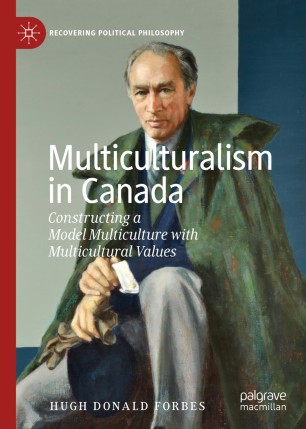
A Review and Critique of “Multiculturalism in Canada: Constructing a Model Multiculture with Multicultural Values,” Part IV
Pulling Punches
When Forbes come to discuss the possibility of “diversity fatigue” he has to consider the effects of multiculturalism’s actual performance. “In a few cases there have been strong reactions against the very idea of multiculturalism” he says. Indeed, in 2010, Germany’s Chancellor Angela Merkel declared that multiculturalism had been a failure. What this showed according to Forbes is that today “even those who must be very careful to speak correctly” about such subjects as multiculturalism “no longer feel that they have to hide their dislike for it.”[1] Forbes himself would not belong to this group strictly defined.[2]
That Forbes is not always stating his decided view is provable from his own words when he poses the following questions to his readers: “What would we see if we could let ourselves say what the controversy about multiculturalism here and abroad leads us to think?” What would we say about multiculturalism if we could suspend our deep historic commitment to the principles and practices of individual freedom and equality, social justice, gender equality, liberal toleration, and democratic government? How would we affirm it if we felt free to accept it as it presents itself, not waiting for it to be squeezed into a modern liberal outfit, as Will Kymlicka does, before we gave it our own nod of approval?’ Forbes’ answer:
Would we not describe it more clearly and endorse it more wholeheartedly, if we did not feel constrained by our deepest moral and political commitments and if we could stop fretting that it might be stretching the meaning of our most cherished political values beyond recognition, to cover something embarrassing in contemporary politics?[3]
This statement indicates why we can say that Forbes can be accused of being in the habit of “pulling his punches.”[4] He would love to say what he really feels but as the condemned man ascending gallows is alleged to have said: “I can’t go up this rickety staircase! It’s not safe!”
George Orwell has some typically relevant remarks here when he explains the fact that he personally declined to take a “Forbesean” approach to the public debate. In regards to the ferocity of his attacks on the intelligentsia, Orwell explains that he had has “never attacked ‘the intellectuals’ or ‘the intelligentsia’ en bloc…not because they were intellectuals but precisely because they were not what I mean by true intellectuals….My case against all of them is that they write mentally dishonest propaganda and degrade literary criticism to mutual arse-licking… It is just because I do take the function of the intelligentsia seriously that I don’t like the sneers, libels, parrot phrased and financially profitable back-scratching which flourish in our English literary world.” [5] Orwell’s remarks can well be taken as indicative of Forbes’ own attitude in the sense that he too takes “the function of the intelligentsia seriously” and for this very reason it must be hard for him to conceive the targets of his criticism as “true intellectuals.” But unlike Orwell, Forbes would never be guilty of saying as much out loud. For example, when commenting Charles Taylor’s discussion of “authenticity” he says simply that it is “exceedingly brief and disappointing.”[6] What Forbes is referring to here is the massive contradiction between Taylor’s winking at “authenticity” and claiming to keep the liberal flag flying at one and the same time. Much harsher words about such a flagrant breakdown of the rational capacity in a man of great ability would seem to be legitimate under the circumstances.
No Limitations
At one point, Forbes quotes John Rawls as saying that “The limits of the possible are not given by the actual.” Rawls’ point is that it is indeed possible to bring change to political and social institutions given the human volition to do so. Forbes’ response here is to say that, with all respect to G.W.F. Hegel, Rawls’s indulging a great deal of “conjecture and speculation” which goes much further than strict Hegelianism would allow.[7] Rawls maintains that we need to be “arguing as best we can that the social world we envision is feasible and might actually exist, if not now then at some future time under happier circumstances.”[8]
In this “Brave New (Multicultural) World” as it is presented by Forbes, good citizens, will present their sincere opinions about the common good to the office holders, pursuant to somewhat esoteric and convoluted discussions with them. These public-spirited offerings will be “based on careful examination of all the relevant issues (and their interconnections)” which will have been undertaken by the citizens’ in their spare time. Such citizens will seek to involve themselves in the public discourse even though they will know ahead of time that whatever their efforts, which might even include their reading of a wide range of studies and reports by the most qualified and responsible public and private experts, “will have no discernable effect on any outcomes of interest to them.” The moderate, public-spirited opinions they express, say in the nightly town hall meetings they regularly attend, or watch on television, “will be duly noted and then forgotten by officialdom.”[9]
To the extent that the new multicultural priesthood takes seriously its appointed task of leading the community into the future it will duly dismiss all opinions that do not precisely conform to this mission. Multiculturalism will then “affirm cultural differences” with the specialized aim of “accommodat(ing)…the legitimate differences related to cultural identities.” There may be something confused or even contradictory about claiming to treat different cultures equally, since how “cultures” are treated is itself something “cultural,” and the various arbitrary customs and bizarre practice that may distinguish one people’s way of life from another’s” will not come under the purview of this process. (Emphases Forbes’).[10]
Forbes deploys his “Swiftian” irony to drive home his barbs against multiculturalism by revealing the sheer irrationality of its implications as compared to solemnly and earnestly attempting to account for them point by point. No matter how many academic conferences are convened to discuss social capital, or how much government money is spent fostering the illusion that diversity is a source of strength, the “Clash of Civilizations” bubbles up from under the surface somewhere. What Forbes calls “the multicultural sizzle” made possible by “rich and vibrant harmonies” could turn into a multicultural clashing of Matthew Arnold’s “ignorant armies clash by night.” What a world is this!!
Yesterday’s Science Fiction
Professor Forbes argues vigorously if ironically that we should reject the claims of the “skeptics,” for they would argue that extreme left-wing speculations should be denied “the serious attention they deserve.” For just a moment we should indulge these various “extreme left-wing academic fantasies” and see what we can see. For one thing the “skeptics” are so blind as not to see that these fantasies or “dreams” are really experiments in normative thinking which can reveal the ways in which “the arc of history (will bend) towards global integration.”[11] This skeptical mentality and not the “no limits” speculative one is in fact the irrational attitude as anyone who lives in modern times must have learnt by now. All intelligent individuals understand that in modern times yesterday’s science fiction is today’s status quo.”[12] Where were the cell phones, SSRIs, space stations, video surveillance, organ transplants, in vitro fertilization, and abortions on demand back in the days of Sir John A. Macdonald? Practical conservatives tend not at all succumb to skepticism because they always end up defending these amazing innovations which are soon to be “recalled nostalgically by tomorrow’s reactionaries.”[13]
Forbes makes a point of noting that such images of the future society as envisioned by the multiculturalists might indeed appear as “deeply morally offensive from our current moral perspective,” and so he feels obliged to “strongly reject most of them.” But Forbes himself declines to say that these things in fact are “morally offensive” but only that they could seem to be so to some eyes. But is it too much to say here that Forbes himself really does find them to be “morally offensive” and would ban them if he could? He leaves us in a fog.
Freedom Versus Diversity
For Forbes it is important that the work of the individual who can be described as “the official theoretical spokesman for Canadian multiculturalism” should receive careful attention. The “eminent Canadian philosopher” Will Kymlicka’s contributions to the understanding of multicultural values and practices have influenced policies of cultural accommodation not just in Canada, but everywhere in the world where serious efforts are made to govern political life by “norms that are grounded on the highest political values.” Forbes’ strategy is to employ Kymlicka’s work as revelatory of “the surprising new theoretical and practical meaning of freedom as ‘cultural freedom,’ within contemporary liberal theory and practice.” Kymlicka, Forbes says, will help us to get “beyond the popular simplifications and to understand freedom as a multicultural value, that is, as ‘cultural freedom.’” [14]
As Forbes sees it, Kymlicka minimizes his departures from the old liberal and socialist ways of thinking about freedom, choosing instead to accentuate how multiculturalism in Canada “has grown almost imperceptibly out of an evolving liberal democratic theory and practice.”[15]
In this way Kymlicka has indeed succeeded in blunting “some of the sharpest barbs of the liberal opponents of multiculturalism by reviving and updating an old theory about freedom that promises to gain the most important benefits of multicultural policies without relinquishing the vital liberal protections of individual liberty.”[16]
We do hear Forbes’s inner voice of “resistance” when he wonders out loud whether any sober person would recommend the Canadian model to a third party even if Canada had managed to “master all (her) threatening internal tensions and so achieved total peace and unity.” So Forbes remains sphinx-like with respect to how he feels about the positive and negative conceptions of rights. To be sure, Canada offers “a model,” (Emphasis Forbes) showing what political winners can sometimes make of the opportunities fortune can give them to practice “deliberate, large-scale social construction.” Even allowing that many countries have done much worse than Canada in the past generation or two, they might well have done much better if they had indeed managed to imitate the Canadian model.[17] But would the world be wise to recognize Canada as “the model of (the) future?” One might answer this question by adapting the words on a sign at the water’s edge of a hypothetical “Lake Canada” – Swim at Your Own Risk![18]
Forbes points to the year of 1971, as the moment when “cultural freedom” emerged as the principal value to be served by his new policy of “multiculturalism within a bilingual framework.” In Forbes’ estimation, at the time, Trudeau was introducing a new term as well as a new policy. The new policy, “Official Multiculturalism,” was on the way to being firmly established as part (perhaps the most important part) of the modern Canadian identity. Nevertheless, Trudeau’s new term, “cultural freedom,” is very infrequently, if at all heard in the Canadian public discussion. But for all that Forbes is sure that this phrase provides a surprisingly good name for much of what Canada’s multicultural policies have been aiming to achieve.[19]
What is called “cultural freedom,” Forbes argues, subsists in another universe from either the positive or the negative freedom associated with liberal democracy. The equality sought by multiculturalism is cultural, not economic or political, and rather than blurring or even denying the lines that separate one culture from another, multiculturalism “tends to sharpen and brighten them.” The old, familiar political freedoms of democratic citizenship and personal liberty are now “problematic.” In fact, the partisans of “diversity” oppose any understanding of “individual freedom” and “individual rights” that would hamper government action on behalf of minority cultural groups while at the same time they fear simple majority rule.
On the “Cultural Freedom” view, if the diversity of cultures is carefully managed, over time it will eventually produce a new polyethnic culture of universal accommodation, cultural amalgamation, and therefore cultural peace. Lingering national and religious rivalries will in due course become no more serious or divisive than the rivalries today between the Scots and the Irish. The future society would not be a classically liberal, laissez-faire society, nor would it be a simply democratic society, and it would certainly not be a literally multicultural one (sustaining many distinct cultures as different as those of today’s ethnic nations). Rather the order will resemble the smoothly evolving organism of novel and universal secular society. It will be a society designed to minimize and control the tensions between a moderate diversity of more or less liberalized cultures and identities. E pluribus unum, expanded and updated.
Equality and Color Blindness
Forbes confronts the famous issue of political “color blindness” head on. As he tells it, the new multiculturalist thought has become deeply skeptical of formal “colour blindness” and so it favours “treating different people differently.” Hence it is that multiculturalism must seek to finesse or neutralize the inflammatory arguments about the merits of different cultures. This has meant that the proponents of “affirmative action” or “reverse discrimination,” as some have termed it, the ultimate aim of which is to “level the playing field,” have been been obliged to endorse discriminating on what were previously prohibited grounds, else their “levelling” goal would be unattainable. To be sure, the offensive distinctions would still be prohibited when their use “would further disadvantage the already disadvantaged.” In other words, “the old prohibitions would be relaxed (but) only when necessary to confer compensatory advantages on the otherwise disadvantaged.”[20]
Forbes argues that sometimes, the word “equality” seems to be nothing more than “a glossy label stuck on some less presentable desires, seeming to justify some quite contestable claims, which are justified, if they are justified at all, by values other than equality.”[21] Forbes’ habitual irony is evident here when he says “It may take much more than theoretical acuity, something more akin to credulous imagination, to see some essential form of equality hovering over all the different uses of the word ‘equality.’” Multiculturalists might “try to equalize particular groups on particular dimensions of difference, however ‘equality of outcomes’ is “emphatically not individual equality.”[22]
No doubt Forbes harbors the hope that this “pang of the Liberal conscience” might prompt some liberals to abandon the very idea of reverse discrimination. But at the same time he knows such liberals well enough to see that such a change of heart is not to be expected.This must be the case because to deny the “group rights” theory in the name of genuine equality would necessarily have the effect of sharpening boundaries, denying hybridity and contestedness, solidifying outmoded practices, encouraging stereotyping, squandering resources, and generally inhibiting “progressive change.”[23] So then from the multicultural perspective it is not “unequal equality” that can cause social division but the principle of “equal rights for all; special provisions for none” that threatens the social peace. To insist on individual rights over group rights would be socially disruptive.
But for his part, Forbes’ is sure that the only real equality possible is “the equality of individuals because only individuals really exist.”[24] If an attempt is made to equalize fictitious “cultural communities” there will ensue “the endless coddling of old resentments and the speedy creation of new ones, as the beneficiaries of the new group rights become entrenched interests and the victims become their enemies.” Can there linger any doubt that Forbes is a “Trojan Horse” writer?[25]
Critiquing the Brian Barry Critique of the Multiculturalist Critique of the Liberal Critique of Identity Politics
At one point Forbes alludes to Brian Barry’s view that if “scrupulous Sikhs” choose to refuse to forego their turbans then they must perforce “forego riding motorcycles.” And likewise, it is perfectly valid to deny special grants to “those with a taste for plovers’ eggs and fine claret” “Liberalism may not be able to accommodate ‘deep diversity’,” Barry concedes, but “it is right not to do so.” For Barry multiculturalism and its “politics of recognition” “divides people at the expense of what unites them.” It is a formula for manufacturing the wrong kind of conflict even as “material inequality grows and the postwar ‘welfare state’ shows increasing signs of strain.” The good people who truly value real freedom and equality should rather work towards “unified political action by the economically disadvantaged.”[26] Barry’s confrere Charles Taylor makes essentially the same case when he says that a politics of polarization is required which will raise “fundamental questions of principle” can serve the good by revealing how the system almost always produces policies that fail to serve the well-being of most people and even, in some respects, “the people as a whole.” [27] In other words: Economic Conflict = “Good”; Cultural conflict = “Bad.”
For Barry it is the ill-conceived policies aiming to “foster diversity,” that “mak(es) culture into a problem” (Emphasis Forbes). For Barry the real problem at the heart of modern society is inequality of income, and the solution to this problem lies in “across-the- board equalization of opportunities and resources” designed to benefit “all those below the median income.” Barry’s case shows why the top fifty percent may be attracted to conceptions of equality that have less to do with “dollars and cents” than Barry’s “egalitarian liberalism.” This upper echelon the socio-economic ladder can then claim to be moving society forward through their support for equality, “rightly understood,” while at the same time feeling more secure as to their place in the social hierarchy because the focus will then not be on disparities of income but rather on systemic discrimination. In other words, Forbes is suggesting that the “top half” may be tempted to join those elements of the “bottom half” “who are more sensitive to the various oppressed groups (ethnic, religious, sexual, cultural, etc.) in promoting a politics of recognition.”[28]
For Forbes, Barry simply takes away with his left hand what he offers with his right. “Culture is no excuse,” Barry declares, because “some cultures are admirable, others are vile.” “We are bound to judge that some cultures…are better than others: more just, more free, more enlightened, and generally better adapted to human flourishing.”[29] But at the same time Barry is in the habit of treating liberalism’s distinctive “culture blindness” as a virtue rather than a shortcoming. This form of blindness points not to the principle that “culture is no excuse” but to the actual dispossession of classical liberalism which Peter Brimelow says “has been so complete that it has even been deprived of its name.” Barry simply leaves the survivors of the classical era to seek shelter under “the hastily invented word ‘libertarianism’, which many Canadian editors either still do not recognize or confuse with liberalism.”[30]
Forbes’ analysis of Barry’s work stresses the fact that Barry is surprisingly willing to accept on “practical” grounds that to which he is utterly opposed at the theoretical level. He might on the surface seem to represent stern opposition to various multicultural laws and policies, when it is specifically a question of their “theoretical” justification. But such recalcitrance melts away completely when it is a question of relieving “hardship.” “Culture” then is “no excuse,” but “hardship” very much is. As a result, Barry’s exuberant attack on multiculturalism is “like a big bomb that falls far from its target, making a big bang, but destroying nothing of value.” Indeed, says Forbes, “Why Barry deviates from the strict principles of liberalism is never actually explained by him. The whole massive contradiction is simply left hanging.” So it is that Barry’s treatment of multiculturalism as a topic in normative political theory provides many opportunities for exposing and ridiculing “the shoddy reasoning of some prominent academics (such as) Kymlicka, Taylor, Walzer, Parekh, Kukathas, and especially the hapless Iris Marion Young).”[31] Forbes seems to doubt whether some of the leading multicultural theorists are worthy of their pay.
The Greatest “Non-Issue Issue” in Canadian Politics
Forbes observes that “Immigration has, from time to time in Canada’s past been a hotly contested issue, and differences of opinion about immigration never entirely disappear.” But he then he alerts us to the fact that “since the early 1970s…there have been no important public controversies about immigration.”[32] So while it may be true that from time to time, various experts, politicians, and stakeholders “have quietly haggled behind the scenes about numbers, sources, and qualifications, and… (s)hort-lived controversies have sometimes boiled up” the immigration issue in Canada cannot at all be described as a “Hot Button” one. But at the same time Forbes has provided us with an account of the tremendous “regime change” that has overtaken Canada since the 1960’s, a “regime change” that is inconceivable without Canada’s post-war immigration policies.[33] But to say the least, this change might be characterized as being as dramatic as any that has overtaken any western nation in a comparative period.
Thus it is a simply mind-boggling fact that the one social policy which might be said to have determined Canada’s fate more than any other – immigration and its collateral measures – “has never been a subject of widespread political debate and roiling controversy in the Canadian public square.”[34] Immigration stands out as the possible policy area on which the destiny of Canada depends and has depended, but for all that it has never been the question on which the fate of a party, a politician or an electoral campaign actually depends. At the level of the Canadian governmental process there has never been an election fought specifically on the immigration issue where there are clear positions stated and vigorous debate pursued. The sense that the policy options in this area can determine the fate of the nation is missing. In a word, the Canadian people have never truly been asked electorally whether they wish to continue or dissolve the regime under which they have been living.[35] Perhaps if no one talks about it too much eventually the problems involved will go away.
An explanation for this strange political paradox might be found in the fact that in times past the obvious consensus was that very obviously Canada was destined from the outset to be a “land of immigrants.” But the situation is somewhat different in more recent days. Immigration has become a subject made “radioactive” by progressivist, multiculturalist ideological hegemony. In regard to the immigration issue (as well with the abortion issue some might say) “the less said about it the better.” [36] More precisely any person willing to take on the immigration (or religion) question (let us say “social conservatism”) has for decades now run the risk of being cast into the outer political darkness
But plus ca change; plus c’est la meme chose. What had once been the principle that it is one the grounds of “cultural or religious compatibility,” and only one the grounds of “cultural or religious compatibility” that persons hopeful of removing to Canada could be deemed admissible, has more recently re-emerged under the guise of the need of “reasonable accommodation.” Forbes explains that this re-emergence is connected to the fact that unlike in the day of J.S. Woodsworth’s meditations on the destiny of the Dominion, the Canada of today “has no official culture.” In our time “Cultural pluralism is the very essence of the Canadian identity.” But when Woodsworth wrote “Strangers Within Our Gates” Canadians old and new were meant to see themselves as obligated to “do all the words of the (Divine) Law”! [37]
So the question of immigration is a paradoxical one of the great “non-issue issue” and Forbes deals with it accordingly.[38] But the curious thing here is that he does not deal with the absolutely acknowledged “issue-issue,” that of the First Nations. If unlike immigration, the First Nations problem is an “issue-issue” for Canada, it is a “non-issue issue” in context of Forbes’ study.
The Marginalization of the First Nations
The reader of Forbes’ book cannot but help notice that there is a strange “vacuum” or “empty space” in its pages. This “vacant spot” has to do with the absence of the First Nations question from the heart of his discussion. This conspicuous “blank space” is made noticeable by the fact that no single issue in Canadian politics symbolizes the question of culture and civilization more than this one, and as well by the goings on connected to this issue in the Canadian public square in recent times.[39] Indeed, as I write these lines it is the first “Truth and Reconciliation Day” in Canada for which government workers receive a day off.[40]
So what is Forbes’s explanation for turning his back on the First Nations question? He explains that despite this question’s “close theoretical relation to multiculturalism” he wishes to achieve the desired clarification of multiculturalism’s meaning “without venturing onto the hotly disputed territory of aboriginal reconciliation.” He leaves it then at reproducing the 1969 Statement of the Government of Canada on Indian Policy as more or less his own: “To be an Indian must be to be free—free to develop Indian cultures in an environment of legal, social and economic equality with other Canadians.”[41] One feels that Forbes decided to excise this policy question from his research agenda because a head-on confrontation with it would inevitably lead to the question of the actual meaning of “Indigenous culture.”[42] One need only glance at a few remarks of the former NDP MP and longtime Ottawa reporter Doug Fisher to appreciate the matter.
Speaking as man who ought to know, given his connections to the far north of Ontario, Fisher says that the pre-Columbian reality for most of the native people in what is now Canada saw them “hardly out of the Stone Age.” Their life was nomadic and mostly involved “eking out a hard, brutish and brief existence.” There was a score of different dialects and several languages in use but writing and permanent communities were unknown. Even before the scourge of smallpox, medical knowledge and sanitary conditions were primitive. The wheel was also unknown, and so were metals and even anything as simple as a dependable cooking pot. Fisher concludes that “If the natives had had the culture and institutions claimed by them and for them there’d have been both more effective resistance to white penetration of the continent and less readiness for guns, traps, tea, flour rum etc.”[43]
We know of course that Forbes understands precisely what Fisher is getting at here, not the least because it would seem both men have studied the thought Hobbes at some point. But then why does Forbes not bring up the fundamental difficulty of the “Culture vs Civilization” debate where it is most instructive and most clearly socially problematic, i.e. in connection with the First Nations? The answer is obvious – in Forbes’ world the wisdom and insight of a great man like Doug Fisher are about as welcome as a skunk at garden party.
The Question of Canadian Degeneracy
The study of Forbes’ book provides occasion for raising perhaps the central issue of the Canadian experiment as it has unfolded in the time period covered by his discussion. This is the basic question of Canadian degeneracy. Can it be said that Canada is a truly degenerate country?[44] A harsh critic might say that in general Canadians have given way to the extremes of western decadence with a kind of insouciance that marks them as especially “nihilistic.” Certainly no one would label Professor Forbes as an especially “harsh writer.” But he does send out certain signals that the “degeneracy thesis” should be credited at some level. [45]
At one point, Forbes explains how the modern, fully participatory democracy envisioned by some political theorists might potentially draw the youngest citizens away from their current meretricious pastimes such as “pornographic videos, drunken dancing, violent movies and computer games, etc.” It is hoped by these theorists that these zombie-like young Canadians will soon see “the folly of the cynicism they now so often betray when asked about politics.” Such observations on Forbes’ part, as ironical as tongue in cheek they may be, very much suggest his true “value” feelings. At bottom he is of the opinion that in one way or another Canada is indeed a degenerate society. Thus he states without comment that under the theorists’ new “participatory democracy” based as it will be on “sound political values” the “the sense of isolation and alienation that so many now feel” will no longer thrive. In such a genuine Tayloresque “dialogue society,” all will “have an unprecedented way of exploring the questions that matter most to all of us, which is to say questions such as “What is right and what is wrong?” – and “What can give meaning to our lives.”[46]
In any event, the term “degenerate” (with all honor to Max Nordau) is sometimes defined as a condition that develops when an organism evinces an appetite for that which is manifestly harmful to it.[47] So if Canada is taken to be as the “first post-modern nation” as Timothy W. Burns has suggested, where might we look for signs of an appetite for the harmful on her part? A review of certain random high-profile events in the not too distant past might help in the clarification of the question.
First of all, there is the famous “Mouthing obscenities across the floor” incident of February 16th, 1971 when Pierre Trudeau “F-Bombed” his opponents in the House of Commons. Secondly, there was Keith Richards punishment for heroin trafficking in the form of giving a concern for the blind with his Rolling Stones bandmates in Oshawa, Ontario, and thirdly the case of New Brunswick Premier Richard Hadfield smuggling marijuana on the Queen’s plane in 1984.[48] Such noteworthy incidents could be multiplied many times over as we look back from 2022.
No doubt such degeneracy is not a Canada specific condition as there are for sure parallel tales in any number of other liberal countries. The term degeneracy has frequently been heard in connection with the Presidential son Hunter Biden and his doings just to take one example.[49] How much more degenerate than other western countries Canada could possibly be one would have to consider. But the significance of these situations is revealed if we simply ask: “What might Sir John A. Macdonald have said about such conduct and choices?” on the part of Canadian officials.[50]
So then, it could be said that a tradition of degenerate conduct has managed to establish itself under the umbrella of Canada’s liberalistic culture. It follows then that an adequate vocabulary is needed to describe it. Without such a vocabulary in current and general use, the commentator might be accused of, to say the least, “beating about the bush” or even of being a degenerate him or herself. “Degeneracy” and “corruption” seem naturally to come to mind as being suitable and appropriate to the Canadian case. To paraphrase one writer from years ago – attempting to describe Canadian life without mentioning degeneracy, decadence, corruption and lunacy is like seeking to provide a detailed description of a concentration camp while abjuring such words as cruelty and inhumanity. In sum, in today’s context of nihilistic public vandalism and anti-civic street violence, reflection on what it means to have a degenerate, indifferent, ignorant and incompetent ruling class at the helm of a once great state seems unavoidable. For this reason alone Forbes book is timely.[51]
The Amnesiac Country or “Remember the Alamo” But “So Much for Ypres”
A degenerate country must almost by definition be a forgetful or “amnesiac” country. As we have seen, multiculturalism defines a modern Canada that has broken decisively with its colonial past.[52] If America has had its Boston Tea Party, Valley Forge and Bull Run there was a time when Canada had its Champlain at Hochelaga, Plains of Abraham and Vimy Ridge. But no more.
Forbes takes time to report on the prominent journalist Douglas Saunders’ view that a multicultural society, as distinguished from a colonial one, is not at all closed, but is rather “an open society, with open borders, accepting and employing large numbers of new members, regardless of their origins and cultural baggage.” For Saunders Canada’s break with her past has less to do with any diversity of cultures, than it has with Canada’s “transformation from a closed and colonial society to a plural and expansive country” based on a “postcolonial, plural, North American view of nationhood.”[53] This new form of society never attempts “to impose old normative standards on new circumstances.” Rather as an open society, “it develops its policies of accommodation and integration in the spirit of trial and error (and) flexibly adopting whatever policies and practices show promise of having immediate practical value.”[54]
The Saunders argument as noted by Forbes, points to a belief that the time has come when it is finally possible to have one’s cake and eat it too. Amazingly enough, Canada has found herself in the position of being able to adjust to any and all demographic changes without paying any sort of national or cultural price whatsoever for so doing. But is this at all plausible? Must there not be some costs involved somewhere when a new national ideology is hitched to the varying patterns of demography? Caveat Saunders! Forbes seems to be saying. [55]
Canada’s collective historical amnesia is well illustrated by Mark Steyn when he refers to a comment by two “apparently grown men” to the effect that “Canadians had the right to Freedom of Expression…because the Trudeau Government negotiated and passed the Charter of Rights and Freedoms.” Steyn remarks here that “One can only marvel at the near Maoist elimination of societal memory required to effect such a belief.”[56] Such a comment indicates that for at least some Canadians, Charter Day 1982 is Year Zero in Canadian history. To speak of the Dieppe Raid is as if to speak of Thermopylae to these “updated” citizens.[57]
As it is, the forgotten country once known as the “Canada” is now only recalled by a dwindling number of “elderly Continentals in towns liberated by Canadian troops in battles of which Trudeau’s children are blissfully ignorant well know.”[58] In one of its reports entitled “A Time for Action” the Committee for an Independent Canada pleaded with their fellow-citizens “Let us forget once and for all about the Plains of Abraham.”[59]
Forbes might well use the word “intemperate” as validly applying to some of multiculturalism’s opponents, but he is unlikely to use this word in reference to those on the side of the C.I.C., Charles Taylor, Will Kymlicka and Brian Barry for example however critical of them he might be. But on Forbes’s very own showing these elite “intellectuals” may fairly be labelled as “intemperate.” Forbes is keen to make us see that the academics have sought to direct a great liberal country towards what must be ultimate confusion and failure. If this not an “intemperance” or “immoderation” it’s hard to imagine what would be.[60]
But Forbes’ great labours in Multiculturalism in Canada are a testament to the fact that he remembers the “Plains of Abraham” and all that came after that astonishing moment. Thus it is that we owe him a debt of gratitude for his almost superhuman patience. He calmly confronts the infinite stupidity, idiocy, hypocrisy, mendacity, buffoonery, fraudulence, egregiousness and dishonesty that is the warp and woof of Canadian political life in general and the academic multiculturalism industry in particular. In doing so he spares us the agony of having to perform such long-term labors for ourselves.[61]
Conclusion
Thus it is that we imagine Professor Forbes, floating in the ether as it were, far above the multicultural political order. From this disembodied perspective he expects nothing else but that his decades of laborious scholarship in the service of Canadian intellectual life in general and Canadian political science in particular will leave him in the Lethe mud, just as it has left so many been Canadian Fathers after their great labours. It may be true that Die Weltgeschichte ist das Weltgericht but this will matter little to historians and political scientists who have taken up their inevitable tenured positions beyond the grave.
So the professor well understands that he should not expect to be treated differently than the long departed gentlemen of honours past who have been diminished and degraded in recent times. Looking forward, he says, “who knows what I will think of (social changes) a generation or two from now, when my circumstances will have changed and when whatever I think will be much less important, in any case, than what Canadians think?” Here we see Forbes (b. 1942) simply “riffing” on J.M. Keynes’ famous remark that “In the long run we are all dead.” Most likely he will not be around twenty-five or thirty years from now (depending on modern medical science) and by then he will most likely will be fully invested in “trans-political” concerns.
NOTES:
[1] Multiculturalism in Canada, p.261 “Merkel redeemed herself a few years later, when Germany admitted large number of those fleeing the turmoil in the Middle East and elsewhere, but more recently, her political base has been crumbling, despite her reiteration of her opposition to “multiculturalism.”
[2] Forbes’ constant “keeping of his cards close to his chest” is meant to seduce his more firmly multiculturalist readers into giving him “a pass” so to speak. But those naturally inclined to skepticism regarding multiculturalism’s claims will not be fooled. They will see that Forbes wishes to reject multiculturalist thinking without clearly appearing to do so. As “The Man with No Name” said in a A Fistful of Dollars when asked if he might like to settle in the little border town for the sake of which he exterminated all the banditos – “What with the Federales on one side and the Union Army on the other?
Uh-uh – Too dangerous.”
[3] Multiculturalism in Canada, p.127.
[4] In his Grant book Forbes notes: “Perhaps Grant was unwise to speak so openly and forcefully about his reasons for taking a bleak or ‘pessimistic’ view of our future. (If he had been less clear and less eloquent it would have been much easier to attribute his lamenting to some more personal frustrations…Perhaps he should be blamed for encouraging the sin of despair in the name of necessity in the name of necessity, as he himself said, or at least for encouraging others to neglect their duties as democratic citizens.” George Grant: A Guide to His Thought, p.83. One might have wished that Forbes himself had not “refrained from unnecessary clarity” quite as much as he has done in his discussion.
[5] George Orwell, “Pacifism and the War” https://www.orwell.ru/library/articles/pacifism/english/e_patw
[6] What is apparent at the outset when approaching Forbes’ book is that he is not about to step out of the shadows and hurl his defiance at the New Canada. If Peter Brimelow is right in saying that “No one can write without giving pain” then perhaps Forbes’ reticence is due to the fear of doing so. But on Brimelow’s principle such reticence would prove bootless as Forbes has written long much in his book. Brimelow’s principle suggests that a serious writer will sooner or later hit his readers “where they live” and cast the shadow of genuine doubt over their most basic premises. The Patriot Game, p.277. In any case, in reflecting on this “pain principle” we see more readily why Forbes’s has produced a book choc-full of irony where only the “suspicious reader” will sense his true feelings underneath the surface of the preposterousness. This obviously was not the case with Orwell who tended to call it as he saw it.
[7] “I shall try to anticipate what it might mean for Canada ‘to become what it is’ multiculturally, in the longer run, starting from a hypothesis that it may not be realized. The hypothesis has to do with the firmness of the Canadian commitment to multicultural values.” Multiculturalism in Canada, p.200.
[8] Multiculturalism in Canada, p.201. Forbes says of Rawls that he “seems sometimes to be in the grip of myths and stereotypes” when he accepts that “the first principle of justice” which is the protection of rights might be limited in scope to members of “national populations.” Forbes continues: “Rawls imposes such a limitation on the revealing assumption that ‘we’ all agree that this is just, despite the existence of serious and intelligent people, even in the English-speaking world, who sharply disagree with his premises and reasoning.” (Multiculturalism in Canada, pp.193-194, n.14.). Rawls then is not a lunatic. But how could we denominate any person who denied the absolute necessity of national borders for the survival of civilization at this time as “serious and intelligent” or even compos mentis? See Lord John Morley, On Compromise (London: Watts & Co.,1933), pp.50-54 and Norman Kemp Smith “Introduction” David Hume, Dialogues Concerning Natural Religion (Indianapolis: Bobbs-Merrill,1947), pp.46-47
[9] Multiculturalism in Canada, p.204. “(The) random selection for political office, an ancient democratic practice (called “sortition”), has been gaining favour in recent years as a remedy for the shortcomings of conventional democratic practices. (Multiculturalism in Canada, pp.216-217)
[10] Multiculturalism in Canada, p.74 p.51. Forbes ratchets up the irony when he explores the question of how to accommodate those immigrants who come from a country where people drive on the left. Only if they had access to a separate system of highways would they be fully free to “practice their culture” in their new country. Such a prospect fits with the idea that the new multicultural man will be “alienist” (to use a phrase from Joe Sobran) which means he will favor the foreigner and the “other” even as a “nativist” would instinctively favor and be attracted to his compatriots and countrymen over “aliens” or foreigners.
[11] Multiculturalism in Canada, p.201. The desire to understand multiculturalism in Canada naturally starts from what can be easily observed and recorded, but it leads on to what can only be imagined and projected. Objective measurement and reporting give way to more subjective theoretical speculation. Science becomes philosophy—or at least the attempt to escape the dominant language of politics and morality in order to experience it from a vantage point beyond the one it provides. Multiculturalism in Canada, p. xvi.
[12] Multiculturalism in Canada, p.201.
[13] Multiculturalism in Canada, p.265.
[14] Multiculturalism in Canada, pp.102.
[15] Multiculturalism in Canada, pp.102-103. “As it is anti-liberal, Kymlicka’s multiculturalism is also anti-democratic.” Burns, “Multiculturalism: Democracy by the Experts” Academic Questions, pp.122-123.
[16] Multiculturalism in Canada, p.102.
[17] Multiculturalism in Canada, p.7.
[18] “No one (and certainly no Canadian) will dispute Canada’s right to claim pre-eminence as the most modern and rational political entity, the last best model for a peaceful and productive global society.” Multiculturalism in Canada, p.xxi.
[19] Multiculturalism in Canada, pp.113-114
[20] Multiculturalism in Canada, p.100.
[21] Multiculturalism in Canada, pp.87-88.
[22] Multiculturalism in Canada, pp.87-88. Forbes says that “multiculturalism” can mean “pandering to immigrant groups to gain their political support” which might be confused in the popular mind with
“permanent cultural separateness.” Forbes quotes Phil Ryan as saying that “A just multiculturalism” would require “a multi-level conception of culture” that would distinguish “an overarching political culture” (Emphasis in the original) from a more strictly cultural “way of life shaped by a comprehensive doctrine”. (“Our Multiculturalism: Reflections in the Key of Rawls,” in The Multicultural Question: Debating Identity in 21st-Century Canada, ed. Jack Jedwab (McGill-Queen’s University Press, 2014), 95 and 102). Ryan also notes that it is “an interesting question … whether multiculturalism might be a comprehensive doctrine,” adding that he “personally doubts this,” as indeed he must, as Forbes notes, “in order to avoid some troublesome complications.” Multiculturalism in Canada, p.90.
[23] Multiculturalism in Canada, p.101.
[24] “(W)ho is society? There is no such thing! There are individual men and women and there are families, and no government can do anything except through people and people look to themselves first.” Margaret Thatcher, “Interview for “Woman’s Own” (“No Such Thing as Society”). in Margaret Thatcher Foundation: Speeches, Interviews and Other Statements. (London,1987). Compare Sidney Webb: “We are apt to forget that the average citizen or the normal human being is abstraction, who does not exist. You and I have never seen him in the flesh.” Quoted in Anne Fremantle, This Little Band of Prophet: The British Fabians (New York: Mentor Books,1959), p.91.
[25] Multiculturalism in Canada, p.102. Forbes poses the question “What are the most distinctive multicultural values and what is their relation to common moral axioms?” Neither the demographic facts nor the official acts are self-explanatory. But however this might be, the new diversity needs to be celebrated so that multiculturalism can take on its prominent public face. “Cultural diversity,” is the “factual” foundation, and official multicultural celebrations are the human appreciation of the “facts on the ground.” New norms of sensitive inclusion and affirmative toleration are backed up by formal policies of cultural accommodation which gives Canadians much to celebrate. Multiculturalism in Canada, p.200
[26] Multiculturalism in Canada, p.77.
[27] Multiculturalism in Canada, p.277.
[28] Multiculturalism in Canada, p.77.
[29] Multiculturalism in Canada, p.76. Stanley Fish explains that “Boutique multiculturalism is characterized by its superficial or cosmetic relationship to the objects of its affection. Boutique multiculturalists…will always stop short of approving other cultures at the point where some value at those cultures’ center generates an act that offends against the canons of civilized decency…For example, a boutique multiculturalist…might honour the tenets of religions other than his own, but he will draw the line when the adherents of a religion engage in the practice of polygamy.” Stanley Fish, “Boutique Multiculturalism,” in Multiculturalism and American Democracy, ed. Arthur Melzer, Jerry Weinberger, and M. Richard Zinman (University Press of Kansas, 1998), p.69.
[30] The Patriot Game, p.49 “The multicultural Left in Canada generally dilutes its classic liberal idealism with simpler, more familiar arguments, relying on the proximity of the United States and the spirit of emulation to strengthen its position. Thus, given the astonishing advances of the past century in transportation and communication, only diverse societies are now possible, they like to say. ‘We have to learn to live with diversity.’” Multiculturalism in Canada, pp.265-266
[31] Multiculturalism in Canada, pp.87-88
[32] Consider also the following comment from journalist John Ibbitson: “Canada’s wide-open immigration policy is deeply entrenched. In 1960, when John Diefenbaker was the Progressive Conservative prime minister, his immigration minister, Ellen Fairclough, proposed that Canada set an annual immigration intake of 1 per cent of its population…By making more than 400,000 people permanent residents this year, Canada will finally meet, and exceed, the intake proposed more than half a century ago by Ms. Fairclough.” John Ibbitson, “Immigration isn’t an election issue and that’s something to celebrate.” https://www.theglobeandmail.com/politics/article-immigration-isnt-an-election-issue-and-thats-something-to-celebrate/ 8/20/2021
[33] See Freda Hawkins, Canada and Immigration (Ottawa: Carleton University Press,1988) and Critical Years in Immigration: Canada and Australia Compared (Montreal and Kingston: McGill-Queen’s University Press,1989.
[34] In what must be described as a classic of sang froid, Forbes states that two topics that tend to be neglected in the most influential accounts of multiculturalism in Canada have been “immigration and religion.” Multiculturalism in Canada, p.270.
[35] “The concept of a bilingual and bicultural society is an interesting and intricate one. But although fundamental to contemporary Canada, it is very rarely discussed in principle there.” (The Patriot Game, p35.)
[36] Multiculturalism in Canada, p.193 n.10. Forbes says of Abba P. Schwartz’s The Open Society (New York: William Morrow, 1968) that it shows “that practical men can write at length on a major topic in complete unawareness, it would seem, of the academic scribblers in the background who have been writing about the same topic for decades. (Ibid.)
[37] Woodsworth’s opinions on Canada’s immigration question are sometimes expressed in biblical terms. He strongly asserts the “openness” principle when he quotes Leviticus 19.34: “The stranger that sojourneth with you shall be unto you as the homeborn among you, and thou shalt love him as thyself.” But then he hastens to add the words: “Assemble the people, the men and the women and the little ones, and thy stranger that is within thy gates, that they may hear, and that they may learn, and fear the Lord your God, and observe to do all the words of this law; and that their children, which have not known, may hear, and learn to fear the Lord your God, as long as ye live in the land.” James S. Woodsworth, Strangers Within Our Gates (Winnipeg: Frederick Clarke Stephenson,1909).
[38] Forbes’ uniquely Canadian focus or even “provincialism” might explain why he makes no mention of non-Canadian studies in his field such as Heather Macdonald’s The Immigration Solution: A Better Plan Than Today’s Victor Davis Hanson’s Mexifornia: A State of Becoming (Encounter Books, 2021), Melanie Phillips, Londonistan (Encounter Books,2006) and Ann Coulter’s Adios America! (Regnery Publishing, 2016) which was said to be so influential on President Trump. But the almost automatic and even higher relevance of these books to the Canadian case seems to place them on the Canadian reading agenda nevertheless.
[39] Forbes mentions the case of the two specialists called to consider the accommodation of the First Nations in Quebec and who “formally requested and were formally granted permission to put aside this large and treacherous part of the overall problem of accommodating diverse cultures.” Multiculturalism in Canada, p.165n13
[40] Prime Minister Justin Trudeau ordered the Canadian flag on all public buildings to be at half-mast as of May 30, 2021 in honour of indigenous students who passed away in Canada’s residential schools. Trudeau says that they will not be returned to full mast until Indigenous communities and their leaders decide it’s appropriate to raise them again. “Flags will remain at half-mast until agreement is reached with Indigenous leaders: Trudeau” https://www.cbc.ca/news/politics/canadian-flags-to-remain-at-half-mast-residential-schools-1.6170504 (September 10,2021)
[41] Multiculturalism in Canada, p.24n2. See Wyndham Lewis, Paleface: The Philosophy of the Melting Pot (London: Chatto and Windus,1923), pp.174-175.
[42] One of the foremost authorities on First Nations matters was unceremoniously “canceled” from the University of Calgary and all media outlets after he was taped making some radically liberal arguments to a largely First Nations audience. See Thomas Flanagan Persona Non Grata: The Death of Free Speech in the Internet Age. Signal Books. 2014 and First Nations? Second Thoughts (McGill-Queen’s University Press, 2019). See T.S. Eliot, “Personality and Demonic Possession” Virginia Quarterly Review 1(1934), pp.99-103.
[43] Quoted in The Patriot Game, p.267. Fisher was a D-Day veteran and a graduate of the University of Toronto. He was elected to Parliament for the CCF in 1957 by scoring an upset victory in the 1957 general election as over Liberal Cabinet minister C.D. Howe, the “minister of everything” in the governments of William Lyon Mackenzie King and Louis St. Laurent. See obituaries: https://www.cbc.ca/news/entertainment/celebrated-political-columnist-douglas-fisher-dies-at-89-1.834532https://www.theglobeandmail.com/news/politics/douglas-fisher-1919-2009/article4286016/?page=all
[44] If Canada is indeed a degenerate country it is for sure then a strange fate for a nation whose founding motto is from Psalms 72:8 “He shall have dominion from sea to sea, and from the river until the ends of the earth.” For Peter Brimelow the “objective material reality” of Canada which the multiculturalists have declined to consider was nothing less than the “supreme artifact” of civilization itself, “safe cities, clean streets, (‘antiseptic’ or not) the implicit honesty that make possible efficiency, the high degree of freedom.” And yet “(Quebec separatism) was for English Canada …(an) opportunity missed by a degenerate leadership.” Peter Brimelow, The Patriot Game, pp.149-150, p.227.
[45] Multiculturalism in Canada, p.253 n.16, p.258.
[46] Taylor’s “politics of polarization would “accept and celebrate diversity” in a “dialogue society” dedicated to fostering the participation of all Canadians in “the search for meaning” by means of their participation in making “the decisions that affect people’s lives” (Multiculturalism in Canada, p.126). See Charles Taylor, The Pattern of Politics (Toronto: McClelland & Stewart, 1970), p.98, p.103, p.126. Forbes says of the solution of the problem of territorial dispersion via “the electronic media of communications” could mean that on the global scale, “dividing 525,600 minutes by, say, 4,000,000,000 citizens, yields a time/citizen of less than one-hundredth of a second per year for the expression of each individual’s opinions.” (Multiculturalism in Canada, p.220 n.4) The Authoritarian Specter (Harvard UP, 1996).
[47] See Max Nordau, Degeneration (London: William Heinemann, 1898). Nordau had labelled Nietzsche as the ultimate degenerate and William James in turn called Nordau a “degenerate of the worst sort.” See William James, “Review of Degeneration” in Essays, Comments and Reviews (Cambridge, MA.: Harvard University Press,1987), pp.507-508. See also George Bernard Shaw, “Nordau’s Book” in The Sanity of Art (Brass Rabbit Classics,2014), pp.51-56. If some of these gentlemen may be described as degenerates it’s hard to imagine how John and Yoko or “The Rolling Stones” would fare under their scrutiny.
[48] The Patriot Game p.172. See Peter Sypnowich, The Voice of Reason “Fuddle-Duddle” http://peter-sypnowich.com/articles/article339.html; “Keith Richards Sentenced to perform concert for the blind in 1979 after Toronto heroin conviction”
https://www.cbc.ca/archives/that-time-keith-richards-was-ordered-to-play-a-free-show-1.4874726 “The premier and the pocketful of pot he said wasn’t his” https://www.cbc.ca/archives/the-premier-and the-pocketful-of-pot-he-said-wasn-t-his-1.5313671
[49] We should recall here that by the end of his Andy Warhol had visited the White House at least five times at the request of three different Presidents. See Grace Marsden, “The Pop Politics of the Warhol’s Presidential Portraits” June 4, 2021 https://www.warhol.org/the-pop-politics-of-warhols-presidential-portraits/ Mick Jagger performed for President Obama at the White House on February 21, 2012.
[50] See Rod Preece, “The Anglo-Saxon Conservative Tradition” Canadian Journal of Political Science 13:1(1980):3-33.
[51] See Angelo M. Codevilla, The Ruling Class: How They Corrupted America and What We Can Do About It (New York: Beaufort Books, 2010).
[52] Brimelow speaks in “Hegelian” terms when he argues that the “highest political expression” of the Canadian people is the simple fact of the Canadian State and this being the case, the “New Canada” involves nothing less than their effective dispossession as a nation. “English-Canadians are being subjected to what amounts to a frontal lobotomy, the surgical excision of inconvenient aspects of their historical consciousness.” “Because the Liberals’ Canada is artificial…it cannot draw upon the common experience and beliefs that form the lifeblood of a healthy nation.” The Patriot Game, p.123.
[53] Multiculturalism in Canada, p.268.
[54] Multiculturalism in Canada, p.270. Peter Brimelow points out that there were many other former British colonies who fared much worse than did Canada “after their Imperial leading strings were cut.” “Far worse things have happened to other successor states of the British Empire.” The Patriot Game, p.144.
[55] See Eric Zemmour, Le Suicide Francais (Paris: Albin Michel, 2014), Peter Hitchens, The Abolition of Britain (Encounter Books, 2002); Patrick Buchanan, Suicide of a Superpower: Will America Survive to 2025? (Thomas Dunne Books, 2011); Robert Bork, The Tempting of America (Free Press,1997); Robert Hughes, The Culture of Complaint: The Fraying of America (Grand Central Publishing, 1994)
[56] For Mark Steyn “(T)he cobwebbed cool of Trudeaupia represents nothing real. When you’re boasting in print that you’d never heard of Vimy Ridge until Stephen Harper came along, you’re the one with the problem. A culture with no past is unlikely to have any kind of future. Mark Steyn, “A Fool at the Hill” https://www.steynonline.com/4237/the-fool-at-the-hill July 6, 2011. “Canadian Nationalism is one of the toadstools of history. It flourished amid English-Canadian confusion after the Imperial tradition was cut down. But it has no roots. It can never provide a nourishing cultural diet because it is based on negatives and deception.” Serious multiculturalists are then compelled to be “deniers” in the sense that they are compelled to deny English-Canada’s historical experience. The multiculturalists are “Canada deniers” in that they deny the simple “material reality of Canada via a kind of ‘presentist’ ideology. The Patriot Game, pp.148
[57] The Patriot Game, p.123. “(Canadian) locals are dwelling, like Andean peasants, amid the ruins of a civilization of which they have lost all memory.”
[58] Mark Steyn. “A Fool on the Hill,” https://www.steynonline.com/4237/the-fool-at-the-hill July 6, 2011. Steyn is also very keen to remind us in no uncertain terms that there was a Canada which “was around quite a long time (at least) as peacefully evolving constitutional polities go” predating “Trudeaupia” by many generations.
[59] The Patriot Game, p.121: Brimelow explains that when Walter Gordon, Peter Newman and Abraham Rotstein founded the Committee for and Independent Canada “it mark(ed) the moment when the Canadian Liberal elite finally acknowledged that it had reversed fronts and trained its guns on free market economics and on the USA.” The CIC’s nationalism “was highly selective, and their concerns not at all closely related to any practical interests of the broad mass of English Canadians.” Ibid., pp.132-133
[60] In a chapter titled “History the Weapon,” Arthur M. Schlesinger acknowledges what he sees as the valid complaints of multiculturalists: “American history was long written in the interests of white Anglo-Saxon Protestant males. My father, growing up in the 1890s in Xenia, a small Ohio town containing large contingents of Germans, Irish and blacks, one day asked his father, who had come from Germany as a child and whose hero was Carl Schurz, the American general, politician and reformer, why the schoolbooks portrayed England as the one and only mother country. My grandfather’s wry comment was that apparently the only Germans worth mentioning were ‘the Hessians who had fought on the wrong side in the War for Independence.’ Irish and blacks fared even less well in schoolbooks, and the only good Indians were dead Indians. Non-WASPs were the invisible men (and women) in the American past.” Quoted in Michael Lind “Why Arthur Schlesinger’s Disuniting of American Lives On” https://www.nytimes.com/2017/11/02/books/review/arthur-m-schlesinger-jr-multiculturalists-monoculturalists.html (November 2, 2017).
[61] H. L. Mencken’s remarks on the works of Thorstein Veblen a century ago are perhaps echoed in Forbes treatment of multiculturalist theory. To read these works, Mencken says, is to get “a cent’s worth of information wrapped in a bale of polysyllables” and to witness the relentless disease “of a sort of progressive intellectual diabetes and a leprosy of the horse sense” reflected in the practice of that incredibly obscure and malodorous style where words are flung upon words “until all recollection that there must be a meaning in them, a ground and excuse for them, were lost”…Worse…the ideas it was designed to set forth were, in the overwhelming main, poor ideas, and often they were ideas that were almost idiotic…Plowing through a bad book from end to end, I could find nothing (else) than…one per cent platitude and ninety-nine per cent nonsense.” “Professor Veblen and the Cow” The Smart Set, May 1919.


Related Posts