Prophet of the Therapeutic: Philip Rieff and the Unmooring of Modernity
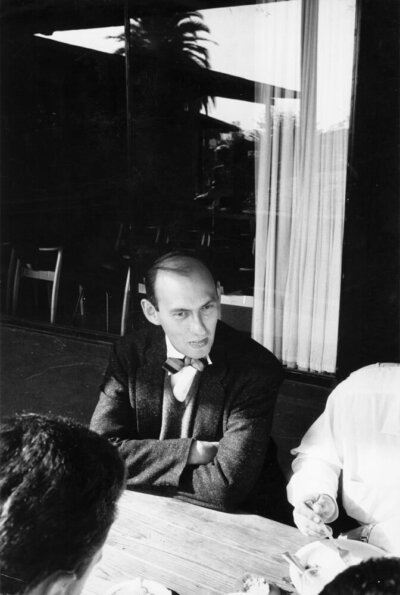
A longtime sociology professor at the University of Pennsylvania, Philip Rieff analyzed the telltale signs of a culture approaching its crisis point. Well-versed in history, literature, and psychology, Rieff traced the inward turn in the human quest for meaning towards therapeutic solutions and away from traditional answers invoking religious authority. Following Sigmund Freud, Rieff developed a theory of culture centered around moral prohibitions which Rieff termed “interdicts.” Underpinned by religion, interdicts long played an essential role in maintaining Western culture’s vitality and longevity. But with the modern assault on faith and metaphysical claims to absolute truth, the strength of the interdicts started to wane. In an unprecedented historical shift, Western society had undermined its cultural basis by abolishing interdicts and lifting all restraints and pressures on the individual.
Through his corpus of work, Rieff explicated how this new era resulted in untenable patterns of behavior and thought. In the absence of belief, materialistic comforts and individualistic attitudes reigned triumphant. Rieff identified the modern zeitgeist as therapeutic— or devoted to inner personal happiness—giving rise to psychologized conceptions of entertainment, education, and government. Mindful of the devastation wrought by totalitarianism, Rieff especially feared the implications of an unchecked marriage between science and politics in a therapeutic age. Against the anti-cultural impulses of his day, Rieff urged for a return to a credal culture that would lead to the rediscovery of evil and guilt, and thus the need for the sacred.
In his 1966 book The Triumph of the Therapeutic, Rieff announced the death of culture and the advent of an anti-culture. Vested with religious or otherwise sacred authority, culture properly understood dictated acceptable and unacceptable behavior via its institutions. Rieff observed, “a culture survives principally…by the power of its institutions to bind and loose men in the conduct of their affairs with reasons which sink so deep into the self that they become commonly and implicitly understood.”[1] A flourishing society depended on robust institutions to generationally instill fundamental principles and prohibitions that created shared meaning and conduct. “A culture must communicate ideals,” Rieff elaborated, “setting as internalities those distinctions between right actions and wrong that unite men and permit them the fundamental pleasure of agreement.”
Moreover, a healthy culture directed the individual outward and toward a communal purpose. Here, Rieff took up Freud’s notion of sublimination—interdicts repress human instinct leading to political, artistic, or other cultural activities. For Rieff, culture existed to limit the utter freedom and self-expression of the individual. Rieff asserted, “to prevent the expression of everything: that is the irreducible function of culture.”[2] Furthermore, Rieff reasoned that, “a culture survives the assault of sheer possibility against it only so far as the members of a culture learn…how to narrow the range of choices otherwise open. Safely inside their culture—more precisely, the culture safely inside them—members of it are disposed to enact only certain possibilities of behavior.”[3]
Culture was set up as a “system of moralizing demands” so that one’s potential for destructiveness would be mitigated and so that the individual might safely enter the community.[4] In the era of religion, “limitation of possibility was the very design of salvation.”[5] Rieff contended that, “until the present culture rose to threaten its predecessor, our demand system could be specified by the kind of creedal hedges it raised around impulses of independence or autonomy from communal purpose.”[6] Despite leaving behind a sense of the sacred, modern culture still required a regulatory system that stressed self-control in service to communal ends.
In Rieff’s theory of culture, society is upheld by the tension between what it forbids (interdicts) and what it permits (remissions). Rieff argued that a radical reordering of interdicts and remissions was behind the cultural disintegration in the West. Remissions, or the sporadic softening of the rules during special social occasions like holidays or festivals, had now become commonplace whereas before they had been subordinated to the overarching interdictory model. Societal decadence inevitably resulted when remissions overtook interdicts as the defining cultural characteristic. Rieff held that, “it is no, rather than yes, upon which all culture and inner development of character, depend.”[7] Instead of checking personal desire and self-expression, contemporary culture rather encouraged the pursuit of one’s impulses and favored lifestyle. In a suicidal turn, contemporary culture yielded to excess rather than restraint.
With the dissolution of a shared moral and religious framework in the West, modern individuals violently sought to through off the codes of conduct leftover from a previous age. Rejecting institutional authority and concomitant character formation, modern individuals gazed inward and located the self as a sure moral guide. Societal institutions or the broader community no longer reinforced ethical beliefs leftover from previous faith-based eras. Instead, modern therapeutic identity was shaped in an anti-cultural milieu that exhorted the “systematic hunting down of all settled convictions.” As a representative type, this secularized and inward-focused individual—what Rieff called psychological man—attempted to find meaning and happiness in an internal sense of well-being rather than in the submission to communal purposes and the sublimination of desires.
Consequently, the individual’s subjective sense of contentment replaced an objective understanding of good and evil—entertainment became “the highest good and boredom the most common evil.”[8] This had the inevitable result of reordering moral priorities: “if ‘immoral’ materials, rejected under earlier cultural criteria, are therapeutically effective, enhancing somebody’s sense of well-being, then they are useful.”[9] In a therapeutic age, traditional morality becomes inverted and moral freedom is redefined to mean feeling good about oneself rather than self-denial and the attainment of virtue. The loss of a sense of right and wrong action that sprung from an objective moral order was replaced by a therapeutic sense of self that reviled against any restrictions deemed oppressive. Rieff pronounced, “In the next culture, there are to be no priests, not even secular ones; we are not to be guided—rather, entertainment, stimulation, liberation from the constraints drawn around us…become the functional equivalents of guidance. Where creeds once were, there therapies will be.”[10] Material abundance and release from moral restraints laid the foundation of psychological man’s “technological Eden,” which boasted a “secular vision of comfort that render all salvations obsolete.”[11]
Infused with the anti-institutional culture of the therapeutic, society itself was restructured to further the individual’s inner happiness. Communal purposes gave way to strictly personal recreations that nevertheless demanded “institutional affirmations.”[12] Therefore, “where family and nation once stood, or Church and Party, there will be hospital and theater too, the normative institutions of the next culture.”[13] While religious belief would persist in the therapeutic age, Rieff predicted that it would become intensely personal and so tailored that it would in no way impinge on the self’s desires or sense of well-being. Rieff mused that, “the wisdom of the next social order, as I imagine it, would not reside in right doctrine…but rather in doctrines amounting to permission for each man to live an experimental life.”[14] Summing up the difference between the world of the therapeutic and the preceding age of belief, Rieff observed, “religious man was born to be saved; psychological man is born to be pleased.”[15]
To further account for this radical cultural shift, Rieff took special aim at the eighteenth and nineteenth-century thinkers who pitted “human nature against social order” (one thinks here of a Rousseau, Marx, or Nietzsche).[16] In a separate essay, Rieff pinpointed Oscar Wilde as one such paradigmatic figure. Rieff described Wilde as illustrative of a new type of individual: “the artist,” a precursor and guide to psychological man. A cultural revolutionary, the artist opposed all social pressures towards conformity and “expresses everything” through the medium of entertainment.[17] Against creeds and culture, the artist valued above all else pure individuality unconstrained by social conditions or demands.
Wilde envisioned a socialist utopia where each person possessed the ultimate freedom to carry out one’s self-actualization. For Wilde, to abolish the restrictions put on the individual by culture constituted the artist’s fundamental responsibility. By expressing creative “truths” that subverted the old religious ideals, the artist could dismantle the sacred authority that enforced cultural limits. Rieff commented that Wilde’s artistic radicalism thrives in contemporary society since, “the revolutionary arts are now mass entertainment.”[18] Indeed, Wilde’s “subversive spirit has been made obsolete by the cheap and massive reproduction of that spirit throughout the educated and televisioned strata of Western society.”[19]
Besides pop culture, therapeutic modes of thinking also infected modern education. Hitherto, educational institutions such as school, church, or family attempted to purge the individual of rebellious or destructive tendencies and conform the student to social standards and norms seen as healthy and essential to one’s success and long-term happiness. In the era of the therapeutic, however, those same institutions now adapted to the individual’s inner conception of the “good life,” and not the other way around. When human fulfilment is redefined as the freedom to act authentically, then restrictive ideas like traditional moral standards or an ultimate reality to which everyone must give an account appeared oppressive and outdated. Rieff observed, “modern children are often educated early in a rejection of authority and hear little about themselves except praise. At the same time…ideal conceptions of character are mocked as injurious to the creative potential of the child.”[20]
When education stresses the outward performance and expression of one’s inner identity, any attempts to curb or suppress the self becomes the pathology of self-repression. Rieff identified Freud as a progenitor of the belief that “nothing is really ‘contrary to nature.’ Human nature includes, in developmental stages that are not eliminable, all our ‘transgressions,’ thus all our ‘transgressions’ are ‘natural.’”[21] Hence, “the education of the therapeutic is no longer a moral form. The classical ideal of the good as that which involves a sacrifice of self is not only obsolete but a kind of sickness that must be stopped before it infects our children.”[22] By stressing self-creation and self-expression, contemporary education affirmed the individual’s autonomy against the “repressive tyranny of the good.”[23] At its worst, modern education furthered the self’s inner destructive delusions and ignored outer saving realities.[24]
In another insidious development, Western politics too had become psychologized. Seeing the therapeutic impulse pervade all levels of society, Rieff announced that therapeutic society would be democratic—if only in its “pursuit of pleasure.”[25] While egalitarian strivings for therapeutic satisfaction would define the political interests of the modern citizen, little concern would be devoted to whether the actual structure of government remained liberal. “All governments will be just,” Rieff foresaw, “so long as they secure that consoling plenitude of option in which modern satisfaction consists.”[26] A citizenry wholly devoted to therapeutic diversions diminished the pressure for critical thought in the political sphere. Concerned only with maintaining a “democracy of the satisfied,” the new political order reflected the rejection of divine and human accountability that marked the whole of therapeutic society.[27] Accordingly, Rieff suggested that, “psychological man is likely to be indifferent to the ancient question of legitimate authority, of sharing in government, so long as the powers that be preserve social order and manage an economy of abundance.”[28] To assuage every ego and affirm each manner of living became the chief aim of politics.
Because therapeutic society rejected history as a source of guidance, past understandings of political liberty as a bulwark against despotism fade and are forgotten. Modern culture had exchanged ordered liberty for moral liberation. Rieff noted that, “‘freedom’ itself was once, in our culture, intensely ordered. It was a term with theological, psychological, and legal resonances specific to obediences felt and enacted within…‘culture.’”[29] When freedom no longer becomes a structured avenue into cultured life but instead merely a means to express one’s inner desires, Western civilization itself comes under attack. This therapeutic recasting of freedom destabilized the necessary restraints that culture placed on the individual to guard against one’s potential for ruin and chaos. Rieff maintained that, “the true savagery comes after the…assumption that all prohibitions are somehow primitive and unjustifiable.”[30]
The therapeutic rejection of essential cultural pillars like religion, law, and moral formation created a powerful vacuum that must be filled by uncivilized human nature and the lust for domination. Thus, when “men no longer grasp their own limits; they become destroyers and worship only under the principle of power.”[31] In his review of Hannah Arendt’s The Origins of Totalitarianism, Rieff remarked, “man’s demonic will to freedom has led him beyond the limits of his reason and humanity, beyond the limits of old political orders, beyond the limits of old social and religious communities….In the absence of limits, evil becomes everyman’s lot.”[32] Since World War II, the stakes had only increased with the rapid advancement of science and technology.
Rieff particularly feared the marriage of the “two anti-creeds” that “compete for mastery over our peculiar mastery of life: Science and Politics.”[33] An amoral mechanism, science could be coopted for any purpose in therapeutic hands. Rieff cautioned that, “science needs…an insistence upon what it is not to do, a time and sphere of constraint. The insoluble social condition of the scientists is that they are…without an interdictory form.”[34] If modern society eschewed principled limitations on political scheming and scientific inquiry, future abominations would inevitably follow. Yet the defining trend of modernity was to spite all such attempts at restraint, to decry any submission to any power other than one’s own.[35] Rieff perceived that, “both rationalist and romantic attacks on the absolute authority of creeds led to that far greater horror: the absolute authority of man. Against this anti-credal authority, no creed can prevail, for it is an authority that is identified with will, that is untied to any constraint except self-interest.”[36]
To counter this violent struggle towards civilizational destruction, Rieff called for the restoration of a credal culture that recognized the reality of sacred authority and the saving ramifications of guilt. At base, the therapeutic transformation of the West was a rebellion against the demands the sacred order placed on the self. Rieff declared, “Anticulture is constituted by an assault upon the eternally given Nots of our historically received faiths.”[37] Moreover, Rieff stressed that, “in his symbolic truth, the therapeutic is what he represents: the most revolutionary of all modern movements—toward a new world of nothing sacred.”[38] Fundamentally, the therapeutic project represented an elaborate escape attempt from moral absolutes and the guilt that ensues from failing to meet those transcendent standards.
Rieff described this feeling of inadequacy as “holy terror,” which he defined as “fear of the evil in oneself and in the world…. To live without this high fear is to be a terror oneself, a monster.”[39] And yet, Rieff lamented, “to be monstrous has become our ambition, for it is our ambition to live without fear. All holy terror is gone. The interdicts have no power. This is the real death of God and our own humanity.”[40] As guilt and sacred authority are irrevocably linked, psychological man tried to do away with guilt in order to abolish the haunting sense of the sacred. Rieff pronounced, “it is as man becomes guiltless, as he can find no opposition to his infinite sense of possibility, that he becomes godless.”[41] If modern culture ever returned to a normative order, then guilt must again trouble the Western conscience.
Amidst the shallowness and insecurity of an anticultural age, transcendent authority persists. Mocked or unacknowledged, the immortal truths of the sacred order still linger. In its endless searching to escape guilt by means of therapeutic diversions, modern society betrayed its own hollowness. Rieff discerned that, “our culture is dying mainly because the objectivity it requires is destroyed by constructions of endless expressional quests that have nothing true and resistant about them.”[42] Despite psychological man’s best efforts, modernity convulsed with the “residual effects of magisterial and eternal truths repressed.”[43] In the end, therapeutic answers cannot account for the full scope of human longings. After all, “there is also justice and mercy, both of which have nothing to do with therapy.”[44] In the ashes of culture, perhaps psychological man will again regain a sense of shame and turn with fear and trembling once more towards the sacred.
Endnotes:
[1] Philip Rieff, The Triumph of the Therapeutic: Uses of Faith after Freud (ISI Books, 2007), 2.
[2] Philip Rieff, “VII A Last Word: The Impossible Culture: Wilde As A Modern Prophet,” Salmagundi, no. 58/59 (October 1, 1982): 419.
[3] Philip Rieff, “Wilde As A Modern Prophet,” 413.
[4] Philip Rieff, Triumph of the Therapeutic, 8.
[5] Philip Rieff, Triumph of the Therapeutic, 12.
[6] Philip Rieff, Triumph of the Therapeutic, 11
[7] Philip Rieff, “Wilde As A Modern Prophet,” 419, emphasis original.
[8] Philip Rieff, Triumph of the Therapeutic, 4; 10.
[9] Philip Rieff, Triumph of the Therapeutic, 21.
[10] Philip Rieff, “Wilde As A Modern Prophet,” 412.
[11] Philip Rieff, Triumph of the Therapeutic, 4; 10.
[12] Philip Rieff, Triumph of the Therapeutic, 18.
[13] Philip Rieff, Triumph of the Therapeutic, 18.
[14] Philip Rieff, Triumph of the Therapeutic, 20.
[15] Philip Rieff, Triumph of the Therapeutic, 19.
[16] Philip Rieff, Triumph of the Therapeutic, 3.
[17] Philip Rieff, “Wilde As A Modern Prophet,” 411.
[18] Philip Rieff, “Wilde As A Modern Prophet,” 424.
[19] Philip Rieff, “Wilde As A Modern Prophet,” 410.
[20] Philip Rieff, “Wilde As A Modern Prophet,” 418n8.
[21] Philip Rieff, Charisma: The Gift of Grace, and How It Has Been Taken Away from Us (Vintage Books, 2008), 197.
[22] Philip Rieff, Charisma, 214.
[23] Philip Rieff, Charisma, 35.
[24] Philip Rieff, Triumph of the Therapeutic, 6.
[25] Philip Rieff, Charisma, 205.
[26] Philip Rieff, Triumph of the Therapeutic, 20.
[27] Philip Rieff, Triumph of the Therapeutic, 132; 137.
[28] Philip Rieff, Triumph of the Therapeutic, 20.
[29] Philip Rieff, Charisma, 205.
[30] Philip Rieff, Charisma, 13.
[31] Philip Rieff, Charisma, 19.
[32] Philip Rieff, “The Theology of Politics: Reflections on Totalitarianism as the Burden of Our Time (A Review Article),” The Journal of Religion 32, no. 2 (April 1, 1952): 120.
[33] Philip Rieff, Charisma, 203.
[34] Philip Rieff, Charisma, 25.
[35] Philip Rieff, “Wilde As A Modern Prophet,” 415.
[36] Philip Rieff, Charisma, 210.
[37] Philip Rieff, “For the Last Time Psychology: Thoughts on the Therapeutic Twenty Years After,” Salmagundi, no. 74/75 (April 1, 1987): 108.
[38] Philip Rieff, “Thoughts on the Therapeutic Twenty Years After,” 104.
[39] Philip Rieff, Charisma, 6.
[40] Philip Rieff, Charisma, 6.
[41] Philip Rieff, Charisma, 22.
[42] Philip Rieff, Charisma, 180.
[43] Philip Rieff, “Thoughts on the Therapeutic Twenty Years After,” 103.
[44] Philip Rieff, “Thoughts on the Therapeutic Twenty Years After,” 111.


Related Posts