Abolishing Aristotle’s Class Distinction with Help from Plato and Rousseau
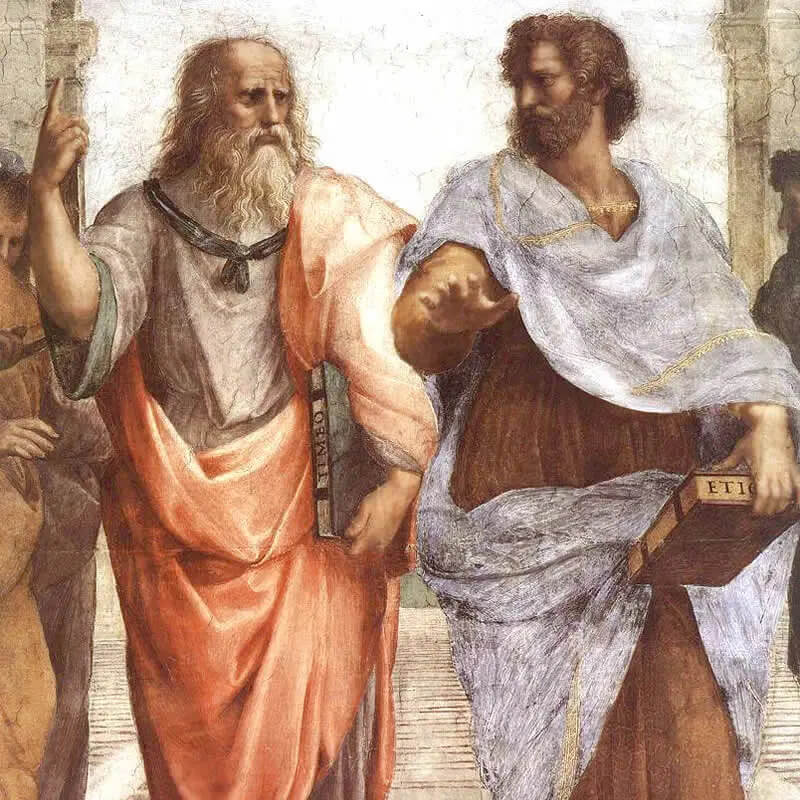
“People don’t like freedom.” -Thomas Bernhard
Aristotle, late in the Politics, says a lot of people don’t know how to live during peacetime, don’t know how to use their leisure well, and he faults legislators for this. Rousseau says a complementary thing in Book 3 of Emile, but is addressing teachers rather than legislators when he advises them to slowly acclimate their students to paying attention: “But this attention ought always to be produced by pleasure or desire, never by constraint. Great care must be taken that it does not become a burden to him and get to the point of boredom. Always, therefore, keep on the lookout and, whatever you do, stop everything before he gets bored, for it is never as important that he learn as that he do nothing in spite of himself.”
Learning is thus subordinate to freedom, but is there a sense in which freedom exists for the sake of learning rather than the reverse? We might possibly become freer through learning, but I’m interested here in whether learning is possible at all if it’s not pursued freely.
That is to say, I leave aside the question posed by Michael Oakeshott and others as to whether and how a liberal education liberates the student, and I start instead from a simpler and clearer conception of freedom: “doing nothing in spite of oneself,” as Rousseau puts it. Freedom is presupposed in education rather than produced by it — or at least that is my provisional premise.
Freedom might be a necessary but insufficient condition for the possibility of education. There is perhaps a danger that “doing nothing in spite of oneself” devolves into mere license, which is why my question regarding the subordination of learning to freedom arose in the first place. The reason freedom is not subordinated to learning is that no learning occurs except freely; learning therefore depends on freedom. But if freedom exists for the sake of learning, and learning exists for its own sake, perhaps this is a sense in which thinkers like Augustine would contend that freedom is inferior to learning after all, “[E]verything that exists for the sake of something else is of less value than that for which it exists.”
The more valuable thing (learning) depends on the less valuable thing (freedom). I take it that modern critics of the aristocratic politics that might be implied in this logic object on the grounds that the labor which ensures the fulfillment of the basic necessities of life has a dignity, and thus so too do the laborers themselves have a dignity, that this logic misses. Learning depends on freedom, which in turn depends on labor. Why labor, and by extension laborers, on which so much depends, should be inferior to that which depends on them is a little unclear to me.
There is perhaps evidence in Aristotle that this is only a “straw man” critique, misconstruing its object. He writes, for instance, that “a man’s [presumably any man’s] constitution should be inured to labor, but not to labor which is excessive or of one sort only, such as is practiced by athletes; he should be capable of all the actions of a freeman.”
What remains troubling, however, is the distinction between mere amusement and the use of one’s leisure for serious pursuits like philosophy, thus for education. Laborers, by virtue of the very nature of their labor, will be reduced to merely amusing themselves in whatever free time they’re allotted. Aristotle says this is a legitimate but lower-class usage of leisure than that of which a truly free person is capable. The problem is thus — granting that labor is conducted for the sake of freedom and ultimately of education — that laborers themselves are denied the very fruits of their labor, since “amusement is for the sake of relaxation, and relaxation is of necessity sweet, for it is the remedy for pain caused by toil…”
The problem is that some people — and Aristotle calls them lower-class — toil more than others and are thus inevitably more in need of amusement as a “remedy for the pain caused by toil.” Early education for both Plato and Aristotle seemingly has the function of channeling children into one of the two basic classes: those who will use their leisure well, as Aristotle puts it, and those who, because they don’t appear to be inclined toward the admirable use of leisure, are formed instead into laborers who will use their leisure for mere amusement, namely to recuperate from toil, which toil is crucial but inferior.
Aristotle writes that “the inferior always exists for the sake of the better or superior…” This applies seemingly to things (work is inferior to study) and not to persons (I don’t suppose Aristotle contends that workers are inferior to scholars — though this perhaps is badly put since he does relegate workers to second-class status and he doesn’t want free persons to become “scholars” per se, but rather amateurs, if 1337b-15 is any indication) — unless those persons are “reified” (that is, reduced to things, treated as if they were things or slaves, or in any case lower-class, and thus dehumanized). Partly I am concerned with the way in which assigning children to whichever of the two classes might function as a self-fulfilling prophecy, since the lower-class use of leisure for amusement is necessary for laborers, and laborers are channeled into this class on the assumption that this is the best they can do with their leisure. I mentioned Plato above in addition to Aristotle in this regard, and it’s mostly what Socrates says toward the end of Book VII of the Republic that I have in mind:
“…no free person should learn anything like a slave. Forced bodily labor does no harm to the body, but nothing taught by force stays in the soul. […] Then don’t use force to train children in these subjects; use play instead. That way you’ll also see better what each of them is naturally fitted for.”
What worries me, in part, is that given the emphasis both Plato and Aristotle place on the importance of early education in determining the future course of a life, teachers (or guardians, for Plato) and Aristotelian legislators have an almost super-human power in forming souls and shaping lives. Socrates, just before the passage quoted above, contends that, contrary to Solon, there’s not much hope in adult education. As a person grows older, “he can [learn] even less well than he can run races, for all great and numerous labors belong to the young.” It seems to me that for Aristotle, the education of students destined (or intended by those in charge) for the lower class of laborers will quite simply end after childhood. They will have been fitted for lower occupations, which necessitate the squandering of leisure which might otherwise, as in the case of truly free persons, be put in the service of an ongoing education.
The young are thus to be sorted on the basis of whether or not they are expected to be inclined and able to carry on their education by themselves as they get older. The future course of a life in this crucial, formative respect depends utterly on the opinion of the educator.
Rousseau’s educator, or governor, employs deception in the service of learning at least as much as Socrates’ playful guardians, but perhaps to quite different ends, which is to say that education — the end in either case — is perhaps conceived differently by Rousseau.
Rousseau tells his governor that “it is rarely up to you to suggest to him [the pupil] what he ought to learn. It is up to him to desire it, to seek it, to find it. It is up to you to put it within his reach, skillfully to give birth to this desire and to furnish him with the means of satisfying it.”
In terms of this essay’s opening quotation from Rousseau, this means that learning can really only happen freely — only if the learner desires to learn — and the educator’s function is to arrange for this desire to emerge. Perhaps what’s different from Socrates in this regard has less to do with this primary function of the educator — “nothing taught by force stays in the soul” aligns well with Rousseau’s contention — than with the secondary function of weeding out the students who are apparently unfit for lives of leisurely self-cultivation, about which Rousseau says nothing, perhaps because he’s dealing with only one pupil, and instructing us in how ideally to educate him.
“Educate” is perhaps the wrong word to use here, or anyway a misleading one. Educators don’t educate – they inspire, maybe. They create the desire to learn, and then the student learns by himself. For what is “learning” that is not “learning by oneself”? It can only be the expectation that a teacher will magically transmit knowledge to their students, students who are like Meno as characterized by Peter Kalkavage in his introduction to that dialogue: a “facile, knowledge-greedy anti-learner.”
It might almost be the case that whereas Meno wants to know without learning, Socrates learns without knowing — which is to say that Socrates somehow sustains his desire to learn without fully “satisfying” it, as Rousseau put it above. Rousseau’s governor must be skillful in “giving birth” to desire in the student, and might rely on playful deception to do so, along the lines of the Socratic strategy. But it’s unclear that Socrates would ever attempt to “furnish the means to satisfy” this desire. My question, in other words, concerns not so much how to produce the desire to learn in otherwise sullen or uninterested students, but how to sustain such desire over the course of a lifetime — particularly how to sustain it for and by oneself as an adult, without a guardian or a governor or indeed a legislator skillfully devising the means for this perseverance. Failing this persistence of the desire to learn, I don’t think it’s possible to follow Aristotle’s instruction to “use leisure well.”
The question of using leisure well, I started out saying, is also the question of how to conduct oneself during peacetime. Aristotle’s division of people into two classes seems to be an obstacle rather than a solution to this problem. That is to say, the reduction of leisurely self-cultivation to mere amusement for the lower class is more hopeless for sustaining peace than is the attempt – which Socrates admirably makes in the Meno in showing that the slave boy can learn – of educating the supposedly lower class, or in other words abolishing this class distinction altogether.
In the Meno, Socrates tells the title character, “But since you don’t even attempt to rule yourself, no doubt so that you may be free, yet attempt to rule me and do rule me, I shall yield to you — for what am I to do?”
This distinction, or opposition – since, apparently, if you’re not capable of ruling yourself you inevitably attempt to rule others – is present, I seem to recall, in Aristotle as well but I cannot locate the passage. What’s important is that Socrates is using the word “freedom” ironically, for I take his implication to be that only by ruling oneself may one become free. Or better: this freedom consists in ruling oneself rather than others. It is slavish to attempt to rule others, and therefore we shouldn’t expect anything less (that is, less than strife and ultimately war) from the people we treat as slaves — for instance Aristotle’s lower class.
I seem to have undermined my own provisional premise just now, in using “freedom” in an additional sense to that which learning presupposes: learning also, it turns out, produces freedom, if freedom truly consists in ruling oneself as opposed to others. Education cannot get off the ground without freedom in one sense — Rousseau’s more straightforward sense — and education itself is freeing in a second, Socratic sense. One frees oneself, at leisure, from the slavish desire to rule others. Because to amuse oneself instead is to fall short of this freedom, the very class distinction itself, along the lines of amusement on one hand and education on the other, is inimical to peace. What peace requires is the flourishing of all through education, which could become possible if all equally are “inured to labor,” as Aristotle himself suggests, though without elaborating the full consequences of such a scenario. If hard labor is shared by all, there will be less need for amusement and recuperation, as well as a more evenly distributed capacity for leisurely learning throughout society, which in turn is the condition for the possibility of a more sustainable peace.


Related Posts