The Tyranny of Mediocrity: When Conformity Becomes a Virtue

Every institution claims to value excellence. Few are equally comfortable with the people who actually demonstrate it.
Walk into almost any modern organization and you will encounter the familiar vocabulary of ambition: innovation, creativity, leadership, independent thinking. These words decorate mission statements, recruitment campaigns, and executive speeches. Yet behind this celebration of talent lies an uncomfortable contradiction. The individuals most willing to question established practices are often the least convenient people to accommodate.
We have created institutions that publicly admire excellence while privately rewarding conformity.
This is the tyranny of mediocrity.
It is not the rule of unintelligent people, nor a complaint that ordinary individuals have acquired too much influence. It is something more subtle: a system in which being agreeable becomes more valuable than being capable, and avoiding mistakes matters more than achieving anything exceptional.
The problem is not that mediocrity exists. It always has. The problem begins when mediocrity becomes an institutional advantage.
Nearly two centuries ago, Alexis de Tocqueville identified a troubling possibility within democratic societies. In Democracy in America, he observed that equality could generate an extraordinary pressure toward intellectual conformity. The individual might enjoy freedom under the law while remaining constrained by the expectations of the majority.
Tocqueville understood that censorship did not always require government intervention. Public opinion could impose its own discipline, making disagreement socially costly even when it remained legally permissible.
Today, that pressure operates not only through politics but through the ordinary structures of professional life.
Consider the employee who identifies a serious organizational weakness. Challenging it may improve performance, but it may also embarrass a superior, disrupt established relationships, or expose years of institutional complacency. Remaining silent, meanwhile, carries fewer immediate risks.
The organization claims to encourage initiative. Its incentives encourage obedience.
Eventually, employees learn an unwritten lesson: competence may help you perform your job, but conformity helps you survive it.
This is how mediocrity becomes self-perpetuating. Those who avoid challenging authority are rewarded with greater authority, while those who question ineffective practices are gradually excluded from influence.
There is a practical reason this pattern can be difficult to reverse. Institutional failure is often collective and delayed, while the discomfort of disagreement is personal and immediate. A manager who suppresses a warning may escape embarrassment today; the cost of that silence may appear months later, scattered across departments and attributed to circumstances. By contrast, the person who raises the warning can be identified at once. Even without an explicit order to remain quiet, the distribution of risks teaches everyone what to say.
This distinction matters because it shifts the argument away from individual virtue. The problem is not simply that some leaders lack courage or that some employees lack independence. It is that organizations can construct incentives under which even sensible people choose silence. A culture of conformity need not be planned by anyone. It can emerge from a thousand small decisions to avoid friction.
Not every dissenter is talented, and not every established procedure is foolish. Organizations need cooperation, discipline, and accountability. But when the preservation of internal comfort becomes more important than the quality of outcomes, institutional loyalty begins to replace professional judgment.
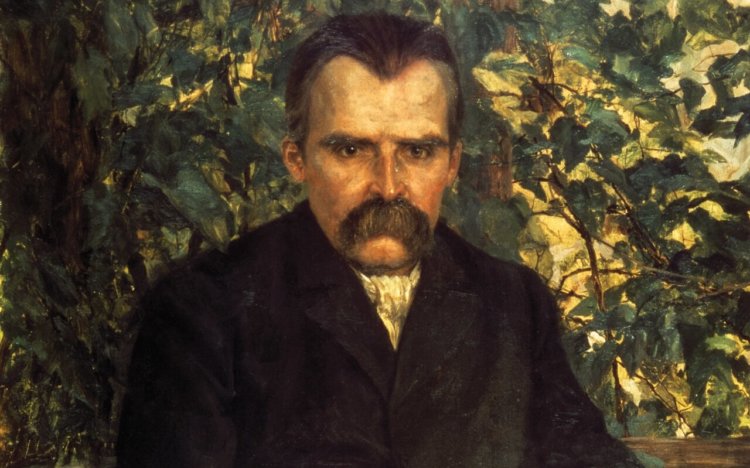
Friedrich Nietzsche approached a related problem through his critique of herd morality. He questioned the tendency of communities to turn their discomfort with exceptional individuals into moral judgments.
Ambition becomes arrogance. Independence becomes disloyalty. Intellectual confidence becomes elitism.
Sometimes these accusations are deserved. Talent offers no immunity from vanity, and intelligence does not guarantee wisdom. Yet when criticism becomes a substitute for evaluating actual performance, a culture begins to punish distinction rather than examine it.
The language of humility can become especially convenient in such environments. Humility is a virtue when it means recognizing one’s limits and remaining open to correction. It becomes a weapon when it is demanded only of those who challenge a settled hierarchy. An institution that welcomes confident agreement but condemns confident disagreement has not discovered modesty. It has found a more respectable vocabulary for obedience.
The consequences extend far beyond the workplace.
In contemporary public life, visibility increasingly masquerades as credibility. Social media rewards the capacity to attract attention, a skill that may have little relationship to the ability to produce serious ideas.
A provocative slogan can travel further than a carefully constructed argument. A confident personality can acquire greater influence than a knowledgeable but less entertaining specialist. Popularity becomes a credential, and recognition becomes its own justification.
This is not because ordinary audiences are incapable of appreciating intellectual depth. It is because the machinery of public attention often rewards immediacy over reflection.
The distinction between knowing something and appearing knowledgeable becomes increasingly difficult to maintain.
There is a parallel between the organization that prizes a reassuring employee and the public sphere that prizes a reassuring certainty. Both make complexity costly. The careful thinker qualifies a claim, acknowledges a counterargument, and sometimes admits not knowing. The performer can offer a simpler product: an answer delivered without hesitation. When attention is scarce, the appearance of certainty may defeat the practice of inquiry.
Yet the opposite mistake would be to assume that obscurity proves depth. Difficult language can conceal weak reasoning just as easily as an appealing slogan can conceal ignorance. Excellence is not measured by how inaccessible an argument sounds. It is measured by whether the argument survives serious scrutiny. The defense of independent thought must therefore include a defense of criticism, including criticism of those who consider themselves independent thinkers.
Yet there is another danger in criticizing mediocrity: the temptation to confuse excellence with privilege.
Established elites are perfectly capable of incompetence. Prestigious credentials do not guarantee intelligence, and professional hierarchies frequently protect people whose principal achievement is mastering the rules of institutional advancement.
A genuine defense of excellence must therefore challenge both the arrogance of entrenched elites and the romanticization of uninformed opinion.
Democracy requires equal rights, not the fiction that every judgment possesses equal intellectual value. A scientist’s evidence-based conclusion is not automatically equivalent to an uninformed assertion. A capable professional should not be considered interchangeable with someone who lacks the necessary skills.
Recognizing these differences does not diminish human dignity. It simply acknowledges that equality before the law and equality of competence are different propositions.
A democracy cannot dispense with expertise, but neither can it surrender public judgment to experts. Expertise supplies reasons, methods, and evidence; democratic legitimacy concerns who has the right to decide and who must live with the consequences. These are different questions. Confusing them invites either technocracy, in which credentials substitute for accountability, or populist resentment, in which accountability is invoked to dismiss knowledge itself.
The challenge is to build institutions in which authority remains answerable to evidence and evidence remains open to challenge. A title should not settle an argument. Nor should the absence of a title disqualify one. What matters is whether a claim can be defended in public, tested against experience, and revised when it fails. Such standards protect excellence from becoming hereditary status and democracy from becoming an applause contest.
The real question is whether our institutions can distinguish genuine ability from social advantage, and independent judgment from mere insubordination.
A healthy democratic culture would make room for uncomfortable competence. It would judge ideas by their substance rather than the status of those expressing them. It would recognize that loyalty to an institution sometimes requires challenging the people who lead it.
That recognition has practical consequences. Leaders must be willing to hear criticism before a crisis makes it unavoidable. Promotion should reflect the quality of decisions, not simply the ability to maintain agreeable relationships. Mistakes should be examined for what they reveal rather than assigned to the least protected person in the room. None of these measures eliminates politics from organizational life. They do, however, make it harder for social convenience to masquerade as merit.
Above all, a healthy culture would understand that excellence is not a threat to equality unless excellence becomes an excuse for denying others their rights.
The tyranny of mediocrity begins when institutions stop asking whether something is right and start asking whether it is convenient. It flourishes when professional survival depends more upon pleasing authority than improving performance, and when intellectual independence becomes a liability rather than an asset.
Its greatest danger is not that exceptional people disappear. They do not.
It is that they learn to remain silent, lower their ambitions, or leave institutions that can no longer accommodate them.
A society does not need to prohibit independent thought to weaken it. Sometimes, it merely needs to make conformity more rewarding.
And a civilization does not begin to decline when it runs out of exceptional minds. It begins to decline when those minds discover that the price of belonging is pretending to be ordinary.


Related Posts