C.S. Lewis, the Battle for Man, and the End of the World
What has happened to man? In a relatively short period of time, it seems civilization has moved quickly from a traditional and religious view of God, man, and nature, to a replacement of traditional truths with progressive “humanist” principles, then to atheism and relativism, and finally to an insane and satanic attempt to dominate the world through an odd mixture of nihilism, wokeism, and raw exertion of power. Who could have seen such a fast acceleration from normalcy into chaos?
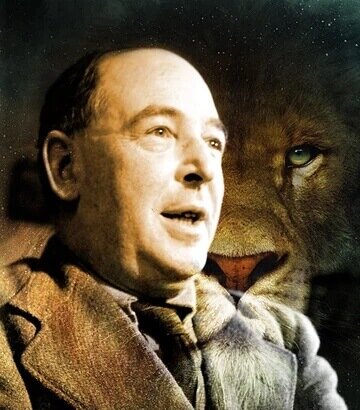
C.S. Lewis, best known for popular works such as Mere Christianity and The Screwtape Letters, and of course as the author of the Chronicles of Narnia series, saw all this coming nearly a century ago. Lewis is the great prophet of what was to emerge in the post-modern, technocratic age. His brilliance and foresight should be studied to help us understand the present-day crisis of man. Lewis’ philosophical work (particularly his lectures published as The Abolition of Man), coupled with his fictional storytelling, provide perhaps the most compelling explanation of how the world got to where it is in the 21st century. And Lewis is especially important because his writing provides not just a description of the problem but deep insight into what Christians ought to do about it.
The Abolition of Man is perhaps C.S. Lewis’ most important (and certainly his most prophetic) philosophical work. Lewis begins by identifying what he refers to as “the Tao,” which is
Nature, it is the Way, the Road. It is the Way in which the universe goes on, the Way in which things everlastingly emerge, stilly and tranquilly, into space and time. It is also the Way which every man should tread in imitation of that cosmic and supercosmic progression, conforming all activities to that great exemplar.
Christians will recognize this as the eternal and natural law. What Lewis means here is simply the existence of objective reality and order, the basic principles of right and goodness and truth that exist and are acknowledged (at least to some extent) not only in Christianity, but among the ancient Greeks, the Romans, many eastern cultures, in any sane civilization. Adherence to these basic principles of living (do good and avoid evil, give each his due, don’t kill the innocent, don’t steal what isn’t yours, etc.) is necessary for peace, order, and a flourishing human society.
Lewis begins The Abolition of Man with an example from an English book for school boys (he calls it “The Green Book”) to show the catastrophic departure of modern man from the traditional, universal view of man, nature, and objective truth. Quoting “the well-known story of Coleridge at the waterfall,” where one tourist calls a waterfall “pretty” and the other calls it “sublime,” Lewis is deeply troubled by the commentary in The Green Book:
When the man said This is sublime, he was not making a remark about the waterfall, but a remark about his own feelings. What he was saying was really I have feelings associated in my mind with the word “Sublime”, or shortly, I have sublime feelings . . . This confusion is continually present in language as we use it. We appear to be saying something very important about something: and actually we are only saying something about our own feelings.
Lewis’ problem with this statement is not the intent of the author, but what schoolboys (and society generally) will take from it: “firstly, that all sentences containing a predicate of value are statements about the emotional state of the speaker, and secondly, that all such statements are unimportant.” A society that accepts this relativistic view of all personal statements quickly descends into a world where there is no truth about things. Nothing exists but each man’s sentiments or feelings about things. In such a world, progressives can try to replace traditional, objective truth with values such as “decency” or “common sense” or “kindness,” but these progressive values are not rooted in reality. If there is no objective truth concerning what things are apart from how each man feels about them, then there is no foundation for any morality, for any knowledge, or for any claim that something is good or true.
Once man leaves the “Tao” (that is, objective standards of goodness and truth that are accessible to man) behind, there is nothing left to direct human behavior or the exercise of power toward any good. The result is hellish. As man progresses in technological conquest of the natural world, he thinks he has defeated nature. But really he has let nature defeat man, for when man does not know who or what he is, he descends into meaninglessness and loses what makes him unique and great. So society descends quickly from rule by progressive elites who attempt to establish updated and enlightened norms for human behavior, to elites who realize there are no legitimate norms. There is only power. So these elites do what is natural for nihilists in such a situation: they seize power and attempt to control as many people as possible, because in a world without norms it is simply more pleasant to rule than to be ruled.
Lewis identifies the descent from normalcy to progressivism to complete degeneration and collapse with incredible prescience: he traces the evolution of the progressive intellectual movements of the modern era and observes how the progressive attempt to replace traditional values with new ones lacks a coherent basis. All major religions and civilizations have, to a certain degree, acknowledged and relied on some understanding of a divine and objective truth. If there is no objective truth (a central claim of progressivism), civilization must descend into relativism. Eventually a nihilistic, raw exertion of power must replace progressivism, because in the absence of truth there is only power. And nihilism quickly descends into inhumanity and evil. This (admittedly) very simplistic and broad-brush rendering of Lewis’ argument accurately summarizes the last two centuries of history in the West.
Lewis knew that, ultimately, stories can convey truth better than philosophical treatises. That is why the themes mapped out in The Abolition of Man and how they play out are perhaps better understood through Lewis’ fiction than his essays. Lewis is rightly famous for his Chronicles of Narnia stories. He is less famous for The Space Trilogy, which is arguably (after The Lord of the Rings) one of the greatest achievements of 20th-century fiction. The final book in each of Lewis’ fiction series (The Last Battle and That Hideous Strength, respectively) takes the thesis of The Abolition of Man and shows how the abandonment of divine order and natural law might play out in the course of human history. Once man leaves the path of objective truth and moral order, the descent into relativism leads not only to chaotic nihilism but eventually to “devilry.” Men who deny the reality of evil while doing evil things are not immune from the devil’s work. In fact, they end up participating in it. Both The Last Battle and That Hideous Strength tell a version of this dark descent into hell, but with very different outcomes.
The Last Battle takes place in the last age of the world of Narnia. The conflict begins with a plot by a selfish, opportunistic ape to create a fake Aslan (the Christ figure of Narnia) that will scare people into serving his every whim. Things escalate as more characters become involved. Tirian, the last king of Narnia, finds himself allied with a small, ragtag group, including Eustace and Jill (two children from England who find themselves brought back into Narnia for this strange final moment). What begins as a small mockery of God by one character seeking power turns into a conspiracy that spirals out of control. Foreign powers use the ape’s scheme to enslave free Narnians. The conspirators merge the idea of Aslan (the figure of the true God) with Tash (the false god of the southern land of Tashban) into the hideous and idolatrous Tashlan in order to keep the worshippers of each deity afraid, controlled, and enslaved.
A few insiders within the ape’s circle take advantage of the situation: they think the ape is a fool and, further, they disbelieve in the existence of Aslan as well as Tash. They believe in nothing; they seek only power. The aristocrat from Tashban, Rishda Tarkaan, and the talking cat Ginger, fancy themselves part of the real inner circle, the few who really understand and control things.
‘I just wanted to know exactly what we both meant to-day about Aslan meaning no more than Tash.’
‘Doubtless, most sagacious of cats,’ says the other, ‘you have perceived my meaning.’
‘You mean,’ says Ginger, ‘that there’s no such person as either.’
‘All who are enlightened know that,’ said the Tarkaan.
‘Then we can understand one another . . .’
Yet just as this atheist cabal rises within the inner circle, the demon Tash himself appears among them. Disbelieving in the spiritual realm does not keep the spiritual realm at bay. Those who want power for themselves and who shun the divine, quickly find themselves in the presence of a horrific demon. The appearance of Tash triggers a final battle, a time of choosing between good and evil, and quickly escalates to bring about the end of the world. Those who chose Aslan, who chose God, are called to fight (ultimately to fight a losing battle) and quickly find their reward in paradise. Those who choose themselves (and so choose Tash) get what they ask for: darkness. Tirian, Eustace, Jill, and the others who remain true to God are called to fight for what is good. This fight is not meant to save the world (which comes to an apocalyptic end), but to save their souls and bring them to heaven, the true Narnia.
In That Hideous Strength, there is a similarly apocalyptic battle at hand. While The Last Battle takes place in the fictitious world of Narnia, That Hideous Strength takes place right in contemporary England, among the academics and politicians of Lewis’ own homeland. The forces of evil bent on controlling England and eventually the world (the institution humorously called the National Institute for Co-ordinated Experiments, the “N.I.C.E.”) are both extremely organized and completely chaotic. It is hard to discern the structure of the N.I.C.E.; it is unclear who is actually in charge. And different people are participating in the work of the N.I.C.E. with completely different understandings of what they are doing. Some see the N.I.C.E. as a progressive political movement that will bring mankind into a new era of history. Others are hardened materialists, unconcerned with politics and policy, who think the experiments at the N.I.C.E. can make the human organism live forever under the right laboratory conditions. But at the center of the movement, the key players at the N.I.C.E. are communing with demons, who are ultimately behind the whole operation.
The N.I.C.E. is politically powerful, obscenely rich, and ambitious to take control of mankind. What is the force of good that opposes it? It is not an army, not a political party, not an organized institution at all. The resistance is simply a handful of people (and a few odd animals) living at St. Anne’s, led by the Director, who are called by God to save England from falling into darkness. In the face of such powerful evil forces, what are they to do, exactly? That is the question constantly posed by the faithful but impatient skeptic at St. Anne’s, MacPhee: what are we supposed to do? In many ways, the answer is simple, much simpler than MacPhee would like: obey God, live a human life together, think, pray, and wait for God to act.
And God does act. The faithfulness of the little community of St. Anne’s involves several members risking their lives at pivotal moments. These modest heroes take a few very bold, simple, decisive actions when the time is right. Against all odds, the remnant at St. Anne’s remains faithful and believes that God’s will will be done. In the end, supernatural forces intervene through the humble work of the St. Anne’s community and the N.I.C.E. is destroyed. Angelic powers descend upon England and society is restored to some level of peace and sanity.
The endings of these two great stories are important to understanding Lewis’ prophetic vision of man, the world, and the modern age. The progressive trends that have, over the last couple centuries, attempted to throw off God and deify man will certainly not lead to utopia. In both stories, man tries to throw off the truth of the ordered nature of the universe, to live as if man can control the world without God. In neither story does the proud attempt to dominate the world without God succeed; each attempt ends not only in failure and death, but it leads to the emergence of demons. Without good, there is evil. Without God, there is the devil. There is no neutral world where man can ignore God and remain good. In The Last Battle, the moment the rulers try to live in a world without Aslan, where they can dominate and enslave the population without constraint, the demon Tash appears, swallows up these evil actors, and ushers in the end of the world. In That Hideous Strength, the unnatural behavior of the inner circle at the N.I.C.E. – communing with an unknown “organism” that is actually a demon through the medium of a disembodied head kept alive by technology – breaks open the barrier between heaven and earth. Such a situation moves God to act, releasing angelic powers into the world. Both stories show what is demanded of the faithful in such dark times: remain faithful to God and act according to His will, come what may.
While the similarities in the two stories both show Lewis’ predictions of how a world that rejects the Tao will end up, the major difference in how each story ends reveals a hard truth: we can only follow God’s will and we cannot control the outcome. Lewis’ stories give us a blueprint for how we are called to act in the face of evil. They also demonstrate the detachment we must have from the outcome of the fight. In Narnia, fidelity to God’s will in the face of catastrophic evil saves the souls of those involved in the fight. But that fidelity does not save the world, for it is time for that world to come to an end. Conversely, the fidelity of the remnant at St. Anne’s in That Hideous Strength does lead to a restoration of sanity and the continuation of England. The fight is the same; the ends are completely different.
What are we to take from this? The correct response is a proper orientation toward the possibility of the antichrist and the end times. We must remain vigilant and faithful when evil forces are at work. We cannot bow to them. We must observe the signs of the times and be ready for God to call us to faithful action. But there is a temptation, driven largely by fear and a desire to control what only God controls, to change the ultimate outcome of the fate of the world. This fear and attempt to control takes many forms. Some obsess over political battles. Others become “preppers,” striving to collect the food supplies and ammunition to endure the most horrible societal collapse. Still others lapse into despair, paralyzed by the terror of what may come. And while personal responsibility and political action in the face of evil can be good and prudent courses of action, they can also become idols. The reality is that we cannot save ourselves. We cannot save the world. We cannot overcome the devil by our own strength and cunning. Only God can do these things.
Our age is a dark age. Man has forgotten who and what he is. Objective truth and religious faith have been jettisoned, leading first to an attempt at godless humanism, then quickly to the dark reality that life without God is not utopia but hell. The takeaway, of course, cannot be to wash our hands of the battles of this life, to give up because we cannot guarantee victory. That is not the message of Christ, who tells us that each day we must take up our cross and follow Him. It is certainly not the message of C.S. Lewis, who is quite clear that evil times demand a response of fidelity, of heroism, of fighting with everything we have. So as we look at our dark times, at the rise of violent politics, of godless cultures, of a society that denies the reality of sex, marriage, and the human person, are we looking at the end times? As J.R.R. Tolkien (a friend of Lewis who also knew what it meant to respond faithfully in bad times) says through Gandalf in The Fellowship of the Ring, that is not for us to decide. “All we have to decide is what to do with the time that is given us.”
The response to dark times can only be fidelity to the light. This is a simple answer, but it avoids the dangers of trying to control what we cannot control or giving in to despair. We must embrace what it means to be human. We must pray and be faithful to God. We must love our spouses and our children. We must be charitable and self-giving members of our community. As Lewis said about how to live in the end times in his 1948 essay On Living in an Atomic Age,
If we are all going to be destroyed by an atomic bomb, let that bomb when it comes find us doing sensible and human things—praying, working, teaching, reading, listening to music, bathing the children, playing tennis, chatting to our friends over a pint and a game of darts—not huddled together like frightened sheep and thinking about bombs.
If we have the skills, the talents, and the calling, perhaps we will do a bit more and will play a small role in the public battles for the fate of our society. Whatever we do, we must do it all with faith, hope, and love. We must remember that we have a part to play, that God controls the outcome and will make all work out for the good, and that our central purpose is not to save the world but to save our souls.


Related Posts