Heaven is My Witness
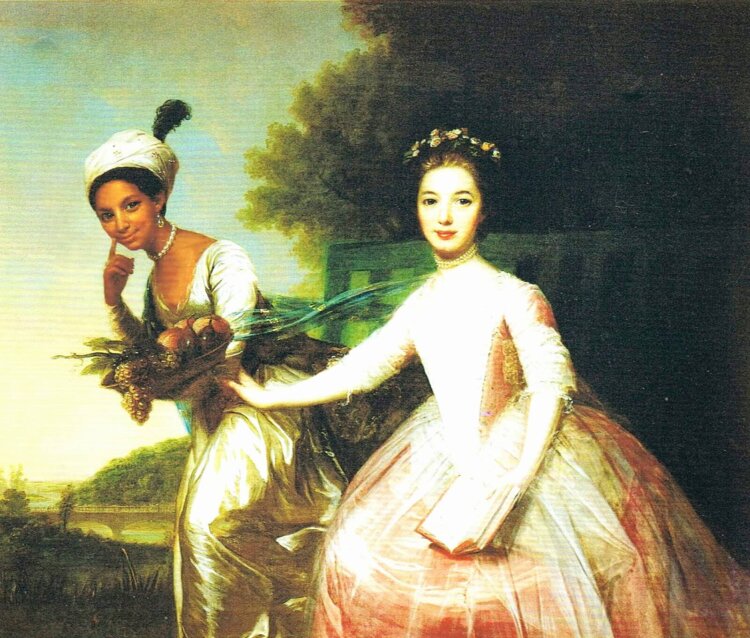
The Woman of Colour, an epistolary novel published anonymously in 1808, is unique, so far as we know, amongst novels of its time in having a mixed-race female protagonist. The heroine Olivia Fairfield is the heiress and illegitimate daughter of a Jamaican planter. She travels to England to marry her cousin Augustus in obedience to the terms of her father’s will and chronicles her experiences in letters to her old governess back in Jamaica. Olivia’s married happiness with Augustus is short-lived because his first wife, whom he thought had died, turns out to be alive. Olivia returns to Jamaica to “zealously engage [her]self in ameliorating the situation, in instructing the minds—in mending the morals of our poor blacks” whom she identifies as her “brethren.”
Since its reintroduction in a modern edition 200 years after its initial publication, The Woman of Colour has been a popular reading choice for university courses focusing on race, class, gender and imperialism. However, some aspects of the story leave readers struggling with the novel’s “incoherence” and “ideological contradiction.” What to make of Olivia’s pidgin-speaking maidservant Dido who proclaims that she was “proud” to be Olivia’s slave? What are we to think when Olivia pines like Scarlett O’Hara for the “placid happiness” and the “calm tranquility” of the old plantation back in Jamaica? Why doesn’t Olivia explicitly call for emancipation? How can she preen herself on being morally superior to Augustus’s cousins, who are London merchants, while she and her new husband are living off the avails of slavery?
The plodding track of cent. per cent. and addition on addition, never suited the taste of Augustus; and, leaving his brother to accumulate thousands upon thousands, he is content to live on the fortune which my father’s will bequeathed to him with his wife. The wise father, and the plodding brother, may laugh, but they cannot persuade him, that a ‘man’s life consisteth in the abundance of the things which he possesseth,’ when the Word of God, and his own heart, both teach him the contrary.
To reconcile these difficulties, scholars turn beyond the text to “consider the invisible, disembodied narratives that haunt the margins of The Woman of Colour.” It is in these invisible and marginal places where they can find readings which sit comfortably within a modern and secular frame of reference. Rebecca Ann Barr describes the story as one which “satirizes the myth of enlightened Englishness and reveals the prevalence of white hostility” and therefore offers “an ideal opportunity for a ‘teach out’: a learning event which analyzes a contemporary problem through an academic text.” Kerry Sinanan reads every male character as weak, corrupt, and despicable, including those whom the heroine loves and admires. The white female characters, even Olivia’s good friend Mrs. Honeywood, are complicit in “white, capitalist, heteropatriarchy.” [1] The editor of the 2008 edition, Lyndon J. Dominique, interprets Olivia as a person who challenges, rather than endorses, the social order. She is a “literal, subversive, and political threat sent to expose the dominant system of prejudice in England and to undermine it by associating with, and re-educating, Britons. Her qualifications for such a task can be found in the erudition of the biblical and literary allusions that fill her tale.”
Indeed, biblical allusions are everywhere in the novel. Olivia adverts to her Christian beliefs over forty times in the letters she sends to her former governess.[2] Her reactions to her experiences in England are all firmly grounded in her religious faith. She conducts her own life in accordance with her religious values; she attends church, ministers to the poor, and asks herself if she is being “unchristian” when she has harsh judgments for the people she meets. When her sister-in-law repents for her malicious behaviour in deceiving Augustus about his first wife, Olivia forgives her. Olivia’s comments about the slave trade are always framed with a Christian perspective, just as in real life, as Mary Turner recounts: “[t]he attack on slavery was formulated in religious terms and, from first to last, practising Christians provided leadership for the cause.”
Yet, as a survey of the literature on this novel shows, Olivia’s self-identification as a Christian and the Christian roots of the abolition campaign receive scant attention as compared to discussions of Olivia’s otherness in English society, her skin colour, or her “Africanized” or “racialized body.”[3] Disinterest could account for this neglect of a theme which is otherwise inescapable in the pages of this novel, but I think a lack of biblical literacy plays a part as well.
Two hundred and twenty years ago, our anonymous author[4] could take it for granted that her readers would readily recognize—and, more importantly, comprehend—Olivia’s biblical allusions and her appeals to Christian doctrine. However, this is simply not the case today in our multi-cultural and secular society. Writing for The Spectator, Gwion Wyn Jones points out that the decline in church and Sunday school attendance means that rising generations are unfamiliar with the bible stories and religious tenets which are deeply embedded throughout our culture. “[W]hat use is a scholar of modern Anglophone history whose ears do not prick instinctively at the KJV’s cadences and inflections, who is unable to spot at a distance an interpolated proverb or an applied parable, even when such things appear disembodied and uncited in profane contexts such as newspapers, diaries, or letters?”
This problem arises, of course, in literature as well. The reader of The Woman of Colour encounters the cadences of the King James Version in the novel’s first pages when Olivia recalls the story of her enslaved mother Marcia, who loved Olivia’s father but who met the romantic fate of a doomed heroine: “Marcia’s was a strong soul, but it inhabited a weak tenement of clay. In giving birth to me she paid the debt of nature and went down to that grave, where the captive is made free!” As Wyn Jones asks, what if students do not hear the biblical cadence in Olivia’s eulogy to her mother: the “tenement of clay,” “went down to that grave,” “captive is made free.” I do not wish to single any one out in this respect, but a few examples illustrate the reality, as with a recent student thesis. The student paraphrases Marcia’s death thusly: “Olivia believes that her mother, Marcia, had a strong soul, but she also believes that it dwelled in a weak body, so in giving birth to Olivia, Marcia died and was buried in the ground, where she was free.” Elizabeth Neiman writes: “Olivia annotates her father’s love story, calling that love ‘captivity.’” She rejects the idea that Marcia could have loved her master and argues that Olivia must be an unreliable narrator who “relays a narrative surely spun by [her father] about Marcia’s love for Fairfield.”[5] She is seemingly unaware that setting the captives free is a Christian idiom representing the belief in salvation and eternal life as a victory over death.
Marcia’s Conversion Narrative
Understandably, Olivia’s testimony that her father and mother loved each other has evoked unease and even denial. Kerry Sinanan feels the tale is “shocking… disturbing… troubling”[6] I would argue that our author’s first readers recognized Marcia’s story as a conversion narrative, a sub-genre of literature aimed at promoting the efforts of missionaries amongst indigenous and enslaved people. As Katharine Gerbner explains, “[w]hile individual narratives differed, there were recognizable patterns in these early modern ‘conversions’; an awareness of sin led to humiliation, repentance, and the hope for God’s grace.” This is how Olivia represents her late mother as she invokes the language of Psalm 42:1: “the soul of Marcia panted” for knowledge “as her understanding became enlightened and her manners improved.” Once she understood that she was committing a sin in having sex out of wedlock, she was horrified and put an end to her intimate relationship with Mr. Fairfield. She then dies after bearing his child.
A much-reprinted example of a conversion narrative, variously titled “Conversion of a Negro” or “The Happy Negro,” appeared in periodical, pamphlet and book form during the 1790s and well into the next century. It recounts a conversation between an English tourist and an enslaved man in New York whose owner “had taught his slaves to read [but had not] conversed with this Negro upon the state of his soul.” As he explains to the tourist:
“I read the [Bible] much before I understand; but at last I felt pain in my heart; I found things in the book that cut me to pieces… God was holy and I was very vile”…
[The narrator adds] In short, he entered into a full account of his conviction of sin… and what scriptures came to his mind… [that] were made the means of light and comfort to his soul… His discourse, flowing merely from the richness of grace, with a tenderness and expression, far beyond the reach of art, perfectly charmed me… my entering into all his feelings… drew streams of joyful tears down his black face.
In another widely reproduced short story, The Negro Servant; an Authentic Narrative of a Young Negro (1804), we are given an extended catechism between a missionary and William, a boy taken captive in Africa and brought to America via Jamaica. After learning to read, William is awakened to: “[m]y sin, my ignorance; me know nothing, me believe nothing. The goot minister made me see, that me think nothing goot, nor do nothing goot.”
The narrator of William’s story uses the vocabulary of liberty, captivity, and redemption to figure salvation as a metaphor for emancipation: “If many [enslaved people] for a time are devoted to earthly slavery, through the cruel avarice of man; yet, blessed be God! That some amongst them are, through Divine Grace, called to the glorious liberty of the children of God and so are redeemed from the slavery of him who makes so many captive at his will.” The “him” the narrator is speaking of is the Devil and he is quoting 2 Timothy 2:26 (KJV): “And that they may recover themselves out of the snare of the devil, who are taken captive by him at his will.”
Conversion narratives also emphasized the purity and ingenuousness of the newly saved converts and therefore black converts served as a living rebuke against white Christians, just as Marcia’s enlightenment is a rebuke to her master who seduced her. Olivia praises her mother’s moral stance as she “abjured a continuance” in sin. “The wild and uncivilized African taught a lesson of noble self-denial and self-conquest to the enlightened and educated European.” In the same fashion, a French novel translated as The Negro Equalled by Few Europeans (1791) makes this challenge: “Of what importance is the name of Christian to [the enslaved], if they are not taught the virtues of Christianity? And how shall they acquire them? By instruction and example. Instruction! They receive none. Example! You know, Europeans, that which you give them!” Lady Nugent, the wife of the governor of Jamaica, noted in her diary that so long as “white men of all descriptions, married or single, live in a state of licentiousness with their female slaves… neither religion, decency, nor morality can be established among the negroes.”
These conversion narratives were presented as true accounts and they correspond with field reports from missionaries in the West Indies. The Methodist Magazine of 1800 account of the “blessed work” in the West Indies described conversion as a gradual process of awakening: “All of these [black converts]… are truly awakened to a knowledge of their fallen state: They have forsaken their outward sins, yea, even the most favourite of all—Polygamy; and are earnestly seeking salvation… they gave an account in their Negro-dialect, of the work of grace upon their souls in its different stages, with as much clearness and perspicuity as any Believer in Europe.”
Slave Trade and Slavery
In The Woman of Colour, Olivia praises her own father for his humane treatment of his slaves. When challenged by her sister-in-law, she says: “the feelings of humanity, the principles of my religion, would lead me, as a Christian, I trust, to pray for the extermination of this disgraceful traffic, while kindred claims (for such I must term them) would likewise impel me to be anxious for the emancipation of my more immediate brethren!”[7] Why is she dividing the two issues—the slave trade and the institution of slavery—with “likewise”?
At that time, as George Boulukos has explained, different degrees of opprobrium were attached to slave-trading and owning slaves. This distinction will not be intuitive for the modern reader but is reflected in other novels of the day. The narrator in Belville-House (1805) ascribes his stepmother’s callous personality to the fact that she was the daughter of a slave trader. The narrator in Old Nick (1801) imagines “that infernal state of mirth and riot which…take[s] place in hell, when a slave-trader breathes his last.” On the other hand, one finds plantation owners presented in a neutral light, as in Fanny, or the deserted daughter (1792), or a sympathetic light, as in Maria Edgeworth’s Belinda (1802) and A Tale of Warning, or the Victims of Indolence (1810). Praise is bestowed on planters who ameliorate the conditions of their enslaved workers, as in A Modern Incident in Domestic Life (1803), or Gretna Green Marriages (1823). A cruel planter is contrasted with a “humane” one in Edgeworth’s The Grateful Negro (1804). Sir Thomas Bertram of Jane Austen’s Mansfield Park berates himself for mishandling his daughters’ education, not for being a planter.
Olivia has one important caveat about her father; although he saw to it that “slaves on his estate were well kept and fed, and treated with humanity… their minds were suffered to remain in the dormant state in which he found them!” She is not merely concerned that her father’s workers lacked intellectual stimulus. His neglect meant they were not given the means to learn the tenets of the Christian faith. This was a critique frequently leveled against planters in real life as Mary Turner noted, “Particular emphasis was put on the fact that, having imposed slavery on the heathen blacks, the slave owners had made no attempt to provide them with religious instruction.” This message extended even to literature for children. In a 1799 children’s book, a wise father tells his children that “[t]hose masters, who neglect the religious and moral instruction of their slaves, add a heavy load of guilt to that already incurred, by their share in this unjust and inhuman traffic.”
This explains Olivia’s emphasis on the need for education and her conviction that “the distributions of Providence are equally bestowed… it is culture not capacity, which the negro wants!” “Culture,” as Olivia uses the term, aligns with the Merriam Webster definition: “the act of developing one’s intellect and morals, especially by education.” This is a broader definition than that employed by Octavia Cox, who is attuned to the assumptions behind Olivia’s remark which modern readers now find patronizing. She writes: “The ‘culture … the negro wants’ is assumed to be English.” Blacks need religious education because, as Olivia declares, “All, all are brethren, children of one common Parent!” Olivia specifically uses the biblical “brethren” because she is signalling her belief that all are equally entitled to the gift of divine grace and salvation, whatever their race or condition.
A Pragmatic Approach
But if the enslaved are Olivia’s brethren, how can she be quiet about emancipation? The answer lies in the pragmatic strategy employed by abolitionists at this time. The Methodists who celebrated their success with Jamaican converts added the jarring note that “their own masters confess that they are the best and most faithful Servants which they possess.” This promise that conversion would render their slaves more docile was a strategy for tamping down suspicion and hostility amongst the planter class toward evangelizing efforts amongst the slave population. If missionaries had openly spread the message of emancipation amongst the enslaved workers, they would not have been allowed to continue their work. Missionaries won support from the planter class for their endeavours by pursuing the line that converts would be more productive, obedient, workers and would marry and raise children. Hewing to this line also enabled William Wilberforce and the English abolitionists to focus first on abolishing the slave trade. According to historian Michael Taylor, during the era in which this book is set, “[e]mancipation had never been the avowed goal of the abolitionists.” Taylor quotes Wilberforce himself as claiming that mass emancipation would do more harm than good: “before [the slaves] could be fit to receive freedom, it would be madness to attempt to give it to them.” [8] Of course, for Wilberforce, as for the missionaries, realpolitik played a part in this disavowal.
“Providence is forever in her mouth”
The middle section of the novel which recounts the period of Olivia’s marriage to Augustus is not concerned with slavery. It follows the pattern of many novels of this era in showcasing the heroine’s virtues as contrasted with the gallery of rogues and fools she encounters in English society. Olivia’s conservative opinions are on display in this section, as in her exchange with the ostentatiously wealthy wife of an East Indian nabob, Lady Ingot. When Lady Ingot complains of the parochialism of English women, Olivia responds with an “Old Testament” quote: “I dwell amongst my own people.” This quote is not given a footnote in the 2008 edition, but it is a reference to the Shunammite woman in 2 Kings 4:13. Olivia is citing a bible story to lend moral authority to her opinion that “[r]etirement seems the peculiar and appropriate station of our sex.” A Korean scholar, Hyewon Ryu, is the only academic I’ve come across who recognized this allusion. She sees this passage as one of many examples of Olivia’s self-identification with British culture and her pride in being “more than half an English woman.” [9] In contrast, other academics have dwelt on Olivia’s otherness or, like Dominique, suggested that she assumes the persona of an English gentlewoman to subvert the social order from within.
I argue that Olivia is recognizably the heroine of a genre described by Anthony Mandal as a “moral-domestic” novel. It differs from the usual sentimental and gothic novels of the period in that it is set more or less in the real world, as opposed to a haunted castle. Its heroine is not a foundling with a strawberry birthmark, but a resolute woman struggling against tribulation. Other authors working in this genre include Hannah More (1745-1833), Ann Raikes Harding (1781-1858), and Barbara Hoflund (1770-1844). Moral-domestic novels were not radical or subversive; they were socially conservative and Christian. There was no contradiction between Hannah More’s social conservatism and her stance as a prominent abolitionist; both were grounded in her Christian convictions. This genre of novel has fallen into obscurity in modern times. Though Hannah More’s novel Coelebs in Search of a Wife (1808) was a huge best-seller in its day, modern readers such as Rebecca Romney find it to be unreadable; it is “self-righteous” and “sanctimonious.” Even in 1808, Olivia’s sententious dialogue in The Woman of Colour struck one contemporary reviewer as being excessive: “providence is for ever in her mouth; she indulges a little too liberal in her use of the Most High, and plumes herself too much on her religious duties, and her quotations from Scripture.”
The heroines of moral-domestic novels did not always get a wedding at the end of the novel. Hoflund wrote about widows struggling to raise their families, Harding wrote autobiographical novels about her own travails. Olivia is also deprived of her happy-ever-after and once again, the religious references in this section have been missed by some scholars. When Augustus’s first wife, a victim of cruel deception, suddenly reappears, Olivia’s servant Dido exclaims: “Oh, accursed, accursed wretches… they that contrived so black a plot!” Dominique, the editor of the 2008 edition, defined “accursed” as “a word used to express strong dislike of, or anger toward, someone or something.” Another scholar quotes the heart-broken Olivia telling Augustus: “I look forwards with faith and hope to that eternally happy state where there is neither ‘marrying nor giving in marriage,’” but she seems unaware of Olivia’s eschatological meaning. She writes: “Seeking a future state where there is ‘neither marrying nor giving in marriage,’ Olivia hopes to find peace; significantly, it is the state of marriage, not just Augustus’s earlier and secret marriage, that seems to be the problem.”
Olivia declines an offer of marriage from her friend Mrs. Honeywood’s son, because her heart will always belong to Augustus. At the novel’s end, she returns to Jamaica, to devote herself to “ameliorating the situation, in instructing the minds—in mending the morals of our poor blacks.” Her plan of action, therefore, seeks to supply humane treatment, education and moral uplift, the necessary precursors to conversion and salvation.
What is the Moral?
When Olivia seeks an explanation for the cruel destruction of her married happiness, she concludes that God is chastising her for loving Augustus too much and making him her “heart’s idol.” She has elevated the things of this earth above God and futurity, so God is sending her a lesson by taking it all away. When she departs the home they shared together, she quotes Luke 12:20—the Parable of the Rich Fool who has stored up his treasures on earth: “Thou fool, this night thy soul shall be required of thee.” She tells Augustus, “[i]t is part of my religious duty to endeavour to resign myself to the all-wise dispensations of the Most High.” He exclaims: “Heavenly, heavenly Olivia!… I could now reverence thee as a beatified spirit!”
Hyewon Ryu sees Olivia’s submission to her fate as the emotional and dramatic climax of the novel. Olivia tells the local clergyman, Mr. Lumley: “I know what is right, and I trust the Almighty will support me in the due performance of it. I had a glorious example in my mother… though an African slave, when once she had felt the power of that holy religion which you preach, from that hour she relinquished him, who had been dearer to her than existence! And shall I then shrink from a conflict which she sustained? Shall I not go on, upheld by an approving conscience, and the bright hope of futurity?” But any reader who cannot accept the Marcia narrative at face value and has no interest in the doctrine of submission to the dispensations of Providence will be inclined to skip over Olivia’s apotheosis.
The religious message is carried through to the Afterword, when the author steps out from behind the curtain, albeit in the persona of the editor of Olivia’s letters. A “Friend” asks her “what do you propose from the publication of the foregoing tale? If your Woman of Colour be an imaginary character, I do not see the drift of your labours, as undoubtedly there is no moral to the work!… You have not rewarded Olivia even with the usual meed of virtue—a husband!” The author/editor responds:
Virtue, like Olivia Fairfield’s, may truly be said to be its own reward—the moral I would deduce from her story is, that there is no situation in which the mind (which is strongly imbued with the truths of our most holy faith, and the consciousness of a divine Disposer of Events) may not resist itself against misfortune, and become resigned to its fate. And if these pages should teach one child of calamity to seek Him in the hour of distress who is always to be found, if they teach one skeptical European to look with a compassionate eye towards the despised native of Africa— then, whether Olivia Fairfield’s be a real or an imaginary character, I shall not regret that I have edited the Letters of a Woman of Colour!
Thus, the author names the importance of “seek[ing] Him in the hour of distress” as her purpose for writing. This is her Summum bonum, her life’s creed, and she mentions it before her plea for compassion for the “despised native of Africa.” It is therefore worth noting that academic discussions of this Afterword frequently elide its explicitly Christian passages. Rebecca Anne Barr leaves out the religious reference when she reports the editor as saying “‘there is no situation in which the mind… may not resist itself against misfortune, and become resigned to its fate.’” Julie Murray quotes the part about virtue being its own reward, then skips to the part about teaching the “sceptical European to look with a compassionate eye,” eliminating all religious references. Olivia Cox discusses the frequent Christian messages in the novel but concludes: “The Editor makes clear that ‘the moral’ of the work is expressly to ‘teach’ the ‘skeptical European’ to be more ‘compassionate’ ‘towards the despised native of Africa.’”
In his introduction to the 2008 scholarly edition, Dominique, like Cox, quotes only the second motive and omits the first, presenting the editor/author’s plea for the “despised native of Africa” as though it were the direct answer to the critique: “What do you propose from the publication of the foregoing tale?” the Friend asks the Editor, “I do not see the drift of your labours.” The Editor replies,
If these pages should teach… one sceptical European to look with compassionate eye towards the despised native of Africa—then, whether Olivia Fairfield’s be a real or an imaginary character, I shall not regret that I have edited the Letters of a Woman of Colour.
He omits entirely the passage about Christian resignation. He omits the phrase about teaching a child of calamity to seek God and goes to the second phrase about compassion for the despised native. When giving his own explanation for the central message of the book, Dominique suggests: “Whoever wrote this long fiction, she (or he) clearly wanted to convey two important points: race is a socially constructed discourse, and fiction should be a means of deconstructing it especially when it relates to gender.” I suggest that the author of The Woman of Colour would need a few moments to even comprehend what Dominique is saying, since it is couched in language that would be entirely foreign to her.
Victoria Barnett-Woods is one of the few scholars who recognizes the centrality of the “Christian position of racial equality” in the novel. Other scholars acknowledge the religious component, but only to accuse the author/editor of insincerity, or at the very least, artistic failure. Deven M. Parker retains the editor’s reference to “Him in the hour of distress who is always to be found” but adds that this assertion has no credibility with her. She writes: “it is difficult to take the editor’s words at face value after she has repeatedly manipulated Olivia’s letters to her purposes… the editor reframes Olivia’s experiences to serve an alternative purpose.” In Parker’s formulation, the author has created a character who wrote the letters but has also distorted and trimmed the letters to turn Olivia into an unreliable narrator and to create a “bitingly ironic” novel which “harshly critiques” England. Henna Messina also uses a truncated version; “Virtue, like Olivia Fairfield’s may truly be said to be its own reward—the moral I would deduce from her story is, that there is no situation in which the mind… may not resist itself against misfortune, and become resigned to its fate.” She suggests that Olivia “cleverly attributes her decision to divine order, but really, Olivia makes the choice” to return to Jamaica. Thus, Olivia’s religious convictions must be a form of window-dressing.
Others find the moral is unsatisfying and hence unconvincing. Joey Kim alludes to the religious component, but comments: “[t]his moralistic ending is rushed and cursory to the point of artificiality.” Joyce Green Macdonald remarks: “[t]he Editor makes their late appearance to imply, with remarks on religious fortitude and suffering Africans, that what we have learned about Olivia—as well as what has been kept from us—is all irrelevant.” She observes that the story’s real focus is on the “baroque extremes of [the sister-in-law] Letitia’s jealousy” which ultimately “deflect[s] the novel’s attention from its portrayal of a transatlantic racial conflict and focus it more strictly on domestic concerns.” “This ending,” writes Conny Cassity, “in which Olivia returns with Dido to Jamaica, has consternated readers and critics, especially those hoping to find in Olivia a prototype for modern depictions of race and racial critique.”
I happen to agree that The Woman of Colour is a mediocre piece of writing at best. This is not because I hope it means something other than what it says. I think our anonymous author was a woman who believed Christians had a moral imperative to spread the gospel. Her cultural frame of reference was one in which Europeans were called upon to educate, civilize and convert the heathen. She adhered to a school of thought which Markman Ellis describes as one which “particularly urg[ed] the desirability of conversion and legitimate marriage and the amelioration of the slave trade.” Her heroine is confident that English benevolence will lead to the abolition of slavery:
England is, sure, the favoured isle, where benevolence has taken up her abode! Here she dwells, here she smiles, while, towards my native island, she turns her “far surveying”, her compassionate eye. She descries the sufferings of the poor negro, and promises benign assistance.—Yes! The cause of Afric’s injured sons is heard in England; and soon the slave shall be free!
I argue that the textual evidence, particularly the author’s adaptation of the conversion narrative, supports the conclusion that The Woman of Colour was written by an English gentlewoman who, like Hannah More, critiqued her society and its complicity in slavery, but was not a radical. Her goal was not to subvert, threaten, or undermine, but to reform England and her empire. Analyzing The Woman of Colour or using it in the classroom without explicating—I do not say endorsing—the religious beliefs that guide Olivia is like describing Da Vinci’s Last Supper as a dinner party where some tension arose. The novel’s frequent allusions to Christianity should alert scholars that these references bear upon the meaning of the text, regardless of the scholars’ own familiarity with, or interest in, the biblical allusions or doctrines involved. When we look at The Woman of Colour within its historical and cultural context—when we, in fact, read the text—we accord the author the respect of recognizing her biblical language and taking her stated motivations and beliefs seriously, however poorly they may align with modern sensibilities.
Endnotes:
[1] For example, see Barr, Rebecca Anne, ‘From Romance to Decolonial Love in The Woman of Colour —A Roundtable on The Woman of Colour (1808): Pedagogic and Critical Approaches,’ Studies in Religion and the Enlightenment, 2 (2021) 41-44; Murray, Julie. Murray, J. (2014). “The Country and the City and the Colony in The Woman of Colour.” Lumen (Edmonton, Alta.), 33, 87–99. https://doi.org/10.7202/1026566ar; Sinanan, Kerry. 2024. “Violent Intimacies: Women and White Supremacy in Imperial Intimacies and The Woman of Colour.” Romanticism on the Net, no. 82. https://doi.org/10.7202/1124047ar.
[2] Calculated with the assistance of ChatGPT. The author has posted an appendix at her website which lists Olivia’s many religious references: www.lonamanning.ca.
[3] For example, see Brody, Jennifer DeVere, Impossible purities: blackness, femininity, and Victorian culture, Duke University Press,1998, 23; Yu, Daniel, “August Disgust: Distinction, Disinterest, and Race in The Woman of Colour.” Eighteenth Century Fiction, 35, 1, Jan. 2023, 103; Steiner, Enit Karafili, “Lessons of Skin: Cosmopolitan Solidarity in The Woman of Colour.” Women’s Writing 27.1 (2020), 54; MacDonald, Joyce Green, “Interracial Sex and Narrative Crisis in The Woman of Colour,” Eighteenth-Century Fiction, 35 (2023) 80, https://doi.org/10.3138/ecf.35.1.65; Dominique. Lyndon J., introduction to The Woman of Colour, Broadview (2008), p. 25; Jarvis, J. Ereck, “Olivia’s Kingdoms: Corresponding with Carby’s Imperial Intimacies in The Woman of Colour,” Romanticism on the Net, Spring 2024; Fernandes, S. and Coleman, D. “‘Embronzed with the African Tint’: Racial Color-coding and intergenerational inheritance in Jamaica, St. Domingo and England in the Age of Abolition.” European Romantic Review, 35 (2024) 70.
[4] In my article “A Possible Identification of the Author of The Woman of Colour,” Notes and Queries, 2026;, gjag115, https://doi.org/10.1093/notesj/gjag115, I lay out the case that the author is Gertrude Stafford Smith (1781-1851), an English gentlewoman from a family of high-ranking clergyman and church musicians.
[5] Marcia’s story includes the added sentimental gloss of the noble savage—literally noble, because Marcia is an African princess—who meets with a romantic death. The trope of the doomed interracial romance between the white man and the spiritually pure native survived well into the 20th century with movies such as Broken Arrow (1950), Green Mansions (1959), and the Star Trek episode “The Paradise Syndrome” (1968).
[6] Kerry Sinanan, The Woman of Colour with Prof. Kerry Sinanan,” Bonnets at Dawn podcast with Lauren Burke and Hannah K. Chapman, S. 4.4. ep. 2, from 4:40.
[7] In tortuously-worded academic essay about “tranimality” which expounds how a simile comparing slaves to horses “recognize[s] alternative humanisms that honor the intersectional alignments of Blackness, animality, and disability,” Jeremy Chow thinks that Olivia uses the adjective “kindred” in “kindred claims” to refer to “her white paternity… kin are understood as whitened and ‘my more immediate brethren’ become Blackened and enslaved.” The article does not engage with the Christian context in the novel.
[8] Taylor, Michael. The Interest: How the British Establishment Resisted the Abolition of Slavery. United Kingdom: Random House, 2020.
[9] Ryu, Hyewon, “I dwell amongst my own people!”: The Reconfiguration of Britishness in The Woman of Colour, Journal of English Studies in Korea 44 (2023): 137–162, DOI: 10.46562/jesk.44.5.


Related Posts