The Gothic Inversion: Why Anne Rice’s Vampires Can Lead Young Adults Into Deeper Faith
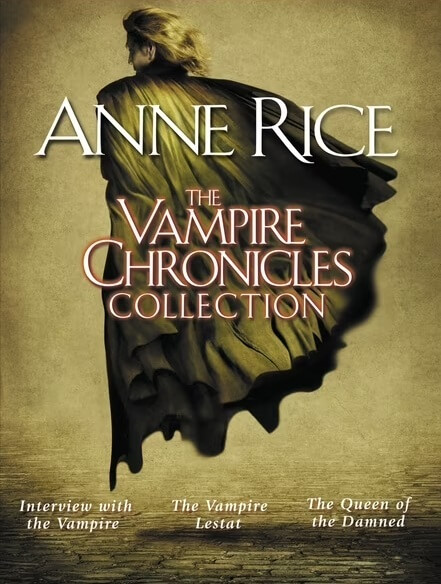
Growing up Catholic, I always felt that I was strange because I secretly had a love for all things spooky and gothic. I was especially drawn to the vampire myth. I loved the dark, brooding gothic aesthetics of vampire literature, particularly Anne Rice’s Interview with the Vampire. After getting a Bachelor of Arts in Theology and Anthropology at Franciscan University of Steubenville, I fell in love, all over again, with the beauty and sacraments of the Catholic Church. I also learned about humans, particularly modern humans, and their desire for beauty and endless time. They also have this existential longing. My studies led me to the realization that the gothic aesthetic of vampires and the Catholic Church are not at odds with each other and that it is okay to read Anne Rice’s Interview with the Vampire. By highlighting the Inverted Baptism, the Anti-Eucharist, the Undead Resurrection, and the existential longing within Anne Rice’s Interview with the Vampire, I will show that reading this with a sacramental lens can deepen a young adult’s faith as it is a “dark mirror” of the sacraments of the Catholic Church, the Resurrection of the Body, and one’s existential longing for God.
Holy Baptism is defined as “the gateway to life in the Spirit,” through which “we are freed from sin and reborn as sons of God; we become members of Christ, are incorporated into the Church and made sharers in her mission” (CCC 1213). To Baptize is to “plunge” into water, which “symbolizes the catechumen’s burial into Christ’s death, from which he rises up by resurrection with him, as “a new creature”’ (CCC 1214). In Part I of Interview with the Vampire, the vampire, Lestat, drains Louis “to the very threshold of death” (Rice, 18-19). Here Louis is “plunging” into dark “water” of death. Then Lestat bites “his own wrist” and presses it to Louis’s mouth (Rice, 19-20). After Louis drank, he “saw as a vampire” (Rice, 20-21). It was as if he “had only just been able to see colors and shapes for the first time” (Rice, 21). Louis is going through a rebirth. He died “as a human,” yet he is “completely alive as a vampire” (Rice, 21). This Inverted Baptism is a “dark mirror” of Holy Baptism, but instead of Louis being Baptized in Christ, he is Baptized into the undead. Instead of being a child and follower of Christ, he is a child and follower of his own predatory desire for blood.
The Blessed Sacrament of the Eucharist is the real body, blood, soul, and divinity of Jesus Christ (CCC 1374). In it, the “consecration of the bread and wine there takes place a change of the whole substance of the bread into the substance of the body of Christ our Lord and of the whole substance of wine into the substance of his blood” (CCC 1376). This is properly known as “Transubstantiation” (CCC 1376). A similar event happens when Louis makes his first kill, his First Communion. When Louis sinks his teeth into the man, he could hear the “drumbeat of his heart,” which “beat in perfect rhythm” with the drumbeat of Louis’s heart (Rice, 30). The blood of the man passed into the blood of Louis (Rice, 30-31). During the drinking of blood, there is a real, physical transformation. The essence of the man is being assimilated into Louis. This Anti-Eucharist is a “dark mirror” of the Blessed Sacrament of the Eucharist because the substance of the man becomes the substance of Louis. Just as the Blessed Sacrament of the Eucharist is the ultimate experience for the Christian, the killing and drinking of blood is the “ultimate experience” for the vampire (Rice, 29).
The Catholic Church firmly believes that the “dead will rise” (CCC 997). When death happens, there is a “separation of the soul from the body, the human body decays and the soul goes to meet God, while awaiting its reunion with its glorified body” (CCC 997). God will “grant incorruptible life to our bodies by reuniting them with our souls, through the power of Jesus’ Resurrection” (CCC 997). We will all “rise at the last day” (CCC 1016). Our resurrected bodies will then be incorruptible and glorified. In Interview with the Vampire, the body of the vampire, Claudia, is incorruptible but it will never be glorified. Claudia’s body, just like the bodies of Louis and Lestat, will never grow or change (Rice, 100). Claudia’s body will remain a child’s body forever, but her mind and spirit will “move towards womanhood” (Rice, 100). Louis saw that “more and more her doll-like face seemed to possess two totally aware adult eyes, and innocence seemed lost somewhere with neglected toys and the loss of a certain patience” (Rice, 100-101). This is a tragic mismatch of a woman’s mind in the body of a child, who is akin to a “magic doll” (Rice, 101). This Undead Resurrection is a “dark mirror” of the Resurrection of the Body. The vampire is raised from the dead in an immortal body, but the body is not glorious, but an inescapable prison.
In Confessions, St. Augustine says his famous quote, “The thought of you stirs him so deeply that he cannot be content unless he praises you, because you made us for yourself and our hearts find no peace until they rest in you” (Augustine, 21). This is true, especially for Louis. Louis’s heart cannot find peace because it has been separated from God. Louis speaks with the vampire, Armand, to try to get theological answers (Rice, 232). Armand asks Louis, “Do you believe that Satan made this world around you?” (Rice, 232). Louis answers, “No, I believe that God made it, if anyone made it. But He also must have made Satan, and I want to know if we are his children!” (Rice, 232). Armand replies, “Exactly, and consequently if you believe God made Satan, you must realize that all Satan’s power comes from God and that Satan is simply God’s child, and that we are God’s children also. There are no children of Satan, really” (Rice, 232). Louis refuses to accept the world without God. He wants to know whose child he is. Yet, his heart is restless because he is an immortal wandering the earth. His existential longing for God is a “dark mirror” of one’s existential longing for God. Louis’s existential longing turns to dread because he is spiritually cut off from God, the Father, the Source of all peace, happiness, and goodness.
By reading Anne Rice’s Interview with the Vampire with a sacramental lens, a young adult’s faith can deepen because the Inverted Baptism in the novel reveals the powerful transformation of the rebirth. The vampire is reborn into a bloodthirsty monster, but the Christian is reborn into a child and follower of Christ. Through the Anti-Eucharist, the novel reveals that the change of substance is real. The substance of a mortal becomes the substance of the vampire who feeds on the mortal. This shows the young adult Christian reading the novel that the change of the bread and wine is the real transformation into the Body, Blood, Soul, and Divinity of Jesus Christ. Through the Undead Resurrection, the novel reveals that the dead do rise. The young adult’s faith can be deepened by connecting the Undead Resurrection of the vampire, Claudia, with the real, glorified Resurrection of the Body. While a vampire’s body is an inescapable prison, the glorified body of the Christian is free in the glory of God. The existential longing of Louis reveals that the creature longs for its Creator. The young adult’s faith can deepen by reflecting on Louis’s longing and realizing that the Christian has the hope of one day coming back to God. It is important that those who love Gothic literature make these connections so that they can see the light through the darkness.


Related Posts