Gnostic Fools Make Our World
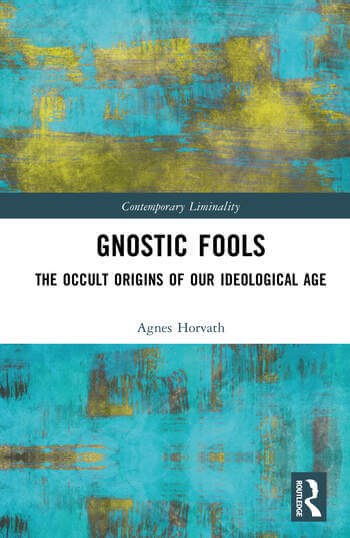
If the reader has grown weary of waking up to the sound of the same old dusty drumbeats of contemporary politics playing the usual ideological tunes of liberal democracy, capitalism, rationalism, progress, technology, modern science, totalitarianism, or globalization (to name just a few), they have come to the right place. It is not that such notions aren’t essential in capturing on-going historical developments but a lot of what they refer to is implicitly subsumed by Agnes Horvath’s book to the action of Gnostic Fools. Indeed the main thesis emerging from this volume is that the modern, contemporary world – our age of ideology – is chiefly the creation of gnostic fools. Alone from this opening the book’s magnitude, complexity and extraordinary originality and importance should be immediately recognized.
What gnostic fools are about becomes clear from the very first pages. In a few wonderful lines delineating the scope of her enterprise, Horvath juxtaposes fools to poets, both of whom appear as perennial and antagonistic types: “Fools and poets represent the conquest of the void. They are its empty vessels” (xiv); yet this comes with a catch: “the genuine void – the poet’s void…– its gratefulness, innocence, benevolence, kindness, modesty, and marvelous, playful nothing-to-do-ness, the Stimmung,…was transformed into wanting ideology and necessity” (xv). The responsibility for the existential assassination of the poet in the modern and contemporary world is assigned to the dominating influence of specifically gnostic fools. The transformations this entailed have to do with a world of simulacra and duplications where the gnostic fools’ games with the void and infinity create the all-consuming chimeras of incommensurable and artificial objects. Horvath sets out to trace this spiraling evolution along three waves, starting with the advent of Gnosticism in the first few centuries AD in the context of a waning and declining Hellenism (referred to as the Greek-Romans, or the “Hellenes” and the classical phase of their culture), and continuing with the Middle Ages and the Early Modern period.
Following up on Voegelin’s famous thesis regarding the gnostic nature of political modernity formulated mainly (but not only) in the New Science of Politics (1952), Horvath’s book brings a most significant enrichment to the discussion. Maybe the best manner to illustrate how this is achieved is by referring beforehand to an exchange between Eric Voegelin and Hannah Arendt on the margins of Voegelin’s review of the latter’s Origins of Totalitarianism. At said occasion – it is January 1953, therefore only a short-while after he finished his freshly published book on modern Gnosticism –, Voegelin puts forward two key diagnoses regarding the contemporary crisis. The first refers to the peculiar point of global unification: “What no religious founder, no philosopher, no imperial conqueror of the past has achieved – to create a community of mankind by creating a common concern for all men – has now been realized through the community of suffering under the earthwide expansion of Western foulness” (68); whereas in the second he claims that the “true dividing line in the contemporary crisis does not run between liberals and totalitarians, but between the religious and philosophical transcendentalists on the one side, and the liberal and totalitarian immanentist sectarians on the other side” (75).[1]
It is in-between the sharp ridges of these comments that Horvath seems to thrust her archaeological explorations with decided power, providing for highly inspired, captivating and novel elaborations on ancient and modern Gnosticism. For once, Voegelin’s world-wide “community of suffering” is conceptualized in terms of “oneness”, or the “One” / “Hen” / “Monad”, as well as “metaphysical monism / monotheism”, and also as their political reflection in symbols like “universal kingdom” and “divine monarchy”. This analytical cue is absolutely essential as Horvath connects the One to Gnosticism and both to magic, pinning down the roots of gnostic fools in occult Oriental religious practices and sacrificial rituals, especially of Persian extraction (i.e. the Magi caste).
One of the main early culprits in these developments is identified at the level of (proto-)Gnostic thought in Philo of Alexandria – the “prince of lies” – whose metaphysical speculations on the Logos and the One are analyzed as corruptions of Platonic philosophy, especially concerning Plato’s second part of Parmenides. While discussing Philo’s system and Neoplatonic thought, mainly Plotinus, Porphyry, Iamblichus or Proclus, Horvath’s arguments bring to the surface a conceptual-theoretical scheme of general validity concerning Gnosticism and its history.
In this account, the Gnostic One is a kind of cognitive doubling or duplication that substitutes God as active principle (as in Aristotle) by throwing over it the artificial net of transcendental virtuality and metaphysical inoperativity. The Gnostic machination results in divine impotence and hiddenness engendering the need of an organized class of ritual specialists in divinization who manipulate divine favors and especially the souls of the dead (for example Philo’s class of priests). This in turn effects ideology defined as “a body composed of doctrine, myth, and symbols, with a reference to some plan, along with the procedures for putting it into operation“ (102) and ideological-organizational structures in politics, philosophy and religion under the immanent shadow of a remote and world indifferent One. Closing the circle, such structures generate the recurrent return of the One, especially in times of confusion, in its various historical-political forms under the aegis of saving magic and the occult. The existential consequence of this chain of interactions is a paralyzing alienation from life and a correspondingly senseless attraction towards vacuous universalism or universal unification, the afferent suspension of concrete spaces and times, and stasis. At once underlying and amplified by all of this is the ruling nihilism of gnostic fools so characteristic of the modern presence in the world.
Implicit in this analysis is the claim that Gnosticism – just like magic – destroys active principles and substances, devalues the natural compositions of matter and form whilst creating a paradoxical spiritualization of matter, tempers with our perception (a topic that receives significant attention) and knowledge of the world, and thus obliterates a proper relation between man’s soul and reality. To sustain these claims, Horvath constantly returns to classical authors from ancient Greece and Rome, Plato and Aristotle (especially his Metaphysics) being in fact some the most quoted sources in the book. The continuous dialogues with them are not a futile display of erudition but follow a well conceived goal that clearly lies at the author’s heart: to steer away from the Gnostic deformations in Western culture and retrieve the lost spirit or ethos of the Hellenes, their relation to life and death.
In Horvath’s words, “logos lies not only in grace, rhythm, measure but also in the manner it is expressed and used, spelled and articulated; it must be lived through, to make it real” (46). Further, it “is a declaration of the quality of the mind…not a symbol that only this or that is seen or heard”. As such, “logos is far away from ideology…dogmatic constructions, abstractions and other meaningless things”. It is is an “active principle” made “for acting with and upon difficulties. Whoever is missing this, taking it for an abstract non-place, without present and future whatsoever, is a fool.” Logos renders reality to the soul by bringing it in the full possession of what the author calls “inner power”: “this is why power is not connected to being per se, except as it is worked out, elaborated in the possession of life. One must endure fatigue and pain to gain a right perception and living, embracing life as being and never happening anymore, an extraordinary, ecstatic event of being in the world“ (47).
As the reader has already realized, the background and foreground to the author’s analysis of ancient, medieval and modern Gnosticism is a profoundly Nietzschean ethos as the study becomes the occasion for the rebuttal of certain types of philosophical and religious-magic transcendentality tout court. It is in this context that the second of Voegelin’s comments on the contemporary crisis demonstrates its relevance for understanding the book. In addition to expanding the discussion with contributions regarding the infiltration of Western philosophy, religion and politics by Gnostic fools and their magical-artificial forms of thinking around the One, Horvath’s work also substantiates a more differentiated image than Voegelin’s straightforward gulp between religious and philosophical transcendentalists on the one side and Gnostic sectarian immanentists on the other.
This is not a coincidence as underneath the avowed immanentism of the contemporary world Horvath senses with rock-solid inspiration and clinical precision a covert perversity: an all-suffocating transgressive transcendentalism that spiritualizes matter and dematerializes the world, with roots in the Gnostic mind-set of magic and the occult. It is here that the reader also enters the most nevralgic aspect of the book, when the author deals with the torturous relation between (historical) Christianity and Gnosticism. The result is an almost wholesale revolution of values from the standpoint of the religious and political history of the post-Hellenic Western world.
Accordingly, in taking over Porphyry’s language Saint Paul is presented with a “transgressive mind” (99) deserving nothing else than “mild laughter” (96). Nearly all of the mentioned Church Fathers cut likewise a poor figure, being treated mostly as Trojan horses of Oriental Gnosticism. The emerging Christian hagiography around saints and martyrs is meant to convey ideology and reflects a style lacking the Hellenes’ grasp of a “world felt and sensed as real” (94). Further down the road, Dante’s poetry in Divina Comedia becomes a sample of nihilistic art, a macabre obsession with the souls of the dead in a general context of religious psychosis that is very alien to the Hellenes. Similarly, Acquinas’ discourses on divine monarchy are tainted by the gnostic-magical thinking of Averroes and Avicenna (much like Dante’s thoughts as well), while Saint Francis is a holy fool – most extraordinary, expounding the intrinsic ambivalence of the system and restoring grace – but a fool nevertheless.
Gothic cathedrals are alluded to – with a faintly veiled sense of humor – as churches with “hysterically elongated walls”, the symbol of “fear” and the “defeat of reason” (160). Not least, the Middle Ages were a time “when people felt…hunted down by the soul-hunting forces of the Church – violent, invisible powers”, constraining them to hide and seek refuge “behind strong, low walls without openings” (160). The image of a deeply melancholic European Christianity emerges at this point as ”the pain was present in the medieval world – in its town and churches – the menacing, threatening pain of the torture of souls, but also the pain of the absence of the world” (161).
The only Christian figures who remain wholly unscathed in the treated material are the Cappadocian Fathers who birthed the Nicene Creed of the Trinity: Basil the Great, Gregory of Nyssa and especially Gregory of Nazianzus. By fending off various Gnostic and Arianist heresies, their Trinitarian Christology succeeded to defeat, at least for a while, the infiltration in the West of the Gnostic One with its compulsion for universal political, mystical unification (mostly through analogical divine monarchies).
If one looks at the more institutional-political developments in Western European Christianity, these too are firmly embedded by Horvath within the ebbs and tides of Gnosticism. The issues at stake are substantial as well as symbolic. The Holy Spirit that dwells in the temple of the body and the Christian idea and practice of the mystical union in the body of Christ are both following the Gnostic logic of the unification in the One and are underlying the formation of the ekklesia (147). The latter is a political community that eliminates the household and puts forward „a priesthood based on pain and sacrifice…which is a logic opposite to that friendly, pleasant Hellenic alliance between man, his oikos, and his polis“ (148).
While the High and Late Middle Ages present a precarious balance between the temporal and spiritual powers, the Early Modern period decisively inclines the balance towards secular power, already visible in Dante and later in Machiavelli. Secularization thus appears as a most paradoxical phenomenon in which the gradual immanentization of Christianity is linked with the unleashing of the Gnostic One in the mystical union of public bodies (151), as exemplified initially by the rising modern monarchies of divine right and the all but complete overlap between Church and State achieved during the Reformation. The Church gained in this context a new task: “to invest an originally divine authority in the person of the king” (150). Implicit in this process of secularization is also the receding of the Trinitarian idea of the Church, which can be seen not only in the advent of a new politics and philosophy but also in modern science (Hobbes, Bacon, Newton etc.)
The provided account thus differs from Voegelin’s discussions of the gradual de-divinization of politics and re-divinization of society, the relation between politics and society being instead seen as a symbiotic whole, a Gnostic One. This mystical unification of public bodies demonstrates for Horvath a profound infiltration of magic and the occult that did not stop with the monarchies of divine right, but found ever new outlets in the constitution of the modern state, the reason of state, but also in the idea of the people, not to mention the latter totalitarian revolutions. Central to this process is also the way in which the Christian and Gnostic ideas of ‘representation’ were carried over in modern politics.
In other words, the book is offering a perspective on Gnosticism that has little to do with the more customary views found especially among Christian narratives regarding the ancient and newer battles between Christianity and Gnosticism, and recounts instead a highly ambivalent story about their exceedingly ambiguous entanglements. None of the aforementioned judgements are conveyed light-heartedly by Horvath, or out of a frivolous desire for épatage so typical of modern artists. Quite the contrary is the case, a certain saddened sobriety transpires through the lines of the book. At the same time, the analysis is moved forward with the intellectual integrity of a thinker who has decided to put all her fruits in the basket of classical Greek philosophy as opposed to revelation religion, and who refuses (like any good genealogist worth her salt) to be swayed by aesthetizing considerations of the past or the future. From this point of view, the achievements of European Christianity and the latter’s yearning to bring together Greek reason and Christological faith are at the very least downgraded, if not entirely rejected.
Two important consequences follow from this. The first is that historical Christianity may be finally looked at in a thoroughly disenchanted way, much like the Roman outsider Celsus, as just another (rather absurd) story in the history of magic, necromancy and theurgy, which in turn explains the second consequence – that no real attempt is made in the book to separate the waters between Christianity and Gnosticism. The reader may therefore be at times under the impression of reading about the history of Christianity while formally following a theoretical analysis on Gnosticism. Here one can legitimately wonder if something is missing or not, and ponder on the fact that just as different things have similar meanings, resemblance among objects may also indicate the existence of different meanings. This could apply even more so to Gnosticism, precisely due to its parasitic, occult, and highly adaptable and syncretic cultural form, which makes the confluences between historical Christianity and Gnosticism in themselves a mysterious puzzle.
At the same time, it is clear that the incorporation of such a discussion would have exploded the scope and limits of a book that already integrates, as it is, a tremendous richness of material. Moreover, the choice of sinking the matter is sensible enough: if the goal is to restore an authentic sense of Greek philosophical transcendentalism, and of the Hellenes’ civility and art of convivium as living “together in practicing civic pleasures” (6), then the declined argument is a minor issue. Yet for those who are not exactly persuaded of throwing over the board two thousand years of Western Christianity, additional thinking will need to be done. In this sense, some unresolved tensions remain at the heart of the book. Philo’s fabrication of the One and the resulting instrumentalization of an embodied Logos are not the same with John’s “the Word became flesh and lived among us” (John 1:14) – or rather, this really is the contended issue. And if by any chance they are the same, then the heart of Christological teaching in the Nicene Creed could be taken instead as just another instance of Gnosticism – but this would not sit well with the provided analysis of the One.
On this latter issue the book allows a great deal of latitude of interpretation, and engenders highly fruitful, challenging and possibly unpleasant questions. No contemporary thinker with Christian sensibilities should ignore the book’s underlying critique of religious (and mainly) “monotheistic” transcendentality and the abyss it may open towards Gnosticism, magic and the occult. Particularly important here are also the highly complex crossroads between modern and ancient gnostic movements on the one hand, and the Christian apocalyptic and salvation ethos on the other hand. The recurring idea of a universal monarchy that “survives as a ghost behind the Christian dream of the universal rule of Christ” (202) is equally significant as point of reflection.
In the end one might ask: who are the gnostic fools? As the analysis advances, Horvath is circling back to this question throughout the book, again and again, trying to put a lasting pin on a paradox that refers to something that exists but has no reality as it lacks property in an Aristotelian sense (1-2). One of the many significant responses she offers is that the Gnostic fool represents a “non-being with the possession of theurgic knowledge, as he accepted the magical side of religious theurgy with the aid of a theology dealing with the nature and means of salvation” (95). A full inversion of Christianity for Gnostic purposes seems to have taken place here. Without going any further, I will leave this question open as an invitation to the reader to look for their own answers by engaging, from cover to cover, with what is a most fascinating and deeply thought-provoking work.
The book finishes with a fitting commentary on ten engravings from Sebastian Brant’s Ship of Fools from 1494, which was probably (and unfortunately) moved by the publisher from the last chapter into the Appendix. The date is significant as it is right on the cusp of the modern world, ushering the ship of fools into it. Moreover, it lies only two years after Columbus’ discovery of the Americas and forty-one years after the fall of Constantinople. Both are extremely relevant events for us as they point towards the magic of the One progressing on water and land: Columbus instantiates this advance through the drive for global limitlessness and unification, while the fall of Constantinople – the real hinge between the Orient and Occident – marks the switch from Christian Trinitarianism to one of the many types of transcendentalism of the One.
It is therefore vital to return to the beginning of this review and emphasize once more that Horvath’s book is not merely an exploration in the history of Gnostic fools but also an extremely significant tool for understanding the present. From the magic-like unification through digital virtuality and artificial intelligence to the various authoritarian-totalitarian regimes worldwide, from globalization and modern science to the dystopian projects of modern humanism and trans-humanism, from total surveillance and control to security, health or cosmic space, the specter of the Gnostic One seems to press on our minds like the ghost of an old demon or a new god.
On this last note, Gnostic Fools also speaks to the dramatic crisis of identity sweeping across our Western cultures, inserting itself in a time with many torments and few answers. Horvath’s resolute response to this crisis is a heartful plea for the political and spiritual re-Hellenization of the West, or at the very least for a renewed Hellenization of our Christian civilization – something that is very much worthwhile thinking about hard and earnestly. The book is thus as timely as it gets and one can only hope that it will spark further interest and research.
Gnostic Fools: the Occult Origins of Our Ideological Age
By Agnes Horvath.
London: Routledge, 2026; 246pp.
NOTE:
[1] Eric Voegelin (1953) “The Origins of Totalitarianism”, The Review of Politics, Vol. 15, No. 1, pp. 68-76.


Related Posts