The Inventive Wickedness of the Ultimate Tyranny: Leo Strauss vs. Carl Schmitt
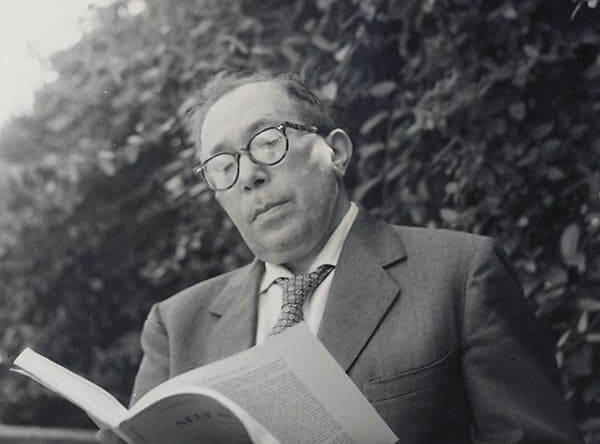
Amongst the strange bedfellows of history, a most unique relationship occurred in the immediate lead up to the rise of Adolf Hitler and Nazi Germany. This relationship was the exchange of ideas that occurred between Carl Schmitt and Leo Strauss, whom Schmitt, the to-be “crown jurist” of Nazi Germany, referred to as the “Jewish man of learning.” It was through the mutual sharing of Strauss’s works on the political theory of Thomas Hobbes and Schmitt’s early editions of The Concept of the Political that they developed a relationship of respect, with Schmitt using Strauss’s feedback to craft later edition expansions to The Concept of the Political.
This resulted ultimately with Schmitt writing in 1932 one of the two evaluation letters for Strauss’s application to the prestigious Rockefeller Fellowship, which got Strauss out of his homeland to France and England only months before Hitler’s rise to power. Within a year of Strauss obtaining the fellowship, Schmitt joined the National Socialist Party in May 1933, and their contact dried up forever. Strauss shortly returned only once to Germany 20 years later in the 1950’s, meanwhile Schmitt notoriously never denounced the Third Reich and the Nazi Party, nor the splattering of antisemitism that can be found throughout his works, even until his late death in the 1980’s. For these two, this was a peculiar relationship born out of an intellectual respect that defied both the times and the inclinations of both men.
But while their official contact dried up and seemingly no cross-pollination of ideas took place from here, there is a section within Strauss’s most well-known work that he returns to one of the central concepts of his old colleague, without once naming him directly. It’s within the closing pages of his chapter “Classical Natural Law” within Natural Right and History that Strauss shadowboxes with Schmitt’s ghost over his central concept of the state of exception, in a most characteristically Straussian manner at that as well. This is worth a detailed close reading, as Strauss homes through the teaching of Aristotle that the exception is to be found even within the classical natural right tradition itself! This matter then digs beyond and under modern natural rights and positivist laws, and as we shall see through Strauss’s own characteristic style, deems the resultant outcomes from all this as sad and unfortunate, requiring a turning of the eye from their full consequential implications. We will, of course, in the end go where Strauss refused to go on this.
In pivoting from his treatment of Plato to that of Aristotle, whom he characterizes as a sober idealist whose way of politics is adapted to times of normality (as compared to Machiavelli, a cynic who relishes times of extremity), a politics that breaks from the philosophical transcendental “divine madness” of his teacher, Plato. From this is Aristotle’s first major assertion, in that there are various other levels of just being and living within society other than the philosophical life, by which Aristotle breaks on the issue of natural right within the Nicomachean Ethics in that there is either “no fundamental disproportion between natural right and the requirements of political society, or there is no essential need for the dilution of natural right… A right which necessarily transcends political society… cannot be the natural right to man, who is by nature a political animal.” For Aristotle natural right is simply what is part of political right through the web of being via relations and groupings amongst fellow-citizens, rather than a metaphysical form beyond the grounded affairs of men. It’s upon this that the or statement of the immediately preceding passage hangs upon, for if there is a well-proportioned relationship between natural right and the requirements of political society, the dilution of natural right is not needed.
But under what circumstances of disproportion would natural right need diluted? From this stems what Strauss argues is Aristotle’s second assertion, in that natural right is changeable. Aristotle does not make any distinction like that of Thomas Aquinas, who in deriving natural law from divine law held it to be immutable, made the distinction that there are specific civil rules of men that are in fact mutable. It’s in relation to this that the Aristotelian traditions of Averroes and Marsilius which respectively held natural right to be “legal natural right” or “only quasi-natural,” being dependent on “human institution or [ubiquitous] convention.” It’s from this that the rules of civil society, even when universally upheld, are still fundamentally conventional, as Strauss brings home the point that “civil society is incompatible with immutable rules.” The reason for this that the baseline for these rules is the circumstance of normality, of social tranquility. Consequently, it’s under certain other circumstances that require the disregarding of these universally held rules for the pure preservation of society itself. Strauss ties this up in that it’s for pedagogic reasons that society must dress up its rules which are only generally valid as universally valid, requiring “all social teachings [to] proclaim these rules and not the rare exceptions,” a complete rephrasing of Schmitt’s state of exception without directly invoking the thought of Schmitt at all. The validity of such general rules are built upon not teaching any qualifications or exceptions to them, without any “ifs or buts,” which if done so, exposes them as universally untrue or unqualified, and nothing more than conventional right. The final consequential conclusion of this is that under natural right, all rules of justice are therefore mutable. Strauss cautions here, in that this view of natural right derived from Averroes and Marsilius, isn’t entirely Aristotle’s view, as this view “implies the denial of natural right proper.” Strauss laborers from here to find a middle route, and in doing so further continues to shadowbox with Schmitt’s ghost.
Strauss focuses here in that Aristotle did not uphold natural right of general propositions but instead concrete decisions, decisions linked with varying particular situations. A peculiar law then may end up to a higher degree being more just than a general natural law because of its ability to meet the needs of a given country and given time, for the very generality of the natural law “may prevent a just decision” in such a given case. That every conflict can be justly resolved upon a concrete decision regarding its circumstantial situation is the very consistent basis of natural law, entailing its own mutability under certain specific situations, in which its general principles of commutative and distributive justice are still presupposed and implied, according to Strauss. It’s from this with such principles of commutative and distributive justice that Strauss ponders why Aristotle holds them and natural right as a result to be changeable, along with natural rights residence within concrete decisions over general rules?
It’s from this that Strauss pinpoints that commutative and distributive justice are not totally encompassing of what is just, in that they are preceded by the larger common good as what is just, which while usually including them within its conception of what is just, also goes beyond them. The common good goes beyond them in including the matter of “mere existence, the mere survival, the mere independence, of the political community in question.” It’s when the matter of community survival arises within extreme situations of war and siege that conflict arises between the self-preservation of society and the requirements of commutative and distributive justice. Its within such extreme situations that the public safety obtains the status of the highest law, whereas in normal circumstances the common rules of justice are the highest law. This deeply Schmittian-dualist conception between times of norms and extreme exception is made perfectly clear by Strauss in that “Justice has two different principles or sets of principles: the requirements of public safety, or what is necessary in extreme situations to preserve the mere existence or independence of society, on the one hand, and the rules of justice in the more precise sense, on the other.”
The actions that must be taken within extreme circumstances and their times of war then come down to the level of savagery the enemy forces threaten and end up demonstrating. As the level of savagery cannot be known truly beforehand, there are simply “no limits which can be defined in advance, there are no assignable limits to what might become just reprisals… For it is not possible to define precisely what constitutes an extreme situation in contradistinction to a normal situation.” This is a direct rephrasing of Schmitt’s own conception within his work Political Theology that the “precise details of an emergency cannot be anticipated,” entailing that while such exceptional circumstances can in general be legally prepared for within a rational constitutional framework, the full specific lengths and ends that might be needed to be fought towards is unpredictable. These lengths and ends can be so great that the very shadows of war shine down upon times of peace. This is because of what Strauss holds to be the “inventiveness of wickedness,” an inventiveness that builds upon prior experiences to out-do them towards the creation of novel extreme situations. It’s upon this that natural right must be mutable to be able to adapt and deal with this very inventive wickedness.
This inventive wickedness, through its threat of a most savage war, is what blocks the light of normal justice over times of peace, requiring pre-emptive action operating within the shadows to safeguard the common good. It’s upon this fact that Strauss declares that the “most just society cannot survive without ‘intelligence,’ i.e., espionage. Espionage is impossible without a suspension of certain rules of natural right.” [[1]] What brings this matter to its apex is that societies are not only threatened by this inventive wickedness from without, but also within. Because of this, extreme considerations and actions that would otherwise only apply to foreign enemies “may well apply to subversive elements within society” itself! This matter is what Strauss shrieks from, in declaring the need to “let us leave these sad exigencies covered with the veil with which they are justly covered.” Before going where Strauss refused to go on this, it’s at this point that the shadowboxing Strauss merges almost entirely with Schmitt into a singular being, in that “it suffices to repeat that in extreme situations the normally valid rules of natural right are justly changed, or changed in accordance with natural right; the exceptions are as just as the rules. And Aristotle seems to suggest that there is not a single rule, however basic, which is not subject to exception.” Theoretically, then, a total suspension of all rules of natural law is possible.
What Strauss has done here without mentioning Schmitt so much a singular time, is in effect fully reformulated the state of exception entirely from an Aristotelian, classical natural right approach. The implications of this are so dire that he intentionally chooses to not follow it fully through, keeping it behind a veil of secrecy, in which emergency powers are let loose upon domestic society to wage war against the subversive inventive wickedness located within the pearly gates. There is no doubt that dire times of exception require dire methods to save civilization from both within and without – only the most coddled idealistic pearl-clutcher would deny otherwise. Under such circumstances the most obvious issue within modern-contemporary liberal constitutional politics is the concern for civil liberties or human rights. Such a theoretical circumstance and the subsequent internal security operations implied here would undoubtably encroach upon the legal rights of innocent citizens caught up within the maelstrom.
The American internment of Japanese, German, and Italian citizens during the Second World War in a bid to prevent 5th columnist sabotage and attacks comes to mind most prominently here. Mass surveillance of the American citizenry and not just Islamic terrorists in response to the September 11th terrorist attacks does as well. Ultimately, by the very reason laid down already, such concerns for civil liberties and human rights are but the rules of justice for times of normality, while the actions and operations taken on by the United States federal government in both these circumstances were taken up for public safety and the emergency sense of the common good. This is a tension that will always exist within liberal constitutional politics, a tension that goes to show exactly the fact that such liberal conceptions of justice under normalcy are but a cultural conventionality, liable to mutability under the wider banner of the common good or national security.
Strauss is notorious for his esoteric method of writing and analysis, in which under the presumption that past philosophers were writing under the threat of persecution, had to resort to cryptic means of intentioned contradictions or major omissions that are meant to convey hidden lessons and meaning to be picked up by attentive readers. While liable to criticism as a method of analysis for the potential of erroneous eisegesis or other forms of misinterpretation, here it seems that Strauss himself may be dabbling in this way of writing, as his deferment in needing to keep veiled the sad exigencies of natural law suspension, the need for espionage, and what is to be done about domestic subversives is a most peculiar phrasing, that at the very least, leads much to be considered further. I don’t wish to concretely ascertain if Strauss was conscientiously engaging in the esoteric method here and even if he was, what was it exactly he had in mind that needed to be obscured and by doing so was being hinted at. Even so, it’s vital to consider the matters left undiscussed here.
At the very least, the central line of worthy inquiry here is found within the aforementioned poetic line by Strauss, in that “war casts its shadow on peace.” Its times of war that are the most exceptional, as they are the times the military blunt of entire other nations or coalitions of nations come bearing down to either strip you of your extended lands and resources, if not invade, pillage, and destroy your nation entirely. That such times cast their shadows upon the times of peace reflects the common sensical notion that one must prepare for war within times of peace to first deter attacks and invasions, and if need be, respond through defense and counter-attack. The most obvious consequence of this is that standing armies must be created to avoid the delay in response that comes from trying to build them from scratch, which necessitate the combined technologies and permanent political, economic, and social institutions to support them, which in of itself augments the very nature and structure of civilization itself.
Strauss though is not talking about standing armies being the consequence of the shadow of war brooding over times of peace. It’s the elements of intelligence and espionage operations that must be taken up within exceptional times, operations that are impossible without the suspension of certain natural right laws and rules, operations that always conduct themselves within the shadows and under a veil of secrecy. But what if the same logic of standing armies holds true to intelligence and espionage operations, and the institutions that plan and carry them out? Are they to be dismantled every single time after every war is ended, just to be built from scratch within times of future immediate crisis? Again, the answer is obvious that such intelligence institutions with their trained expert personnel, national and international infrastructure, and global relations across other nations and assets cannot be built up and deconstructed over and over again in a dangerous, chaotic international order. They must be permanent standing bodies in their own right, exercising a vital role in national security as the eyes, ears, and potential preemptive and first strike capability of any powerful nation.
It’s essential to meditate on what it further entails for there to be permanently standing intelligence institutions, as the essence of their character and their legal charter have major implications for their modus operandi. As Strauss already noted, espionage isn’t legally possible within times of normalcy and the normal rules of natural right; it’s only possible with the suspension of certain rules of natural right. To conduct espionage operations in times of normalcy then is illegal at the bare minimum, and if you want to tie what is moral to what is naturally legal, then also immoral. If one does not want to make that initial moral connection without regard to further circumstance, then it comes down to the specific nature of whatever espionage operation to deem if it meets the criteria of a moral-normative judgement of immorality. What all this necessitates then is that by times of normalcy, espionage is at the very least illegal, at worse immoral as well.
This entails that by their very nature espionage operations as carried out by groups are de facto conspiracies that are illegal and/or immoral, with conspiracy being baked into it on an institutional level, most specifically as a mode of social networking and operation, with secrecy being an essential element as an operational-social glue. Even if whatever operation against a foreign enemy is legally permitted by domestic national laws, the act of conducting foreign espionage is a great conspiratorial crime in the other nation, one often punishable by death if uncovered. That this essential, conspiratorial characteristic of espionage is so often overlooked is remarkable, but beside the immediate point for now. It’s only with the perception of an exceptional threat to the nation that such operations are to be domestically legally permissible, with the suspension of the varying degrees of natural right. This should serve to make clear that exceptional legal sanction of espionage institutions is the de facto extra-legal sanction of significant organized conspiracies to conduct varying operations including but not limited to sabotage, informational warfare, paramilitary training and operations, and the overthrow of entire governments.
This matter rolls into another important matter to consider that stems from the exceptional extra-legal sanction of espionage, which is an element inherent naturally to power politics in general, which is captured by the classic proverb that the enemy of my enemy is my friend. When your enemy is threatening to kill those that you love and destroy your nation, unlocking exceptional circumstances and the right to take up extreme means to fight back and even destroy them, the potentiality of unconventional alliances arises as a vital stratagem in defeating the threat. A most well-known example of this was the cooperation of the western liberal-capitalist states with the totalitarian socialist Soviet Union to form the Allies against the German and Japanese Axis powers in WW2. Yet another is the Central Intelligence Agencies (CIA) Operation Cyclone, which armed the jihadist Afghani mujahideen with vital weapons and training that were instrumental in the defeat of the Soviet Unions attempted occupation and Sovietization of Afghanistan. On the more obscure but profound end of this dynamic is via US covert operations, first under the Office of Strategic Services (OSS) to work with the Mafia in WW2 under the aptly named Operation Underworld for counter-intelligence operations, and later under the CIA with the Mafia as part of Operation Mongoose in its failed bids to overthrow and assassinate Fidel Castro of Cuba.
None of these alliance-operations would have been permissible under times of normalcy. It’s only with the threat of German domination of Europe, the threat of Russian domination of Eurasia and entry into the Persian Gulf, and the threat of communism off the coast of Florida that these alliances of necessity were formed and carried out. What is most maligned here is the notion that permanent intelligence institutions would stoop as low as to cooperate with domestic organized crime for the greater good, a matter captured by the OSS’s terming of Operation Underworld. It’s the underworld of organized crime that brings domestic rot and decay through their own forms of conspiracy, and that any alliance of necessity is to be found between them and intelligence institutions against a common threat is baneful factor of realpolitik that cannot be underestimated. Especially when combined with the following considerations, this dynamic is one that opens a backdoor to a most pernicious corruption, which thanks to the veil of secrecy that pervades the modus operandi of both intelligence institutions and organized crime, may grow and fester unchecked beyond the horizon of the public and its legal-state institutions, leading to potentially disastrous developments in the public body politick.
The most important further considerations stemming off of this is the consequence of what it entails for there to be an established existence of permanent, standing intelligence institutions given the potential of the permanent looming shadow of war over peace: the permanent suspension of certain rules of natural right, up to and including all rules of natural right. The implications of this are profound and far reaching, and perhaps that is why Strauss was cryptic and unwilling to explore this route in more detail. There are several immediate questions that arise from this issue: does this mean that the state of exception itself is to be permanent, that the exceptional is to become the new normal? Is there ever to be an easing of state-executive security powers? Is there to ever be a return to a pre-war, genuinely peace-oriented political economy? Does the violent, perhaps even evil underbelly of the human condition even permit times of normalcy within an era of global relations and competition? What if the intelligence institutions and their allies both domestic and abroad, deem it within their interests to maintain and exacerbate the permanent exception by whatever means deemed necessary, as to protect the mandate for their institutional existence by making it so that they are always needed?
There is no simple answer to any of these questions, any one of which can be expanded into full essays if not books. They are, however, serious ones that cannot be overlooked. When your enemies both domestically and abroad are the worst of unhuman savages, and when there is no theoretical limits to what can even be defined beforehand let alone what is to be done in response to or preemption of them, all under a permanent exceptional situation, the notion that “normally valid rules are changed” in that the “exceptions are as just as the rules” becomes a very suspect idea, as the just cause itself becomes not only blurry, but liable to potential corruption. The security of domestic liberty becomes completely precarious at the very least. I sit and wonder if Strauss would reprimand me for making this all the more explicit.
As important as these matters are, they however still are but secondary concerns that miss out on the bigger primary threat that is implied here, whether intentionally or not, by Strauss. Strauss after all directly and logically connects the nature of inventive wickedness to its ability to build upon past experience to ingeniously come up with new plots, schemes, conspiracies, and attacks to bring down the gates and pillars of civilization. What is problematic here is that Strauss further follows this matter home to the domestic sphere, to a domestic inventive wickedness hellbent on subversion and sabotage. But what if the most dangerous domestic-side inventive wickedness is not either foreign enemies who have slipped through the gates undetected into the larger domestic citizen population, or an element of the citizen population that has become radicalized and disillusioned with the regime, but elements within the regime itself? Wouldn’t the dangers posed by an ingenious domestic inventive wickedness be greatest within the halls of power itself, especially when the nebulous web of organized crime is weaved in and out of vital security institutions? And would it not be the most ingenious, inventive conspiracy of all to create a great ruse, one that would necessitate extra-legal absolutist dictatorial powers to respond to the resultant manufactured crisis?
Such a great ruse would serve as the ultimate crime, as it would turn the rule of law against itself while self-suspending itself, and if the ruse is not caught onto by other elites or the public, it will be entirely self-legitimizing for the new order, which will have the further means hinted at in the final question of the second preceding paragraph to self-perpetuate itself. Such a notion is not absurd, for even by Strauss’s own conception of the term within his work On Tyranny, tyranny is the rule without law upon being founded through the means or despotic virtues of force and fraud.
Such an ingeniously fraudulent means of seizing absolutist power would then be the ultimate tyranny, as the very procedure of invoking the exception through manufactured crisis ruptures the very framework of law in the first place, ushering in either a sovereign tyrannical dictatorship or an entirely post-constitutional Caesarism. The permanent state of exception, when combined with the prior potential state terrorism that goes out of its way to create new threats, would result in such an ultimate tyranny which may stoop to spectacularly and pathetically low terroristic stratagems and tactics to rule for potential perpetuity.
Strauss was not unaware of this exact line of theoretical development, for its within his response to Eric Voegelin’s own review of Strauss’s work On Tyranny in which the matter of tyranny vs post-constitutional Caesarism is introduced and comes to the fore, from which this ultimate tyrannical usurpation of power is detailed in Strauss’s own words:
“But there was another reason which induced the classics to be almost silent about ‘postconstitutional’ rule. To stress the fact that it is just to replace constitutional rule by absolute rule, if the common good requires that change, means to cast a doubt on the absolute sanctity of the established constitutional order. It means encouraging dangerous men to confuse the issue by bringing about a state of affairs in which the common good requires the establishment of their absolute rule. The true doctrine of the legitimacy of Caesarism is a dangerous doctrine. The true distinction between Caesarism and tyranny is too subtle for ordinary political use.”
Perhaps I am making a grave mistake by digging this matter up from the obscure pages of the works of Strauss, especially given the notion that the classics were silent over this matter for the very reason I am mistaken for bringing it up, that being the dangerous potential of someone somewhere reading this that may end up finding themselves in a position to exploit what is nothing less than a catastrophic weak spot within both classical and modern political-legal theory. Nevertheless, I lean upon my own intuition or conviction that bringing further light upon matters of this nature serves to mitigate the risks involved and increases the chances of any attempts at the great ruse failing. Strauss ends the core of his essay on the state of exception within Natural Right and History upon a relevant note here, in declaring that given the general strand of natural right must be mutable to fight inventive wickedness, its “what cannot be decided in advance by universal rules, what can be decided in the critical moment by the most competent and most conscientious statesman on the spot, can be made visible as just, in retrospect, to all; the objective discrimination between extreme actions which were just and extreme actions which were unjust is one of the noblest duties of the historian.”
In a similar vein, Strauss in an earlier section retorts the common notion that power is inherently evil and corrupting, for the wielding of power is but an art reflective of the very process of classical self-perfection and excellence through virtue. It’s upon this that “while some men are corrupted by wielding power, others are improved by it: power will show a man.” The state of exception, as the ultimate institutional representation and enactment of sovereign power, serves then as the greatest tool in judging a statesman’s true character if enacted. Indeed then, with great power comes great responsibility.
With this all said and elaborated upon, my intention here in contrast to the retrospective historian has been to work within political theory to fully flesh-out this dynamic in anticipation of the great ruse being attempted in the future by the forces of inventive wickedness, all within the wider contextual concern of the reemergence of totalitarianism within the 21st century. It was after all William L. Shirer’s assessment within his famous The Rise and Fall of the Third Reich: A History of Nazi Germany that it was the Nazi Party under the newly elected Adolf Hitler that burned down the Reichstag in a false flag to blame it on the communists, which was used to invoke Article 48 of the Weimar constitution, its exceptional-emergency powers article to suspend constitutional normalcy. I wish not to uphold up Shirer’s work and theory as infallible or uncontested (which it is), but rather as one historiographical framework and argument that embodies the theoretical issue here in a manner directly related to the most notorious totalitarian regime of the last century.
The state of exception simply implodes legal normalcy to total asunder, and in doing so results in unrestrained state security powers upon domestic civil society. While not all exceptions are by their very nature the same, the threat of an ultimate totalitarian tyranny coming about by either a legitimate use of exceptionalism gone awry or illegitimate abuse from the very beginning, is not a matter to be trifled with or overlooked. It may very well end up being the origin point of a history-ending final regime to be witnessed this century or beyond. It’s been my purpose to make this perfectly and explicitly clear in an attempt to carry out vindictive pre-emptive tyrannicide.
NOTE:
[1] This passage by Strauss is also quoted by Peter Thiel in his 2004 political theory essay The Straussian Moment, in the context of discussing the imperative necessities that the United States and the wider West found impressing upon them by the events and consequences of the 9/11 terrorist attacks. Thiel writes in full on page 208:
“Strauss also reminds us of the exceptional framework needed to supplement the American regime: ‘The most just society cannot survive without ‘intelligence, i.e., espionage,’ even though ‘[e]spionage is impossible without a suspension of certain rules of natural right.’ Again, there is no disagreement with Tennyson on ends, but only on means. Instead of the United Nations, filled with interminable and inconclusive parliamentary debates that resemble Shakespearean tales told by idiots, we should consider Echelon, the secret coordination of the world’s intelligence services, as the decisive path to a truly global pax Americana.
This passage gives both great context to Thiel’s creation of his data analytics-surveillance company Palantir, founded within a year or so of The Straussian Moment publication, and to his recently revealed Dialog society, a Bilderberg-esque organization created in 2006 to facilitate secret networking, proceedings, and negotiations of western elites beyond the public purview. Thiel then is as much a man of action as that of words, actions working towards the real-world facilitation of Echelon, and towards final ends of a highly speculated and controversial nature.


Related Posts