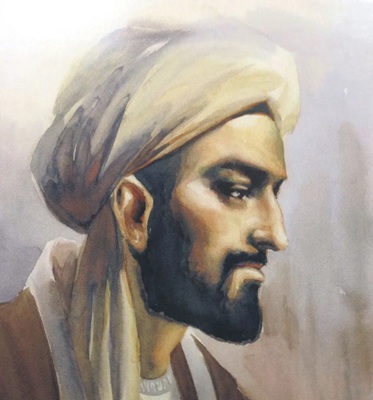
The Shadows of German Thought: Max Weber, Carl Schmitt, and Eric Voegelin in Hannah Arendt’s Political Philosophy
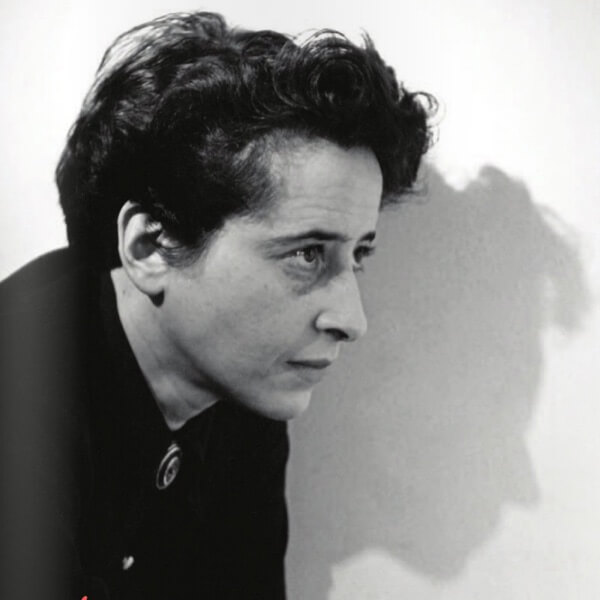
Hannah Arendt, one of the most influential political theorists of the twentieth century, stands as a bridge between the philosophical traditions of continental Europe and the democratic aspirations of post-World War II America. Born into a secular Jewish family in Hanover, Germany, Arendt’s intellectual formation occurred amid the Weimar Republic’s cultural effervescence and political turmoil. Her doctoral dissertation on Augustine under Karl Jaspers, her brief romantic involvement with Martin Heidegger, and her eventual flight from Nazi persecution in 1933 shaped a worldview profoundly attuned to the fragility of human freedom. Exiled to France and then the United States, Arendt’s major works, The Origins of Totalitarianism (1951), The Human Condition (1958), Eichmann in Jerusalem (1963), and The Life of the Mind (1978, posthumous), dissect the pathologies of modernity, from imperialism’s racial hierarchies to the bureaucratic machinery of genocide.
Arendt’s thought is not a seamless tapestry but a dynamic weave of engagements, appropriations, and repudiations. Among her most significant interlocutors are three German thinkers: Max Weber, the architect of modern sociology; Carl Schmitt, the crown jurist of the Third Reich; and Eric Voegelin, the philosopher of historical consciousness. These figures, each emblematic of Weimar’s intellectual ferment, cast long shadows over Arendt’s oeuvre. Weber provided her with analytical precision and a sober realism about modernity’s disenchantments; Schmitt, a provocative foil for interrogating sovereignty and enmity; Voegelin, a metaphysical depth that Arendt both drew upon and resisted in her secular humanism. Their influences were not unidirectional. Arendt transformed their ideas through her core categories of action, plurality, natality, and judgment, yet they indelibly marked her diagnosis of totalitarianism and her prescriptions for political renewal.
This essay explores these entanglements, arguing that Arendt’s genius lay in her selective assimilation: she adopted Weber’s tools to map bureaucratic alienation, radicalized Schmitt’s decisionism into a critique of ideological violence. She tempered Voegelin’s gnostic warnings with an emphasis on worldly contingency. Far from mere borrowing, these influences underscore Arendt’s commitment to a politics of appearance, where human beings disclose themselves in concert with others, resisting the totalizing impulses of modern power. By tracing these lineages, we illuminate not only Arendt’s debts but also the enduring relevance of her thought in an era of resurgent authoritarianism and technocratic governance.
Max Weber’s Enduring Methodological and Substantive Imprint
Max Weber’s shadow looms largest in Arendt’s methodological arsenal and her critique of modern institutions, though scholars have only recently begun to excavate this underappreciated affinity. Unlike the more overt Heideggerian echoes in her existential phenomenology or the Kantian roots of her aesthetics of judgment, Weber’s influence is subtle, embedded in Arendt’s empirical rigor and her typology of political forms. As a student in the 1920s, Arendt absorbed Weber’s lectures on Economy and Society and his essays on charisma and bureaucracy, which resonated with her own Weimar-era disillusionment. Yet, as Tuija Parvikko argues, this impact extends beyond biography to the core of Arendt’s analytical practice: her use of “ideal types” to distill historical phenomena into conceptual clarity.
Weber’s ideal type, an abstract construct against which empirical realities are measured, finds its analog in Arendt’s “representative” figures, such as the “conscious pariah” in her essays on Jewish assimilation or the “jobholder” in her analysis of totalitarianism. In The Origins of Totalitarianism, Arendt employs this Weberian lens to trace the “boomerang” of imperialism back to Europe’s metropoles, constructing totalitarianism not as a sui generis evil but as an ideal-typical escalation of bureaucratic rationality and racial pseudoscience. Here, Weber’s “iron cage” of disenchantment, in which capitalism’s rationalization traps humanity in an instrumental means-ends calculus, morphs into Arendt’s vision of the concentration camp as modernity’s reductio ad absurdum, where human plurality dissolves into a fungible “rabble.” Peter Baehr, however, cautions against overstating this lineage, suggesting that Arendt’s personal revulsion at Weber’s nationalism tempered any wholesale adoption, rendering their relationship more “dilemma” than direct influence. Nonetheless, the methodological overlap is undeniable: both thinkers eschew grand teleologies, favoring polycausal histories that honor contingency.
Substantively, Weber’s typology of authority—traditional, charismatic, and rational-legal—infuses Arendt’s reflections on legitimacy and power. In Between Past and Future (1961), she critiques the “decline of authority” in modernity, echoing Weber’s lament for the routinization of charisma into bureaucratic impersonality. Yet Arendt diverges sharply: where Weber saw authority as inherently conflictual, a fragile legitimacy amid value pluralism, she reimagines it as a Roman-inspired “august” foundation for political stability, enabling the miraculous “beginnings” of action. This adaptation is evident in her analysis of the American Revolution, which she praises for blending Weberian rational-legal structures with a charismatic commitment to founding principles, thus preserving space for natality—the human capacity to initiate novelty.
Weber’s value-neutrality (Wertfreiheit) further complicates Arendt’s ethical stance. As a sociologist, Weber advocated for dispassionate analysis, separating “is” from “ought” to preserve the integrity of science. Arendt, confronting the Holocaust’s moral abyss, adopts this ethos in Eichmann in Jerusalem, where she dissects bureaucratic complicity without psychologizing motives. The “banality of evil” is no Weberian “vocation” gone awry but a chilling extension of his routinized administration, where thoughtlessness supplants judgment. Critics like Baehr note that Arendt’s fidelity to factual reportage—her insistence on “storytelling” over moralizing—mirrors Weber’s ethical minimalism, yet she infuses it with a Socratic call to thinking as a bulwark against conformity.
Finally, Weber’s homo politicus, the engaged intellectual navigating the ethical ambiguities of politics, resonates in Arendt’s own public role, from her New Yorker reportage to her advocacy for council democracy. Both viewed the university as a site of intellectual rigor in opposition to ideology, a theme Arendt echoed in her 1950s Princeton lectures. In sum, Weber equipped Arendt with the diagnostic tools to unmask modernity’s depoliticizing forces, but her pluralistic optimism—politics as the space of freedom, not mere administration—transcends his tragic realism. This synthesis underscores her enduring appeal: a Weberianism humanized by hope.
Carl Schmitt: Provocation, Critique, and the Banality of Enmity
If Weber offered Arendt tools of precision, Carl Schmitt provided the scalpel of provocation, forcing her to confront the political’s primal antagonisms. Schmitt, whose The Concept of the Political (1927) defined sovereignty as the decision on the exception, was no mere academic for Arendt; he embodied the intellectual’s seduction by power. Their “debate in absence”—Schmitt’s avid reading of Arendt’s works, met by her selective citations—reveals a fraught dialogue on totalitarianism, power, and evil. As a Weimar-era figure who opportunistically joined the Nazis in 1933, only to be sidelined, Schmitt fascinated Arendt as the archetype of the “opportunist intellectual,” whose brilliance found no totalitarian niche.
Central to this exchange is Schmitt’s friend-enemy distinction, which posits politics as an existential conflict irreducible to economics or morality. Arendt radicalizes this in Origins, portraying totalitarianism as enmity’s totalization: enemies become “objective” subhumans, annihilated not through war but ideology’s logic of superfluity. The camps, for Arendt, exemplify Schmitt’s state of exception writ large, with law’s suspension not as a sovereign fiat but as a permanent, race-infused nomos, dissolving the public and private realms. Yet she inverts Schmitt: his decisionism empowers the sovereign to name the enemy; totalitarian “power,” by contrast, is impotent violence, sustained by terror and fabrication, not genuine authority. In The Human Condition, Arendt distinguishes power as consensual action among plural equals from violence as its simulacrum—a direct riposte to Schmitt’s glorification of the decisive act.
This critique reaches its peak in Arendt’s reading of Schmitt’s loneliness. As Dirk Bonker notes, Schmitt’s post-1945 marginalization mirrored the Nazi regime’s disdain for independent thought; Arendt uses him to illustrate how totalitarianism devours its enablers. Schmitt, in turn, devoured Arendt’s Eichmann in Jerusalem, scorning her “grotesque” banality thesis as Jewish revenge porn while pilfering it to relativize his own complicity. For Schmitt, Eichmann was no banal cog but a loyalist enacting the sovereign’s will; Arendt’s counterclaim—that evil’s profundity lies in thoughtlessness, not depth—exposes Schmittian decisionism’s ethical void. As Tracy Strong observes, Schmitt read Arendt “sick of” her, yet their convergences illuminate totalitarianism’s allure: both saw liberalism’s neutralization of conflict as inviting radical enmity.
Arendt’s Schmittianism extends to human rights and the concept of sovereignty. In Origins‘ “Decline of the Nation-State,” she echoes Schmitt’s Political Theology (1922) by critiquing the fragility of abstract rights in the absence of political membership. Yet, she rejects his Catholic-inflected analogy between divine miracles and sovereign decisions. Instead, rights emerge from revolutionary action’s “right to have rights,” a pluralistic guarantee Schmitt’s monistic state abhors. This “high heels as hammers” critique, Arendt wielding Schmitt’s concepts against his authoritarianism, frames their encounter as the secular pivot of political theology.
Ultimately, Schmitt sharpened Arendt’s pluralism: his dualism of friend-enemy becomes her multiplicity of perspectives, enmity a perversion of debate’s agonism. Their shadow-boxing endures, warning against intellectuals who mistake sovereignty for salvation.
Eric Voegelin: Metaphysical Foils and the Gnostic Temptation
Eric Voegelin’s influence on Arendt, forged in émigré correspondence and shared anti-totalitarian fervor, contrasts with Weber’s empiricism and Schmitt’s juridical edge, offering philosophical depth. Both German exiles, Voegelin fleeing Nazis in 1938, and Arendt a year later, converged on totalitarianism as modernity’s spiritual crisis. Voegelin’s 1952 review of Origins in The Review of Politics sparked a 1953 exchange, in which he lauded Arendt’s genealogy but chided its “functionalist” historicism, urging a deeper “pneumopathological” examination of ideology’s heretical roots. This dialogue, as Peter Baehr reconstructs it, refined Arendt’s views on ideology as “political religion,” a secular gnosticism that promises immanent salvation through historical dialectics.
Voegelin’s core thesis, that totalitarianism inverts the transcendent order into closed immanence, resonates in Arendt’s portrayal of ideology’s “superhuman” law. It dictates events retroactively via logic’s tyranny. Both trace this to modernity’s “loss of substance”: Voegelin to Gnostic alienation from divine reality, Arendt to the Judeo-Christian image of man’s worldly duality eroded by secular progressivism. In her unsent reply, Arendt credits Voegelin for highlighting ideology’s religious undertones, yet insists on its novelty as an “event” unbound by heresy—totalitarianism fabricates a new human nature, interchangeable and superfluous.
Divergences abound: Voegelin’s metaxy—the “in-between” of divine-human tension—clashes with Arendt’s action-oriented plurality, the “space of appearance” where mortals disclose their uniqueness without recourse to metaphysics. As John Gunnell notes, Arendt resists Voegelin’s functionalist view of religion as psychological “need,” favoring a phenomenological emphasis on doing over being. Their shared dissent from positivism, Voegelin’s “positivist” critique echoing Arendt’s anti-sociological stance, binds them. Yet, she rejects his moralizing of totalitarianism as “murderous heresy,” preferring factual horror over theological judgment.
Voegelin’s influence surfaces in Arendt’s later works: On Revolution (1963) counters gnostic utopias with America’s bounded founding, while The Life of the Mind grapples with the will’s voluntarism, akin to Voegelinian “second reality.” As Stefan Rossbach argues, their compatibility lies in diagnosing ideology’s reality-denial, though Arendt’s secularism—politics as artifice, not theophany—secures her from Voegelin’s conservatism.
This exchange enriched Arendt’s warnings against gnostic politics, from Bolshevik engineering to neoliberal technocracy.
Conclusion
Arendt’s engagements with Weber, Schmitt, and Voegelin reveal a thinker who thrived on intellectual tension, transforming the ambivalences of German thought into a robust political philosophy of vigilant freedom. Weber’s rationalism and methodological precision demystified her critiques of modernity’s bureaucratic encroachments, providing the empirical scaffolding for her dissections of alienation and routinization. Schmitt’s provocative antagonism, with its stark friend-enemy dualism and sovereign decisionism, vitalized her commitment to pluralism, compelling her to reframe enmity not as the essence of politics, but as its perversion under totalitarian logic. Voegelin’s metaphysical inquiries into gnostic ideology offered a deeper grounding for her anti-ideological humanism, sharpening her analysis of how secular movements mimic religious heresies in their quest for total dominion. These influences were never passive absorptions; Arendt interrogated, critiqued, and transcended them, weaving their threads into a tapestry uniquely her own—one that prioritizes the worldly over the abstract, the plural over the monistic, and the contingent over the deterministic.
At the heart of this synthesis lies Arendt’s originality: a fierce defense of the world against the forces of totalization, where the miracle of human action sustains dignity amid profound contingency. Her core categories—action as natality’s irruption into the public sphere, plurality as the condition of all politics, and judgment as the bridge between the particular and the universal—emerge not despite but because of her German interlocutors. Weber’s “iron cage” becomes, in her hands, a warning against the eclipse of freedom by administration, yet redeemable through deliberate political engagement. Schmitt’s exceptional sovereignty is subverted into a celebration of constitutional limits and revolutionary beginnings, where power arises from concert rather than fiat. Voegelin’s pneumopathology is secularized into a phenomenology of ideology’s reality-denial, emphasizing the ethical imperative of thinking to preserve the everyday world. This originality manifests in Arendt’s refusal to moralize history abstractly; instead, she narrates it as a drama of appearances, where individuals like Rahel Varnhagen or Adolf Eichmann become exemplars of possibility and peril. Through these lenses, Arendt crafts a theory that is neither purely diagnostic nor prescriptive but invitational—a call to inhabit politics as a space of disclosure and deliberation, resistant to the seductions of ideology, bureaucracy, and sovereign myth.
In our contemporary moment, marked by algorithmic bureaucracies that echo Weber’s disenchantments, populist exceptions that revive Schmitt’s antagonisms, and technocratic utopias that betray Voegelinian gnosticism, Arendt’s lessons resonate with an urgent imperative: think, judge, act. From surveillance states eroding privacy to identity politics fracturing plurality, the pathologies she diagnosed in mid-century Europe now manifest in digital guises and global migrations, demanding renewed vigilance against the “banality of evil” in everyday complicity. Her insistence on the “right to have rights” challenges us to rebuild political membership amid refugee crises and democratic backsliding. At the same time, her praise for council-like grassroots action offers blueprints for countering elite capture. By reclaiming Arendt’s synthetic vision—forged in the crucible of Weberian realism, Schmittian provocation, and Voegelinian depth—we not only honor her intellectual legacy but equip ourselves to safeguard the fragile miracle of freedom. In an age of manufactured consent and engineered realities, Arendt reminds us that politics, at its best, is the art of beginning anew, together.


Related Posts