Three Times Gnostic Olympics
Like a Magus, he tortures, enrages, soothes, fills us with false terror. ~ Horace
Gnosticism is an overall term for a syncretic intellectual influence, mostly Eastern and Hellenistic Greek in origin, that first appeared in the 1-2 century AD in Imperial Rome (Rudolph 1987). It thus emerged in confusing times, and was itself a set of confused ideas, a totally disordered farrago conglomeration of ideas about redemption and restoration into the divine spark of light, for the single purpose of undermining Rome and taking its role by the liberation of the self from earthly constrains. Parasitic itself, Gnosticism wanted to change reality and do away with it by living off Romans. Plotting in every possible way and means, Gnosticism undermined the confidence of Romans in their sense of existence, inducing them to look for salvation outside the world. This meant a will for a complete destruction of their present, and a Gnostic zeal for the future, going exclusively for the vibratory energy of transformed substances.
Claiming entirely for themselves the support of God, their hostility to the world, their solipsism – that they themselves are the only thing that can be known and verified –, their self-indulgent absorption with themselves, without consideration for the needs and desires of society and the inherent laws of living together, lead to the collapse of the Antique civilization of Rome. Their idea was that everything that exists is vibrating with energy, and that substances are extended or destroyed in order to exchange this energy, which is a logic of transformation, which can only lead to a liminal void (Horvath 2021). They proposed a form of living without a positive design of civility, because the aim of their ethos was not the actual world, with its politics, economy and society, but an impersonalized fictive one, the liminal void of energy exchange. Ascetism and libertinism were two tightly connected features of Gnosticism, which were united in a hatred for the world. Their occasional love feasts, orgies, cannibalism, refusal of child-bearing, their claim to collect and offer the power that resides in blood and semen, coincided with the ascetic refusal of the flesh. It is no wonder that their self-absorption was both the means of evoking and appeasing transcendentality. Understandably, as the resulting substance transformation could only lead to destruction, evoking the powers of the death.
Gnosticism operates, and festers, against the backdrop of authenticity, replicating inside the ruined or infested community, and doing all this with the clearest consciousness, a feeling of rightness, as vengefulness is indeed a part of ressentiment, as Nietzsche argued in the Genealogy of Morals. Eventual signs of decline and weakness are interpreted as proofs for their rightness, without acknowledging their own fault in promoting all this. An intellectual movement as it is, versed towards anomalies, it has a special interest in exceptional cases, that are read through their special, erratic interpretations, which explains their particular attention for ‘knowledge,’ believed to cure all ills, mollifying all pain and suffering.
Watching the Olympics Opening Ceremony
For a Magus must be born of a mother and her son. ~ Catullus
When watching the opening ceremony of the Paris Olympics we could see how entities were violated in their integrity in this summer of 2024, as well as the transvestite joy for overcoming ourselves, successfully plundering our wit. Gnostics are lifting the ‘seed of light,’ we all entered into a new understanding of ourselves, which is not linked anymore to history, society, to sexes, to our personality, but has got a particular illumination from a new global universe: liberated, free and united, without personal or communal identities. A woke designer lead us there, for whom identity is so precious that it could be sacrificed for the sake of his own greatness. The most valuable vivacity of this great designer is to grant us purity, fluxity, autonomy – not for our sake, but for the cosmological and universal good and utility, so that we can devote ourselves to it, being afraid to offend it even by just a hint of individual integrity. We should have no thoughts anymore.
We thus serve voluntarily the coming one-world designer, who claims to bring new ideas on the forefront, especially the perfection of objecthood by its elimination, a global effort to change history, memory, family, and individuality, and last but not least the entity of things themselves. This, to inaugurate a Great Reset, or rather Great Res-entiment, where a post-Hegelian dialectics is at work, and a pro-Kantian enthusiasm is also necessary, with the promotion of a prioristic thinking – a main feature of magic – and of the idea that the ‘thing-in-itself’ cannot be known, so we are free to construct, through the ‘transcendental mind,’ whatever we please.
Even if the opening of the Paris Olympics was tasteless, poorly and cheaply choreographed, obscene, bewildering, sad, and weak, it publicly supported an effort to persuade wider audiences and even wider authorities to approve the designer’s architectural deal. Taboos are in ruin, sexes are given up, we are prospering towards cowardice, and are opening up ourselves to bullies who force us to leave the old ways of thinking, but in change we will receive our exclusive space just for ourselves, without any frustrating comparisons with others, a rounded bubble space that ‘protects us and helps us survive,’[1] but at the same time secure our infinite restlessness, because after all we all became just slaves of a designer, stuck in desperate isolation and desolation, deprived of the shaped world, and only being vaguely aware that something was robbed from us.
The first wave of Gnosticism
The various modes of worship which prevailed in the Roman world were all considered by the people as equally true; by the philosopher as equally false; and by the magistrate as equally useful. ~ Edward Gibbon, The Decline and Fall of the Roman Empire
Gnosticism emerged in a fussy context, consisting of elaborately made marble cities, mosaic-paved houses and decorated villas, where inhabitants paid great, even excessive attention to personal tastes and appearance. They were tall and regularly featured men, and pretty woman in fastidious silk robes,[2] in bright-colored damasks ‘lingering over their dessert and wine until late at night and makes them find the chief charm of the long evening in the conversation’ (according to Cicero). One can add to all this elaborate civility the joyful company, exquisite table talks of taste, prosperity, abundance, and extravagance in a good mélange of speaking and laughing, games and other entertainment. For this reason, the Romans were formed to excellence, in the sense of Huizinga’s Homo Ludens. Cato is said to have declared, still according to Cicero, that con-vivium, to live together in practicing civic pleasures, this highly skilled, intricate convivium, recalling the Athenian symposium, was an extremely, delightfully beautiful everyday event, with abundant use of perfumes and flowers in case of feasts: ‘In classical times the late dinner (cena) was the regular practice for all persons of any social standing throughout the length and breadth of Italy.’ They entertained themselves, their children and wives, and their guests every evening to promote excellence and outstanding decency and joviality, and such events became the envy of every other nation:
Even the rest of the nations of the world which were not subject to the imperial sway were sensible of its grandeur, and looked with reverence to the Roman people, the great conqueror of nations. Thus even Scythians and Sarmatians sent envoys to seek the friendship of Rome. Nay, the Seres came likewise, and the Indians who dwelt beneath the vertical sun, bringing presents of precious stones and pearls and elephants, but thinking all of less moment than the vastness of the journey which they had undertaken, and which they said had occupied four years. In truth it needed but to look at their complexion to see that they were people of another world than ours. (Yule 2010).
Apart from the pretentious, showy, vulgar display of the few at the top, captured in the satires of Juvenal, in general, at least for a long time, Roman’s life was spent in splendid urbanity, possessing qualities of delicacy and fine craftsmanship, keenly sensitive and responsive to the necessities of life, living with/for each other in a gentle manner, so evidently was not responsive to Gnostic ideas of estrangement and salvation for all. But it was not so, Gnostic years of reconditioning estranged the Romans from their society, their Gods and customs, separating them from this accustomed place of joy and merriness. Gnosticism is not only a state of separation between persons or groups, but an alchemical separation inside the concrete entity itself, between its soul and body, as the integrity of the individual is split into schizophrenic fragments by Gnostic inspiration. Gnosticism implies an awareness of one’s own divinization, let’s say the separation of one’s soul from the body, and the subsequent annihilation into a divine whole. Thus, one not only becomes the center on the world – a very special person – after having removed the soul from the place and position occupied in its rendered form, but the soul is repositioned into an exclusively spiritual existence, so one is also experiencing the disappearance of one’s own soul by this expulsion. The estrangement of the individual from its historical and private context is a special Gnostic idea, also implying a feeling of aversion, an antipathy to oneself, and feeling being disliked and left alone by society.
Alienation is precisely what is giving to Gnosticism a religious imprint, predisposing a separation of its followers from themselves and a turn to universalistic principles, immersed in pacifism, which is overall false, not in accordance with reality, since it idealizes an unattainable situation, a paradise on earth, by separating elements from searching and fighting for their authentic place and time. Instead, Gnosticism is collecting the souls from all things and transmits them to its God, who is in turn providing light and energy. It is better for an unworldly nucleus of men to bind up connections with the transcendent in a hostile world, than to try their best in the conditions already given to them, no? This is the way how Gnosticism seduced the Romans, they became followers of these deceptive ideas, an alchemical transformation disguised as religious truth.
The advantages were twofold: first, it collected followers for Gnosticism, and second, as Gnosticism was flattering the individual of becoming part of the divine, it offered conditions of privilege. This was a position of moral superiority over all those who remained outside of the belief. Of course, this privilege was unprovable, because the initiated would never question their own superiority. The nature of absurdity is that it has no truth content, so any question is in vain in confronting a belief in it. Finally, Gnosticism, which started to conspire against the Romans, soon found itself in a position of political, social, and religious power, wanting to cancel Roman state and authority, society and individuals, and in fact successfully substituted it in the version of Christianity, which heavily adapted Gnosticism into its doctrines, but changed them into a positive-looking, community-building structure, which Gnosticism lacked.
The question is whether the messed-up have an advantage over complete entities, due to their expressing an attractive, lumpish confusion. It seems to be a preview of the question whether signs and symbols which have been artificially engineered, outside space and time, are more energetic than the authentic ones, which is the question of Gnosticism.[3] Gnosticism is obsessed with energy, its patterns of intrusive thoughts are producing energy, its God is the God of light, its compulsive idea is electricity, in all the senses of the word, which is in contrast to anything that existed before, and its magicians conducted the orchestra. The Gnostic deity idea is the ‘unknown, alien God,’ which is an infinitely pulsating, incommensurable energy. No wonder that Gnosticism mocks any human discipline, because they could orchestrate energy vibration, which could make all these earthly efforts vanish by will into thin air. This persistent idea of energy that continually forces its way into Gnostic knowledge was the energy of existence. This compulsive, definitely destructive idea is rooted in Alchemical knowledge, which means that it is mobilizing, evoking the void. Only the void is capable of an impressive display of all varieties of objects, all deprived of shape, mere constructs, and consequently all eager to annihilate any other existing form. This is the unknown god of the Gnostics, that performs and utters repeatedly, the machinery gyre of light, the energy, that is turning on the axis of devotion, eternally living and controlling all possible combinations of the feeling machine’s sensual elements.
At least two things resulted from these: one is restlessness, showing a persistent will for change and action; the other is forgetfulness, two necessary conditions for the Gnostic takeover. The Gnostic’s spirit is evidently fluttered; there is restlessness about it. Gnostics achieve wealth, obtain a growing multiplication of things, desires, emotions, sensuals, impulses, all the outcomes of disquietude. This restlessness irresistibly triumphs over memory, over entities who govern themselves, over individuals with caution and patience, over the course of actions conducted with tolerance, understanding, and cooperation. Changes in memory also issue from this: times and affairs do not converge in any way.
This process of growth has repeatedly appeared in history, with identical signs and symbols of progress, identical actors and propagators/activators, and identical results. Its diffusive and restricted movement could be seen in the appearance and spread of Gnosticism in imperial Rome, then in 16-18th century political, social and scientific thought, and finally right now, by the spread of transhumanist ideas, resulting in all cases in the growth of bizarre harvesting impulses by reconditioning.
The second wave of Gnosticism
according to this Survey he consider’d not the real Operation or Energy of his Subject, nor contemplated the Man, as real Man, and as a human Agent; but as a Watch or common Machine. ~ Earl of Shaftesbury, Characteristics
Gnosticism is ridiculous and erroneous, as it is against the fine and the beautiful, it corrupts and seduces (Rudolph 1987), yet it is constantly gaining territory by gradually reconditioning thinking. But how? The point is indeed how to gain territory, as I learned from the strategical ‘war’ game played between my cat and my dog. Anytime the dog perceives the cat approaching in a lurking way, he starts to chase her away, nevertheless she always comes back, and always one step closer to the doggie and its desired plate of food. Anyhow, the sneaky cat is getting closer to the meal, closer to the idea that after sufficient inducing the new generation will normalize the bizarre and will not make any fuss about its strangeness, until the point that normality will not simply be the deviant one, but its very existence becomes nullified, will become an extinct species. While this progress destroys the past, present and future, so all we have, it makes individuality more than controllable, to be controlled remotely by selected impulses.
Growth in size is in a way the sign of fertility, so probably the female singers of the Paris Olympics Opening ceremony want to bring this message to the world, of giving birth to something that never before existed: fertility without conception. Anyone who did not like this exposed surplus of big bellies and big thighs is labelled as frustrated and narrow-minded, without class and dignity. In reality, our perception makes us who we are, and if this perception will be altered and debased by suggestions like this, if it is mocked and devaluated into something bizarre, then we lose the ground underneath us, leaving a void, and so anything could be stamped on our damaged, impoverished minds. By slowly breaking down our perception, destroying the time and space relationships of our lives, this renders us into pure receptors for Davos projections. All those who organized, planned and approved this bizarre Olympics ceremony belong to a lineage targeting the transcendent since the 16th century or even before, marked by Machiavelli, Francis Bacon, Newton, Locke, and others. It consisted of an enthusiastic mélange of emotions, sensuals, pulsations of reflections, outbursts of impulses, and only later, with Marx, turned to the harvesting of emotions in a systematic, methodical way. It was a metamorphic formation created from unconscious sediments, and things scraped off the top of downward-moving urges for reconditioning. It was the second wave of the West’s bizarre ‘growth of forgetfulness,’ in order to receive energy, as the first was initiated in Gnostic Rome already in the 1-2 century AD.
The second wave of extracting impulses that came in the 16-18th centuries was still within the gnostic frame of providing knowledge and method for all those who became alienated, or not yet conditioned properly to their life. It was initiated by Bacon, with the exact words of progress and change, as recently propagated by the initiatives of Davos, and resulted in all cases in the growth of the bizarre. But in all cases the alchemical, magical Gnosticism searched out for higher influence, and in all cases thousands of supporters served the case of growth and forgetfulness. Not only Bacon but almost the entire intellectual milieu of the Baroque, from John Locke to David Hume soldiered the case, with few exceptions. One of them is the Earl of Shaftesbury, who in 1732 developed ideas about the curious role of spectatorship. Inspired by Plato, Shaftesbury was not only deeply disturbed by the implications of Newtonian science (we should recall how just a little bit later William Blake would attack Newton, Bacon and Locke passionately, because of lie, folly and knavery, in marginals of various essays), and its all-too perfect fit with lowering standards of decency and the increased commercialization of life, or better to say the growth of a parasitic methodization of existence for gaining profit from evoking the transcendent by subverting and annihilating objecthood.
The third wave of Gnosticism
The new transcendent power redefines words, binds, people using law, commanding and restraining their behavior. ~ Travis D. Smith
The third wave is our contemporary. The spiteful contempt of the world, deemed as a product of error and ignorance, and the positing of a higher world, to which we all eventually turn as the dream of an open and tolerant society in a global world without strife and discord, pure and white, even though evidently infected with bacteria and viruses and roasted in wavelengths, is the intellectual suggestion of today. For this is the space for the true self, with its supreme, consciousness existing, persisting over identities, in a transformed, electrified substance. When nobody is there to remember, history evaporates; when objecthood ceases to exist, then actors become mere spectators: a muddy, soft mass of energy transmitters, fulfilling the Gnostic dream of the spiritualization of matter, by bringing it into the field of electricity. This progress can be correlated with the rise of a more sophisticated evocation of sensuals by various public arenas and private technologies, marked by the wide dissemination of electronic instruments, radars that serve wavelength transmission from one object to another.
With these mediators a new kind of spiral started in the relationships between the agents of the public, medical, commercial or political influencers, those who need to sell the shows for profit. Thus Covid measures started, educating and enlightening with coercion, serving and totalizing the subservient spectators for their new role of egoistic self-absorption.
Something became robbed from us, but we do not know what, neither that when and how it has happened. Only one thing is certain, the process of stealing souls (as intuited by Goethe). The spiritualization of matter is in line with the robotization of souls, gathering them into sources of energy, the aim of Gnosticism, hence the liberation of the souls from the prisons of body to the kingdom of light (Rudolph, 1987: 320). Against this Gnostic disregard of all the validity of the world, all the virtues of life, mocking individual discipline and the righteousness of moral values, there stands the III. Earl of Shaftesbury who noted at the beginning of the 18th century that this view degrades humans as ‘common machines’ (Soliloquy III)[4] without a reflexive nature, but definitive, (automatic) essences of the spirit, properties which require identification, instead of properties that requires adaptation, learning, understanding, and so ‘It does not tell us who we really are.’
On other places Shaftesbury, who had a good understanding of Plato, traced this erratic process back to a Barbaric notion, which did not bear in itself goodness but hatred and even gave a humorous, but given our case, the 2024 Paris Olympics, a particularly illuminating example of the foolish but institutionalized destruction, amounting to murdering a man in order to plunder him out of his wit, and so to get the inheritance of his understanding. It is a case of handing over government to ‘sorcerers and conjurers,’ recalling Plato’s Statesman, replacing those who excelled in vocations, moral rules, maxims, manners, charity and good will.
The aversion from incest has less biological or genetic reasons, but a cultural one, defending a principle that helps to avoid circularity in transformation. Nevertheless, now public figures appear in front of us, with their motherly spouses, aged exactly as their mother, thus in figure and essence denying linearity in transformation. Transformation has its normal linearity, which preserves the resemblance between parents and their children, except when somebody goes back to nothingness, hence cause magic circularity. The nature of magic is the robbing, stealing, cheating away of time and space relationships, ‘that rendered men as much wolves as was possible to one another, … and overfreighted by the Magi’ (Shaftesbury). Magic is a heavy word, but even heavier is its practice which is full of brutal, aggressive connotations, and involves a communication with dead souls.
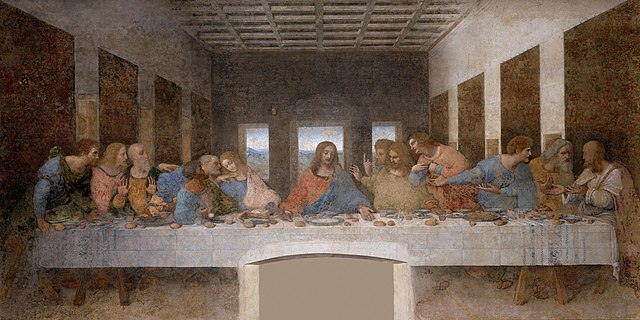
The commercial machine is magical (Binswanger 1995), which extends itself to the transcendent and promotes perfection, now actually reached by annihilating objecthood, eliminating space and time relationships, and leaping over the Earth to the supernatural. The Olympics opening was a kind of circus, yet an ordered, even morally ordered one. For performing its magic it first had to teach us the way of plaguing, infecting one another most devoutly (mocking the Last Supper), second universalizing the fluxion of sensuals (pestilence of desires without limit, transsexual character dance), including a barbarization of reflections, exalting passions to an appetite for annihilating (only the effect counts, no matter the circumstances, endless examples of how to smite us with disease), and finally ridiculing us, claiming that we did not understand their humor.
Naturally, the form of the commercial machine can change without limits, but also without altering its operation. The logic can be extended to the media, the medical service, or the educational enterprise, but also to science, natural or social, or the political machinery, now run by enthusiasm, sensuals and passions, until its sources are dried out by exhaustion. Then a new circle starts, with a further extravagance of ideas and fury of images, the most recent being transhumanism, or rather voluntary globalized servitude, or radiocarbon substitutes, or using more radiation to express or rather evoke whatever was fluid in sensuals. The parasitic rule remains the same: the more you take away, the more you gain in desperate sensuals, invoking the barbarism of reflections, without knowing, without trying living through life, but being possessed by an idea.
The possessed one is a bystander who is able only to observe, overcome with an infinite range of visions, signs, symbols, sensuals, incommensurable desires for something not yet experienced, out of that unknown infinite around in which the universe revolves.
Conclusion
These problems, including the bizarre West and the evocation of impulses, by definition belong to the situation of ‘ruling the void’ (a term coined by Peter Mair, 2013), and is indeed central to political discussions about meaning loss in politics, and how is it that after the WWII there developed a non-political West (see Sakwa 2024), a universalized distortion of common sense politics, and the voiding effect of this kind of liminal politics. Liminality is singled out for attention by the classic work of van Gennep, and analyzed in depth by Arpad Szakolczai (2009), pointing to a transitory state that was pushed into effectuality by artificial means. The Danish anthropologist Bjørn Thomassen (2014) developed the term ‘limivoid,’ for the emptying of reality, when objects and relations are losing their sense and meaning. On the one hand, the proliferation of both an imitation of democratic values and a masking of democratic institutions, through hysterical collective rituals,[5] and hypocritical political dissimulations and unmasking that go on simultaneously (Boland 2019), inevitably escalate the bizarre: a prolonged and continuing effect of reflections of a society dominated by and schemed by invoking sensuals. The vibratory energy of sensuals gave the Gnostic connotations to the phenomenon of Covid measures, recurrent economic crises, puzzling wars, stimulated immigration. This also leads to the direct question of what for: why this energy to cancel, to destroy, to eliminate, to annihilate the existing? Given the persistent support by various media enterprises to the class of activists and operators that emerged around such practices of destruction, it resulted in an orchestrated zeal against history, tradition, common sense, anything which has solidity, objecthood. The aim is to temporalize into a vibratory form, to take hold of or seize firmly into the sensuals of pain and suffering, following the destruction of any possessions, of anything laying its feet on the earth, to attain new time and space relations in order to architect a new world.
The consequences of this new wave of acting is of course just as momentous as of the previous, paving the way to a new circle that is further undermining the remaining beliefs in a lasting, meaningful social order, replacing it with a mechanical-technical kind, and resulting in the view that any authentic arrangement (if there remained anyone to remember it …) is a mere fabrication, a view pre-announced in the constructivism of Kant, by reinstating a different understanding, instaurating a different moral and intellectual mindset.
The Gnostic machinery gyre of the Paris Olympics ceremony is not a unique phenomenon, but part of intellectual Gnosticism which are turning on an axis of transformation, which is not new, and is in fact quite banal. The opening ceremony intended to raise invigoration, instead was just drearily commonplace; its bromidic triteness was best expressed by the look of a bored child, on stage during the fake Last Supper scene, exposed in front of the cannibalistic platitudes.
Notes
[1] Extracts from an interview given by French President Emmanuel Macron to the Spiegel magazine, Oct 13, 2017. The same interview is also remarkable for the smart idea of gifting the rich with tax breaks in order to benefit the poor.
[2] Chinese silk was used ‘to enable the Roman maiden to flaunt transparent clothing in public’ (Pliny the Elder, Natural History, 23.79.
[3] In a February 22, 1965 letter to Robert Heilman Voegelin talks about ‘the extreme destruction of reality committed by expressionists,’ like Brecht, through an ‘ “obsessive” language (through symbolism of characters in the drama)’; see Embry (2004: 234).
[4] ‘Shou’d we have flown at every religious and moral Principle, deny’d every natural and social Affection, and render’d Men as much Wolves as was possible to one another, whilst we describ’d ’em such; and endeavour’d to make them see themselves by far more monstrous and corrupt, than
with the worst Intentions it was ever possible for the worst of ’em to become?—This, you’ll say, doubtless wou’d have been a very preposterous Part, and cou’d never have been acted by other than mean Spirits, such as had been held in awe, and overfrighted by the Magi.’ The Earl of Shaftesbury, Characteristicks of Men, Manners, Opinions, Times, http://oll.libertyfund.org/title/811
[5] See Harald Wydra (2015) and Camil Roman (2015) on the French Revolution.
Bibliography
<REF><BOOK><AU><SNM>Binswanger</SNM>, <GNM>Hans C.</GNM></AU> (<YR>1994</YR>) <BTL>Money and Magic: A Critique of the Modern Economy in the Light of Goethe’s Faust</BTL>, <LOC>Chicago, IL</LOC>: <PUB>University of Chicago Press</PUB>.</BOOK></REF>
Boland, Tom (2019) The Spectacle of Critique: From philosophy to cacophony, London: Routledge.
Charles R. Embry (ed.) (2004) Robert B. Heilman and Eric Voegelin: A Friendship in Letters, 1944-1984, Columbia, MO: University of Missouri Press.
Horvath, Agnes (2021) Political Alchemy: Technology Unbounded, London: Routledge.
Mair, Peter (2013) Ruling the Void: The Hollowing of Western Democracy, London: Verso.
Roman, Camil (2015) ‘Liminality, the Execution of Louis XVI, and the Rise of Terror during the French Revolution,’ in Agnes Horvath, Bjørn Thomassen & Harald Wydra (2015) (eds) Breaking Boundaries: Varieties of Liminality, Oxford: Berghahn.
Rudolph, Kurt (1987) Gnosis: The Nature & History of Gnosticism, New York, NY: Harper and Row. [1977]
Sakwa, Richard (2024) ‘Living in the Void: The End of the Revolution and the Politics of Krisis,’ International Political Anthropology 17, 1:63-80.
Smith, Travis D. (2024) ‘On Never Explaining Anything and Forgetting Almost Everything,’ International Political Anthropology 17, 1:41-54.
Szakolczai, Arpad (2009) ‘Liminality and Experience: Structuring transitory situations and transformative events,’ International Political Anthropology 2, 1:141-72.
Thomassen, Bjørn (2014) Liminality and the Modern: Living through the in-between, Farnham Surrey: Ashgate.
Wydra, Harald (2015) Politics and the Sacred, Cambridge: Cambridge University Press.
Yule, Henry (ed.) (2010) Cathay and the Way Thither: Being a Collection of Medieval Notices of China, Cambridge: Cambridge University Press. [1866]


Related Posts