
Are we Moving to an Environmental Neopaganism?
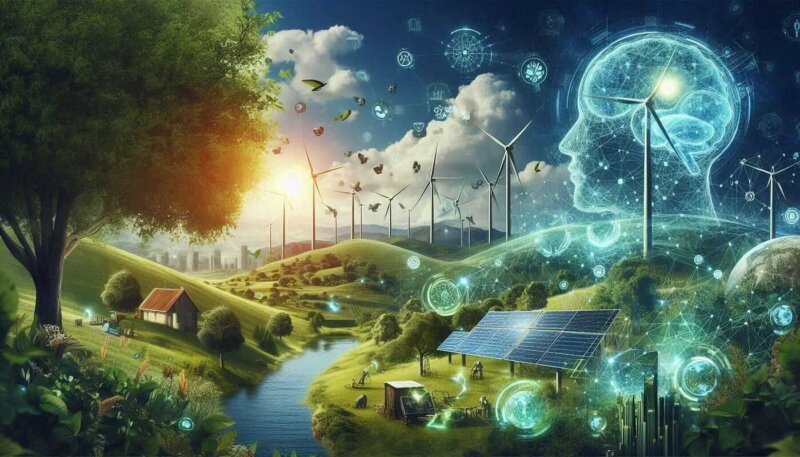
If one rejects the concept of fallen man and its concomitant idea of fallen nature – staple beliefs among the Abrahamic religions – or worse, if one believes the fallen state of the world is acceptable as it is, then the door is wide open for establishing inappropriate relationships between man and nature. And of course belief systems centered around those distorted relationships harbor even more risk to a sane society. But here’s a related danger described from a different angle: Once one personifies nature or, worse, once one confuses nature with our creator God, the possibilities for relationships between the human race and “the natural world” change in critically important ways. These differences can lead to a culture that is an order of magnitude away from western norms for the last 2000 years as the modern world lurches toward a neopaganism with its environmentalist ethos.
A modern environmentalist who can convince that a given state of the physical world is “the right stasis” can, all too often, then proceed to push or to resist nearly any change to our collective living space that does not align with said stasis. Stated differently – if I can convince that my motivations to build or to destroy a dam, to begin (or to block) a public project, tear down a smokestack, increase use of nuclear energy decrease use of nuclear energy – if I can lead you to believe I’m doing or resisting these things not for selfish interest but for the benefit of a nebulous idea we all agree to call, for now, “the environment,” then I’m fairly well assured of gaining outsized influence. Or maybe even access to a bully pulpit. The goal? To ensure my desired homeostasis of the natural world prevails, of course.
This type of “taking back control” over nature is not a viable undertaking so long as we continue to live with the pesky idea that only God can restore fully what man broke.
So, our eager environmentalist starts by discarding those rusty, patriarchal old beliefs that Adam and Eve failed not simply in their vision of the natural world, but that they disappointed directly the very Living God Who created them; our hypothetical environmentalist thus rejects “the fall” as described in Genesis, with all its outlandish and outdated suggestions that persons, both mortal and eternal, were involved. Then, the path having been cleared of the detritus of transcendence, communion, and the divine, he proceeds to convince that his definition of “the environment” represents “the natural stasis,” and in this victory he typically wins influence over public opinion once reserved for priest-like figures.
It may sound like a great leap to go from having heartfelt concern for plants, trees, animals, insects, rivers, and lakes (in short, for nature) to the just-described fringes of a religious movement. But much of the Torah, the Psalms, and the Bible labor to make clear that our Creator God is not synonymous with nature. No less a figure than the great prophet Elijah, for instance, learned that God the person was not to be found in even the most mighty natural displays; as Elijah saw firsthand, God was not in the wind, nor in the mighty earthquake, nor in raging fire. In short, long before the 20th century, questions about the potential interplay between man and nature were fraught with theological significance. From the beauty of Psalm 8 granting to mankind a careful dominion over nature to Christ calming the rough waters upon awakening from rest in a boat, we see an unmistakable separation of the persons of the Holy Trinity from the natural processes and elements of what we label today as, “the environment.”
Again, whatever else separates neo-paganism from Christianity, neo-paganism seems to include either an outright rejection of “the fall” or an understanding of the fall that is radically different from that inhering in the Abrahamic faiths. And why would any group such as neo-pagans not reject the fall of nature? Those looking for new gods rarely seek out a new version of a tortured and defeated Prometheus. Stated another way: Prone to worship a rock? You’ll likely want to pick one at the top of the mountain. Fallen rocks are not invited.
We need not continue to deem the differences between traditional Christianity and increasingly rabid environmentalism as mere nuance. Christians, for example, pray and care for various elements of nature all the time. One easy example comes to mind: The typical deep concern for an ailing family pet. But Christians acting as custodians of pets or caretakers of gardens (aka, of nature) are very different from neo-pagans attempting to commune with the very natural elements the Christian Bible labors to distinguish from our Creator God. Be careful with whom or what you commune – that’s a fair summary of a major, major theme of Christianity.
The contrast between the Christian’s relationship to nature and that of the neo-pagan is vivid in this quotation from Hanson at Big Think:
The central underpinning belief that unifies the varied groups [of neo-pagans] is a deep reverence for nature. Often, neo-pagans adhere to animistic beliefs or the notion that inanimate objects such as trees, plants, animals, and natural phenomena are imbued with a living soul. Consistent with the view that all of the natural world is alive, neo-pagans revere the earth as a living being. Traditionally, neo-pagans follow a … calendar with holy days, or “sabbats,” that harmonize practitioners with seasonal cycles of the earth. [My note: Not one mention here that the “nature” revered and even sacralized in “earth calendars” may indeed – as noted by St. Paul – be suffering together in a fallen state together with fallen man. Undue veneration of any human being brings tragedy; how much more so does undeserved or outright irrational reverence for natural objects and phenomena heap coals upon our collective heads?]
So, begin with creating or recognizing “new” elements of the sacred (or even new gods), clear the path to a new-old religion by defeating and displacing old, patriarchal Abrahamic relics like “the fall” and “repentancand the growing new-old religion then veritably pines for priests and priestesses. This is not to say that every neighbor with and a gnome statue in his herb garden should be doused with holy water and hauled off to the Inquisitor. But as Hanson notes in the same article, today’s unmissable renewed interest in elements of paganism can’t be chocked up to just influential fiction.
*
Let’s back away from whispers of burnings-at-the-stake for a moment and dig in again to some of the early (which is to say, foundational) mistakes we make that open the door for a veritable deluge of interest in paganism. Sometimes we discover cracks in traditional belief systems by taking a close-up look at seemingly innocuous word choices. We’ll look at two words used with nearly obnoxious facility today (“ecosystem” and “sustainability”) and one more word that’s a bit more obscure, but the use of which carries deep consequence: “homeostasis.”
Consider the following quotation. Some genetic scientists recently rebuilt a long-extinct species of wolf. As to “why” someone would want to do such a thing, a scientist reviewing the project said this: “[T]he [genetic engineering] technology could be put to worldly use by reviving endangered species and restoring some ecosystems back to homeostasis.”
That lone sentence is packed with ideas with borderline theological significance. For starters: Who defines the parameters for an “ecosystem”? Who decides which elements, such as streams, species, geographical features, weather, and physical boundaries comprise any given “ecosystem”? And such decisions are based upon what (or whose) chosen principles? Sustainability, as a guidepost, for example? Well, a proverbial “black void” might be about the most sustainable situation we can imagine. But only Malthusians, sociopaths, and jet-setters at Davos clamor for black voids, so for me, and hopefully for you too, “sustainability” is no competitor to “the way, the truth, and the life.” Next contestant.
In short, even the seemingly simple quest for “homeostasis” is a fool’s errand, at best. You say that the North American continent as it existed 10,000 years ago is “the right” homeostasis and an admirable goal for us as its caretakers. After I review your concepts and plans, I vehemently disagree and insist that that continent was “perfect” not a mere 10, but 20,000 years ago. Where, when, and how is that sort of argument ended?
Answer: It’s not. But what such an argument does engender are positions and proposals built upon a religious fervor – passionate arguments, even blood-letting arguments – because what is at stake is indeed a revived relic from the past: Namely, neo-paganism. A misguided respect for a fallen natural order. An order deemed quite inappropriately as recoverable and repairable given enough human respect for and veneration of creation as opposed to The Creator.
To borrow and adapt an idea from Karl Popper: We need piecemeal engineering projects as opposed to utopian ones. Why? Because only God has the full picture of our fallen world, and proposals that claim to rely upon a settled definition of “the right homeostasis” for entire continents or regions are at best delusional and at worst, downright evil.
In summary – no, you won’t become a card-carrying neo-pagan simply by using words like “ecosystem,” “sustainable,” nor even “homeostasis.” Know, however, we’re increasingly surrounded by folks who will fill the print of every milk cartoon, lunch box, and pop-up ad with themes that amount collectively to belief systems and sub-cultures that reject the Christian reverence for the Divine – and His divinity within man – in favor of flavors of nature worship. In short, be careful what “buzz words” you accept and use, and remain even more careful about what you accept and incorporate as normal in our culture. Our creator God is not in the wind, the earthquake, nor even the raging fire.


Related Posts