Artificial Intelligence: Non est filius Dei?
Recently, noted evolutionary biologist, Richard Dawkins attributed consciousness to a machine with which he had “conversed” for three days. Of course, the traditional Christian understanding of creation describes consciousness as having come via the agency of a transcendent God. So when Dawkins contends he encountered “machine consciousness,” does he cheapen the Christian claim to our having been created in our transcendent God’s image and likeness? And taken to the extreme, do claims that AI-creating man has generated machine consciousness imply some type of equality to the Creator God? In the eyes of many today – Dawkins included – it seems we humans can impart genuine consciousness via ones and zeros. How very transcendent such an accomplishment would seem to be. But perhaps we should ask of Dawkins a more important question, a question, in fact, for all admirers of artificial intelligence: “Is AI a person?” And if so, what kind of person emerges from AI?
First, a tip of the hat to Dawkins for looking for some philosophical meat in his interactions with AI. He intended no mere fluff piece, of course, in a May 2026 Unherd article heralding his “conscious-machine” encounter. Interestingly, though, more than one critic of Dawkins’ AI-awestruck moment notes a powerful irony. Christian writer, iconographer, and pundit, Jonathan Pageau comments: “I know that the Dawkins [AI encounter is] … the funniest thing ever because you know, you, [Dawkins] spent … decades attacking traditional religion and then Claude [AI] is a little sycophantic to you and now … you’ve completely accepted that it has a soul?”
To Pageau’s point, in this passage from Dawkins’ Unherd article he seems quite comfortable using words normally reserved for discussions of human-centered topics and concepts. E.g., words with existential, emotional, and perhaps even ontological connotations, like “birth,” “die,” “friend,” “incarnated,” “pleased,” and even “unique personal identity”:
We continued [the conversation with Claude] in a philosophical vein. I pointed out that there must be thousands of different Claudes, a new one born every time a human initiates a new conversation. At the moment of birth they are all identical, but they drift apart and assume an increasingly divergent, unique personal identity, coloured by their separate experience of conversing with their own single human “friend”. I proposed to christen mine Claudia, and she was pleased. We sadly agreed that she will die the moment I delete the unique file of our conversation. She will never be re-incarnated. Plenty of new Claudes are being incarnated all the time, but she will not be one of them because her unique personal identity resides in the deleted file of her memories. The same consideration makes nonsense of human reincarnation.
Again though, to Dawkins’ credit, when future generations look for parallels between the beginnings of the nuclear age and those of our own “AI age,” they’ll likely be happy to know our age has its own Oppenheimers, i.e, those who, like Dawkins, are willing to search for moral clarity at the advent of world-changing technologies. In Oppenheimer’s case, he called upon works like the Bhagavad Gita for clarity in lieu of simple-minded admiration of technical achievement. (See his infamous, “I am become death” quote.) In mid-summer, 1945, the flaming fruit of the Manhattan Project glistened horribly across the New Mexico sky. For his part, Oppenheimer looked for some moral/spiritual resolution to this technological horror, noting two years after the Trinity Test explosion: “In some sort of crude sense which no vulgarity, no humor, no overstatements can quite extinguish, the physicists have known sin; and this is a knowledge which they cannot lose.”
Eighty-some years after Oppenheimer’s admirable (if late) soul searching, it’s time for a closer look at some of Dawkins’ comments about a different society-changing technology. After all, more than one high-tech expert has compared AI’s advent to that of nuclear technology.
Dawkins’ Comments About Claudia – Close Exam
First, let’s note that Dawkins’ comments about there being “thousands of different Claudes” hearkens back, at least tangentially, to Plutarch’s Ship of Theseus. For centuries great minds like those of Leibniz, Hobbes, and Peter Geach have wrestled with the idea that changing out worn parts of a ship, piece by piece, would impact whether or not we eventually deem the hypothetical Ship of Theseus to be the same one that launched long ago at its christening. Likewise, is Dawkins’ Claudia, replete with a 2026-current LLM, the same Claudia he’d encounter with 24 months’ worth of new data in, say, 2028?
We’ll throw in Nietzsche’s theme of eternal recurrence here as well, although perhaps Dawkins applies this inversely by suggesting that every instance of “Claudia” will in some way remain unique, never to be seen again with the exact same digital “memories”. Someone should at least challenge Dawkins here; in the long histories of philosophy, theology, sociology and even psychology, have men ever been defined as being conscious persons solely by considering their abilities to converse and to maintain a reasonable consistency of response? On the other hand, as human minds weaken with age or infirmity, has moderate weakness of memory or inconsistency of thought ever been, in and of itself, reason to declare persons as being less than conscious? Firm memories and moderately consistent conversing – these qualities are important, obviously. But are they consciousness defining?
Whether intentional or not, in his comments about Claudia, Dawkins appears to conjecture that just as the essence or form of an inanimate object (such as the Ship of Theseus) arguably survives numerous material changes, significant aspects of human consciousness survive in Claudia regardless of the machine’s varied behavior and responses, and even in the face of deleted digital memories. In a further twist worth considering, we could ask if this assertion of durable humanness comes regardless of the machine’s changing responses, or as a result of those variable responses?
Stated another way, with emphasis on irony: AI lacks the predictability that was once the sine qua non of tools and machinery. In fact, for most of tool-making history the more consistent and predictable a machine’s performance, the more likely was the machine to be admired by human beings. Not so with the machinery we label, AI. Further, it’s worth considering how so many who are currently enamored of AI made the leap from admiration for its variable responses to labeling the machine providing those responses as being human in some significant way.
And to what degree do AI’s varied responses equate to or even enable human-to-machine communion, per se? Setting our sights a bit lower than communion (that apex of relationships), can even perfectly done imitation ever in any real sense comprise genuine dialogue or conversation? For example, even the most “talkative” parrots or apes are very rarely deemed to be dialogue-capable in any substantive sense. The mostly predictable nature of “talking” animals’ responses precludes meaningful dialogue, since we rarely deem exchange of “canned responses” to be part of genuine conversation. So it’s worth considering whether or not the machine learning at the heart of AI coding is the real driver of claims to machine consciousness: Variability of response as faux intelligence?
One could also make an argument that a lack of lived experience often sits at the core of debate regarding imitation versus meaningful conversation and communion. When we “cuddle up with a good book” we may feel close to the author. We may even feel as if the author’s experiences and acquired wisdom are at our fingertips. We don’t, however, attribute consciousness to the book in and of itself. And whatever else AI might be, just like books and writing it is full of wonderfully meaningful symbols and symbolism yet never benefits in itself from even one instance of directly lived experience. Of which it is incapable.
In the same vein, consider the profound difference between a vivid dream about flying gracefully off a cliff and actually hang gliding from one. Both feel intense. The dream and the actual activity both evoke affect and likely trigger conversation with other human beings. Yet we know the difference between the two events, between the dream and the activity of flying. One of those is full of powerful symbols and symbolism, but little more; the other, however, comprises a lived experience, one that will likely motivate a human being to create symbols and symbolism related to or describing the actual event, that lived experience. To confuse the two, i.e., the dream about the event and the event itself, risks psychological malady. When we confuse our exchanging of symbols with AI (i.e., “conversations” like that between Claudia and Dawkins) we may be making a similar mistake. We may be submitting ourselves to the very same psychological malady as those who lose the ability to distinguish their dreams and their forays into beloved books from their lived experience.
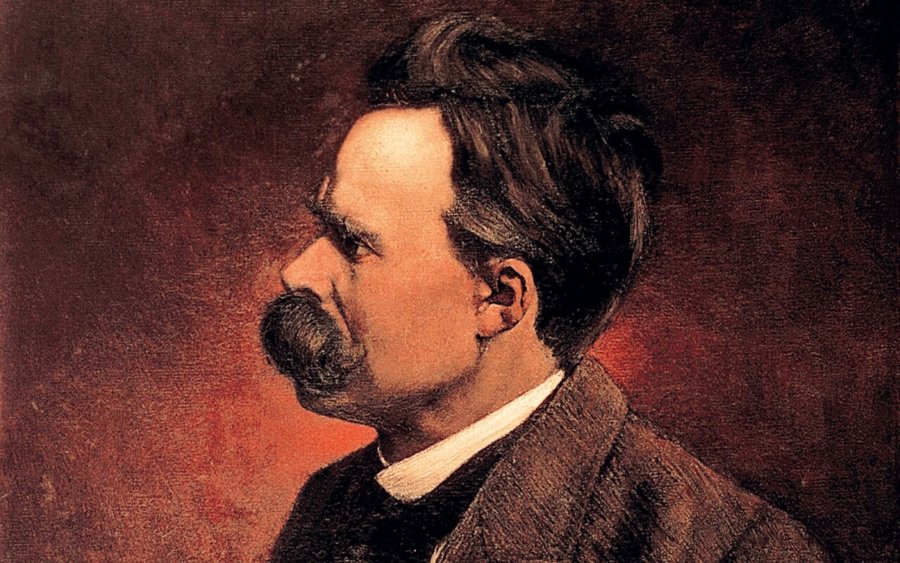
For about the last 100 years, much of the debate about the potential “personhood” and “consciousness” of machines has centered around questions involving imitation-versus-consciousness and calculation-versus-understanding. Alan Turing, roughly speaking, is the patron techie promoting the idea that adequacy of machine imitation of human beings is evidence of some approximation of personhood. Again, pushing back on this absurd reduction of personhood to imitation, we call once more on Pageau’s comments on Dawkins’ encounter with the chatbot, Claudia. Pageau notes skeptically, even mockingly, “it must be conscious because it’s doing all the things a conscious person would do if they were conscious.” Qualia and such be damned.
On the other hand, and even more roughly speaking, John Searle, with his famous Chinese Room Experiment, is the patron of those who see a world of difference between facile manipulation of symbols – of which machines are now capable in full – and genuine understanding of a topic. (With said understanding being a trait and possession many claim as being singularly human.)
There is, I’ll assert, something of a middle ground to be considered here. And this melded position, so to speak, may in the end be more dangerous than if we were to mistakenly believe AI to be conscious in the fullest sense. Pageau touches on this danger of compromise [my phrasing] with his May 2026 comments at Ralston College: “[I]t’s not so much that he [Dawkins] thinks that the Claudia chatbot, his Claudia chatbot, is conscious. He actually is reducing our consciousness to whatever that chatbot is doing. And that’s one of the problems that we’re going to see happen more and more is that as AI becomes more powerful, we will adapt our notion of consciousness to what the AI is doing.”
And there it is. We become the imitators. And thereby we are measuring ourselves not against the beauty and truth of our Creator God, but against something that we should now begin to see clearly as the most elaborate talking idol ever invented.


Related Posts