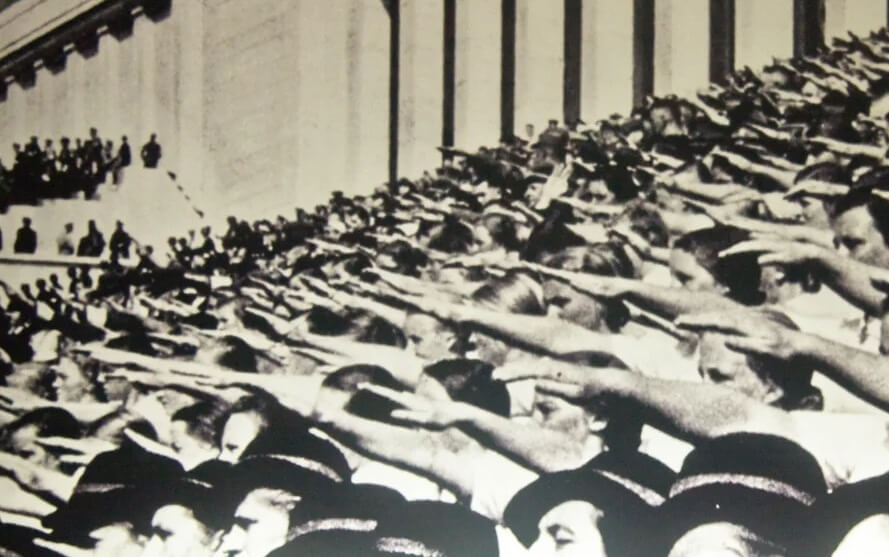
Learned Ignorance in an Age of Early Meaning
When the Picture Arrives Early
Something happens in the world, and many people already know what it means before they have seen it. The news now reaches us before the event does. By the time it arrives at a kitchen table it often has a name and a verdict. We meet the meaning first. The day that was supposed to test the claim has not happened yet.
This is not only because news is fast. It changes the work a mind has to do. A mind has work because the world is not already certain, not already explained. There is a gap between what a life can check and what it is asked to believe. That gap is a limit. Humility lives in it. Hubris treats it as a mistake and tries to finish the picture in advance.
Today, that early shaping is easier. Meaning already arrives already formed. An official often has to act on a sentence before anyone has lived the thing it describes. The same act then splits. Inside the official story it looks like a threat. Outside it looks like betrayal. When ordinary life cannot grow a shared reading in time, a ready-made doctrine holds the words together. Machines trained on yesterday’s finished sentence print it again as tomorrow’s official world. This is not a secret plan. It is what a shared frame does when claims outrun a day.
The hard part is not collapse. It is how easily life starts to feel like a picture painted before the hour. The counterweight is old: take time to see a thing where it can still be checked. Leave the gap open.
This essay looks at three things: the gap, the distance between a claim and a life, and the speed at which claims now arrive. It then follows what happens when meaning comes too early and too fast, how the frame tightens, splits, and begins to repeat itself. It does not tell you what to think about the next headline. It asks whether you still have room to test it.
This is not an argument about whom to blame. People still have agency. What follows is the machinery we are already inside, and a way to explain a troubled world without first naming a villain.
Limit: When Consciousness Needs a Gap
The world is not already a completed map. It is not settled, finished, and known. Every life meets more that it can fully know or turn into a rule. That extra is not a flaw. It is why we have to interpret at all. Consciousness, here, is the work of making sense when the next hour is not already labelled. If every event arrived with its meaning attached, a mind would only have to follow instruction, little more than a biological algorithm.
A limit is what a life can test; the line between what experience can answer and what it cannot. When that line goes, interpretation goes with it. A fully mapped world would ask us only to carry out orders. Identity would shrink into a role. Purpose would shrink into compliance. A person would still move but would no longer choose.
Every age has faced the same choice. Live in that gap or try to close it. Humility lives within the limit. It accepts that the world is larger than the map. Hubris refuses the limit. It treats whatever has not been tested as an error in the picture and looks for ways to finish the map rather than live it.
Some people kept the gap open. Nicholas of Cusa, in the fifteenth century, called it learned ignorance; we see only in part, and certainty is not available on our side of the ceiling. Others began the modern habit of closing it. Descartes is the familiar name, cogito ergo sum. He starts in doubt, which is the gap, and ends by rebuilding the world inside his head, as if thought could finish what a life cannot.
Humility lives within a limit. Hubris refuses one. That raises the next question; how far a story can run past what a life can still answer.
Proportion; How Far a Story May Run Past a Test
Most people have felt a story arrive before they have had time to live it. A rule at work that no one can quite inhabit. A name put on a person before anyone had met them. A sentence about “who we are” that feels too large for the moment. The story is already moving. The life that should hold it has not caught up.
Proportion is how far past a life a story may run and still be lived in. It is not a mood. It is a measure; can experience still answer a claim? Humility keeps that distance small enough to test. Hubris lets it grow until the story has to be believed first.
A test has three parts. Someone has to look at the claim. Someone has to question it. Someone has to settle it again in ordinary life. All three take time. The test is not a view from nowhere, and ordinary life is not uninterpreted ground. It is contact that can still contradict the early story.
When there is no time, the claim hardens. A little overshoot is normal. Every people carries stories that run past what one day can check. That becomes a problem when a household can no longer live inside them. Then the official sentence and the lived day come apart, and a moral ranking holds the words together.
Justice works by the same measure. Punishment has an end; something is put right. Punitiveness has no end; striking becomes the way of seeing. When the distance between story and life grows too large, justice stops being a limit and becomes a public show of already knowing.
Montaigne helps because he is not grand. “Que sais-je?” – what do I know. He measures a claim against a day. The essay is a personal test; does it fit a life I can actually lead? That is proportion at human scale. It is a check on the habit of finishing the map inside the head.
Healthy shared meaning can still be answered. Brittle meaning must be delivered before it can be lived. The next step is to name what we can share, what counts as a piece of it, and how fast those pieces now arrive.
Meaning, Canopy, Unit – So the Clock Can be Measured
The distance between a story and a day is easier to discuss if we name a place where it shows up.
Meaning is what we can make sense of together. Not every private thought, but the overlap that lets people live in the same picture of what is real, fair, safe, or ours.
A canopy is the shared frame that holds that overlap. It is the assumed picture of the world most people use without naming it. Official sentences land there and become part of the common map.
A unit of meaning is a claim on that map. Not a glance, and not a passing feeling, but a packaged interpretation that asks to be take as part of the shared frame. A job title, a diagnosis, a rule about what counts as safe, a sentence about who we are; each is a unit if accepting it would change the shared picture.
Not everything we think is a unit. Only the claims that try to enter the common frame.
Once these three are names, we can ask how far those claims now arrive.
Velocity: Rate of Meaning Flow
A clip from another city, another country, reaches a group chat before anyone in the room knows whether the event happened a described, or happened at all. By supper it already has a label and a side. No one present has a fact that could test it. The claim is moving faster than the day.
Velocity is not the cause of meaning drift, It is the condition under which older checks, proportion, contact, time, lose their hold.
Velocity is units of meaning per unit of time a person can actually test.
The external rate rises the internal pressure of interpretation – the rate at which a canopy must adjust contest and seek fit. When the pressure exceeds what contact can absorb, the older checks lose their hold. The problem is not simply more news. It is more claims on the shared map, arriving faster than a life can answer them. As the rate rises, the time for a test shrinks.
How a claim travels matters only because it changes the past. Speech, print, posts, forwards, generated text; each can move a unit faster. That is not what is being measured. Velocity is not the channel. It is the rate at which units arrive.
The units also stack. An unverified label becomes the premise of the next post. A claim enters the shared frame; the next claim builds on it. The picture thickens. What counts as the map changes faster than the household can take in.
Humility needs time. It needs room to look, question, and settle a claim again in ordinary life. Hubris does not. It does well when that time collapses. That is why velocity and hubris travel together. As the rate rises, there is less daylight for a test, and proportion is harder to keep.
The Canopy Under Speed
The official picture now tends to move first. The kitchen where it is received has not yet moved. A claim arrives already shaped. The day feels late.
When claims arrive too fast to test, the shared frame tries to hold it together. It narrows what a claim can mean and pulls attention onto one object so the map does not scatter. People can still act inside the same story. This is not a plot. It is a frame keeping itself in one piece when the pace is high.
When there is too little time for a test, the frame does more. It supplies a direction, a tone, a category, a verdict before experience. That is the glue named earlier; a moral ranking steps in so the picture does not fall apart. The cause is not villainy so much as pace.
People feel behind the story. The shared frame is not always filing. It is running ahead, and the household is asked to catch up.
Where the Late Day Becomes Work
The same pressure shows up as work. Someone at a desk, in a classroom, a newsroom, a ward, and office, has a line they must sign, post, or brief. A head teacher receives language about a new safeguarding category on Monday and must present it to staff of Tuesday, before anyone has seen how it works in a real corridor. A ward manager circulates a risk phrase from a regional memo; the first patient who might test it is not due until Thursday. A reporter files a frames account of a distant event because the slot will not wait for a lock check. The sentence arrived early. They act before they could check. The gap becomes workload.
Hesitation comes first. It is not always confusion. It is timing. Action is required before understanding is possible.
Silence often follows. At this desk silence has two reasons. There is no footing yet, because nothing has been lived to stand on. There is also safety: speaking now would look like friction against a verdict already ranked. Silence keeps order inside the frame.
Distance here is not malice. It is what happens when the world grows faster than contact can follow.
Then comes alignment. It is not conversion so much as pace. The desk matches the lean on the sentence that arrived, enough to keep the picture coherent. The desk feels behind the story. The frame is running ahead. Ordinary life is slower. The middle is stretched.
The Two Readings of the Same Act
A claim now arrives not only early but finished. It already has a name and a verdict. It is meant to be accepted before anyone has lived what it describes. There is little left to check.
A late question then looks like trouble, not like useful information. A parent asks, at a school meeting, whether the new wording has been seen to work in this building is heard as obstruction. A nurse who says the protocol has not yet met this patient is heard as noncompliance. Drift feels like a risk to the story. People learn not to move in ways that look like friction.
Inside the frame, the parent’s question looks like a threat to the story. Outside it, the staff member who repeats the wording looks like a betrayal of the day. The same act carries two meanings, depending on where a person stands. That is not a theory of elites. It is what a sealed picture does; two readings of one gesture, each sure the other has missed something that matters.
The next person at the desk receives a sentence that is already settled. At home, people feel they have less room to inhabit what the day is supposed to mean. Cohesion becomes a demand so the story does not come apart. The day arrives with its meaning already attached. The same act looks like danger inside the story and disloyalty outside it.
Ideology Rushes In
When a claim arrives finished and the same act splits into two meanings, the shared story still needs to mean roughly the same thing. Ordinary life cannot grow that overlap time. A ready-made map can.
The finished map is what we usually call ideology. It is not the engine. It is the filter. It tells a person how to read a day they have not lived: who is in the right, what the event was, how the next move should lean. Under speed, a doctrine is useful because it arrives already sorted. It saves time.
The same clip can produce two finished readings before the local facts exist. One side already knows what kind of event it was. The other already knows that the first reading is the real story. Each package is faster than conduct. Each looks like explanation. Each hold the words together when the hour cannot.
The habit is old. Giambattista Vico saw that worlds rise and soften in a cycle and then filled the gap with providence so the motion would not have to stay open. Karl Marx turned redemption into process; history as meaning already decided, a map that arrives ahead of the life it describes. Michel Foucault showed how offices, routines, and “knowledge” produce the official world, then left no outside against which to check. The drawing of the grid is clear. It is too tight if taken as the whole frame.
The modern habit of managing more and more of what cannot be fully known is already a form of hubris. The map tries to cover the gap. The habit now runs through offices that never met the kitchen table where the sentence lands. It does not need a doctrine in order to start. When speed makes procedure thin, doctrines finish the story, class, power, redemption in history are ready to sit down. They look like causes because they are loud. They are passengers that learned to drive.
The ready-made maps do the same work under speed regardless of content. Rival stories, left or right, national or global, often look like opposite worlds. Under sealed picture they can do the same work: keep the words together when the day cannot. Each side thinks the other is ideological. Each side thinks its own reading is just the facts. That is what velocity does.
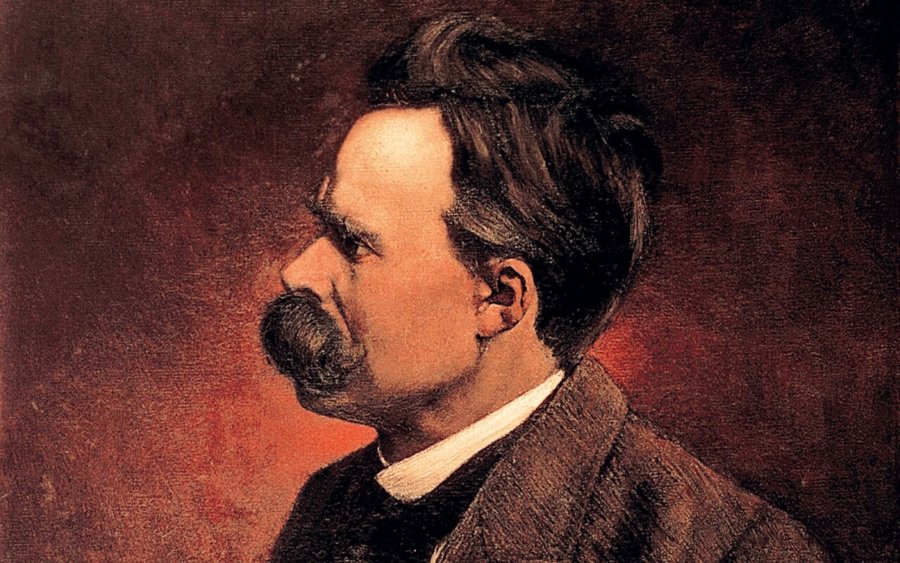
Nietzsche’s old cut still holds. The ranking is human-made, then worn as if it were the sky. Under speed that is not a curiosity. It is how a finished claim gets its heat. Ideology rushes in when there is no time to test. It supplies the overlap the shared story can no longer grow from life.
Machine-Age Recursion
A machine does not need a soul in order to matter. Even when it only recombines the record, it still floods the shared map. Output becomes the next official world.
Models train on yesterday’s finished story and emit tomorrow’s version of it. Each pass tightens the frame because the material is already sorted. A summary of last week’s verdicts becomes this morning’s briefing note. A generation caption arrives with the lean already in it. When the story moves faster than a person can live it, there is less room for variation.
A household moves at the speed of the day. A desk can often only pass the sentence on. The machine runs at the speed of the feed. Under that loop, the official world arrives before the day. A life ends up reading what it has not yet had time to test.
This loop is a tendency under speed, not a fate. The finished story becomes the material for the next story. Meaning is made inside the picture, not outside it.
The Difficult Future
The field tilts, but it is not a cliff. When the official story arrives before the event, a person meets the picture first and the day second. The slope is real. The ground is still there.
More time then goes to correcting the picture than to living the day. Revision feels late. Drift feels costly. The slope rewards speed over contact. Shared space narrows when the early story fills the room, and the split already named grows steeper.
The day still exists. A household still moves at the speed of a day. The quiet risk is forgetting to check. When the early story is strong, the late story can begin to feel optional.
The difficult future is this slope: the official world arrives before the day, and a life must keep testing what it has already been told.
The Counterweight
The day still exists. Even on a slope, some things still happen at the speed of a person. They do not arrive early. They do not come sorted. They come when they come.
Contact still corrects the picture. A lived moment can contradict the early story. A conversation at a table can reopen a meaning that looked finished. A household can test what the feed has already leaned. Slow does not mean weak. It means checked.
Some parts of life stay slow; work that has to be done in a place, care that takes hours, small duties that cannot be rushed. These are not heroic. They are friction, and friction is enough to keep the picture from sealing.
Late meaning is plain. It arrives after the early story, but it arrives from contact. It is the meaning a feed is worst at making. It keeps the day from becoming only its early version.
Humility, here is simply leaving room for a test.
Close
Consciousness has work because the day is not already decided. That gap is a limit; what a life can test, and what it cannot. Humility lives within the limit. Hubris treats it as an error and tries to finish the picture from inside the head.
Under speed, finishing becomes easier. Units of meaning arrive faster than a day can answer. The shared frame moves first. The desk acts before it understands. The claim arrives not only early but closed. The same act splits; a threat inside the story, a betrayal outside it. When life cannot grow overlap in time, a ready-made map rushes in. A machine that trains on yesterday’s finished sentence makes tomorrow’s official world. None of that is fate. It is a condition on a slope.
Life can begin to feel like following a picture that showed up before an event. The counterweight begins with noticing the picture arrives early. It is not a new doctrine. It is the original work of consciousness; keep the unknown open, leave the gap open, and take the time to see a thing where it can still be checked.
Limit makes interpretation possible. Proportion is how far a story may run past a life. Velocity is the rate at which claims outrun that life. Ideology fills what the clock will not wait for. A loop reprints what the clock would not wait for.
The day is slower. It is also the only place the test happens. Humility is leaving the room for that test. The field slants. The gap remains, if we do not close it ourselves.


Related Posts