Eminence of Governing
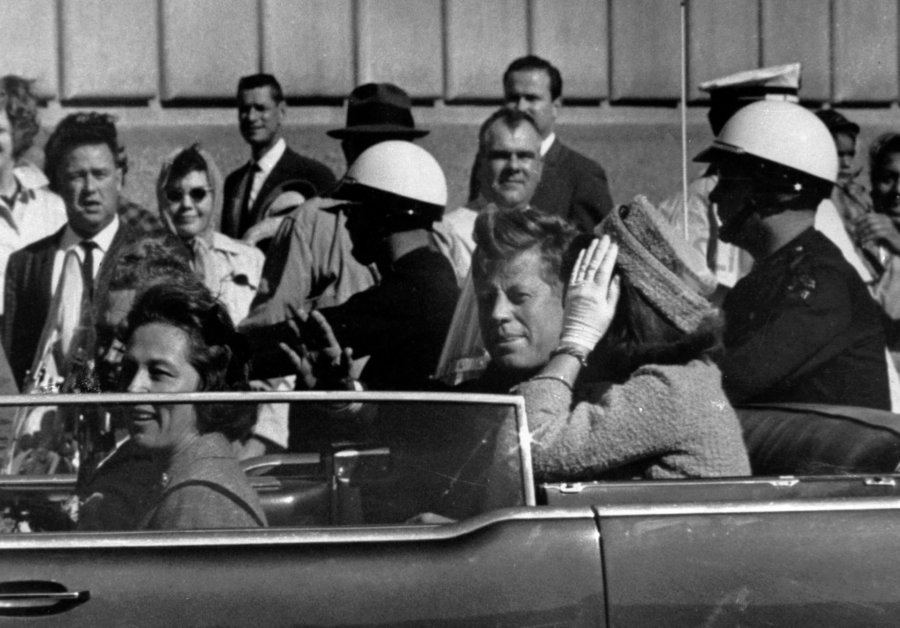
The collective memory and the enduring vision of a great leader is a subject not solely reserved for the history books, for college lectures, nor for commemorative engravings. A survival tactic against the enemy during military service or the debunking of testimony by a litigator are experiences that span across the passage of time and etch empowering moments into the minds of a generation. There are plenty of exemplary individuals that can prove valuable as a role model for the aspiring politician or the unassuming president. A visit to the library or bookstore will more often than not reveal a flattering arrangement of biographical books on the life of John F. Kennedy as well as the aftermath of his term in office. Another way to better ascertain the substance of his administration before, during and after, is by viewing the commendable list of films made in his honor. Within the book collection of many institutions, the steadfast presidency of Abraham Lincoln can be invoked to a relatively discernible degree. The remainder of the unique journey of both presidents forms the basis for this examination into successive phases of private or public life through a consideration of cinematography and by adaptation in literature or other disciplines.
The first film traces his bravery as a Naval Reserve ensign during World War II. It is one of four films that rely heavily on books to carry the film. The book PT 109: John F. Kennedy in World War II galvanizes the tragic ramming of Kennedy’s vessel during combat in the south Pacific. The author, Robert J. Donovan, reveals how Kennedy was awarded medals of valor for rescuing his shipmates and devising a way to signal for help while they clung to life after swimming ashore to a nearby island. The fact that the film was a revival of the book is not as unusual as knowing that the film was released during the time Kennedy was still in office. The film PT 109 was directed in 1963 by Leslie H. Martinson and Lewis Milestone who have emboldened the first of many exploits through a biographical film of the would-be president.
The second film also tracks Kennedy through archival material. In 2000, Roger Donaldson directed Thirteen Days to examine the perilous stand against the Soviet Union during the Cuban missile crisis. The film provides a broad historical perspective by using declassified government documents. The role of political consultant Kenneth O’Donnell is played by Kevin Costner in what would become his second JFK movie. Donaldson combines those documents with a book written by Ernest R. May and Philip D. Zeliko The Kennedy Tapes: Inside the White House During the Cuban Missile Crisis. The end result in this case is nothing less than a boundless and creative appendage to a normally straightforward documentary of historical events.
The third film returns to the unimaginable shooting in Dallas. The film Parkland replays the valiant effort by medical and nonmedical staff to resuscitate the fallen president. Among the notable cast is actor and Forth Worth resident Bill Paxton who was present among the spectators during an impromptu presidential précis spoken immediately before the motorcade tragedy. This flashback of those terrifying moments at Parkland Memorial Hospital was directed by Peter Landesman in 2013 and takes a cue from the book Four Days in November: The Assassination of President John F. Kennedy by Vincent Bugliosi.
The fourth film was released in 1973 as a conspiracy film directed by David Miller. The film Executive Action is a documentary based on the 1966 book Rush to Judgment: A Critique of the Warren Commission’s Inquiry into the Murders of President John F. Kennedy, Officer J.D. Tippit and Lee Harvey Oswald written by Mark Lane. In that book, Lane takes issue with and confronts the findings of the investigation and subsequent conclusions within the report filed by the Warren Commission. The book is widely regarded as the origin of the conspiracy theories surrounding the Kennedy assassination.
Unlike the first four films, the next film aired as a television production for American, Canadian and European viewers through a National Geographic broadcast network. In 2013, Nelson McCormick directs Killing Kennedy guided by a book of the same title by Bill O’Reilly and Martin Dugard. Aside from success through the wide distribution, the film features Rob Lowe as the president.
The Cuban missile crisis and the Daley Plaza shooting account for only a portion of Kennedy’s prolific life. Although some films use books to navigate the sequences, a film can apply other methods to greater effect. A more intimate experience of events is composed by director Bruce Herschensohn through voice-over by Gregory Peck and Maximilian Schell. The director highlights the newly formed Peace Corps, the Cuban missile crisis, the space program, the Alliance for Progress, the 1963 Nuclear Test Ban Treaty between the US, Great Britain, the Soviet Union, and the Civil Rights Act of 1964. These segments are, in turn, infused within a lingering recurrence of the funeral procession in Washington. In the film John F. Kennedy: Years of Lightning, Day of Drums (1964), Herschensohn alternates between color and black-and-white rendition of early and late presidential speeches and between English and German narration. Since the film was sponsored by the United States Information Agency primarily for overseas audiences, an act of Congress was sought in order to facilitate domestic viewing.
The next selection of titles cover ground that remain perplexing in the eyes of many. The main one addresses the question of ‘what if?’ the president had survived the gunman’s bullet. Another one considers the clandestine existence of the presumed second gunman. The last topic reflects on the peculiarities of a time affectionately known as Camelot.
The world averted a catastrophic decision during the Cuban missile crisis. Yet, Harvard University professor Niall Ferguson proposes the alternate outcome of similar turmoil in Vietnam had Kennedy not been targeted in Dallas. This version of ‘virtual history’ is the subject of a 2008 documentary by Koji Masutani. The film Virtual JFK: Vietnam if Kennedy Had Lived is a thought-provoking stance on history unfolding the shot been averted. The same stance is projected on the alleged gunman through two films. In the absence of the shots fired by Jack Ruby, director Larry Buchanan speculates how the Lee Harvey Oswald trial may have ended had he been spared by Jack Ruby. In 1964, The Trial of Lee Harvey Oswald dramatizes the verdict had such a trial been allowed to run its course. Then, a made for TV movie directed by Gordon Davidson and David Greene revisited the dilemma. For 1997, the identically titled The Trial of Lee Harvey Oswald ponders the same question on the mind of Buchanan and possibly everybody since.
In this chapter in history, as in many others of a controversial nature, no stone is left unturned. The second gunman theory is posed in Interview with the Assassin. In 2002, director Neil Burger re-imagines a retired Marine that is diagnosed with terminal cancer who decides to ask his reclusive neighbor to document a startling confession. The unemployed cameraman is told that the ex-Marine, not Lee Harvey Oswald, killed President John F. Kennedy in Dallas, Texas on November 22, 1963. The stunned neighbor is reminded of the conspiracy theory stating that there was a second gunman on the grassy knoll. The claim of the Marine being that second gunman hovers around the existence of a spent bullet casing supposedly retrieved from the assassin’s rifle.
The pseudo-documentary by Burger is only one in the film genre. Another that was reenacted in the tradition of cinéma vérité by D. A. Pennebaker appeared on a television network in 1963. The ABC movie Crisis: Behind a Presidential Commitment was directed by Robert Drew as an attempt to preserve time by revisiting the stifling confrontation between Black students and officials at the University of Alabama. This equally enthralling perspective by director Jonathan Kaplan is undertaken in a subtle; yet, laudable depiction of race and obsession during the Kennedy years. In 1992, Denzel Washington was in the lineup for the role opposite Michelle Pfeiffer in Love Field, but was eventually recast with actor Dennis Haysbert.
A precarious moment in time is entwined with portrayals of two Kennedy brothers; namely, Edward Moore Kennedy and Joseph P. Kennedy Jr. This time, actor Peter Strauss effortlessly represents the eldest Kennedy son who was seamlessly marching toward greatness at the White House. The doomed military flight operation that derailed that hope is the backdrop to Young Joe, The Forgotten Kennedy directed by Richard T. Heffron in 1977. A melancholic biography that follows the well-meaning intention of the first of what would be five Kennedy contenders for first Catholic president based on The Lost Prince: Young Joe, the Forgotten Kennedy written by Hank Searls. Another presidential candidate met a similar encounter on the ground. The lapse of judgment displayed by Senator Ted Kennedy during an automobile crash is the theme behind Chappaquiddick. This film was released in 2017, several years after the senator’s death and several decades after the incident.
The flair for the political that is the hallmark of the Kennedy name was elevated to the flair for the cinematic in 2006. That was brought to life in a fictionalized account of the hours preceding the June 5, 1968 assassination of Robert F. Kennedy at the Ambassador Hotel. That day in Los Angeles celebrated his triumphant 1968 Democratic presidential primary. The director for Bobby was none other than Emilio Estevez in the film that stars his own father Martin Sheen, among a lengthy roster of top actors and leading actresses.
As expected, the rivalry among siblings is not reserved solely for the Kennedys. In 1991, Oliver Stone sways public opinion away from the Warren Commission report with his magnum opus, JFK. The role of New Orleans District Attorney Jim Garrison became Kevin Costner’s first JFK movie. A year later, directors Barbara Kopple and Danny Schechter expressed their skepticism to the Stone version by producing a complementary rebuttal resting on the conflicting eyewitness testimony, in stark contrast to the public and privileged evidence at the core of JFK. The Kopple and Schechter documentary is titled Beyond ‘JFK’: The Question of Conspiracy.
Regardless of the quality of directing or acting within each film nor the level of journalistic integrity, a true enthusiast will tend to seek more footage to satisfy their curiosity or to suit their taste and to ultimately draw their own conclusion on the matter. In the decades since the Kennedy assassination, there have been an endless stream of documentary programs to address the perception of wholesomeness against the irrepressible reality. It starts with Joseph P. Kennedy Sr. who has had to withstand scrutiny as to the provenance of personal wealth and of deceptive practices in public and private industry. In his own corner, Joseph P. Kennedy Jr. doubling as the Ivy Leaguer while philandering with an Anglican divorcée then remarried mother of three during his military tour of Europe. It continues with John F. Kennedy toggling the image of war hero despite a longstanding and debilitating ailment as well as his commanding rhetoric against communism vis-à-vis a propensity for lax negotiation thereto. It doesn’t subside with Robert Kennedy who waged a relentless affront on organized crime only to wield a preachy stance on human decadence. Notwithstanding Ted Kennedy who cultivated an unparalleled 47-year senate career that was tainted by the blemish of misconduct starting in college and, in one form or another, during his term in office. In all fairness, a philosophical perspective provides one way to comprehend all the scorn upon the goodwill. In 1975, French theorist Michel Foucault succinctly captures the conceivable culprit behind the family misfortune: “Visibility is a trap.” For the time being, the eternal Kennedy anthology awaits untold generations through the family progeny.
The most emblematic moments of the Kennedy presidency mirrored the Lincoln presidency in that both presidents were assassinated. The funeral cortège for President Kennedy was modeled after the memorial service for President Lincoln. Many people decided to pursue a political career due in part to being inspired by the Kennedy Administration. In the time between the end of the war and the beginning of his presidency, Kennedy fomented an enviable political portfolio: the congressional candidate to Massachusetts; the freshman congressman; the junior senator; the Pulitzer Prize author of Profiles in Courage; the vice-presidential contender in 1956; a campaign that did not end with him. Three other Kennedy brothers had presidential aspiration and it was often speculated that John F. Kennedy Jr. would one day run for his father’s office as well. Unlike his father, only one significant TV film surrounding pivotal moments was aired in 2003. The movie America’s Prince: The John F. Kennedy Jr. Story was filmed on location in Toronto and New York with Kristoffer Polaha as the son of the former First Lady who is, in turn, portrayed by sultry actress and namesake Jacqueline Bisset.
In late 2019, President Kennedy was honored with the christening of the second U.S. aircraft carrier bearing his name. As she did in 1967, his daughter Caroline swung the apéritif against the nuclear powered vessel. A gesture of deference; but, also one that reverberates with presidential pedigree. In keeping with the family literary predisposition, Caroline has published her own Profiles In Courage For Our Time in 2002 that pays homage to the next swathe of noteworthy statesmen. Another documentary film produced by Rory Kennedy details the impact of Senator Robert F. Kennedy’s assassination. The daughter who was born soon thereafter directed Ethel in 2012 to document the political dynasty unraveling. The only sister to survive the tumultuous family years, Rosemary became the sole offspring to perish merely from natural causes. Amid reconcile, centenarian Rose Kennedy remarked, “I would much rather be known as the mother of a great son than the author of a great book or the painter of a great masterpiece.” Soon after President Kennedy’s interment at Arlington National Cemetery, his wife was interviewed by Theodore H. White for Life magazine. Mrs. Kennedy told the journalist that she and her husband enjoyed listening to the musical at night. They particularly enjoyed the title track where Richard Burton playing King Arthur sings: “Don’t let it be forgot, that once there was a spot, for one brief, shining moment, that was known as Camelot.” Solemnly, she concedes “There will be great presidents again, but there will never be another Camelot.”
The Kennedy White House was often compared to Camelot in matters of social mingling or political meandering among the dignitary, celebrity and mediocrity alike. It was a metaphorical choreography of mythical proportion: in diplomacy, in combat, in orbit, in theatrics and in family. The Kennedy presidency was as much a product of the time as it was an arbiter. The imminence of the Cold War and the seething domestic matters ensured that the presidential agenda would leave a distinctive mark on the nation nearly as indelible as the ones left by the Founding Fathers.
Who controls the past controls the future. Who controls the present controls the past.
-George Orwell, 1984
The Vietnam War raged against North Vietnam from 1955 to 1975 with most battles taking place in South Vietnam; where it inflicted the most casualties but extended into the neighboring countries of Cambodia and Laos. As recently as 2019, the casualty figures for US soldiers stand at: 58,318 Killed In Action, 153,303 Wounded In Action, 1,587 Missing In Action, and approximately 766 Prisoner Of War representing the totals by estimate. In perspective, the American Civil War claimed over 600,000 casualties. While that figure pales in comparison to all past wars, it is not without its own unique story. The sixteenth US president began his life in a modest Kentucky home. Abraham Lincoln filled most days by providing for family needs and by devotion to his own studies. He found time for other responsibilities during his stay in Indiana; subsequently, establishing himself as a formidable lawyer in Illinois.
There are two Depression era films that emphasize his early life. The first film records his life as a young boy living in a Kentucky log cabin where his mother nurtured his fascination with books. It delves into his adolescent years when he acquired vital skills as a backwoodsman and the woman he courted prior to his marriage with Mary Todd Lincoln. In 1930, D. W. Griffith directed Abraham Lincoln with Walter Huston as Lincoln and Una Merkel as his love interest, Ann Rutledge. This was Merkel’s second speaking role. Her first speaking role was produced using a sound-on-film process known as Phonofilm. The second film opened in 1939 with John Ford directing Young Mr. Lincoln and starring Henry Fonda in the role of president. This film follows his career as a lawyer and later aired as a radio play during a 1946 Academy Award Theater broadcast.
A Kentucky native, D.W. Griffith managed a compendium of 500 feature films before establishing United Artists in partnership with Charlie Chaplin and Douglas Fairbanks. An earlier production directed by D. W. Griffith, The Birth of a Nation appeared as a 1915 American silent film. It is adapted from the novel and play by Thomas Dixon Jr. that captures the dilemma faced by two families: the Union-led Stoneman family of the north against the Confederacy-led Cameron family of the south during the Civil War. It is regarded as the pivot moment when audiences began to regard the motion picture industry as a legitimate form of entertainment. One particular screening inside the East Room of the White House marked the first time a president and the directors hosted a viewing. The cinematic methods employed undoubtedly contributed to that accomplishment, which included: close-up, fade-out, battle scenarios projecting hundreds of actors to appear as thousands of soldiers, color tinting for intensifying effect, escalation of plot climax, blending history alongside fiction, and musical score to complement the visual sequences. An intermission, another emerging feature, was required due to the three-hour duration. This depiction led to the first sequel in the history of the film industry. This time, Thomas Dixon Jr. directed The Fall of a Nation from the eponymous novel. The film is set in the US during World War I under the pretense of an onslaught by European monarchies. The screenplay enjoyed a loyal following abroad but was scoffed in the US due to its controversial subject matter. All traces of it eventually disappeared, soon thereafter.
The money power preys upon the nation in time of peace and conspires against it in times of adversity. It is more despotic than monarchy, more insolent than autocracy, more selfish than bureaucracy. I see in the near future a crisis approaching that unnerves me, and causes me to tremble for the safety of our country. Corporations have been enthroned, an era of corruption will follow, and the money power of the country will endeavor to prolong its reign by working upon the prejudices of the people, until the wealth is aggregated in a few hands, and the republic is destroyed.
– Abraham Lincoln
Another three films retrace his boyhood years in Kentucky, schooling in Indiana, legal practice in Illinois, and political career in Washington. The first film was initially adapted from a Broadway play and then aired on Lux Radio Theater following the release of the film. The play earned a Pulitzer Prize while the radio show opened to Ford Theatre audiences on both the East and the West coast. In 1940, John Cromwell directed Abe Lincoln in Illinois with Ruth Gordon in her acting debut as Mary Todd Lincoln. Most of the actors behind the president and his cabinet reprised their roles from the Broadway play and some were subsequently recast for the radio adaptation. The Cromwell film was released in the UK under the title Spirit of the People.
The next two films turn their attention to Lincoln’s ascendency as a lawyer and the personal struggles that began before and which haunted him throughout his presidency. A film portrayal of his career as a lawyer in Illinois alongside his colleague Ward Hill Lamon was introduced by director Salvador Litvak. A technique known as CineCollage was applied to a variety of objects such as photographs and actors that were superimposed onto a green screen as a complement to the narrative sequence. In 2013, a combination of these visual effects and Lamon’s recollections of thwarting several earlier attempts on Lincoln’s life were used to render Saving Lincoln. One year later, a book written by William Bartelt There I Grew Up was the inspiration for The Better Angels. This 2014 film was directed by A. J. Edwards and explores Lincoln’s younger years primarily through the book, with Bartelt serving as historical consultant on the set.
In contrast to the previous five films, the next four selections focus on the events surrounding political accomplishment in his later life including a study of the people and places associated with the assassination. In 1998, director John Gray replays the hours and minutes leading to the assassination at the Ford’s Theatre with Lance Henriksen as Abraham Lincoln and Rob Morrow as John Wilkes Booth. Those tense moments as retold by Jim Bishop in his book The Day Lincoln was Shot set the tone of the movie by the same name. Well before the release of the film, the book was also the impetus for a 1956 CBS television adaptation with Jack Lemmon as the perpetrator John Wilkes Booth. Although several individuals were tried and convicted for the assassination, there was a woman who was alleged to have protected Booth when the plan was merely abduction of the president. That sole character is the theme behind a 2010 mystery film directed by Robert Redford. The movie The Conspirator relates the account of Mary Surrat who would become the first woman in US history to be executed by hanging at the gallows. The film opened to audiences at the Abraham Lincoln Presidential Library and Museum in Springfield, Illinois as well as Ford’s Theatre in Washington, D.C. on the 146th anniversary of the tragedy. It would go on to entertain history enthusiasts and film devotees alike in the UK and Canada.
The events that unfolded before and after the Civil War seem distant at first glance. The final two films prove that the man behind the legacy continues to command new followers regardless of the time or place. A book Team of Rivals: The Political Genius of Abraham Lincoln by Doris Kearns was the guiding principle for a new recollection of the last four months of the president’s life. That time is dramatized in the movie Lincoln which is directed by Steven Spielberg. This 2012 reenactment of the legacy has Daniel Day-Lewis reliving the strained effort to pass the Thirteenth Amendment that sought an end to slavery. Another film was televised on the National Geographic Channel in 2013 with Tom Hanks as the narrator. The docudrama Killing Lincoln was directed by Adrian Moat and averaged 3.4 million viewers. The attention that this film garnered made it the highest-rated television lineup since the inception of the cable network in 1997 and surpassed another 2013 program Killing Kennedy by 3,000 viewers.
It is not uncommon to surmise that John Wilkes Booth acted alone and merely out of spite for his predicament and the disarray looming large. His parents, Junius Brutus Booth and Mary Ann Holmes emigrated from London soon after eloping. Once settled in a Maryland log cabin, they started a family which swelled to 10 siblings, most of whom died in quick succession. In London, Junius Booth made a living as an actor. His talents were seamlessly acquired by his sons: Junius Jr, Edwin Thomas, and John Wilkes. The duty of chronicling the family history fell to daughter Asia Frigga. John Wilkes’s foray into theater was not without difficulty despite being born into a theatrical dynasty, as it were. As any serious actor must contend, John Wilkes started as an extra, eventually hired an agent, and gradually shifted into the meager wages and sporadic scheduling of stock acting. The pressures of survival would have dissuaded even the most ardent individual; however, John Wilkes had a reputation as a flamboyant and charismatic thespian of Shakespearean tragedy, one that afforded him the status of matinee idol in the social circles of his day. At one point, his fine performance gained him entry into the Arch Street Theatre operated by Louisa Drew. She is related to silent screen actor then director John Lionel Barrymore and child actress turned model Drew Barrymore. An equally gifted actor, Edwin Thomas actually voted for Lincoln and would at one point have the honor of saving Lincoln’s son Robert from a fatal strike. While standing on a train platform, Edwin Thomas noticed an arriving train heading into the direct path of a young Robert, frenetically deflecting him from harm’s way.
John Wilkes was to be remembered for more heinous acts. His discontent with his personal career and the larger political travesty unfolding in the nation, erupted in an early plan to kidnap Lincoln. The kidnapping later evolved into a synchronized plot to eliminate: President Lincoln, Vice-President Andrew Johnson, and Secretary of State William Seward. Lincoln was unobtrusively gunned down while attending a play at Ford’s Theater and while the vice-president and secretary of state were in a vulnerable situation either at home or in lodging, each escaped the fate that would befall the president. Following John Wilkes’s horrendous attack, all theater employees were arrested for questioning and all access to Washington was barricaded, except for one leading from the Navy yard which John Wilkes used callously for his escape. The broader conflict preceding the plot, the mass assassination, and the escape that ended in John Wilkes’s death 12 days later by Union soldiers from the New York Calvary Regimen, have fueled a wide array of speculation. Among them: a theory that John Wilkes supposedly eluded capture from the Garrett farm in Virginia during pursuit, that one-time political rival and Secretary of War Edwin Stanton was the mastermind behind the eradication of the admired president, notwithstanding involvement by foreign officials, among other unsubstantiated allegations that persist to this day. Even after Lincoln’s death, his son Robert would have the unenviable distinction of being in the presence of two other presidential assassinations: James Garfield in 1881 at a Washington railroad station and William McKinley in 1901.
Robert Lincoln was Harvard educated in keeping with Mary Todd Lincoln’s upbringing under a prosperous Kentucky family. Just as President John F. Kennedy’s childhood home in Brookline, Massachusetts is now a national monument, the home Mary Todd shared with Lincoln for 17 years still stands at Eighth and Jackson Streets in Springfield, Illinois. As Washington correspondent covering the Second Inaugural Address for The New York Times, Walt Whitman noted that, Lincoln “looked very much worn and tired; the lines, indeed, of vast responsibilities, intricate questions, and demands of life and death, cut deeper than ever upon his dark brown face; yet all the old goodness, tenderness, sadness, and canny shrewdness, [showed] underneath the furrows.” Lincoln led the US through an intense moral, constitutional, and political crisis, as he vehemently grappled with his own misfortune. He preserved and strengthened the government and modernized the economy, besetting his memory as the greatest US president.


Related Posts