From Prodigy to Pioneer
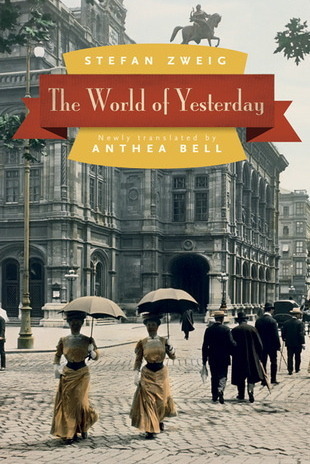
In his remarkable memoir The World of Yesterday, Austrian writer Stefan Zweig described Vienna at the end of the nineteenth century as a place of unbounded optimism. “[People] honestly thought,” he wrote, “that divergences between nations and religious faiths would gradually flow into a sense of common humanity, so that peace and security, the greatest of goods, would come to mankind.” Given the global cataclysm that would soon arrive in World War I, Zweig’s remarks are sobering. But at the end of the century the Viennese spirit was one of great pride, and for good reason: practically every great mind of the previous two hundred years had come out of that city. The thinFrom Prodigy to Pioneerkers Ludwig Wittgenstein, Carl Menger, Viktor Frankl, Friederich Hayek, and Sigmund Freud were all Viennese. So were the writers Stefan Zweig, Ignaz Castelli, and Arthur Schnitzler. And of course there are Vienna’s composers: Haydn, Mozart, Beethoven, Schubert, Brahms, Mahler, the Strausses (all three of them), Schoenberg, and Berg, among others.
Born in 1897, Erich Korngold came of age amidst the crucible of Viennese creativity just as the city’s optimism reached its zenith. His father was a leading music critic in the city, and his composition teacher was one of Mahler’s foremost students. Mahler himself even proclaimed Korngold to be a genius, a prodigy who would someday carry the banner of Viennese musical excellence. And Korngold lived up to the hype; his operas were being performed in Europe’s greatest concert halls before his twentieth birthday.
Then came the war. Korngold fled Vienna and settled in California, where he earned a living writing scores for Hollywood films. In his later years, he found ways to bring these two arenas of his musical life into productive dialogue, composing works (like his 1945 violin concerto) that teem with the rich opulence of the late Viennese style while also containing an expansive, dramatic touch reminiscent of early Hollywood.
These three distinct periods of Korngold’s musical output are the subject of a recent Cedille Records album of Korngold’s chamber music, performed by the Pacifica Quartet in collaboration in pianist Orion Weiss, violist Milena Pájaro-van de Stadt, and cellist Eric Kim. Titled The Korngold Collection, the album features works composed between 1913 (when Korngold was still a teenager) and 1935 (after he became an established film composer). I would be remiss not to mention the fact that the Pacifica Quartet recorded these works in full, single takes over the course of three weekends at Indiana University in Bloomington, Indiana. This is an admirable and remarkable accomplishment—old-school, certainly, but worthy of respect. What few errors remain in their playing (a slightly out-of-tune note here and there, for instance) serve, in my opinion, only to highlight the incredible accomplishment of recording such difficult works in live takes.
The album begins with the three string quartets and ends with the string sextet, but I will proceed with my remarks in the opposite order since the string sextet was written first. Composed in 1913-14, the string sextet represents the first flowing of Korngold’s mature style. One can hear, particularly in the first movement, the influence of Korngold’s continental forebears. There is a warm, mellow smoothness to the sound reminiscent of Brahms’ violin sonatas and a serious depth that sounds almost as if Mahler could have written it. There is also a waltz-like theme in the third movement that feels almost Straussian, though (dare I say) a bit more interesting. Yet the work is also punctuated by quirky passages of parallel fourths that offer a glimpse into Korngold’s future dramatic works. I thought of the second movement of his violin concerto, composed nearly thirty years after the sextet, which has a similar section of eerie parallel intervals. And I thought of the third movement of that concerto when I listened to the sextet’s finale, a joyous, almost frantic rush to the finish line for which Korngold writes the instruction: “as fast as possible with fire and humor!”
Next in the chronology of the album is the piano quintet, for which the Pacifica is joined by pianist Orion Weiss. Weiss is one of those musicians who seems to show up everywhere you look. One wonders: is there anyone he can’t perform with? He and the quartet are very much at home with the elegant, almost operatic quality of the piano quintet, which dates from the years immediately following the global success of Korngold’s opera Die tote Stadt. Again one hears the sweeping, dramatic influence of Mahler, but there is also a sense of unmistakable progression toward the sound that would eventually become his own. I was particularly moved by the second movement, which Korngold built off of fragments of his song cycle Vier Lieder des Abschieds. Weiss and the Pacifica highlighted the gentle, luminous sonorities of the movement with poise and grace.
For all the excellent playing they do in the sextet and quintet, it is with the string quartets that the Pacifica’s players truly shine. I will limit myself to a few comments on each of the three quartets. The first quartet is an adventurous and joyful work, brimming with energy and panache and reveling in Korngold’s mature harmonic style. The dense Germanic texture is still there, but the work is tighter and more confident. The Pacifica plays it with the relish that only comes from repeated performances of a work over many years.
The second quartet portrays a mature and marvelously confident Korngold. In the second movement, he mixes a childlike nursery-rhyme melody with what sounds almost like an American folk dance. And the third movement showcases his increasing fondness for mysterious string harmonics and dissonant high notes in the violins over a lush cello melody (again, forecasting the brilliant middle movement of his violin concerto). These contrasts are tastefully highlighted by the Pacifica Quartet, though the violins deserve particular commendation for their execution of the difficult strings of stratospheric harmonics.
Finally comes the third string quartet, composed during World War II and premiered in Los Angeles in 1949. This quartet set the pattern for all the works that would follow, mixing themes from Korngold’s iconic film scores with original chamber music. For instance, the second movement’s trio draws on Korngold’s score for the film Between Two Worlds, and the lovely sostenuto third movement is based on music Korngold composed for the film The Sea Wolf. The Pacifica Quartet manages the extremely virtuosic passagework with dexterity, highlighting both the Germanic density of the harmonies and the quintessentially American motifs in the film-score quotations.
Like Beethoven, Erich Korngold’s musical output can be divided into three periods: the first containing his youthful output of operas and the string sextet before World War I; the second containing the film scores of the post-World War I years; and the third containing the mature works composed after World War II, such as the third string quartet and the incomparable violin concerto. By following Korngold’s maturation through his chamber music compositions, The Korngold Collection offers the listener a comprehensive view of a composer as he grows from prodigy to pioneer, from Viennese wunderkind to American master.


Related Posts