Hegel’s Philosophy of History: A Faustian Grimoire
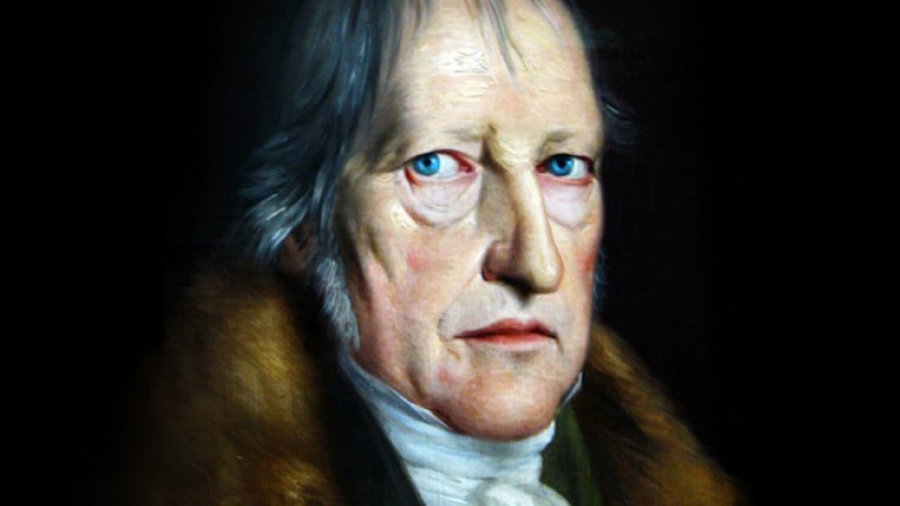
Hegel’s contribution to philosophy of history is quite significant, even though he had not directly inaugurated the field in the West, we are indebted to Kant and Herder for that specifically within Western thought, Hegel’s Lectures on the Philosophy of History was still the first work of speculative philosophy of history to formally popularize the genre. It is also interesting to notice that Hegel’s own work seems to synthesize ideas from both Herder and Kant, who both produced philosophies of history that are almost antithetical to one another. Kant’s philosophy of history is universalist in its treatment of cultures, and is quite optimistic when dealing with the future of Western civilization. Herder on the other hand produced a relativist treatment of cultures, which is essentially a precursor to Spengler’s own culture isolation theory. Moreover, Kant was more hesitant in predicting future events, even though he indirectly does that when attempting to project a shape on to history, which involves an unavoidable element of speculation or prediction. Herder on the other hand was clearly more comfortable in predicting future events, this is clearly seen when he predicted the growth of a future Slavic culture to follow what he viewed as a declining West. In terms of prediction, Hegel took Kant’s path, and was hesitant to project his philosophy of history onto the future. Yet, like Kant, he could not help but occasionally offer some predictions, offering a glimpse of his profound foresight, as clearly seen with his prediction on the future of the Americas. From Herder, Hegel borrowed the volk (nation), or volkgeist (national-spirit), as his historical unit of analysis. Finally, if Kant adopted the enlightenment conception of progress, and Herder as a personification of counter-enlightenment tendencies preferred the organic of progression, Hegel resolves the two different conceptions “dialectically,” ironically, through his now popular concept, namely, the Hegelian dialectic. In other words, Hegel’s own philosophy of history could be seen as a synthesis of Kant, as a thesis, and Herder, as an antithesis.
The Faustian Western culture to Spengler is dynamic and expansive, possessing an obsession for the infinite, expressing this through its conquest of the continents, poles, and the whole globe. But even that was not enough to satisfy its Faustian cravings, the West then set its eyes on spaces as a new frontier to conquer, shattering the Magian firmament — God’s enclosed dome, as it traverses through infinite space. These very same tendencies are also reflected in the historical instinct of the West, producing history-pictures that are also large in scope, both temporally and spatially. Thus, with the rise of Spengler’s philosophy of history, the historicity-geographic horizons are expanded, as he replaces the volkgeist with Kultur as the main units of analysis for historical analysis. If the former lies within the conjunctures (medium term) of history, that is, within the overall structure of historical time. The latter belongs to the longue durée (long term). We can view both Hegel and Spengler’s philosophies of history as purely Faustian treatments of history, and as the West’s horizons expand spatially and temporally — through space and time — the philosophies of history also expand. As seen clearly with the transformation of spatial and temporal scopes within the development of speculative philosophies of history within Western thought, which gradually shift from units of analysis that function within conjunctions of history, like Hegel’s concepts of national spirits, volkgeist, or each period’s or time’s unique spirit, zeitgeist.
Two units of analysis that function within the longue durée, like Spengler and Toynbee’s civilizations, or even the Hegelian World Spirit, Weltgeist. The difference though, according to Spengler, is that Hegel’s own limitation, being a prisoner of his own culture (hence his rejection of other cultures), leads to the application of flawed concepts in history. To Spengler, there is not one Hegelian world spirit that drives history and the different nations that play a significant role in it. Rather, there are multiple human spirits — high cultures — that are the main protagonists of the historical stage — the drama of world history. Perhaps what is ironic, is Hegel’s own argument on hindsight itself reveals the weaknesses of some of his own concepts over time. “The owl of Minerva flies at dusk” argued Hegel, emphasizing that the essence, and reason, for specific events in history is revealed only after the passage of time-history, namely, in hindsight. Thus, it is only through hindsight that Hegel himself is able to construct his own respective philosophy of history, through his own specific spatial and temporal coordinates in historical time. Moreover, and more importantly for us, it is only through our unique position in time and space, that we can critique and improve upon Hegel’s own speculative philosophy of history. The latter, is essentially what Spengler had attempted to do with his own philosophy of history, albeit whilst rejecting his notion of teleology, arguing that it is an inversion of the notion of destiny that is the primary driving force of history.
Spengler’s cultural relativism provides one with a lens that reveals the flaws of Hegel’s philosophy of history. Spengler highlighted how Hegel’s universalism and Eurocentrism led to his mistreatment and utter negligence of many cultures and their significant role in history. The result was a historical scheme that neglects the reality of major cultures in history, a tripartite periodization model — Ancient-Medieval-Modern — that passes by major cultures like Islam, India, and China briefly, and totally neglects others like the Mesoamerican culture. Hegel also denied some cultures membership into world-history, dubbing them “Unhistorical” like the sub-Saharan African cultures, which he viewed as exhibiting an undeveloped spirit, still stuck in the “conditions of mere nature.” We can see how this can be quite a problematic argument when combined with a linear model of world-historical development — whereby a hierarchy emerges between the different cultures and nations within Hegel’s philosophy of history. The nineteenth-century witnessed the rise of the German tradition of historicism, which is in itself an ambiguous term which I will not attempt to clarify here, but its ambiguity perhaps reflects the need for re-exploring the concept and other similar terms such as historicism. I like to view historicism as a distinct paradigm in historical understanding, one that emphasizes multiple points.
The first and main point, which is perhaps shared by most historicists within the German tradition, is an approach to understanding specific phenomena through exploring their development across history. The second tenet, which is embodied in the works of Hegel, is viewing history in itself as a unique ontological entity. This notion was a defining feature of many speculative philosophies of history that have emerged in the West since the field’s inception with the works of Herder, Kant and Hegel. With the rise of speculative philosophies of history and the historicist paradigm, history now became independent of other ontological structures, and this is perhaps best reflected in the contrast introduced between history, on one hand, and nature on the other. History and nature were now seen as separate entities, both alive but functioning as independent structures with their own laws and dynamics. To Hegel, nature has no history, or directionality, and is essentially stuck in an eternal cycle or loop. Such concepts found their way to Spengler’s own philosophy of history clearly as seen with his separation of the spatial world — world-as-nature, and the temporal world — world-as-history.
As Michael Sugrue once said, if the primary concern of Enlightenment philosophers was to highlight the importance of nature as an ontological category, it was Hegel (perhaps even Herder before him) that has attempted to do the same for history and temporality. That is, creating a coherent and holistic system to explain away history and time philosophically in order to provide an explanation for the question of history, time, and the end of history. This is, of course, quite an ambitious project which Hegel was not able to complete, nor perhaps any other speculative philosopher of history. But Hegel, in my judgement, devised a linear-progressive framework combined with a mechanism – teleological dialecticism – which brought him closer to achieving such a feat – explaining the meaning, pattern, and value of history. Hegel did not answer these questions, but provides a model that transcends his own respective time-period, as seen with the example we have mentioned above when describing how we can use Hegel’s own model retrospectively, through hindsight, to critique his own philosophy of history.
Thus, Hegel’s dialectic theory creates a series of paradoxes, it allows his theory to transcend his own historical period through traversing temporality-history and penetrate the dialectic clashes of forces present within the future. What Hegel has actually done, was construct a philosophy of history that is impeccable and timeless, not because it is correct, but because it has been able to successfully penetrate the unconscious collective of the West and predict its development across time and space. Our current modern secular culture takes this achievement for granted, but a deeper dive into the works of Hegel, Romanticism, the Enlightenment, and Western history as a whole, gives us an idea of how profound Hegel’s dialectic philosophy of history is, perhaps also, how dark it actually is. Hegel’s dialectical metaphysics, the source of power of his philosophy of history, is a blueprint of the logic behind the socio-political and economic development of Western civilization, and only Western civilization.
This is an idea I am currently wrestling with, and have not fully developed yet, but what I am attempting to argue here is that the dialectics do not really reveal the actual logic, or explain the development of, of non-Western Germanic cultures such as Chinese, Indian, Greco-Roman, and Islamic worlds. Spengler was correct when asserting that Hegel was not capable of totally detaching himself from his own culture, and get a clear view of world-history beyond Western culture. Indeed, he did not only not detach himself, in the Nietzschean sense, but he immersed himself in Western culture to the point that he became one with its Faustian soul. When Hegel argued that his own philosophy of history was in itself a reflection and manifestation of the Welt Geist, World Spirit, reflecting retrospectively on its journey across time, just as how Napoleon was himself the embodiment of the same World Spirit shaping the destiny of France and Europe as a whole, what is meant by World Spirit here is the Faustian spirit. My argument here, simply, is that Hegelian dialectics makes no sense outside of the context of Western Germanic civilization. Any attempts to do so, as in Hegel’s own case in his treatment of Eastern and Greco-Roman culture, or modern Hegelian philosophers who attempted to the same with Russia or the Islamic world, is an attempt at enforcing a specific scheme or mould where it essentially does not belong.
That being said, this is not an argument that attempts to undermine the profundity of Hegel’s dialectics, for it actually leads to another realization. As mentioned earlier, and in simple terms, Hegel was able to penetrate the collective Western psyche, its deep unconscious structures, and was able to retrodict and predict its past and future mechanisms, making sense of its historical process rationally and logically. Spengler knew this, arguing that this was the specific reason why Hegel chose to intentionally ignore specific cultures that do not fit his own dialectic teleological scheme, not because they were inferior exactly, but because the same rational process seen in the development of the Germanic nations will not be found when surveying the history of Islam for instance or African cultures. To Spengler, Hegel’s ideas were not original, and many past Western philosophers of history wrote works that could be seen as precursors to Hegel, the thinkers of a “Hegelian stamp,” like Joachim of Fiore for instance whose works on eschatology and obsession with triads precede Hegel by centuries. Again, the problem with modern paradigms is the fact that they deny metaphysics, and in doing so, they attempt to over-secularize and demystify many works of the past, including Hegel’s. This is clearly seen with all sorts of Hegelian thinkers that have emerged during the past two centuries who have provided Hegelian narratives that are stripped of its metaphysical and theological presuppositions, and more importantly in my judgement, it’s clear esoteric, hermetic, and occult elements.
Karl Marx inverts Hegel’s dialectics and imposes the material world on top of the spiritual metaphysical world – the result is dialectical materialism. Right wing Hegelianism does the same thing but emphasizes modern nationalistic political forms instead of the economic processes Marx was fixated on. Liberals like Fukuyama also clearly transform Hegel’s philosophy of history to fit their own ideological commitments and enforce his dialectics into the modern paradigm, again, devoid of any real metaphysics or spiritual concerns. The reality, however, is beyond these modern makeovers, Hegel’s work is clearly immersed in metaphysics, despite the fact that it appears in a more secularized version when compared to pre-enlightenment philosophies and philosophies of history.
Karl Löwith’s writings on the development of philosophy of history shed further light on this phenomenon – the gradual secularization of eschatology, or theologies of history, over time into secularized forms, namely, philosophy of history (speculative philosophy of history in specific). The Enlightenment, to Löwith, has oddly led to the inversion of monotheistic Abrahamic conceptions of time – history – that is, the concept of eschatological direction, or directionality in historical time. Which has subsequently given birth to the artificial, and secular, concept of linear progress. Although Hegel is clearly influenced by his own respective zeitgeist, that of the Enlightenment and Romantic movements, he is still perhaps the least affected by such developments since it merely led to the same Judeo-Christian conception of history, albeit through a different language and philosophical approach, the model and scheme remained the same. Hence why Löwith called him the “last philosopher of history,” primarily because his historical scope and lens was derived from the Judeo-Christian tradition, that was “still restrained and disciplined by the Christian tradition.”
The only difference between Augustine and Joachim, on one hand, and Hegel, on the other, is the fact that the latter interprets such Christian ideas through speculative and “cunning” reasoning. That all being said, and as Löwith argued, Hegel’s interpretation still had its clear limitations, his philosophy of history, after all, was a weak remake of the original. For what is true – faith – cannot be reduced into reason, and thus, theologies of history cannot be converted into philosophies of history. The conversion of theologies of history into philosophies of history is an inversion, and devolution, of these sacred modes of knowledge into modes of knowledge that are compatible with the age of spiritual deficiency we currently reside in. More importantly, when looking at Hegel’s philosophy of history, is how it absorbs the will of God into “the spirit of the world and the spirits of nations, the Weltgeist and the Volksgeister,” which in my judgement, reveals the implicit pantheism hidden beneath Hegel’s secular reason. A pantheism that is compatible with the Faustian nature of Western culture, and can clearly be seen in many other philosophical systems that have emerged from Western civilization. These pantheistic elements in Hegel can be understood perfectly through Eric Voeglin’s concept of gnosis and Gnosticism.
Eric Voegelin described gnosis as a sort of direct comprehension of truth devoid of reflection, and Gnosticism as a spiritual belief or mode of thinking that asserts “absolute cognitive mastery of reality” which can appear in two forms, transcendentalizing (early gnostic Christian groups) or immanentizing (Modern political forms – Marxism, Fascism, Liberalism?). Voegelin saw a connection between early gnostic Christian beliefs and modern political forms, describing both beliefs as naturally leading to a peculiar kind of alienation with society which leads to the belief that the world can be transcendentalized through learning and knowledge – gnosis. The second effect, which is more common with modern political forms due to politicizing such beliefs, is materializing or “immanentizing” the eschaton, that is, the urge to create a heaven on earth. Such political philosophies are characterized by beliefs that human life can be perfected, and the world as a whole, through the intervention of “World-Historical” individuals, “Men-Gods,” Carlyle’s “Great Man,” Spengler’s “Caesars,” De Chardin’s “Omega Point Man,” or even Nietzsche’s “Übermensch.” To Voegelin however such a reality, one that seeks to create a heaven on earth, is spiritually impossible since the reconciliation of mankind and the divine is seen as the only path to redemption and salvation, which consequently lead to actual transcendence beyond this world and towards the spiritual world or the afterlife – the Kingdom of God. Voegelin warned of attempts to create a heaven on earth, since they will ultimately lead to an inversion, or caricature, of that specific sacred idea or notion, arguing “Don’t immanentize the eschaton!”, in other words, “Do not try to make that which belongs to the afterlife happen here and now.”
Like Voegelin, I also avoided a deep criticism of Hegel’s work because I could not fully understand and comprehend his work. Apart from the natural confusion that occurs when attempting to translate or read any German philosophical work, which is quite common, something else obscured my understanding of Hegel, and it all becomes clear once you find the connection between Hegel’s work and the occult, esotericism, and magic. Like Voegelin, who understood Hegel when connecting him to his concept of Gnosticism, I was able to understand, and dissect, Hegel through connecting him to Spengler’s conception of Faustian Western culture, and locating his work at the intersection between esotericism, the occult, and Western philosophy. Additionally, like Voegelin, I came to the conclusion that Hegel’s work as a whole, should be viewed as a “grimoire,” that is, it must be “recognized as a work of magic – indeed, it is one of the great performances.” This again explains why and how his dialectics are imbued with so much predictive and insightful power, it is not because it is an accurate speculative philosophy of history like Spengler’s, but precisely because it could penetrate the collective Western psyche through magic, albeit concealed in secular language.
The fact that Hegel’s own work is in itself is a synthesis of the two greatest, and contradicting, philosophies of history of his own zeitgeist, that of Kant and Herder respectively, is in itself a remarkable feat, and again, could only explained through a similar approach – to view his dialectics as a Faustian magical spell or rite. Hegel argued that the World Spirit, apart from asserting itself through guiding the rise and fall of specific nations across history, and embodying world historical individuals to their destiny (Alexander, Caesar, Napoleon), has also manifested itself at the moment where Hegel begins writing his own philosophy of history. In Hegel’s philosophy of history, as he retrospectively reflects at the whole of world history, the past is all synthesized perfectly and made sense of logically and rationally at his exact moment through hindsight – all history leads to Hegel writing his philosophy of history at that exact moment in historical time. Hegel was both right and wrong. He was wrong in asserting that all of human history leads to his own work, but he was right in asserting that all of Western culture’s development had led to him. For the spirit that possessed him at that moment, what he called the “World Spirit,” as I mentioned earlier, was nothing more than the same Faustian Daemonic spirit that possessed, and still possesses, all of Western culture. This is also, in my judgement, the tragedy of Spengler and Nietzsche, whom both attempted to free themselves from this spirit through “total detachment” and their cultural relativism, yet they failed to do so, leading to the bleak, dark, and pessimistic outlook on the world as a whole. Spengler and Nietzsche are indeed both perfect embodiments of the “crisis of historicism,” the lack of constructing a holistic and collective metanarrative in light of the discovery of the relativity and historicity of culture and time. This is why to Spengler history was meaningless, it contained patterns and organic forms, but as a whole, did not possess any meaning, or at least to Spengler it did not. For every culture had bestowed its own meaning on to history and life, and the meaning of history to the Western Faustian man was a truly tragic one that Spengler could not help but attempt to totally detach himself from his own culture in a Nietzschean manner. The tragedy here lies in the fact that the Faustian spirit is so powerful within the West, that both Christianity, and cultural relativism, were unable to purify the West from these daemonic forces. The result, the Faustian man transforms Christianity, into a Christianity of his own, and cultural relativists are left with a void – the abyss – after attempting to deconstruct the West philosophically, this is ultimately what Nietzsche’s eternal recurrence was – the Faustian infinite Ouroboros that consumes Western man eternally. The Faustian trap, which both Nietzsche and Spengler were victims of, is perfectly embodied in Nietzsche’s satanic thought experiment on this matter:
What if some day or night a demon were to steal after you into your loneliest loneliness, and say to you, “This life as you now live it and have lived it, you will have to live once more and innumerable times more; and there will be nothing new in it, but every pain and every joy and every thought and sigh and everything unutterably small or great in your life will have to return to you, all in the same succession and sequence” … Would you not throw yourself down and gnash your teeth and curse the demon who spoke thus? Or have you once experienced a tremendous moment when you would have answered him: “You are a god and never have I heard anything more divine.”
Once more, Hegel’s World Spirit, once identified as the Faustian spirit, reveals the limitations of his philosophy of history and its actual scope. What Hegel calls “world history” is actually Western history, and when mentioning other cultures it is a view of these specific cultures through a purely Faustian lens. Any avid reader of both Hegel and Spengler will realize the effect of the former on the latter, clearly Spengler’s philosophy of history possesses a lot of parallels with Hegel, precisely because Hegel had inaugurated the field within Western thought. Of course, both authors possess conflicting world-views, or overarching philosophies, but Spengler still possesses some ideas that he clearly had taken from Hegel but for some reason, which is in my judgement characteristic of Spengler, he does not cite him nor give him any credit. A simple example that I can mention briefly for the sake of brevity is Hegel’s contribution on Hindu and Chinese cultures, as well as his views on Christ as a world-historical figure. Also, Hegel’s conception of Jesus Christ, as the only exception within history, is also one that Spengler adapts, and builds on.
That all being said, Spengler clearly chooses, or attempts to totally detach himself from his culture, which was able to do in his philosophy of history, but perhaps not as a human being – religiously and spiritually as an individual he was still bound by the Faustian spirit. Spengler’s world history, is in itself, to a larger degree, more of a world history than that of Hegel, even though he himself described his own philosophy of history as a form that is relative to a specific time and place. Spengler’s cultural relativism does lead to his cultural isolation theory, which in turn leads to the respectable treatment of each culture independently, as opposed to Hegel’s universalism which prescribes a Eurocentric scheme and forces all cultures to revolve around his own.
Again, I do not refute all of Hegel’s arguments or concepts in his philosophy of history, if anything, anyone involved in this field of study today is highly indebted to Hegel for popularizing it. That being said, our modern purely secular and materialist lens almost obscures the true nature of Hegel’s philosophy of history and how it should be read. As Glenn Alexander Magee argued in Hegel and the Hermetic Tradition, Hegel’s work cannot be properly understood when viewed in isolation from its implicit hermetic influence. As Magee said, Hegel’s system is “Hermetic in both form and content,” apart from structuring his work in “Hermetic symbolic forms of the circle, triangle, and square,” Hegel’s obsession with triads is also another sign to his commitment, one that can be noticed when simply looking at the table of contents in his philosophy of history. My problem with Hegel’s philosophy of history is not the hermetic elements, nor the esotericism, but rather, the malevolent nature of his all powerful world spirit. This of course, again, reveals the pantheistic elements within Hegel’s work, or more specifically his rather pantheistic elements, since the world-spirit guides the universe and is part of nature, but also transcends its. Thus, this panentheism in Hegel leads to a guiding principle in world history – the World Spirit, is a manifestation of the Absolute Spirit – God. As Hegel says at the end of his philosophy of history, the history of the world is essentially the “process and development and the realization of Spirit–-this is the true Theodicæa, the justification of God in history.” Ultimately, Hegel’s philosophy of history is not eschatological per se, although it may appear to be so for some of his readers. In reality, the Hegelian “End of History” is a theodicy, a vindication of divine providence – God, in the existence of evil. Yet, how can the absolute develop a spirit that is intrinsically malevolent? As Jonathan Black mentioned in his controversial works at the intersection between the occult and history, The Sacred History and The Secret History of the World, even from the point of view of the occult and esoteric thought, Hegel’s World Spirit was not the eternal spirit. Rather, it was a spirit that reflected a specific zeitgeist, one of a spiritual crisis, a “terrible darkening,” a crisis that was caused by spirits – demons. What esoteric history views as a spiritual crisis, is what materialist history explains through the concept of “alienation.” This is why, according to Black, Hegel’s spirit has another darker side that is rarely mentioned, in Hegel’s own words “The spirit cheats us, the spirit intrigues, the spirit lies, the spirit triumphs.” Such notions remind us of the relevance of Löwith’s argument that many forms of philosophy of history that emerge during the Enlightenment are inversions of the “theologies of history” from Judeo-Christian-Islamic traditions, where the concept of “eschatological direction” is replaced by “rational progress.” Although Hegel definitely provided the greatest of these attempts, as a “priest of the Absolute” through philosophy rather than theology, he did not do it as a prophet predicting the future, but as a “prophet in reverse, surveying and justifying the ways of the Spirit by its successive successes.” Of course, as mentioned earlier, Hegel does also briefly project his philosophy of history unto the future, like Herder, Spengler, and Toynbee, especially in the case of America and Russia, and did so while demonstrating astonishing accuracy and foresight. One could only imagine what such a philosophy of history, imbued with such magical powers, would have accurately predicted if Hegel were to actually project it into the future as Spengler did. That being said, from my own research on philosophy of history, I realized that they can be actualized, or manifested, into conscious existence as unconscious philosophical expressions – ideas. What is scary about Hegel’s own philosophy of history is its hubris, as Löwith said, he felt no difficulty in expressing that he had found the “ultimate meaning of history” and identified it as “the idea of freedom.” Yet I cannot help but ask, whose idea of freedom exactly? Voegelin’s reading of Hegel, as a dangerous grimoire, again reminds us of what such utopian metanarratives could lead to in their attempts to “immanentize the eschaton” and creation of an inverted heaven on earth, a place where it does not belong. According to Voegelin, the world has already had a glimpse of such false dystopian heavens with the rise of Marxism as the embodiment of a leftist form of Hegelianism, and the Fascists as the right-wing counterpart. Fukuyama’s “End of History” thesis, as a liberal form of Hegelianism, also has its own respective political, social and economic implications that most of the world is wrestling with today. All modern purely secular political forms all naturally lead to a gnostic tendency to dominate and lead to a process of alienation within society according to Voegelin. With the current state of radical alienation in Western civilization, the anarchic state of global politics, and the developments at the ecological and technological front, we should remember that philosophy of history is a perennial human concern of existential relevance that could help resolve many anomalies we are currently facing. Therefore, we should be careful which form of philosophy of history we materialize, lest we invoke a Faustian spirit forcing our collective consciousness into a compact with the Devil securing us infinite power and unlimited gratifications in the temporal world but at a heavy price – our eternal salvation.


Related Posts