Idealism Reborn?
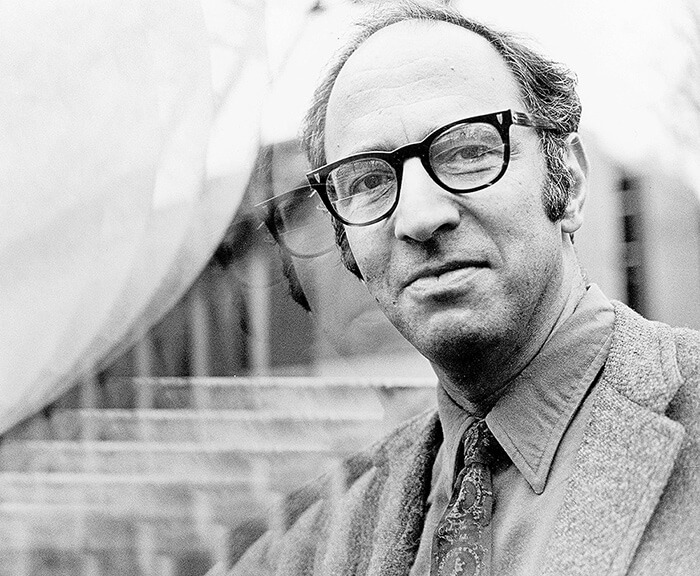
As Thomas Kuhn rightly pointed out in The Structure of Scientific Revolutions, the progress of knowledge, the change of attitude of the scientific community towards certain concepts is not a simple, linear process, but something more complex, where periods of “normal” science are sometimes accompanied by radical paradigm shifts. Sometimes some theories that seemed certain are gradually replaced by new ones. Not so long ago, for example, we saw new objections to the big bang theory obtained by the interpretations of observations from the James Webb telescope (the successor to the Hubble telescope), or the popularisation of the multiregional hypothesis against the famous out-of-Africa theory. The exit from Africa would become just one episode in the emergence of the homosapiens species on three continents.
Developments in the natural sciences have inspired directions in philosophy for at least the last several hundred years. The remarkable development of technology, the hard sciences including neuroscience, the secularisation of societies, have all left their mark on our perceptions of the human mind and consciousness. We owe a great deal of assistance in internalising these beliefs in society to mass culture. Films such as the “Matrix” where the entire perceptual content of the protagonists’ exteriors can only be an illusion existing in a computer programme, or the cyborg characters from the film “Blade Runner,” blurring the distinction between man and cyborg, which is nothing but a man-made machine, have played an important role in this. In 1999, US head of state President Bill Clinton stated: “Mental illness can be accurately diagnosed, successfully treated, just as physical illness.” This view was agreed upon by the then US Surgeon General David Satcher, who commented: “Just as things go wrong with the heart and kidneys and liver, so things go wrong with the brain.” The significance of these statements lies in the equating of somatic (bodily) disorders and mental disorders in practice. This change in research optics is called naturalisation; the description of the mind has shifted from the field of philosophy to the sciences, seeking to treat the mind in a similar way to objects in the physical world.
There are many distinctive conceptions of the philosophy of mind and, more specifically, of the body-mind problem. The ontic criteria, indicating monism and dualism, i.e. whether a concept presupposes the existence of one or more substances, are most often taken as the basic criterion. The classic example of soul-body dualism is found in Descartes. This thinker did not avoid adopting a certain belief, which has become so firmly implanted in European philosophy. By this I mean the radical opposition of subject and object of cognition to which the separation into soul and body corresponds. Against this separation, an opposition that has nested so well in European culture and philosophy, spoke none other than Eric Voegelin. Although Voegelin’s position was not idealism, it was closer to the philosophy of neutral monism by William James. In James’s famous 1904 essay, “Does ‘Consciousness’ Exist?,” it presents a critique of such a dualistic position, showing the paradoxical nature of such a division. On the one hand, the visible world is the content of the experience coming from outside, which at the same time is supposed to be some mental content. As he stated: “paradox that what is evidently one reality should be in two places at once, both in outer space and in a person’s mind.” William James rejected the traditional dualism of mind and matter by suggesting that: “thoughts and things are made of the same ‘stuff’ of pure experience.” This allowed him to invoke a different approach to the traditional body-mind problem. This question now arises: what is the nature of this primary experience within the framework of neutral monism? In my opinion, this is where James’ considerations could open up a certain small gateway for idealistic speculation.
It is sometimes difficult to grasp well-noted differences between different concepts. This is, among other things, because what for some is only a property of one entity e.g. consciousness for the brain for another constitutes a separate entity in the form of mind. Distinctions arise that are difficult to grasp, e.g. between monistic emergentism (which assumes that the brain, by virtue of its very high level of material complexity, is able to induce states of matter that are unattainable for its other complexities, in effect “creating“ consciousness) and interactionist dualism (which is a dualism of substance where one entity – brain – interacts in some way with another – mind or consciousness), which in practice seems to settle on distinctions in describing very similar, if not the same, concepts, despite obvious ontic differences. A concept common to many of the contemporary approaches is what is known as supervenience. That which is mental (e.g. feelings of pain, awe) supervene upon the physical and does not exist without it. This supervenience creates a link between our mental and physical states in much the same way that throwing a ball and then the flight of that ball creates a causal flight in the physical world. The complexity of the problem of the philosophy of mind (what is consciousness? how many entities exist, what their nature is, what affects what and how, if at all) gives rise to a wide range of different positions. The physicalism present in contemporary philosophy of mind can take many forms. It does not infrequently make use of the thesis of supervenience. In other words, the situation when we feel satiety after a meal could be a mental superstructure of the empirically identifiable physical states of our body. The mind is dependent on the corporeal and does not exist in isolation from it.
In the most extreme physicalist view called eliminativism, the human mind does not exist, only the brain exists. In the end, such oddities are, after all, the domain of interest of philosophers and not of “serious“ scientists. The first-person consciousness of the human being, which does not exist as something ontologically real, is supposed to be the effect of constantly occurring biochemical processes in the human body, and is therefore an illusion. Unfortunately, in such an account, it inevitably turns out that the possibility of making the judgement contained in the previous sentence is also an illusion. The reified ‘subject’ itself becomes a victim of the naturalised ‘phenomenon’ it was tasked to investigate. The question of the metaphysical habitat of the soul is seen in this instance as a vernacular, but it is, at best, a prehistory of the philosophy of mind. Every position in the philosophy of mind faces counter-arguments, philosophical as well as those from the sciences. Adopting any view without aggravation, combined with the knowledge, or rather very convincing models of the natural sciences, makes it difficult to see the obvious holes that exist in our scientific knowledge of how the human nervous system works. An example is the creation of theoretical models (often not explicitly called such). Disregarding their theoretical shortcomings, but nevertheless accepting them as valid, they best explain the phenomenon in question in the light of current knowledge.
A sample of this is the recording of memories in the brain. In a big nutshell: memories are able to be formed instantly, faster than at least a few minutes of formation of molecular memory traces in neurons, and it can often recall them for the rest of your life. It is possible that recent memories arise from the circulation of signals between neurons, which occurs through the release of neurotransmitters at memory-related synapses. Perhaps, if some critical sources are correct, it is important to point out that we don’t really know how the brain recalls memories. In fact, we don’t have the knowledge to say with apodictic certainty where they are recorded as well as how they are played back. “What If Memory Information is Stored Inside the Neuron, Instead of in the Synapse” is one of the titles of the articles. It is consensually accepted that cognitive functions depend on the integrated activity of many areas of the brain. Even great damage to the precious organ that is the brain does not cause a glaring impediment (measurably recorded, e.g. by a drop in IQ) to its continued efficient functioning.
Idealism is the name of many different philosophical currents. It is sometimes used by philosophers during their lifetime and by scholars qualifying some scholar’s beliefs posthumously in this way (Plato certainly did not know during his lifetime that he was an Idealist; the term was not coined until the eighteenth-century). In the context of the philosophy of mind, idealism is a view that postulates that ontologically there is something more fundamental than the reality as we perceive. Surprisingly, many representatives of the sciences have pointed to the mind, or consciousness, as primordial in human experience. Erwin Schrödinger wrote for instance: “For consciousness is absolutely fundamental. It cannot be accounted for in terms of anything else.” In a similar vein, Max Planck, German Nobel laureate in physics in 1918, stated: “I regard consciousness as fundamental. I regard matter as derivative from consciousness. We cannot get behind consciousness. Everything that we talk about, everything that we regard as existing, postulates consciousness.”
It seems that also into the realm of the world of sciences is infiltrated by a perspective that calls contemporary paradigms into question. The new optics are summarised very well. For example, in an article on the subject titled “Spirituality and nonlocal mind: A necessary dyad” by Larry Dossey, who coined the term nonlocal mind in 1987, gives insight regarding this idea. Here is the abstract of that article: “A growing body of empirical evidence suggests that human consciousness is nonlocal; it is not confined to specific points in space, such as brains and bodies, or specific moments in time, such as the present. Evidence for nonlocal consciousness can be found in distant cell-to-cell, organ-to-organ, and person-to-person interactions. Throughout history, what are commonly called spiritual experiences involve a similar motif of experience: the felt transcendence of space and time and a sense of unity with all there is. This article proposes that nonlocality is a common feature of consciousness in general, and of spiritual experience in particular.” It seems to me that a view that can be called the opposite of non-local consciousness is encephalo-centrism, which is the belief that the mind is in the brain and has its roots as far back as ancient Greece. In the Hellas, another popular view at the time was the belief that the mind is in the heart, this is known as cardiocentrism. In my opinion, it is better to call the numerous “evidences” presented by L. Dossey as observations or actually some intriguing results of interpretation of observations; this is a more appropriate term here for the time being. For example, a 2014 study from Italy described scientists observing similar reaction(s) of groups of neurons shielded from each other after laser stimulation of one of them, as if there was some invisible thread of connection between them. Some of this research does not necessarily support the idealistic model. Emergentism, or the so-called quantum mind, fit equally well here. Thus, neuroscience has already entered the realm of quantum physics with great certainty. It used to be speculated by John Eccles and Karl Popper in the work called, “The Self and Its Brain: An Argument for Interactionism;” this work today has increasingly bold theories based on meticulously prepared models. According to some very recent theories, quantum entanglement in the brain generates consciousness. I do not undertake a deeper interpretation of this research, as I am not familiar with quantum physics. I’ll just quote Werner Heisenberg at this point, who said, “I think that modern physics has definitely decided in favour of Plato. In fact the smallest units of matter are not physical objects in the ordinary sense; they are forms, ideas which can be expressed unambiguously only in mathematical language.”
One of the most interesting, in the context of the topic at hand, studies not discussed in the article by Dosseym is the international AWARE study (AWAreness during REsuscitation) conducted over the past several years. Two studies were conducted, AWARE I and AWARE II. Associated with this are sometimes so-called near-death experiences (often shortened to NDE), during which, for example, one encounters other beings, has auditory impressions and dim, sometimes clear visions. The first study, which was published in 2014, said its findings “supports other recent studies that have indicated consciousness may be present despite clinically undetectable consciousness.” The full name of the second experiment, the results of which were published in 2023, is “AWAreness during REsuscitation – II: A multi-center study of consciousness and awareness in cardiac arrest.” The study’s conclusions read as follows: “Despite marked cerebral ischemia […] normal EEG (electroencephalography) electrical activity in the brain activity (delta, theta and alpha) consistent with consciousness emerged as long as 35-60 minutes into CPR (cardiopulmonary resuscitation).” This study is the first to identify indicators of consciousness during CPR. However, none of the participants who recalled conscious experiences, including the six who reported, had any EEG data, not to mention EEG data that would suggest signs of consciousness. What is important here is that some of the subjects were able to recall the memory of an experience from a time when brain activity no longer existed or was minimal, which should be impossible, from the point of view of modern knowledge.
It seems that the most controversial of the studies discussed are those on the effects of DMT on humans. People experiencing various phenomena under the influence of DMT infrequently present them as feeling more real than the drug-free reality. These events are so called “trips” that are devoid of the element of so-called ‘being high’ and do not cause destructive addiction or a visible decrease in intellectual capacity. DMT is a naturally occurring substance, and it can overcome the blood-brain barrier. Plants containing DMT are used by Indian tribes in South America in shamanic rituals, during which a drink containing DMT called Ayahuasca is consumed. In some parts of the US, the use of Ayahuasca is legal for religious purposes. Although DMT occurs naturally, it was artificially synthesised under laboratory conditions in 1931. DMT can be taken in various forms. In one study, DMT was administered to participating people intravenously while observing what areas of the brain activates. What is significant about these experiences is that DMT ingestion often has such a profound experience for those taking it that it calls into question a previous view of the world unlike any other. There are websites about mapping DMT realities, cataloguing encounters with beings encountered there and common motives that travellers encounter, e.g. being given gifts by these strange beings. Some scholars such as Andrew Gallimore and Ede Frecska studying the effects of DMT on humans have proposed that the brain can be interpreted to be just a kind of receiver that switches to receiving some other reality after taking DMT. A particular popularisation of the knowledge of these experiences is due to a series of extremely popular podcasts by Joe Rogan.
These and more circumstances are undoubtedly cognitively stimulating in the search for answers to fundamental questions about human consciousness. Brazilian-born computer engineer and philosopher, Bernardo Kastrup, was the author of a philosophy he named Analytical Idealism. The primordial meaning for him is consciousness, and the universe is made of transpersonal mental processes that manifest as matter. His idealism is the idea that reality is essentially mental. If I understand Kastrup correctly (I can’t point to the relevant passage in his PhD dissertation), the word “analytical” in the phrase “analytical idealism” is meant to be a reference to the heritage of analytical philosophy. I do not know to what extent his philosophy is characterised by a rigorous, logical approach. However, Kastrup’s idealism is not a set of arbitrary speculations, but it is based on the latest findings of empirical science. The AWARE experiments, near-death experiences, and descriptions of the unspeakable strangeness of DMT experiences are what inspired him in the development of his philosophical thought.
Finally, after identification of the philosophical views of various authors, scientific theories and concepts collected here as obviously inspired not only by the progress of the sciences, but, more importantly, by the recognition of their deficits; it is also an indispensable step in the development of knowledge, perhaps more important than the mere addition of knowledge. Conceivably this is the main engine generating intellectual ferment. As Proclos, a Greek Neoplatonic philosopher who lived in the fifth-century AD said, “statues are made by subtraction.” What we know today may not be true tomorrow. As Nassim Taleb wrote: “disconfirmation yields more reliable results than confirmation.” I will conclude my argument so far with this sentence: consciousness (whatever it is) has not yet said its last word.


Related Posts