John Locke’s Paul
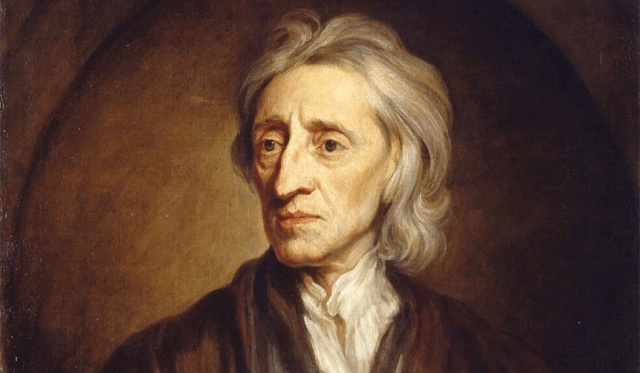
Paul is intentionally “all things to all people” (1 Corinthians 9:22). Christian philosophers must have some view of Paul, given that half of the New Testament is attributed to him. Even ignoring pseudepigrapha, no author is more present in the New Testament than Paul. The interest here is in presenting John Locke’s understanding of Paul. I confess that part of the motivation for this is simply that Locke is one of my favorite philosophers. There are broader reasons to think about Locke’s interpretation of Paul. Locke is a Christian and a philosopher. He is also one of history’s most important political philosophers. Given this, it is reasonable to wonder how some of Locke’s famous doctrines square with Paul’s views. In particular, one might wonder how Locke can both hold that Paul possesses the entire gospel, while ostensibly disagreeing with Paul both on the importance of faith and the authority of established governments. This essay addresses that question. The essay is not evaluative, however. Whether Locke reads Paul correctly is not the issue. The issue is simply to understand what Locke makes of Paul’s more famous declarations.
The focus of this discussion is on Locke’s somewhat underappreciated Essays and Notes on the Apostle Paul. This text was published posthumously, and Locke might still have been working on it at the time of his death. Locke does not discuss all the letters attributed to Paul. Still, this is a substantial work. It includes Locke’s translations, paraphrases of, and commentary on Galatians, Corinthians I and II, Romans, and Ephesians. When necessary, I do draw from Locke’s other works. The most obvious necessary companion here is the Reasonableness of Christianity. I freely refer to Locke’s other works when it is particularly helpful.
Paul is obviously crucial to Locke’s understanding of Christianity. Locke expresses the common view that Paul received the gospel via miraculous revelation. Locke holds that Paul received the entire gospel, and a harmonious understanding of all its elements. Locke speculates that this distinguishes Paul from the other apostles who learned the gospel over time and may well have had an incomplete understanding of it at the time of Jesus’ death.
Now, Locke is committed to the view that God created humans as rational creatures. A common theme in Locke’s work is that God would not have created rational animals if God did not want us to live according to reason. This presents an initial puzzle that allows us to dig into how Locke understands Paul. The puzzle is that Paul is often taken to privilege faith over reason. Indeed, in the old tension between Athens and Jerusalem, Paul represents Jerusalem. In Lev Stestov’s Athens and Jerusalem, he employs Romans 14:23 as illustrative of the spirit of Jerusalem. There, Paul says, “Whatever is not done of faith is sin.” Plato, of course, represents Athens. The line from the Apology, “The greatest good of man is to discourse daily about virtue” represents the quest for wisdom. Locke rather clearly endorses something like the Athenian impulse in the epistle to the reader that precedes his Essay Concerning Human Understanding. I encourage interested readers to work through unabridged versions of that letter.
There are many lines in Paul that welcome the reader to believe that he takes faith to be of utmost importance. In Romans 10:8-14, Paul writes the following:
This is the message of faith that we proclaim. If you confess with your mouth, “Jesus Is Lord,” and believe in your heart that God has raised him from the dead, you will be saved. One believes with the heart, resulting in righteousness, and one confesses with the mouth, resulting in salvation.
In Galatians, Paul scolds his audience. He asks whether they “received the spirit by works of law or believing what (you) heard” Galatians 2, 2. Paul’s answer is that “those who have faith are blessed” Galatians 2:9. It seems that Paul wishes to link the fact that the Galatians received the spirit by believing instead of works of the law to the conclusion that it is faith, and not works, that saves. Paul particularly chastises Cephus. Paul claims to have told Cephus that “We are Jews by birth and not ‘Gentile sinners,’ and yet because we know that a person is not justified by the works of the law but by faith in Jesus Christ” Galatians 2:15-16.
Perhaps the most compelling case for treating Paul as stressing faith over wisdom is found in 1 Corinthians 21 to 23. He writes, “in God’s wisdom, the world did not know God through wisdom, God was pleased to save those who believe through the foolishness of what is preached. For the Jews ask for signs and the Greeks seek wisdom, but we preach Christ crucified, a stumbling block to the Jews and foolishness to the Gentiles.” The notion of seeking evidence and understanding seems to be called into question here. After all, this comes right after Paul invokes the line from Isaiah that says, “I will destroy the wisdom of the wise and I will set aside the intelligence of the intelligent.”
In his Essays and Notes on St. Paul’s Epistles, Locke warns against taking passages from Paul in isolation. He likens this to reading a long message from a friend as if it were not an organic whole. The intentions of an author are usually contextualized. When they are not, it is only by paying attention to digressions and the like that one may discern what Paul wishes to say. Locke quips that many readers take Paul to write with “invincible obscurity.” This is an error, as Locke sees it. Indeed, Locke takes Paul to be committed to employing reason at all turns. Turn now to the relevant passages considered above.
Start with Romans. Locke translates Romans 14:23. The entire passage reads as follows in his translation: “And he that doubteth, is damned if he eat, because he eateth not of faith: for whatsoever is not of faith, is sin.” Paul is referencing keeping kosher here. It seems that he wants to say that, irrespective of what one’s dietary practices, if one lacks faith, one is damned. When Locke paraphrases this passage, he introduces the idea that one must be convinced that one is behaving properly.
But have a care to keep this faith or persuasion, to thyself; let it be between God and thy own conscience: raise no dispute about it; neither make ostentation of… it by thy practice before others. But he that is in doubt, and balanceth… is self-condemned, if he eat; because he doth it, without a full persuasion of the lawfulness of it. For whatever a man doth, which he is not fully persuaded in his own…mind to be lawful, is sin (Essays, p. 200).
There is a theme in Locke’s work to the effect that acting contrary to one’s own conviction is wrong. The wrongness arises from acting contrary to one’s rational nature. What Locke takes Paul to express is not that faith is what matters, but that to do something that one is not convinced is right is immoral. It is a sin. In Locke’s Essay Concerning Human Understanding, he expresses this idea.
He that believes without having any reason for believing, may be in love with his own fancies; but neither seeks truth as he ought, nor pays the obedience due to his Maker, who would have him use those discerning faculties he has given him, to keep him out of mistake and error (Book 4, Ch. 17, section 24).
What about 1 Corinthians 19 through at least 24, where Paul is dismissive of the Greek quest for wisdom and understanding? On this matter, Locke offers an extremely light-handed treatment of Paul’s intentions there. Rather than to dismiss the general importance of wisdom and understanding, Locke sees Paul as trying to show only that rival apostles have no advantage over others as preachers of the gospel. Locke understands that the context of the letter is crucial. The context of the letter to the Corinthians occurs in part because there was an upstart in Paul’s absence. Some new apostle sought to overthrow Paul’s authority.
There was got in amongst them a new instructor… who had raised a faction against St. Paul. With this party, whereof he was the leader, this false apostle had gained great authority, so that they admired and gloried in him, with an apparent disesteem and diminishing of St. Paul (Essays p. 42).
Paul had to show that this instructor, who had neither met Jesus nor had the gospel immediately delivered by revelation had no special claim to preach the gospel. The usurper of Paul’s authority could not rely on any intellectual gifts like those of the Jews, nor philosophical wisdom to know what God had said.
Locke does not wish to say that no one needs to seek understanding of the gospel and its implications. He seems to limit the extent of Paul’s argument only to undermine the authority of the new apostle. Locke takes it as true that Paul received the gospel by immediate revelation. He also thinks that Paul fully understands the gospel. Because Paul is right, the intelligence and wisdom of these new apostles cannot not trump the direct revelation that Paul received. This does not imply that one cannot use intelligence and wisdom to learn God’s will. Certainly, Locke thinks that we must – especially those of us at a great distance from the relevant events. The specific upstarts cannot better understand the matters than Paul. This is what Paul wishes to say when he downplays the intellectual virtues in the passages in question.
In Galatians, when Paul says that we can be saved by faith alone, he does not mean that faith is all that matters. The Law of Faith makes up for failures to keep the Law of Works. That is not abrogated. Individuals must do their best to keep it. When their best still leads to failure, it is faith that will save them. In the Reasonableness of Christianity, Locke says that God “found out a way to justify some” who had not kept the Law of Works. This is the Law of Faith. There is no suggestion, at least as Locke sees it, that the sincere effort to learn and keep the law is unnecessary. Now, Locke does hold that the ceremonial and judicial aspects of the Mosaic law are eliminated by Jesus. The moral component of the Mosaic law is unchanged.
Now, there are some matters of controversy here. Whether Jesus himself told his early disciples not to follow the judicial and ceremonial aspects of the Mosaic Law is debated. So, too, is Paul’s view of whether Jews ought to keep that portion of the law. Yet, those controversies do not bear on Locke’s understanding of Paul on faith and reason. I want to round out this discussion by turning now to the question of political authority.
Romans 13:1-7, as Locke translates it, reads as follows:
Let every soul be subject unto the higher powers. For there is no power, but of God: the powers that be are ordained of God. Whosoever, therefore, resisteth the power, resisteth the ordinance of God: and they that resist, shall receive to themselves damnation. For rulers are not a terrour to good works, but to the evil. Wilt thou then not be afraid of the power? do that which is good, and thou shalt have praise of the same. For he is the minister of God to thee for good. But if thou do that which is evil, be afraid: for he beareth not the sword in vain: for he is the minister of God, a revenger to execute wrath upon him that doth evil. Wherefore ye must needs be subject, not only for wrath, but also for conscience sake. For, for this cause, pay you tribute also; for they are God’s ministers, attending continually upon this very thing. Render therefore to all their dues: tribute to whom tribute is due, custom to whom custom, fear to whom fear, honour to whom honour.
Given Locke’s commitment to a consent-based theory of political authority, this passage appears in tension with Locke’s views. I am tempted to call Locke’s interpretation of this passage ‘clever’ but I do not want to imply that he is being disingenuous. What Locke says is that ‘power’ in this passage is just that Christians have no special exemption from obeying a magistrate. Christians have the same rights that all citizens possess when it comes to judging whether de facto political authority warrants obedience. Locke simply denies a special Christian prerogative in this matter.
The tenor of Paul, as Locke reads him, is that Christians have certain obligations to obey legitimate authority. Locke does not see Paul as committed to any particular judgment about which authorities are legitimate. Locke’s admittedly light-handed reading of Paul on this matter allows him to square Romans with the actions of both Paul and Jesus. Paul and Jesus both defied their governments. Surely Paul could not then say that it is impermissible to do so. This, at least, is how Locke makes sense of Romans 13: 1 -7.
There is much more to say about all these matters. Locke has done us the great favor of assisting us in our understanding of Paul and politics. He would be loathe if we were to take his word as gospel. His goal, as he tells us in the epistle to the Essay Concerning Human Understanding, is to be useful. Readers should try to figure out if he is right.


Related Posts