Laurence Lampert and the Problem of Reason and Revelation
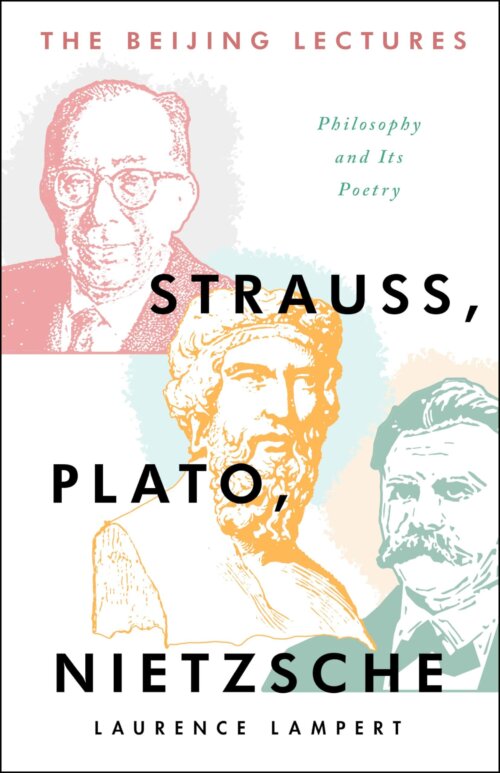
World renowned Nietzsche scholar Laurence Lampert passed away in 2024. A Canadian born in Winnipeg, Manitoba, and teaching from 1970 to 2005 at Indiana University, Lampert influenced Nietzsche scholarship not only in North America but also in Europe and Asia. The recently published Bejing Lectures: Strauss, Plato, Nietzsche by Paul Dry Books shows how important Lampert was to introducing Nietzsche and Strauss overseas. Lampert, out of reverence for the height of intellect from great thinkers, rejected calling himself a “philosopher” only to take from Nietzsche the vocation of philosophical laborer. This is telling of how Lampert viewed the philosophical canon of great minds. It is no wonder why Lampert was attracted to the thought of Leo Strauss. Strauss’s unique reading of the history of political thought, searching for a ground to modern political science, led him to recover esoteric reading derived from ancient and medieval political philosophy. Esotericism aims at the non-surface level meaning of an author’s intent, the opposite of which would be exoteric, the apparent or readily available meaning.
Lampert has an essay in the Cambridge Companion to Leo Strauss (2009) edited by Steven B. Smith on Strauss’s recovery of philosophical esotericism. The themes in this essay are expanded upon in the Bejing Lectures (2024) and in The Enduring Importance of Leo Strauss (2013), but this pithy essay in the Cambridge Companion concludes ambiguously about the foundation of the modern Enlightenment which is worthy of measure against Strauss’s intent. The essay’s esoteric reading of Strauss necessarily leads into a discussion on the tension of reason and revelation. This is one of the dominant strands and plays a central role in the development of Strauss’s political theory. There is one aspect of philosophical reason Lampert overlooks, that I uncover by way of reconstructing Lampert’s thoughts on the recovery of esotericism. It is the very reason why Strauss provides so much emphasis on the tension between philosophical and political life.
Lampert, with astonishing precision, reads Strauss’s letters to bring to life the journey of how he discovers esoteric writing. Lampert aims to find Strauss’s recovery of esotericism and how he restores it as a mode of philosophical communication. To do so Lampert reads, with a patience lost on contemporary interpreters, Strauss’s correspondence with Jacob Klein in 1938 and 1939. Throughout we are looking over Lampert’s shoulder into the writing process of one of political philosophy’s best interpreters. Lampert calls the letters “hilarious” where Strauss, spread across twenty-two months, is in precarious living situations searching for sustainable employment in New York, which he eventually finds at the New School of Social Research.
By 1943, Lampert announces that Strauss exposes the literary character of his subsequent writings. There is an exercise in restraint, Lampert argues, where in publicizing esotericism, Strauss brings back a Platonic political philosophy of “responsibility:” the appropriate degree for the philosopher facing persecution to discourse amidst the circumstances of one’s own practical affairs of the age. The restraint the philosopher exercises is also illuminating in what is not said. What is disclosed is measured against this restraint because the peculiarities of one’s age are always dictating what is presentable to popularly resonate. Lampert ties this back to Strauss’s “extreme opposition” to the modern Enlightenment. Where a thinker like Heidegger calls for radical historicism as a response to the Enlightenment’s metaphysical exhaustion, Strauss plants a firm grounding within the philosophical communication of esotericism, which dispels a faith in anti-Enlightenment relativity. This search, Lampert asserts, compels Strauss to look for enlightenment in traditions other than the modern European Enlightenment and its legacy. The responsibility in philosophical discourse is what helps it stand firm facing any persecution, in our post-Enlightenment and postmodern world, so as to not be abandoned to abject nihilism. Lampert calls this “philosophy’s place” which is the responsibility of philosophers to maintain when Enlightenment has collapsed. This is Strauss’s crowning achievement: no matter the Hegelian progress of history towards freedom or Kojeve’s universal and homogenous state to fulfill Enlightenment ends, there is responsibility inherent in philosophy that can quell or at least combat collapse; there is always a private responsible character of the philosopher that is not influenced by worldly affairs but is motivated by an eros for the truth. The philosopher is motivated by a search for wisdom about the whole, and historical satisfaction is not pleasing to the philosopher. The philosopher is not engaged in a struggle for recognition that necessitates freedom in the political realm. Progressive or reactionary politics are not the focus of the philosopher. Rather it is wonder at mysterious eternity, and our mortal place within it, despite societal vicissitudes. End of history revelation only concretizes a temporary state of affairs dressed-up as a permanent solution to the perennial issues of politics, which, for Strauss, raises the issue of the ultimate persecutor of philosophy, the “Universal and Final Tyrant.” Manifesting this on earth would for Strauss spell the end of philosophy.
With this Tyrant, Lampert reveals Strauss’s strategy for recovering esotericism in the history of political thought. Ultimate authority of faith in public revelation leads to a diminished realm of private philosophical communication. To Strauss, reason and revelation are “irreconcilable warring opposites,” a tension which necessitates philosophical esotericism. The private life of reason must be justified against a total revelatory public life. By the very proof of esoteric communication, reason always exists as that which is able to judge revelation.
Here Lampert asks two important questions: (1) Is reason too weak and contradictory today? (2) Are we at an end of the modern Enlightenment, where responsibility to philosophy, requires “making philosophy timid again”? Lampert, to answer the second question, draws from Strauss’s thought a parallel to Nietzsche, who, early on, was open to the “secrets of philosophy” by casting judgement on his age. Where Strauss searches to uncover a ground, Nietzsche wishes to reach for new heights. Nietzsche in his late writings sees Baconian science as completely totalizing the demands of the modern Enlightenment, so the only response from philosophy is silence, rendering, to Nietzsche, esotericism as muted and futile.
To complete the essay, Lampert praises the founders of modern Enlightenment, Bacon and Descartes, and squares Strauss’s philosophical project with theirs. Up to this point, it seems that Lampert is praising the thinking of Strauss, believing truly that reason and revelation are at odds with each other, a tension beneficial to posterity and the reading of the history of political philosophy. But what Lampert finds troubling is Strauss’s rejection of modern Enlightenment and attempts to contextualize Strauss as casting judgement on the modern Enlightenment age, by going back to ancient and medieval political philosophy. It is this Nietzschean reading of Strauss that forces Lampert to conclude, due to Strauss’s recovery of esotericism, we now have the tools to view the modern period in conjunction with the history of thinking, as our “highest spiritual achievements of our species.”
Reason, on Strauss’s account, is precisely what cannot be fully interjected into the public realm. It is reason, based certainly on Greek contemplation, which must be open at all times to wonder and mystery. It is reason for which is open to not only the affairs of the human realm but to the highest transcendental standards of eternity. Strauss did not mean for reason to be contextualized today as scientific reason and therefore as homogenizing reason separate from practical affairs. Quite the opposite. Strauss, in Natural Right and History, is critical of the modern positivistic and scientific fact versus value distinction, which leads to value relativism. On this interpretation, Strauss, by reading in the Greek enlightenment, cannot be said to be preparing the ground for practical reason or instead tracing its roots. Scientific reason cannot account for its own ground, and, to this extent, modern political science, by searching for morality, is in a crisis, for which leads Strauss to the Platonic Idea of Form or eternality, something permanent and perennial, not contingent, like the separation of facts and values, in the human condition.
We must remember that Strauss is writing against the backdrop of Heidegger’s solution to this modern crisis diagnosis: radical historical relativity. Scientific rationality does not have a moral connotation in its uncovering of facts, and addressing this Heidegger concludes that all periods of human life have a connection to Being but none have a higher authentic connection to it. This weak connection to Being has led to science and technology dominating thinking. The history of Being culminates as the modern Enlightenment and brings us to our nihilistic moment. While Heidegger says that the modern Enlightenment is banal due scientific rationality’s weak connection to Being, bourgeois self-interest and instrumentality, Strauss flips this claim by recovering the philosophical realm as persistently present and not contingent upon a relation to Being. Philosophy’s skepticism of any certain and correct political life provides its openness to wonder, much like Socrates, aware that he knows nothings, questioning the opinions of convention in Athens. Humanity, occupying the unique position as not a god or a beast, is incomplete. A political project that attempts to formulate the contrary is what is detrimental to the limit forming openness of philosophy and thus of human life. To attain the highest order of truth, the philosopher transcends the practical affairs of society by rationalizing about them but also must be tied to them. Heidegger severs thinking from practicality, where no moral judgement can be rendered upon practical life, as all epochs of Being are relative, leading to his own disastrous judgement in joining an authoritarian political regime. Strauss ties reason to practicality, where the philosopher has a responsibility not only to the temporal realm but to the highest sense, greater than oneself, of which a human will never grasp fully but can comprehend and contemplate through aligning one’s soul attune to what is. This would be higher than worldly affairs, in every case, but also part of it. Strauss’s aristocratic vision of philosophy has a dimension of virtuous civic spiritedness upholding that openness to what is or a freedom on the practical side. In any case, modernity has forgotten permanent questions of politics due to reason becoming subjectivist and instrumental. Ancient political science addresses this permanence in the human condition that science and technology cannot eradicate or perfect.
As Lampert suggests that Nietzsche injects poetry into philosophy, to reconcile in the modern age a particular truth not considered by scientific judgement, Lampert is less hopeful about esotericism: Strauss’s “anti-Enlightenment fostering of fundamentalism seems a less wise strategy for philosophy in our age than Nietzsche’s reinvigoration of the enlightenment.” In reforming the Enlightenment, Nietzsche’s philosophers become poetic commanders and legislatures, rendering modernity worthy of revolutionary redemption from the mass age of herd-like democracy, what Nietzsche calls the Christian slavish morality. Nietzsche’s unleashing of poetic passions as a master morality to “fix” the Enlightenment, convinces Strauss to keep reason and revelation separate and in tension. Lampert’s adoration for Nietzsche’s solution over Strauss’s, or reformulated as a claim that Strauss somehow missed aspects of Nietzsche’s poetic-commanders, is part of a more serious problem for liberal democracy in post-Enlightenment societies: revolution without limit can eradicate banality and viciousness from human behaviour.
For Strauss, moderation, not fundamentalism, must define the interaction between philosophy and politics, reason and revelation. Strauss did not “refuse” to endorse the modern Enlightenment; he instead found that every epoch, due to the friction between philosophy and politics, is saved not only from outright relativity but also from each epoch’s class of philosophers for which reasoning about the practical affairs of the age is their priority. Strauss admits of a compulsion, incentive, or conviction for the philosopher to be attracted to reason, but much of Strauss’s thinking maintains philosophers as not desiring to rule, as they have learned how to properly channel their ambition towards what is highest and do not need to be satisfied with the opinion of the many. The philosopher does not need to be universally recognized. It is this lack of recognition Strauss finds in esoteric writing, a philosophical standpoint to render judgements about society, to avoid persecution. It must be independent of opinion to do so. One would not write to avoid persecution if it is the nature of philosophy and politics to eventually overlap; opinion and truth in this case would be the same.
Hannah Arendt, one time student of Heidegger, but monumental political philosopher in her own right, once remarked that Heidegger’s philosophy is like a “digging.” This remark actually applies much more to Strauss’s esotericism than Heidegger’s philosophy of Being: underneath the surface, philosophy finds a home, not to be buried in relative thought-paths, unable to render judgement on convention, with each nomos being of equal weight, but to shine forth as a mode of communication not to be ensnared by opinion. How else is one able to provide a litmus test of political freedom in society? Judging from within historical affairs cut off from philosophical reason would only confirm the historical reality of any given society.
As Steven B. Smith, the editor of the Cambridge Companion that features Lampert’s essay, points out in Reading Leo Strauss, Strauss reads Plato’s Republic not literally but ironically for its dialogical intimations. This interpretation unsettles the Plato that Karl Popper once called the greatest enemy of open society. By discovering Plato’s esoteric meaning, Strauss concludes that the ancient philosopher is not seriously endorsing a closed totalitarian society but is painting a picture of the limits of justice. Without engagement in esotericism, Strauss would never arrive at the conclusion, for example, that Socrates and Thrasymachus are the main characters and mirror antithetical moral images in the dialogue. All great thinkers have more to say than the surface message, and we must in the case of the Republic pay attention not just to content but to the dialogical form. Strauss’s Plato is “anti-utopian” warning against the totalitarian impulse to merge philosophy with politics, where philosopher-kings would rule with the oversight of all the private affairs of the citizens, from the literature they consume to the clothes (or lack thereof) they wear to the mating rituals of a whole guardian class raising children without mother and father distinction. Plato, the greatest thinker, warns of what happens when reason is fashioned into a new mythology of revelation: complete rejection of individual private life for complete submergence into the collective myth. With the same irony does Strauss view the modern Enlightenment: it is not the completion of the species for Hegelian progress to incrementally subsume humanity into a totalizing state ruled by a class of scientific-techno-oligarchs, dictating the demands of all facets of individual life, similar to Bacon’s allusion in The New Atlantis. Instead, permanent problems of politics endure, which Enlightenment progress cannot stamp out, scientifically or morally.
However, Lampert postulates a narrative to augment Strauss’s thoughts: recovering esotericism also recovers the history of enlightenment commencing with the Greeks and its transformation into practical reason in the seventeenth-and-eighteenth-centuries. Bacon and Descartes preserve reason from the irrationalism of the wars of Christianity, which would have promoted a new dark age without enlightenment. They want to “act on behalf” of philosophy to alter worldly affairs so that philosophy is preserved. Political philosophy in Lampert’s view can go on “changing [the world] in the time-honored way that adds poetry to philosophy.”
Although apparent is Lampert viewing Strauss’s philosophy through a Nietzschean lens, Lampert is striking a nerve on the fundamental problem of reason and revelation and the human’s capacity to change the world. The philosophical life needs independence to remain open to what is, but how is this at all tied to practical changes in the polis or the capacity for political judgement or just and unjust regimes to enact practical change? Strauss, witnessing Heidegger’s 1933 disastrous foray into politics, undoubtedly reinvigorates prudent action in his political philosophy, redefining prudence at that which is reasoned upon, as reason and revelation remain in warring opposition. One overtaking the other leads to tyranny. This much is clear. But how much must a philosopher believe in change without becoming a revolutionary or zealot of one’s own partisan philosophy to enact prudence on society? How does a philosopher perennially remain skeptical? Is a new myth fundamentally necessary, such as the noble lie, for proper statecraft? Alluding to these questions Lampert raises the issue of fundamentalism, as he asks, isn’t philosophy today simply in the service of revelation now that our bearings of rationality are contained to the religious private sphere due to Enlightenment’s desacralization?
Barring Strauss’s warning of the ultimate tyrant extinguishing philosophy, there must always be a standpoint for the human to contemplate a rational judgement and to put the affairs of the city in a different, non-contingent, non-ideological, non-scientific light. While Lampert is introducing Nietzsche into Strauss, he is doing so for a deeper reading of Strauss: to maintain that “reason” is not contingent but the same in ancient and modern times, to the extent that ancient moderation can be enacted into the political project of modernity. On second glance, then, Strauss’s political philosophy does not provide a grounding for the modern Enlightenment project; in fact, it does the opposite: it pulls the rug from underneath its historicism. As soon as we believe in the technological age as our highest crowning achievement as a species, we begin to be less skeptical of it, and our judgement becomes timid. In a sense, we become more susceptible to utopia without the skeptical quality inherent in addressing the permanent political problems of humanity. For philosophy to be not caught up in history, it must maintain the independence of reason, but Lampert is asking if this independence is severed due to Enlightenment progress. A prudent philosopher is open to the whole of existence, sheltering the claim that current societal affairs do not, and never will, align perfectly with an imaginary promise of historical perfection. Without understanding the limits to knowledge and justice, essentially the limits of the human condition, an awareness of which is derived from Socratic questioning, we search for ready-made answers at the expense of understanding limits. On this link to the political, philosophy, in Strauss’s view can, like in classical thought, distinguish between just and unjust political regimes. Becoming part of society with no recourse to a higher realm of political judgement, leaves philosophers and citizens as prisoners to history and homogenization. The conquest of nature initiated by Bacon and Descartes is a project of knowledge perfection, and within it, there are going to be Promethean and utopian reaches for that perfection. Strauss is demonstrating to his readers that even in modernity, with its project of perfection, philosophy remains a viable point of transcendence to judge societal affairs. It is Socrates’ initial quest for philosophy, with its inevitable condemnation by the city, that shelters philosophy ad infinitum. But the political impact of his death has never been forgotten: Socrates never brought about the actualization of wisdom on earth.


Related Posts