Lincoln, Ambition, and the Macbeth Effect
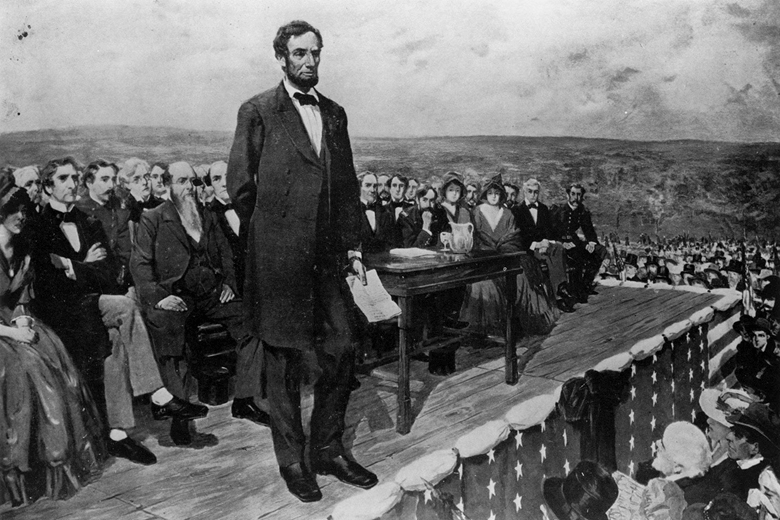
“I have no spur to prick the sides of my intent but only vaulting ambition which o’erleaps itself and falls on the other.” —Macbeth, I.VII
Introduction
Ambition holds a complicated relationship to western political life. A new dirty little secret a là D. H. Lawrence, some Americans do not speak of their drive for success or personal ambitions without great degrees of veils and strain, a rather Victorian blush resulting from the scandal of mentioning such matters. Those who are forthright with their ambitions are either praised for their innovation and self-preservation, or are denounced as power hungry and callous, with little variation existing between these polarized options. If there is a vast body of historical and political literature that views ambition as an upsetting and threatening force on social and political life, then how may such a drive ever be good or redeemed? Yet ambitious figures naturally arise, and as warily as they are perceived (or not perceived, as they attempt to conceal their drive), are simultaneously needed to bring politics to life in an energetic and vigorous way.
The Aristotelian definition provides the most concrete understanding of the characteristic of ambition. Philotimia, the Greek for ambition, is the literal “love of honor.” Ambition to a virtuous degree and to the point of excessive vice share the same name, while it is simply “a lack of ambition” that characterizes the deficiency of the virtue. It is of great question then, how a liberal and egalitarian public may make sense of, and ultimately peace with, those risky individuals who are driven for this honor to possible vicious degrees. Do attitudes regarding ambition, particularly in the American political sphere, differ across politics, business and innovation, or other fields? Can the ambitious man be bent to the good of the public?
This wariness of ambition is not uncommon in the American political sphere or its history. In a July 1775 letter to her husband, Abigail Adams writes that “how difficult the task to quench the fire and the pride of private ambition, and to sacrifice ourselves and all our hopes and expectations to the public weal! How few have souls capable of so noble an undertaking.” There is something even greater than the glory of ambition alluded to by Adams. Love of honor can be honed to the greater good, a philotimia tempered by love of one’s polity and fellow men.
Perhaps in American history the answer to such a healthy ambition rest in the presidency and statesmanship of Abraham Lincoln. Lincoln himself was no stranger to the virtue of ambition, being described by close friend and law partner William Henry Herndon as having a sense of drive that “was a little engine that knew no rest.” Lincoln described in his Lyceum Address that “towering genius disdains a beaten path,” and instead yearns for distinction at any and all costs.
This description of the fulfillment of ambition, the thirst for distinction, is seen within Lincoln himself. In his address to the people of Sangamon County, Lincoln declares that “Every man is said to have his peculiar ambition,” and admits that he himself holds no higher ambition than to be “esteemed of my fellow men, by rendering myself worthy of their esteem.” While still young in his political career at the point of this particular speech, and self-admittedly lacking the wealth, popularity, or lineage for success in politics, Lincoln seemingly humbly throws himself on the people’s judgment. The fulfillment of his ambition is not in his hands, but as he mentions later in the speech, in those of “the independent voters of this county,” who if they elect him, Lincoln will be “unremitting in [his] labors to compensate.” Conversely, if “the good people in their wisdom” see it fit to keep Lincoln “in the background,” he may be admittedly disappointed but at the acceptance and mercy of the people’s will and judgment once more.
Lincoln’s ambition was one that was oriented to the good: oriented not to the enslaving of free men but the emancipation of all. He was aware of the risks of his ambition, the possibility of running awry of democracy, and checked himself via a dedication to democratic principles. This mirrors the well-understood ambition Abigail Adams sketched out. It is possible then, for ambition to be curved and bring about even higher virtue and honors than originally aimed for by the individual.
Lincoln’s legitimacy as either the fittingly ambitious individual foretold in Adams’s letter, or an exemplar rhetorician skilled in playing upon the American public’s passions and beliefs, is a contentious question. Similarly, while in good faith the rule of the people may have checked Lincoln’s ambition, can it be trusted to do so for all seekers of honor? Are there better tools with which to hone the naturally occurring ambitious man? Or, perhaps as is the more conventional belief, these individuals are threats to democracy and overall peace, and should be treated as such. Through the lens of Lincolnian statesmanship and oratory, a deeper understanding of the relationship between ambition and stable order, the duties and obligations between politician and the public, as well as how ambitious people may be educated to use their drive to proper ends and for the voting public to recognize their true efforts is hoped to be gained.
Political History Behind the Ambitious
To explore Lincoln’s ambition and its implications for American democracy, it is pertinent to first understand how ambition has been perceived historically in political thought. By examining the fears and ideals surrounding ambition in both ancient and modern contexts, Lincoln and his rhetoric may be better understood and situated within the intellectual landscape.
Ambition was a character feature difficult to be understood in the virtue ethics of the ancients. In Aristotle’s Nicomachean Ethics, the philosopher defines ambition as a measured pursuit of achievement or distinction, a – moderate – love of honor. When healthy, it is constructive and enabling. However, ambitions, at least pure ambition, could just as easily be unhealthy, becoming a destructive and constrictive vice. Yet, to lack ambition totally is a deficiency. A fine line must be walked for healthy ambition, and opting out is not a desirable option. Compared to the other virtues enumerated in the Ethics, ambition appears to be more explicitly linked to the political sphere, yet Aristotle is not clear on anything beyond the superficial in regard to ambition:
The Nicomachean Ethics is the only ethical work by Aristotle that recognizes ambition as a distinct virtue. Because of its connection with the Politics, it is tempting to conjecture that there might be a specifically ‘political’ reason for including ambition in the Nicomachean Ethics. However, what he has to say about it is disappointing. It is not clear how we are to conceive of the virtue and its relation virtues of character, notably the other honour-related virtue of magnanimity.
Aristotle’s analysis of ambition is admittedly lacking beyond a general loose definition. Ambition cannot be fully lacking in a person, yet it cannot be purely present at the risk of being vicious. It is something that is related to moral character, seeking after the noble goal of honor, but simultaneously strikingly political in its nature too. It is this combined love of honor and connection to the political that creates a paradox within the ambitious person, he or she is both driven to rise above their contemporaries and circumstances, but is dependent on, perhaps even in a way a slave to, those same people they see as lesser. While it can be oriented to the good, through the Aristotelian lens at least, ambition is a knotted mess that can devolve into the sickness of vice.
As it stands, fear of the ambitious man is riddled throughout the history of politics and society. In the ancient world, these charismatic figures were often accused of being demagogues, twisting the passions of the people to their will in the hopes of grasping at tyrannical power. The image of the aspiring tyrant has been a standard trope of political theory going back to ancient times. It is the psychological motivations and dispositions of excessive ambition, love of fame, and glory that give way to demagoguery, making ambition a weed planted perennially in these types of hearts and creating an enduring political type. The ambitious figure haunts political life throughout the eras, yet understanding the lover of honor never takes solid rooting.
In his dialogue Gorgias, Plato draws a sharp distinction between the statesman and the demagogue, two traditional archetypes shaped by their ambitious natures. The statesman, Plato suggests, aspires to “make the souls of citizens as good as possible,” elevating the moral and civic character of the polity. In contrast, the demagogue operates through low-minded flattery, appealing to the base desires of the populace. The demagogue’s ambitions align not with the common good but with personal domination, positioning them as a tyrant-in-waiting. Such a figure often emerges in times of destructive factionalism, presenting themselves as a unifying savior. Yet, under the guise of serving the people, the demagogue leverages their growing prestige to dismantle laws and traditions, ultimately consolidating power for their own ends. The statesman, compelled by the same internal ambitions, manifests them in far more moderate means. They seek to improve the polity and its people, creating a lasting legacy in history.
Another figure in antiquity, Plutarch catalogs and compares the lives of great men in ancient Greece and Rome. Throughout his Parallel Lives, one of the recurrent motifs, and problems, is “the protagonist’s excessive pursuit of a great reputation.” This is comparable to Aristotle’s vice of the excess of ambition and Socrates’s line between the statesman and demagogue. Once more, the excessive pursuit of a great reputation both elevates the ambitious individual above their fellows, but makes them a slave to said people to receive such a great reputation from. This proverbial slavery is characteristic of antiquity’s greatest men, bringing these figures down from their lofty pedestals.
Even as ambition is dealt with by a nuanced hand throughout the Lives, Plutarch overall attacks “those philosophers who run away from every activity that implies ambition (De tuenda 135C–D),” criticizing the Epicurean notion to ‘live unnoticed’ (λάθε βιώσας),” deficient of ambition. Rather, Plutarch proposes an alternative that reinterprets the virtue “in order to channel it into a noble philosophical project.” Ambition, Plutarch posits, should not be followed for its own sake, but “rather to realize an honorable political purpose,” not unlike the description of Socrates’s statesman.
Yet while this alternative appears sound, there is a perennial tension between “the matter of concrete political life” which “all too often remains recalcitrant and interferes with the success of the intellectual project.” Plutarch’s redirection of ambition into a “noble philosophical project” for an “honorable political purpose” leaves the incompatibility of politics and philosophy unaccounted for, as “Even when there can hardly be any doubt about the honorable nature of the politician’s motivations, philosophical problems are far from being solved. In fact, the opposite is rather true. On such occasions, the clash between philosophical ideals and political pragmatism often raises much more difficult questions” Once more, ambition eludes categorization, and if anything, gives rise to further problems as philosophy and politics tangle into and challenge one another.
It is with the advent of modern political theory that conceptions around ambition grew even murkier. Thomas Hobbes reconceived ambition and the propelling forces of man as the individual being oriented to self-preservation, rather than the “honor-loving individual’s orientation toward the preservation of his or her reputation.” It is this recentering of the propelling forces of man’s actions and his relationship to “honor” that has garnered the word an ill-defined place and understanding in discourse. Being detached from the individual, honor is used to refer to multiple goods in life: medals of honor for high conduct or honoring a consensual contract.
Yet the word and whatever nebulous form it points to also holds a certain danger: the “honor killings” of distant cultures or the bygone era wherein women defended their honor via chastity or men theirs through guns and duels. It is in these cloudy and nearly mysterious latter examples that honor is contestable, able to be lost or preserved, but also denoting a certain place within society and social hierarchy. Honor, then, is both fixed, even hereditary, yet able to be lost. It is social, dependent upon others as much as it is upon the individual to receive and feel the effects of such honors. Finally, honor is inherently unequal. It, being honor, engenders inequality in the thirst to be differentiated from others. Honor seems antithetical to an egalitarian order “in which status is considered flexible and earned rather than inherited, and individuals are considered autonomous rather than bound by sociability or nature.” In the concept of honor and the ambitious pursuit of it, what is prized and what is detested are linked. Virtue is married to vice.
Lovers of honor, those ambitious figures, are both selfish and servile, in some ways rising above the masses and in other ways reliant upon others for their veneration. If the ambitious person “does not identify with those whose honor one seeks,” the pursuit of their honor can be exploitative and vicious, whereas if the ambitious person does identify, “an ‘honor code’ of actions arises wherein actions can be generally recognized as being worthy of praise or shame, and room for the cultivation of virtuous actions, in search of honor, arises.” The ambitious person, seeking such honors, can “even internalize this ‘honor code’ to the point where an audience no longer seems necessary, leaving one to trust in some imagined audience (posterity, the gods) or to serve as one’s own audience.” In such an instance, the ambitious person “becomes a ‘man of honor,’ the consummate product of an ‘honor code,’ admirable precisely insofar as he experiences himself to be independent of others’ admiration.” Having explored the philosophical and historical foundations of ambition, we now turn to Abraham Lincoln’s early political career. In his address to the people of Sangamon County, Lincoln offers a compelling portrait of his youthful ambitions and their alignment with the democratic principles he sought to uphold.
In the Beginning in Sangamon County
In one of his earliest addresses, directed to the people of Sangamon County, the future president campaigns for his first run in the Illinois state legislature and outlines his goals and views as a candidate. This provides a glimpse into Lincoln’s early political thinking and character. He appeals to the voters’ sense of fairness, asking for their support based on his honesty and diligence rather than polished rhetoric, admitting his lack of formal education or political experience, and offers policy proposals on the improvement of infrastructure, economic growth, improvement of education and opportunities, and government efficiency.
Perhaps most of interest is how Lincoln concludes his remarks with an appeal to his own ambitions, masked under the guise of youth and deference to the wisdom of public opinion:
But, Fellow-Citizens, I shall conclude.—Considering the great degree of modesty which should always attend youth, it is probable I have already been more presuming than becomes me. However, upon the subjects of which I have treated, I have spoken as I thought. I may be wrong in regard to any or all or them; but holding it a sound maxim, that it is better to be only sometimes right, than at all times wrong, so soon as I discover my opinions to be erroneous, I shall be ready to renounce them.
There is a rhetorical tactic being used here by Lincoln to both admit his presumptuous ambitions while maintaining a degree of plausible deniability by laying himself at the mercy of the audience to understand the mistakes and mis-temperament of his youth. To be so pointed and driven in the rest of his speech, it is prudent for Lincoln to toss his beliefs into the air in the very end, “ready to renounce them,” should they not please the people. Ambition, until it has a strong foothold, must be malleable in this way, and this at least nominal submission to the general will appears to put Lincoln more in line with future statesman than demagogue. Lincoln addresses his personal ambition more specifically in saying:
Every man is said to have his peculiar ambition. Whether it be true or not, I can say for one that I have no other so great as that of being truly esteemed of my fellow men, by rendering myself worthy of their esteem. How far I shall succeed in gratifying this ambition, is yet to be developed. I am young and unknown to many of you. I was born and have ever remained in the most humble walks of life. I have no wealthy or popular relations to recommend me. My case is thrown exclusively upon the independent voters of this county, and if elected they will have conferred a favor upon me, for which I shall be unremitting in my labors to compensate. But if the good people in their wisdom shall see fit to keep me in the background, I have been too familiar with disappointments to be very much chagrined.
Lincoln begins by acknowledging the universality of ambition (“Every man is said to have his peculiar ambition”) but subtly distances himself from base or selfish aspirations. His claim that his greatest ambition is “to be truly esteemed of my fellow men, by rendering myself worthy of their esteem” positions him as a figure whose ambition is aligned with moral worth, with goals that benefit others before himself and he is dependent on the masses for his satisfaction. This could reflect an attempt to reconcile ambition with republican virtue, the love and drive for honors being oriented to civic responsibility, self-sacrifice, moral integrity, and other virtues that sustain a republic. This republican turn is supported by how Lincoln acknowledges ambition—a potentially dangerous quality—but redirects it toward a noble end: public service and the cultivation of virtue. By framing his ambition as dependent on the esteem of others, Lincoln connects his personal striving to the public good, suggesting that his success is only meaningful insofar as it benefits the community, the Socratic statesman. While Lincoln disclaims any extraordinary ambition, his eloquence and self-awareness suggest otherwise. This rhetorical modesty may serve to disarm potential critics while subtly asserting his suitability for leadership.
Lincoln portrays himself as a humble, self-made man from “the most humble walks of life.” By emphasizing his lack of wealth or influential connections, he appeals to the egalitarian values of his audience, presenting himself as a representative of the common man. Lincoln’s humility is strategic, serving both to align him with democratic principles and to possibly conceal his true ambitions. Great statesmen often cloak their extraordinary qualities to avoid alienating the public, while subtly guiding the community toward greater understanding or achievement. Lincoln’s insistence on his ordinariness may thus mask his awareness of his exceptional potential and his belief in his ability to lead. This humility creates a bond of trust with the audience, wherein Lincoln is bound by the structures of the democratic process in being able to be elected to office but also allowing Lincoln to present himself as the voting public’s equal while also subtly asserting his capacity to lead them.
Lincoln claims that his “case is thrown exclusively upon the independent voters of this county,” framing his potential election as a favor granted by the people. He pledges “unremitting labors” in return, casting himself as a servant of the public will. By emphasizing his reliance on the voters, Lincoln acknowledges their sovereignty while quietly suggesting that true leadership requires guiding, not merely reflecting, the people. Lincoln’s reference to being kept “in the background” reflects a Stoic resignation to fate. However, Lincoln’s ambition is clearly visible beneath the surface of the text, suggesting that he sees himself as destined for greater things, whether the voters immediately recognize it. This also alludes to some of the fatalism exhibited by Lincoln, where even if he himself is not in the spotlight, the forces that are directing his fate will use him to their will either way.
Lincoln concludes by stating that he is “too familiar with disappointments to be very much chagrined” if he loses. This remark humanizes him and reassures the audience of his resilience, but it also subtly signals his long-term vision. This may be interpreted as Lincoln’s acknowledgment of the contingency of political life while suggesting that his ultimate ambition transcends this particular election. His focus on worthiness and resilience hints at a deeper understanding of leadership as requiring a capacity to endure setbacks and keep sight of a larger goal, whether that be the goal of the statesman or demagogue.
This passage is a masterful piece of rhetoric that simultaneously expresses and conceals Lincoln’s ambition. On the surface, he appears humble, deferential to the will of the people, and resigned to the uncertainties of political life. Beneath this, however, is a subtle assertion of his extraordinary character and his belief in his capacity for leadership. Lincoln’s speech harmonizes the tension between the ambitious disdain for the vulgar and the statesman’s need to appeal to the many. By presenting his ambition as rooted in moral worth and service to the public, he aligns himself with democratic ideals while implicitly asserting his suitability to lead above those around him, the wheat separating from the chaff.
The passage demonstrates how Lincoln skillfully balances the demands of democratic rhetoric with the internal requirements of quenching his own desires. While Lincoln’s Sangamon County address reflects a nascent understanding of ambition, his Lyceum Address represents a more mature and philosophical engagement with the subject. In this speech, Lincoln grapples with ambition as both a necessary force for progress and a potential threat to democratic stability.
Lincoln’s “Lyceum Address”
In analysis of Lincoln’s rhetoric and statesmanship, Jaffa initiates Chapter IX “On Political Salvation” in his book, Crisis of the House Divided, by contrasting the Lincoln of his Lyceum Address with the more common, almost culturally mythic, portrayal of the man. Lincoln’s acute awareness of the impending national crisis of slavery reveals a dimension that disrupts his folk hero persona: “This may disturb the image of the folklore Lincoln, the hero who resembles Everyman, fashioned from the clay of the common people, sharing their joys and sorrows, yet able to turn from the concerns of everyday life to discharge, with deeper wisdom, duties heretofore regarded as the province of kings and potentates.” Lincoln thus straddles both the sphere of the ordinary and the lofty demands of statesmanship, a king in pauper’s facade.
Striking throughout the address is Lincoln’s allusion to the Towering Genius, and his possible identification with it. Edmund Wilson is noted as perhaps the solitary critic to perceive Lincoln’s complex engagement with the archetype of the “Towering Genius,” a figure impelled by a consuming desire for distinction, yet hardly intent on “perpetuat[ing] a government which would only be a monument to the fame of others,” driven by “a fire that seemed to derive as much from admiration as from apprehension.” Wilson seemingly posits Lincoln as the veiled Caesar of the generation, that the American Emancipator is a tyrant in the making and uncontented much longer to foster other men’s legacy. Lincoln fits the description of the tyrannical Towering Genius to a striking degree, while keeping plausible deniability via working to nominally and rhetorically distance himself from the possible accusation.
In the Lyceum Address, Lincoln turns the latter half of his speech to the problem of political ambition. He distinguishes between “the ambitions of the founding generation and those of the post-heroic world in which he finds himself.” Those great men of the founder’s generation were inseparable from their work to establish a republican form of government, these men had “their all…staked upon it— their destiny was inseparably linked with it.” The Founding Fathers shared an ambition that aimed at being admired by the world, to prove the tremendous and unprecedented task on the mass scale that people were capable of self-governance. The founders’ drive for the creation of this new state and its perpetuation was interwoven with their own drive to be immortalized as well, however. It was not an altogether altruistic practice. Rather, if the founding generation succeeded, “they were to be immortalized; their names were to be transferred to counties and cities, and rivers and mountains; and to be revered and sung, and toasted through all time,” while if they failed, “they were to be called knaves and fools, and fanatics for a fleeting hour; then to sink and be forgotten.” All was able to be won in the face of this drive for honor, yet all to lose as well.
Lincoln delineates a scale of ambition in this speech that separates the ambitious from the exponentially so. It is unclear if this difference of levels is characterized by the transformation of ambition into a vice as described by Aristotle, yet Lincoln himself surely clarifies that “any great and good men sufficiently qualified for any task they should undertake, may ever be found, whose ambition would inspire to nothing beyond a seat in Congress, a gubernatorial or a presidential chair.” These places and offices would not satisfy Alexander, Caesar, or Napoleon. Rather, Lincoln details the “Family of the Lion” and the “Tribe of the Eagle” as clans for these exceptionally ambitious souls. This creates a contrast to ordinary political leaders, who are content to “add story to story upon the monuments of fame erected to the memory of others,” whereas extraordinary individuals, those he calls “towering genius,” are not satisfied with building on existing achievements but seek to create something entirely new. Towering Genius, those in the Family of the Lion and the Tribe of the Eagle, see “no distinction in adding to story upon story the monuments of fame erected to the memory of others,” and deny “that it is glory enough to serve under any chief.” These figures cannot stand a predecessor, no matter how illustrious, as they burn for distinction, be that at the “expense of emancipating slaves, or enslaving free men.” With this final descriptor of distinction coming for these high individuals at the cost of emancipation or further slavery, Lincoln has separated ambition from the moral, at least by conventional terms. This is reminiscent of Socrates’s distinct fates between the statesman and demagogue, wherein orientation to the public good is the only line separating virtuous from vicious. Lincoln, however, has severed this line completely, blurring the ambitious figure to either be hero or villain, with little grounding either way for how they may turn out, describing a thirst that must be quenched at all costs instead. This reveals part of Lincoln’s own ambitions, his own shirking under the shadow of the founders. Through too thinly veiled comments, Lincoln has one foot out of the shadow as revealing himself to be the Towering Genius he describes and detesting the legacy of the founders he must upkeep. Perhaps Lincoln is seeking to build his own path instead, a Caesar on his own campaign.
However, while new Caesars and Napoleons may rise in each generation, they are inevitably indebted to the past. In Plutarch’s life of Alexander, the concluding of the life details how Alexander visited and honored the tomb of Achilles at the start of this Asian Campaign. Nearly 800 years later, Alexander still modeled his life and aspirations off of the mythic Homeric hero. While Lincoln’s ambitions may put him at odds with the generation before him, he is undoubtedly connected to their work and legacy. By sheer circumstance of time, Lincoln in some ways will always be standing upon the shoulders of the Founding Fathers, even if his own are quite imposing eventually.
While figures such as Wilson are worried about the possibility of Lincoln carrying the germ of tyranny within, perhaps these feared tyrants should be embraced instead. If ambitious types thirst after honor, then truly a moderate dosage of such will appease these people for the best? Lovers of honor and those who are propelled by ambition may offer a return to a politics of heroism. The idea of a hero comes from the ancient Greeks, for whom a hero was “a mortal who had done something so far beyond the normal scope of human experience that he left an immortal memory behind him when he died, and thus received worship like that due the gods.” Heroes were not inherently good, though often benefactors of humanity, but always extraordinary. These were individuals who expanded the perceived scope of human potential.
This description of heroes sounds not unlike the towering genius Lincoln warns of himself. Politics, then, should meet the potential of these heroes for the better, honing the potentially dangerous drive into a benefit for the common good. Similarly, seeing the ambitions and actions of the heroic types may bring about and incite heroic actions in those less naturally inclined to them. If the “scope of human potential” and the boundary of what it means to be a human, and more specifically a citizen, are pushed, then this offers a sense of progress and growth for the individual in the political sphere. It is encouraged to push for greatness when such examples are embraced and honored, benefiting both the seekers of honor and those following their example.
Lincoln himself seemed to predict the emergence of heroic figures, figures not always for the betterment of the polity, and sought a balance with such risky people. His reference in the address to the destroyer who “thirsts and burns for distinction” captures all the temptations of the ambitious demagogue. Lincoln has no good answer to the problem of towering ambition that he so brilliantly diagnoses. His only concrete prescription is to turn the Constitution and the rule of law into the “political religion” of the nation:
Let every American, every lover of liberty, every well wisher to his posterity, swear by the blood of the Revolution, never to violate in the least particulars, the laws of the country; and never to tolerate their violation by others…. Let reverence for the laws, be breathed by every American mother, to the lisping babe that prattles on her lap—let it be taught in schools, in seminaries, and in colleges; let it be written in Primmers, spelling books, and in almanacs; let it be preached from the pulpit, proclaimed in legislative halls, and enforced in courts of justice. And, in short, let it become the political religion of the nation; and let the old and the young, the rich and the poor, the grave and the gay, of all sexes and tongues, and colors and conditions, sacrifice unceasingly upon its altars.
Lincoln then sees adherence to the Constitution and what appears to be a creation of a political religion as bonds, particularly to check the potential tyrannical threat of those in the “family of the lion or the tribe of the eagle.” There is a near Platonic quality to Lincoln’s proposal. While not put in the same language, there is a similarity between Lincoln’s positing of a common political religion and Socrates’s creation of the Noble Lie within the City in Speech: polities, from city to country scale, need a common belief or creation myth to bind them together and be devotedly followed. It is the devotion, the passion, Lincoln’s religion is characterized by, to a nearly Platonic mythic degree, that is its essence.
Lincoln’s religion realizes that the passions must be kept, especially the passion of ambition. It was great passions that led to the birth of the American nation. Afterall, “From the force of circumstance,” Lincoln continues, “the basest principles of our nature were either made to lie dormant, or to become the active agents in the advancement of the noblest of causes—that of establishing and maintaining civil and religious liberty.” Yet where these passions helped once upon a time, even to the degree of turning vice to virtue, they can “do so no more.” It is not the passions that have changed, but the people. Lincoln saw around him the passions that had been so essential in the American Revolution being now “directed toward promoting a culture of domination and lawlessness.” As Lincoln identifies it, it was a devotion and connection to the founding generation that kept these perennial passions in control. Where the founders were once “a fortress of strength” and “forest of giant oaks,” the “silent artillery of time” has rendered the former generation obsolete. Lincoln compares the severing of the founding generation from his own as “they [the founders] were pillars of liberty and now that they have crumbled away, that temple must fall, unless we, their descendants, supply their places with other pillars, hewn from the solid quarry of sober reason.” Two points seem to arise from Lincoln’s rhetoric thus far: the one, that heroes and the ambitious are not only inevitable but needed in society, but secondly, that a civic religion and devotion must pervade the nation as well to keep these same passions in hand.
Lincoln walks a fine line between his concurrent embraces of the passions and reason, as he ultimately writes “Reason, cold, calculating, unimpassioned reason, must furnish all the materials for our future support.” Reason here for Lincoln is not pure cold calculation, but rather “general intelligence, sound morality and, in particular, a reverence for the constitution and laws.” As ever careful and intentional as Lincoln is in his wording and rhetoric, this redefinition of reason from its conventional understanding stands out. Lincoln’s description of reason, outside of his appeal to “general intelligence,” appears more like a re-affirmation of his groundwork for a political religion earlier in the address. He equates reason and its appeal to the right formation in morality and proper deference to the constitution, which may be achieved by reason but not inherently so. Lincoln has blurred the lines of what is an appeal to the moral, political, and rational. Rather, he creates a schema wherein all roads lead back to his vision of America. This is a noble venture but lends credence to Wilson’s fear of Lincoln as even the well-meaning tyrant. Building on the insights of the Lyceum Address, where Lincoln warns of the dangers of unbridled ambition, his later speeches—particularly the Second Inaugural—demonstrate how his rhetoric evolved to address the moral and political challenges of a nation at war.
Lincoln’s Second Inaugural
During his unexpected second term as president, Lincoln broke with the tradition of inaugural addresses by redirecting the rhetorical focus away from himself and the personal honors of reelection, centering instead on the broader national project and the American experiment. Aware that he assumes office under challenging conditions and with a tarnished reputation, Lincoln goes to extraordinary lengths—even venturing into ungrammatical phrasing—to avoid self-reference or the use of the first-person singular pronoun. His sole use of “I” appears in the line: “The progress of our arms, upon which all else chiefly depends, is as well known to the public as to myself, and it is, I trust, reasonably satisfactory and encouraging to all. With high hope for the future, no prediction in regard to it is ventured.” Lincoln resists any temptation to bask in the impending Union victory or to claim personal credit for its achievement. Rather, it is this fine and purposeful hand in his word choice and rhetoric that makes the threads of ambition difficult to track through Lincoln’s Second Inaugural but instead holds the speech up as a focal point in his political career.
A powerful triptych emerges from Lincoln’s rhetorical choices in the Second Inaugural Address, the First Inaugural, and the Gettysburg Address. By referencing 1861 and deliberately employing the phrase “fitting and proper,” Lincoln weaves these pivotal speeches into a cohesive narrative of his presidency. The First Inaugural, delivered at the dawn of his first term, sought to avert the looming Civil War and articulate the illegitimacy and unconstitutionality of secession. The Gettysburg Address, delivered amid the war’s bloodshed, reframed the conflict as a test of the nation’s fidelity to its founding principles following immense loss of life. Finally, the Second Inaugural, given as the war’s conclusion neared, offered a profound reinterpretation of the war’s meaning, aimed at reconciliation and national healing.
Lincoln’s call for reunification is exemplified through his repeated use of the inclusive pronoun “all.” The most frequently used word in the address, “all” acts as a democratizing force. While the Gettysburg Address relied on “we,” emphasizing Union solidarity amidst wartime sacrifice, the Second Inaugural is a speech of peace. In addressing “all,” Lincoln speaks to both warring factions and the newly freed enslaved population, uniting opposing political sides and races in a shared vision of renewal, a voice above and for the masses.
Notably brief, the Second Inaugural is only slightly longer than the Gettysburg Address. Yet within its concise form, it encapsulates a profound historical timeline. While the Gettysburg Address transitions from past to present to future, the Second Inaugural begins in the present moment of March 1865 and toggles back to March 1861. It then extends further back to 1619, marking the introduction of slavery to North America, before invoking humanity’s earliest exile from Eden. This sweeping historical perspective situates America and the Civil War within the broader narrative of human sinfulness, Lincoln finding himself at the helm. Reflecting back to the man’s initial campaign address to the people of Sangamon County, it is doubtful that his ambition would come at the cost of such loss of life. The moral issue of slavery, perhaps, as Wilson points out and even Lincoln himself offers up through the criterion of the Towering Genius. Yet, the president has surely set himself apart and on his own in being at the very crux of a timeline of human sin to that point in time. What drive may be worth that cost is unknown. Lincoln’s Second Inaugural not only encapsulates his ability to reconcile personal ambition with national purpose but also reveals the deep personal costs of his leadership. These elements invite a closer examination of Lincoln as a tragic hero, a figure whose ambition shaped both his triumphs and his ultimate sacrifice.
Lincoln, Ambition, and the Tragic Hero
In his analysis of the shared political ambitions of Lincoln and Bill Clinton, Professor Matthew Pinkser appeals to David Herbert MacDonald’s then recent biography of Lincoln and outlines three forms of political ambition from such:
Donald has suggested that Lincoln could “easily identify” with Macbeth ‘because he had that kind of ambition.’ By that remark, Donald meant simply ambition on the grandest scale. However, it may be possible to construe even more. I would divide ambitious politicians into three categories: those who want, those who need, and those who know. Those who want are ambitious because they feel they deserve success. They achieve if their timing is good and circumstances permit. Political figures who seem to fit this description are men such as George Bush and Dwight Eisenhower. Those who need are ambitious because they fear they might deserve failure. They achieve because they are relentless and driven. Political figures who seem to fit this description are men such as Lyndon Johnson and Richard Nixon. Finally, there are those who know. They are ambitious because they believe it is their destiny. They achieve because their faith in themselves is so unshakable. Lincoln was one who knew. Clinton may be another. Macbeth was one who knew too much.
This comparison of Lincoln to Macbeth is striking in its allusion to such tragic fates. The two men are united in their shared ambition, one that separates the proverbial wheat from the chaff, even if that separation means one of the lofty from the even loftier. There is a near Shakespearean nature to the trajectory of Lincoln’s life and presidency: a noble leader struck down at the peak of his victory, the country on the beginnings of the course to reunification and a political legacy secured, by a man believing Lincoln to be a tyrant. While it is debatable if the hands of fate and destiny wove this end for the president, the circumstances of his untimely death do have ambition looming in the background of them. Was it this drive that caused Lincoln’s assassination, making him into a warped American Caesar and Booth an attempted Brutus?
Seeing himself in Shakespeare’s works, Lincoln held a noted preference for “the soliloquy in ‘Hamlet,’ commencing, ‘O, my offence is rank,’ surpasses that commencing, ‘To be or not to be.’” Quoted here at length, the preferred speech is as follows:
O, my offence is rank, it smells to heaven; It hath the primal eldest curse upon’t, A brother’s murder!—Pray can I not, Though inclination be as sharp as will; My stronger guilt defeats my strong intent; And, like a man to double business bound, I stand in pause where I shall first begin, And both neglect. What if this cursed hand Were thicker than itself with brother’s blood, Is there not rain enough in the sweet heavens To wash it white as snow? Whereto serves mercy But to confront the visage of offence? And what’s in prayer but this twofold force, To be forestalled ere we come to fall, Or pardon’d being down? then I’ll look up; My fault is past. But, O, what form of prayer Can serve my turn? Forgive me my foul murder? That cannot be; since I am still possess’d Of those effects for which I did the murder,— My crown, mine own ambition, and my queen. May one be pardon’d and retain the offence? In the corrupted currents of this world Offence’s gilded hand may shove by justice; And oft ’tis seen the wicked prize itself Buys out the law: but ’tis not so above: There is no shuffling, there the action lies In his true nature; and we ourselves compell’d, Even to the teeth and forehead of our faults, To give in evidence. What then? what rests? Try what repentance can: what can it not? Yet what can it when one can not repent? O wretched state! O bosom black as death! O limed soul, that, struggling to be free, Art more engaged! Help, angels! Make assay! Bow, stubborn knees! and, heart with strings of steel Be soft as sinews of the newborn babe! All may be well!
In regard to this out of the normal preference, it could be that Hamlet and the tragic story of leadership and rule gone horribly awry gave Lincoln a mirror through which to understand his own time as president. The play, the struggle to wash a brother’s blood from one’s hands and beg forgiveness from the angels above spoke to “the natural guilt he felt as leader of the bloodiest war the nation had ever endured.” This may be corroborated by a remark from Lincoln to a congressman during a darker part of the war, “Doesn’t it seem strange to you that I should be here? Doesn’t it strike you as queer that I, who couldn’t cut the head off of a chicken, and who was sick at the sight of blood, should be cast into the middle of a great war, with blood flowing all about me?” Even if fought for a righteous and necessary cause, “any empathetic human who leads other humans through a war would certainly, like King Claudius, feel the weight of their “brother’s blood” — and Lincoln was nothing if not deeply empathetic.”
Lincoln was almost hyper-aware of his similarity to Macbeth, noting his preference for the play, “Some of Shakespeare’s plays I have never read, while others I have gone over perhaps as frequently as any unprofessional reader. Among the latter are Lear, Richard Third, Henry Eighth, Hamlet, and especially Macbeth. I think nothing equals Macbeth—It is wonderful.” The president’s connection to the tragedy seemed nearly spiritual, as Senate Secretary Forney is reported as discovery Lincoln alone one night, “his face ‘ghastly pale, the dark rings were round his caverned eyes, his hair was brushed back from his temples […]’” Macbeth was open upon Lincoln’s lap, and “true to character, he asked Forney if he might recite a passage from Macbeth that he said ‘comes to me tonight like a consolation.’” The passage was Macbeth’s infamous soliloquy, wherein “Tomorrow, and tomorrow, and tomorrow, Creeps in this petty pace from day to day,” and so on. The passage is spoken in the play after Macbeth has achieved the totality of the Scottish crown, yet ultimately gaining nothing and resulting in the very kingdom he sought after turning against him. While vicious enemies steadily approach the castle and throne room to kill Macbeth, it is the “immense sorrow and desperation of powerlessness that Macbeth here laments,” as he realizes that “even after achieving supreme power in a political sense, he realizes he cannot change the course of destiny.” Why would Lincoln resonate with such a speech, with such sorrow, if not from his seeing his own situation presiding over an America turning against itself and him thrown during it by the fates. Yet, this “desperation of powerlessness” and realization that one “cannot change the course of destiny,” seem to push against the ambition and striving of Lincoln’s Towering Genius. What purpose is there in shirking off tradition and the success of those before you to set forth for your own acclaim, if your actions are already dictated by powers beyond your control?
Lincoln’s fascination with Macbeth was rooted not in identifying with the tyrannical aspects of the character, but in a shared sense of unchanging destiny. Unlike Macbeth, who met his demise under the weight of guilt and overreaching ambition, Lincoln carried no such burdens, at least consciously to others. Instead, he was captivated by the notion that his life and presidency were shaped by forces beyond his control. In an 1864 letter, he confessed, “I claim not to have controlled events, but confess plainly that events have controlled me.” This was not false modesty; it was a genuine belief held by the man to reconcile with the extraordinary forces and events he found himself subject to.
In Shakespeare’s portrayal of Macbeth, Lincoln found an expression of the existential weight borne by those in positions of immense responsibility. The play’s exploration of destiny and human frailty resonated deeply with him, offering solace in its insight into the powerlessness that even the most capable leaders sometimes feel. Despite the ultimate success of Lincoln’s presidency in hindsight, during his life he likely often felt, as Macbeth put it, like “an idiot, full of sound and fury, signifying nothing.” Great men are haunted by the weight of their humanity, the top of the pyramid being a lonely and reflective place.
Lincoln appeared aware of the inevitable nature of his ambition, that a seemingly invisible playwright dropped him into these horrid scenes. Throughout his life, Lincoln was noted by many around him as having a deep fatalistic inclination. He viewed the human life as one that was predetermined, propelled by motives and forces decided before any singular person came to be, with those forces dictating their lives and reducing man to little more than a tool for the fates:
Things were to be, and they came, irresistibly came, doomed to come; men were made as they are made by superior conditions over which they had no control; the fates settled things as by the doom of the powers, and laws, universal, absolute, and eternal, ruled the universe of matter and mind…. [Man] is simply a simple tool, a mere cog in the wheel, a part, a small part, of this vast iron machine, that strikes and cuts, grinds and mashes, all things, including man, that resist it.
Lincoln held himself to this same philosophical Doctrine of Necessity. Even as president, Lincoln described himself as “but an accidental instrument, temporary, and to serve but for a limited time,” and “a piece of floating driftwood,” which had “drifted into the very apex of this great event.” This belief can be seen at a peak in a recalled discussion with fellow William Herndon:
We often argued the question [Herndon remembered], I taking the opposite view…. I once contended that man was free and could act without a motive. He smiled at my philosophy, and answered that it was impossible, because the motive was born before the man…. He defied me to act without motive and unselfishly; and when I did the act and told him of it, he analyzed and sifted it to the last grain. After he had concluded, I could not avoid the admission that he had demonstrated the absolute selfishness of the entire act.
Lincoln believed that human choice is caused, and caused in such a way that the mind is compelled, without the countervailing power of deliberation or free will, to cooperate with the cause. In regard even to his own ambitions for office and renown, Lincoln admits to holding such drives, “I have never professed an indifference to the honors of official station; and were I to do so now, I should only make myself ridiculous.” Yet, Lincoln notes that it is a commitment and remembrance of the republican cause that has kept his drives in check, “I have never failed—do not now fail—to remember that in the republican cause there is a higher aim than that of mere office.” Lincoln acknowledges the force of his own ambitions, not denying these internal factors within himself. Yet, these drives coexist within his worldview of predetermined fates, as well as his own dedication to the “republican cause,” harkening back to the civic religion he outlined within the Lyceum Address. If the world truly is one of determined causes and ends, that man is just like a player upon a stage whose strands of life are being controlled by unknown forces, perhaps these forces are nearly divine in nature. In their divine wisdom, ambition and devotion to the United State’s republican constitution would have been planted in Lincoln’s heart and mind on purpose, a determined fate for him to carry out until the end not unlike his beloved Macbeth.
If everything unfolds according to forces beyond human understanding or control, then ambitious statesmen like Lincoln emerge as great figures when history demands them—much like the heroes of antiquity—only to fade into the relentless current of time until another is called forth. Perhaps ambition, which elevates exceptional individuals into heroes, also requires that they become martyrs.
For Lincoln, his “religion” was the Constitution, a near-sacred force to which he dedicated his life. Like the heroes of old, he redefined what it meant to be a devoted citizen, leaving an example for those who would follow. Yet, if this vision holds true, Lincoln’s ultimate role was not only to serve but to sacrifice. His assassination—carried out in dramatic, almost Shakespearean circumstances—was more than a tragic act; it was the final chapter of his fate, sealing his ambition and his life as a profound offering to the rebirth of the American republic. Lincoln’s life and presidency encapsulate the paradox of ambition: it can elevate a leader to heroic heights while simultaneously courting tragedy, courting a praise of honor from contemporaries that can only be met by just as unusual and high of a death. By synthesizing these insights, one can draw broader conclusions about how ambition might be understood and guided within democratic governance. That ambition is not friendly to a democratic republic, not inherently or in any way easily, but it is the gleaming few ambitious men and women who crop up throughout the horizon of history who make such a polity possible and vigorous.
Conclusion
Abraham Lincoln’s life and presidency reveal the complex, often paradoxical, nature of ambition in democratic governance. His journey—from a humble self-made man in Sangamon County to a leader at the helm of a nation in crisis—shows ambition as both a force of creation and destruction. Lincoln’s own ambition, tempered by a dedication to the republican cause and a belief in the necessity of fate, allowed him to navigate the treacherous currents of his time. He embodied the Aristotelian concept of philotimia, a love of honor that strives for virtue while acknowledging the potential for vice.
Yet Lincoln’s story does not provide easy answers about ambition’s role in a democratic society. His towering genius, a theme he himself explored in his Lyceum Address, demonstrates that ambition is both essential for progress and inherently dangerous. Figures like Lincoln—rare and extraordinary—seem to arise when the times demand them, forging new paths and redefining what it means to lead. But as much as their ambition drives history forward, it often exacts a tragic price. For Lincoln, his martyrdom became the final act of devotion to the Constitution and the rebirth of the American republic, sealing his legacy as both hero and sacrifice.
In grappling with Lincoln’s ambition, we are reminded that democracy does not thrive on mediocrity. It requires leaders capable of great vision and daring, even at the risk of their own downfall. Ambition, rightly understood, is not the enemy of democratic governance but its lifeblood—when guided by virtue, tempered by responsibility, and oriented toward the common good. Lincoln’s life challenges us to consider how a democratic republic can harness the extraordinary power of ambition without succumbing to its excesses. His legacy invites us to ask: How do we educate and guide ambitious leaders so that their striving builds rather than destroys? And how do we, as citizens, recognize and cultivate the ambitions of those who might serve the public good?
Lincoln’s life stands as a testament to the paradox of ambition: it is both the republic’s greatest risk and its greatest hope. His story, like the heroes of antiquity, reminds us that ambition can elevate humanity to extraordinary heights, even as it carries the seeds of its own tragedy. Democracy’s survival depends on how we manage this tension—not by suppressing ambition, but by channeling it toward a vision of the good that serves all. In this sense, Lincoln’s ambition was not merely a personal drive but a profound act of faith in the enduring potential of democracy itself.


Related Posts