Machiavelli, Tocqueville, and the Imperial Presidency
Machiavelli noted that the goal of political power and order is centralized authority. In The Prince, the hallmark of a good ruler is their ability to centralize power within the State. In 1835, after visiting America to write about its prison system, Alexis de Tocqueville published Democracy in America. Within it, Tocqueville spent time analyzing America’s political order as constructed from its Constitution. While Tocqueville marveled at the absence of central government—bureaucracy—he presciently foresaw the “royal prerogatives” of the Presidency. Both Machiavelli and Tocqueville are very insightful in understanding the Trump Administration.
Americans are a hopelessly romantic and optimistic people. That is one of America’s great, if not greatest, legacy. We praise the Declaration and Constitution even as its practical functionality has long dissipated. There are ironies with this, the first being that the most stringent opponents of Trump’s executive power are also fans of the great imperial presidents: Abraham Lincoln and Franklin Roosevelt. The second being that Trump’s critics who want a return to the Constitution often ignored any want to return to the Constitution during the Biden and Obama presidencies.
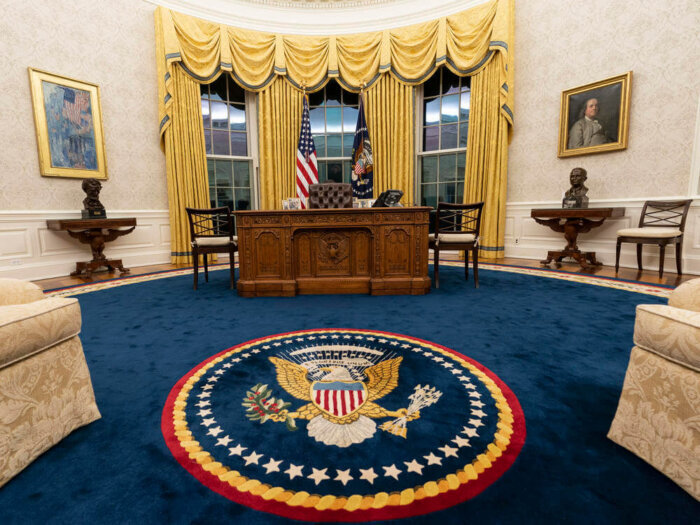
This seeming hypocrisy is not really a hypocrisy. The United States has run on presidential fiat for some time, a long time, and our modern history is one of executive power—the “royal prerogatives” that Tocqueville wrote about concerning the implicit power and demands of the Presidency in the 1830s. We do live under the imperial presidency. The most important body of government is no longer Congress, as the Constitution originally envisioned, but the Presidency. That is why control of the Presidency matters so much and our politics can be described as presidentialist.
Complaining about executive overreach is one thing. Complaining about executive overreach by wanting a return to a Constitution that has been null and void for decades reveals a stunning lack of realism as to the nature of the current American political order of governance.
Trump is pushing the United States down the path that Machiavelli would applaud and that Tocqueville presciently foresaw (though Tocqueville was negative in viewing this forthcoming imperial presidency). The issue, now, is not the curtailing of Presidential power but the art of character—who should be in an office with such extreme power? The political debate we must be having given the new realities of the technological world we live in is not a restriction of Presidential power but who can exercise it dutifully and virtuously.
Here, reading Aristotle would be a great complement to Machiavelli and Tocqueville. Decisiveness is important. So is virtue and wisdom. The real danger of the imperial presidency that we unmistakably live under is to have a President lacking in virtue and therefore is foolish in wielding power. I would maintain the power of the Presidency is a necessary good, not a necessary evil, in the world we now inhabit (and the insight of political philosophers has long been that power is a necessary good but it must be wielded wisely). A President who is not virtuous and is unwise can become the evil implicitly feared by Tocqueville, the tyrant worried about by Aristotle, and even the foolish ruler whom Machiavelli knew would bring about alienation and isolation and leave a country weaker as a result. Looking at the debates now over Presidents and the Presidency, the Constitution is long gone. Crying about its restoration is a moot point. What must be had, though, is the debate over the virtue and wisdom of those now holding, or seeking to hold, the office that has accrued so much regal power in 250 years.


Related Posts