Power, Glory, and Vanity: The Politics of Romantic Poetry
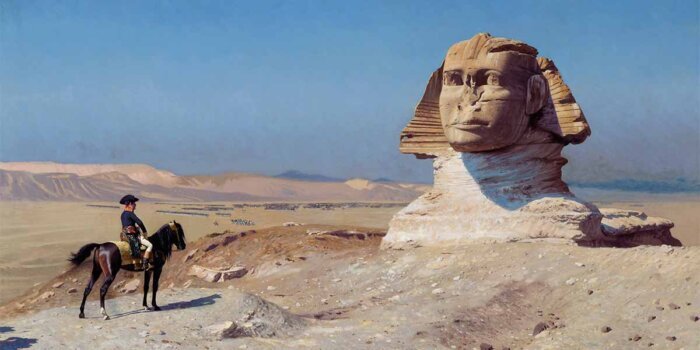
“And on the pedestal these words appear: / ‘My name is Ozymandias, king of kings: / Look on my works, ye Mighty, and despair!’ / Nothing beside remains. Round the decay / Of that colossal wreck, boundless and bare / The lone and level sands stretch far away.” Percy Bysshe Shelley’s famous poem “Ozymandias” captures, in my opinion, the essence of the power, glory, and fleeting vanity of the political sentiments of the nineteenth century Romantics. While the Bible and classical sources testified to the vanity of fleeting power and glory, the Romantics resurrected this wisdom in an age of haughty power, glory, and egoism with a corresponding pomp, vanity, and egoism of their own which proves ironic, all things considered.
Understanding Romanticism is difficult because of the multifaceted avenues it influenced. Isaiah Berlin, in his series of lectures on Romanticism in 1964, remarked that Romanticism simultaneously influenced reactionary movements as much as radical and progressive movements. If, however, we are to agree upon one common thread of Romanticism it would have to be the unbridled passion, pathology, that undergirded it as it rebelled against the sterile and suffocating tyranny of mechanical materialism which had risen to prominence in the so-called Age of Enlightenment. Some have taken to calling the romantic revolution not so much the Counter Enlightenment as it was the Age of Passion.
The Age of Passion, to my mind, is apt. One cannot help but feel the passionate blood coursing through their own veins and off their lips as they read the words of proto-romantics like Milton and Pope and the works of the canonical Romantics like Lord Byron, John Keats, or Shelley. And it is these three figures whom I would like to briefly discuss within the realm of the passionate politics of power, glory, and vanity which move their poems.
That the Romantics would preoccupy themselves with politics shouldn’t be surprising to us. After all, they lived in an age of intense passion and conflagration. Byron, Keats, and Shelley all matured and lived in the throes of the French Revolution and the Napoleonic Wars. Napoleon, unsurprisingly, is a figure whose echoes can be heard in their poetry—explicitly or implicitly. From the storming of the Bastille up until the Battle of Waterloo, the explosive triumph of the will stirred the hearts and passions of men and women in Europe and even across the sea in America. It was also an age of exploration, excavation, and desecration; all these themes meet in Romantic poetry in their unique ways.
It would seem odd, then, that some Romantic political poetry draws on the imagery and consciousness of antiquity rather than nascent modernity. But Romantic poetry using the veil and imagery and language of antiquity is making commentary on the present. The haughty tyrants of Europe were, in the imagination of the Romantics, akin to the cruel and vindictive kings of the past: Nebuchadnezzar, Ozymandias (Ramses II), Sennacherib.
Keats, if I am permitted to say, is the least of the three poets insofar that his language conveys the point in an otherwise straightforward way. It lacks the imaginative flair of Byron and Shelley but still underscores the main point of pride cometh before the fall. And who can forget, among the Biblically literate, the pride and fall of Nebuchadnezzar from towering conqueror and tyrant to bestial animal roaming with the cattle:
Before he went to live with owls and bats,
Nebuchadnezzar had an ugly dream,
Worse than a housewife’s, when she thinks her cream
Made a naumachia for mice and rats:
So scared, he sent for that “good kind of cats,”
Young Daniel, who did straightway pluck the beam
From out his eye, and said – “I do not deem
Your sceptre worth a straw, your cushions old door mats.”
A horrid nightmare, similar somewhat,
Of late has haunted a most valiant crew
Of loggerheads and chapmen; – we are told
That any Daniel, though he be a sot,
Can make their lying lips turn pale of hue,
By drawing out – “Ye are that head of gold!”
Keats, here, no doubt wishes himself to be the imaginative radical Daniel of his fancy (part of the romantic imagination of the poet-prophet being more eternal and immortal than their political masters who are, in fact, puppets to the poets who are the true masters). Daniel, like the poet Keats himself—an opponent of absolutism—reminds the pride and pomp of Nebuchadnezzar, the metaphor for the European kings and aristocrats of his own time, that his “sceptre” is only “worth a straw” and his “cushions old door mats.” As a poet Keats mocks the pride and power of the vain king. Keats is speaking through Daniel.
As Daniel, Keats is telling the unworthy kings of the world (Nebuchadnezzar) of their coming fall which horrifies them. Truly, this prophecy of coming demise is an “ugly dream”—a terrible nightmare. Here, Keats also relishes the fact that the poet is like the prophet, interpreting dreams and visions with intense political overtures still relevant in our time as it was in ancient times. Power, glory, wealth—all is vanity since it will come tumbling down.
The straightforwardness of Keats’s political romanticism reaches fuller maturation in Byron and Shelley. There is a lack of life, no life-force, to Keats’s ostentatiously political poems (which is opposite of the very animating lyrical eroticism of Keats’s romance poems and unfortunate since it shows the talent that Keats had). Byron’s political poetry which draws on ancient language, imagery, and metaphor—by contrast—explodes to life before collapsing into death by the greater power of the angel of death and the hand of God:
The Assyrian came down like the wolf on the fold,
And his cohorts were gleaming in purple and gold;
And the sheen of their spears was like stars on the sea,
When the blue wave rolls nightly on deep Galilee.
Like the leaves of the forest when Summer is green,
That host with their banners at sunset were seen:
Like the leaves of the forest when Autumn hath blown,
That host on the morrow lay withered and strown.
For the Angel of Death spread his wings on the blast,
And breathed in the face of the foe as he passed;
And the eyes of the sleepers waxed deadly and chill,
And their hearts but once heaved, and for ever grew still!
And there lay the steed with his nostril all wide,
But through it there rolled not the breath of his pride;
And the foam of his gasping lay white on the turf,
And cold as the spray of the rock-beating surf.
And there lay the rider distorted and pale,
With the dew on his brow, and the rust on his mail:
And the tents were all silent, the banners alone,
The lances unlifted, the trumpet unblown.
And the widows of Ashur are loud in their wail,
And the idols are broke in the temple of Baal;
And the might of the Gentile, unsmote by the sword,
Hath melted like snow in the glance of the Lord.
While Byron is undeniably playing on the same themes of haughty power and pride being culled by a pertinent justice as in Keats, Byron brings a grander flair to his writings as the poem literally moves with the imagery of wind, life, and movement before dissipating into defeat, death, and lack of movement. The poem opens with power and majesty—temporal, to be sure—on full display, a grandiose movement of power and life: “The Assyrian came down like the wolf on the fold, / And his cohorts were gleaming in purple and gold; / And the sheen of their spears was like stars on the sea, / When the blue wave rolls nightly on deep Galilee.” The power and majesty of the powerful Assyrian king and army, however, rapidly dissolves into death, destruction, and defeat: “And there lay the rider distorted and pale, / With the dew on his brow, and the rust on his mail; / And the tents were all silent, the banners alone, / The lances unlifted, the trumpet unblown.”
In a grand movement of poetic successions and contrasts, the mighty power of Assyria pales in comparison to the greater power and majesty of the Angel of Death sent by the Lord to deliver Jerusalem from destruction. The once rapturous and awesome sight of banners and men and spears glistening in the sun as they move down the hills and valleys is suddenly stalled into a lifeless death, everything now “unlifted” as the wind howls through the camp and flaps the empty tents with only the echoing of flapping fabric filling the ear.
The height of pride and power is shown to be vain, all power and glory—as Byron shows here—is fleeting. “And the widows of Ashur are loud in their wail, / And the idols are broke in the temple of Baal; / And the might of the Gentile, unsmote by the sword, / Hath melted like snow in the glance of the Lord.” The power of Sennacherib and his mighty army is nothing compared to the power of the Lord on High. Lords and ladies of temporal polities beware, challenge the awesome power of Lord if you dare.
The arrogance of the kings of old and the vanity of their passion and pride is also set up for the chopping block by Shelley. Like Byron, Shelley’s “Ozymandias” opens with action and movement but reminds us of age and antiquity (and therefore decadence and decrepitness). But unlike Byron, who crushes the arrogance of tyrannical kings with a lifeless camp lacking movement, Shelley keeps movement alive through the cycle of time and its bearing down and withering away of the vanity of kings:
I met a traveller from an antique land,
Who said—“Two vast and trunkless legs of stone
Stand in the desert. Near them, on the sand,
Half sunk a shattered visage lies, whose frown,
And wrinkled lip, and sneer of cold command,
Tell that its sculptor well those passions read
Which yet survive, stamped on these lifeless things,
The hand that mocked them, and the heart that fed;
And on the pedestal, these words appear:
My name is Ozymandias, King of Kings;
Look on my Works, ye Mighty, and despair!
Nothing beside remains. Round the decay
Of that colossal Wreck, boundless and bare
The lone and level sands stretch far away.”
What Shelley does so remarkably in this poem, upon close examination, is how it begins with a sense of urgency, movement, and life; we meet a traveler from an antique land who bears supposed wisdom and knowledge to the poetic pilgrim. But we soon learn that the amazing colossus that the ancient traveler has seen is “shattered” and “lifeless.” And to make it more haunting, the ultimate revelation of the decayed statue is laid bare to us only after the ultimate invocation of arrogance and pride on the part of the patron and benefactor: “My name is Ozymandias, King of Kings; / Look on my Works, ye Mighty, and despair!” Only after Ozymandias boasts like an infantile tyrant do we learn what remains of that “colossal Wreck.”
The arrogance of Ozymandias moves the world into the imbalance of decay. Decadence and destruction follow from this decay wrought by tyrannical arrogance. Destruction, Shelley reminds us, naturally follows such haughty proclamations of naked vanity. Yet the movement of nature, the eternality of lifeless things, persists. Ozymandias is dead. But the lifeless stones which bear his legacy, decayed as they are, remain without him—mocked by the eternality of the poet as he laughs at the pretensions of a failed king. Additionally, the “lone and level sands stretch far away.” Befitting Shelley’s atheism in comparison to Byron’s quixotic and despairing psychological Calvinism, the power of man is nothing compared to the power of nature.
*
But allegories and metaphors of contemporary politics veiled by the imagery and consciousness of antiquity is not the only commonality among the Romantics. Given that Keats, Byron, and Shelley lived during the turbulence and exhilaration of the French Revolutionary and Napoleonic Wars, it is only fitting that Napoleon, the Napoleonic Wars, and Europe’s titanic struggle against a new Sennacherib or Ozymandias—even if the poets themselves had awkward affinities to the French emperor reflective, perhaps, of the first realization of the psychology of frenemies—appear in their poetic writings. Paradoxically, or contradictorily depending on your perspective on the Romantics, our poets eulogize the pride and power of Napoleon but, in doing so, end by reminding us of the fleeting nature of glory and the vanity of power.
Keats is the most modest of the poets writing about the shocking and sudden fall of Napoleon—in 1814—and the first hopeful sway of peace to arrive on the continent since 1792. Napoleon goes unnamed, but “On Peace” echoes with the footsteps of Napoleon everywhere:
O Peace! and dost thou with thy presence bless
The dwellings of this war-surrounded Isle;
Soothing with placid brow our late distress,
Making the triple kingdom brightly smile?
Joyful I hail thy presence; and I hail
The sweet companions that await on thee;
Complete my joy let not my first wish fail,
Let the sweet mountain nymph thy favourite be,
With England’s happiness proclaim Europa’s Liberty.
O Europe! let not sceptred tyrants see
That thou must shelter in thy former state;
Keep thy chains burst, and boldly say thou art free;
Give thy kings law leave not uncurbed the great;
So with the horrors past thou’lt win thy happier fate!
While Keats is genuinely happy for the arrival of peace, “Joyful I hail thy presence; and I hail / The sweet companions that await on thee,” he is also hopeful for a continuation of reformist radicalism to sweep the cornerstones of Old Europe, those “former state[s],” away. “Let not sceptred tyrants see / That thou must shelter in thy former state; / Keep thy chains burst, and boldly say thou art free; / Give they kings law leave not uncurbed the great; / So with the horrors past thou’lt win they happier fate!” Keats desires to see a Europe free of the absolutist chains which currently ensnare it. He desires constitutional systems where laws constrain “the great” and provide the “happier fate” of the citizenry.
In between the lines we still learn much about Keats in this sonnet. He wants the powerful and proud to be curtailed. He wants the common citizenry to burst out of the absolutist chains that drag them down. Though it has the veil of modesty and reform, Keats desires nothing less than the powerful and prideful to be knocked down off their pedestals. The emancipatory impulse is what drives this desire to the see the proud and powerful broken.
Byron and Shelley also join the fray of Napoleonic eulogies. What make Byron and Shelley unique, in this enterprise, is that there is an undercurrent of adoration to their poems that nonetheless end with that proverbial wisdom of all power and glory is fleeting.
Action, movement, is the great hallmark of power and greatness as Shelley subtly informs us in “To the Emperors of Russia and Austria” in his imaginative poetic lecture on the Battle of Austerlitz. The “Coward Chiefs” of Russia and Austria remain “calm and still” on the heights as the torrential bloodbath ensues below where real patriots fight and die. Napoleon, by contrast, is the man of action—the “restless fiend who haunts / The tumult of yon gory field, / Whom neither shame nor danger daunts, / Who dares not fear, who cannot yield, / Will not the Equalizing blow / Exalt the high, abase the low, / And in one mighty shock o’erthrow / The slaves that sceptres wield.” Cowardly tyrants sit aloft while men of greatness get into the thick of it.
But on the death of Napoleon Shelley was overcome to offer his eulogy to the great shaker and world mover. While others mocked and punned the French emperor, Shelley took it upon himself to offer a stirring eulogy that is—nevertheless—still filled with irony given that grandeur and greatness and glory ends ignominiously.
Shelley combines his two great themes like in Ozymandias, the eternality and supremacy of nature over the greatness of man:
What! alive and so bold, O Earth?
Art thou not over-bold?
What! leapest thou forth as of old
In the light of thy morning mirth,
The last of the flock of the starry fold?
Ha! leapest thou forth as of old?
Are not the limbs still when the ghost is fled?
And canst thou more, Napoleon being dead?
How! is not thy quick heart cold?
What spark is alive on thy hearth?
How! is not his death-knell knolled?
And livest thou still, Mother Earth?
Thou wert warming thy fingers old
O’er the embers covered and cold
Of that most fiery spirit, when it fled—
What, Mother, do you laugh now he is dead?
Shelley displays his own passionate arrogance in conversing with Mother Earth who berates the poet, and Napoleon in the process:
“Who has known me of old,” replied Earth,
“Or who has my story told?
It is thou who art over-bold.”
And the lightening of scorn laughed forth
As she sung, “To my bosom I fold
All my sons when their knell is knolled,
And so with living motion all are fed,
And the quick spring like weeds out of the dead.
“Still alive and still bold,” shouted Earth,
“I grow bolder, and still more bold.
The dead fill me ten thousandfold
Fuller of speed, and splendour, and mirth;
I was cloudy, and sullen, and cold,
Like a frozen chaos uprolled,
Till by the spirit of the mighty dead
My heart grew warm. I feed on whom I fed.
“I feed on whom I fed” is apt to describe this mortal condition of man and the empty grandeur and greatness that accompanies him. The Earth feeds on the poor and the rich, the haughty and the lame, the great and insignificant. It mattered not how great and powerful Napoleon was—like Ozymandias—Nature’s power is tenfold that of man. So it is that Napoleon, the scourge of Europe—the bringer of liberty or tyranny depending your partisanship (and it is obvious where the sympathies of these English Romantics stood)—is swallowed up by the Earth and his grandeur and greatness but a ruin inside the stomach of that which consumes everything man has ever tried to achieve:
“Ay, alive and still bold,” muttered Earth,
“Napoleon’s fierce spirit rolled,
In terror, and blood, and gold,
A torrent of ruin to death from his birth.
Leave the millions who follow to mould
The metal before it is cold,
And weave into his shame, which like the dead
Shrouds me, the hopes that from his glory fled.”
In fitting tribute, Shelley still gives Napoleon a “fierce” and rolling “spirit” to indicate his greatness, even if it is consumed by the Earth and all “glory [has] fled.”
Byron’s “Ode to Napoleon Buonaparte” is, in my mind, the grandest of the eulogistic (and satirical) compositions to the French Emperor concerned with his fall from power. Where Shelley has his own egotistical wrestling match with Nature and loses, Byron captures the blood, terror, and ecstasy of political greatness and decadence all at once. There is spectacle and ego, ecstasy and victory, glory and vanity, in this pursuit of power and eternity among great men. Yet there is also the reality that grandeur is soon met by the fall:
’Tis done – but yesterday a King!
And arm’d with Kings to strive –
And now thou art a nameless thing:
So abject – yet alive…
The triumph, the vanity,
The rapture of the strife –
The earthquake voice of Victory,
To thee the breath of life;
The sword, the sceptre, and that sway
Which man seem’d made but to obey,
Wherewith renown was rife –
All quell’d! – Dark Spirit! What must be
The madness of thy memory.
The opening stanzas of Bryon’s poetry proceeds paradoxically. The great movement, power, and vanity of Napoleon has become the movement of memory in Byron. The poem begins with the death and destruction of Napoleon, now a “nameless thing.” But upon reflecting on that former greatness, Byron provides the spectacle and ego, ecstasy and victory, the “rapture of the strife” which moves grandiosity to ascend to the stars.
In continuing to reflect upon Napoleon, we meet the awesome wrestling of power against power, the fragility of the old coming up against the youthful intemperance of the new, freedom for all and the destruction of the old. In this conflagration of old power and new power, youthful exuberance and aged fear, the intensity of the sublime is revealed in this struggle to the death:
And Earth hath spilt her blood for him,
Who thus can hoard his own!
And Monarchs bow’d the trembling limb,
And thank’d him for a throne!
Fair Freedom! we may hold thee dear,
When thus thy mightiest foes their fear
In humblest guise have shown.
Oh! ne’er may tyrant leave behind
A brighter name to lure mankind!
Thine evil deeds are writ in gore,
Nor written thus in vain –
Thy triumphs tell of fame no more,
Or deepen every stain:
If thou hadst died as died as honour dies,
Some new Napoleon might arise,
To shame the world again –
But who would soar the solar heights,
To set in such a starless night?
What Byron does well in his eulogy concerning the fall of Napoleon is how greatness lives on in memory even as battlefield triumphs and magnificent marble statues are no more. Great men come and go, their monuments decay and dissolve, but in that most blessed realm of memory greatness endures in the imagination of the beholder. Yet that memory reminds us of fleeting vanity, that no matter how great and powerful one was, death and destruction inevitably come.
*
Power, Glory, and Vanity all intersect in the mesmerizing movement of Romantic poetry. The rapturous strife that was the 1790s-1810s is captured in the very movement and closure of the political poetry of the Romantics. We witness power, pride, and glory—but we also witness death, destruction, and the fleeting and feeble realities of power and pride. All decays. All withers. All disappears. The Romantics, in their own egotistical ways, remind us of the ancient wisdom from antique lands that “all is vanity.” From them we remember the decayed and desiccated ruins of fleeting politics, kings, queens, and tyrants.
The Romantics, as new preachers, still proclaim that timeless truth. But they do so with such a pomp and pride of their own that one wonders if they imbued into their proclamations a type of energetic motion that was intended to outlast their own vain lives that they knew would decay and die. And vain the lives of Keats, Shelley, and Byron were despite the beauty and truth contained in their poetry. They too reached pinnacles only to fall ignominiously, each and every one just like Sennacherib, Nebuchadnezzar, Ozymandias, and Napoleon.


Related Posts