The Culture of Neoindividualism
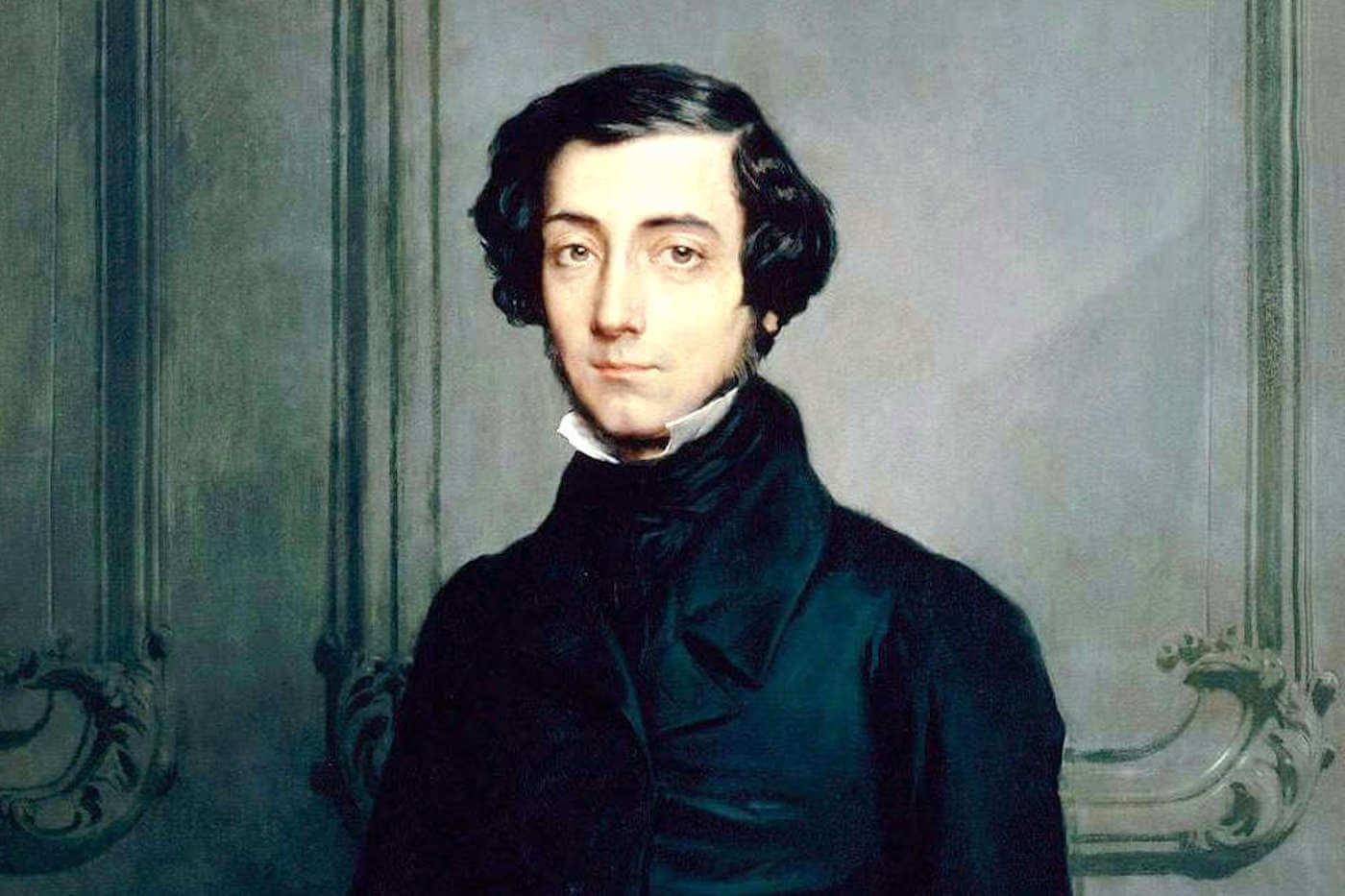
“Individualism is a mature and calm feeling, which disposes each member of the community to sever himself from the mass of his fellow creatures; and to draw apart with his family and his friends; so that, after he has thus formed a little circle of his own, he willingly leaves society at large to itself.” ~ Alexis de Tocqueville, Democracy in America.
The ‘Prophecy’ of Tocqueville: His Understanding of Radical Individualism
While Tocqueville wrote these iconic words, he could hardly have imagined how true, nearly two centuries later, these words would become. On his journey throughout the United States, Tocqueville already realized and warned about the derailing effects of hyper-individualism. Yet, those warnings seem, looking back, to have been in vain. Hyper-individualism has become the central doctrine of modern society and we are a long way from recovering from its consequences.
Modernity has transformed Western societies from societies based on tradition, Christianity, and culturally embedded institutions (e.g., the family, community, and church) into societies based on individuality, technical innovation, liberal rights, and emancipation. This movement has tried and partially succeeded to combat the bias of our deepest instincts toward those who are different from us (e.g. in ethnicity or culture). Yet, the reason why we have been unable to completely eradicate such bias as well as the emergence of new forms of divisions and polarization shows us one thing: human nature cannot be altered completely to our desires.
Therefore, one should not throw out the baby with the bathwater. Individualism has provided some benefits to humanity. Yet, the misguided and radical form destroys both the benefits of some other forms of individualism as well as the premodern accomplishments of our ancestors. One of the glaring weaknesses of the utopian dream to shape humanity and its societies into a fictional and abstract ideal is that unintended consequences always happen. One of the phenomena that has emerged out of modernity, in line with Tocqueville’s warning, is the rise of hyper-individualism, also called neoindividualism.
What has followed is a psychological exile in which embedded citizens have turned into individual metaphorical strangers. By detaching from overarching cultural consciousness, man has increasingly had difficulty finding a world of conviction, certainty, and truth. To replace the underlying societal morality, modernity has promoted mass consumption as a moral placebo for private interests. The (individual) self has become a commodity to consumerism as modern culture organizes itself around artificial and sales-driven images. The philosopher David Hume warned against this form of consumerism in his time as follows: “This avidity alone, of acquiring goods and possessions for ourselves and our nearest friends, is insatiable, perpetual, universal, and directly destructive of society.” Yet, as Western societies have massively adopted consumerism, man has alienated himself from himself, others, and society. The famous clinical psychologist John F. Schumaker phrased it well when he recognized that modern society has alienated man and led him astray from his intrinsic nature: we are in the “age of insanity.” The chickens have come home to roost and clearly show us the heavy price we are paying in our path towards social and mental exile. To recognize this reality will be the first crucial step in a long healing process of which the outcome might be uncertain, but still preferable to a certainty of alienation.
Sologamy: A Case of Absurdity, or a Rational Consequence of Neoindividualism?
A good anecdote of the absurdity of neoindividualist alienation is the rise of sologamy. Sologamy, the act of marrying oneself, has been one of the newest trends in a long line of (radical) individualism. Although the practice of sologamy has existed for a few decades now, with the first official case in the United States in 1993, especially since the COVID-19 lockdowns in 2020 there has been a significant rise in sologamy, especially among women. Although sologamy does (as of now) have no legal or binding consequences, the rise in popularity raises the question whether sologamy will become normalized.
Some people have argued that sologamy is just an expression of self-love. It is claimed to show the independence of a strong individual mind who outgrew the need for long-lasting commitment to anybody else. In actuality, it is a sign of detachment from social connections to others and the responsibility that comes with committed relationships. As social beings, committed relations are essential to experiencing a meaningful life, as well as to a stable and prosperous society. Hence, sologamy is a way of self-deception. It celebrates giving up on a crucial part of what makes us human. It forgets that institutions such as marriage and the family are not reducible to self-love. They are about transformation of the I into the Us. Of taking part into something that transcends our wimps and needs. Where could we have gone so far astray that this self-evident truth is not only challenged but increasingly denied?
The Emergency of Neoindividualism
Neoindividualism is an excess and logical development of Calvinistic theology. Calvinism started out as part of a bigger protestant movement in which the corruption of the church as institution was rightfully so criticized. Over time Calvinism embedded the idea that truth and salvation can be best derived from personal subjective experience and interpretation. By turning the sanctity of personal life experience into a dogma, man has gradually detached from others and become a stranger among strangers. As this Calvinistic belief over time secularized, no authority was longer equipped to bind the individual to any bigger structure. Consequently, the individualistic tendency of Calvinism was transformed into its logical climax: the radical detachment of the individual from fellow man and its environment.
Calvinism itself should not be seen as the only cause that made the stars align for the rise of neoindividualism. As Calvinism prepared the minds to alienate from others, human beings still held a strong tide to their environment. Pre-modern human beings were attached to their environment. They understood that it was an extended part of their being and reality and that therefore, one must take care of its environment in the form of stewardship. This changed when society modernized.
Consequently, socioeconomic development, urbanization, and the decline in natural and viral disasters became catalysts for a more individualistic approach as people became less reliant on their families and communities to survive. Over time, the local environment became less important as people detached from its significance and started to make more room for the rise of the nation-state and later supranational entities such as the European Union. Man no longer was the master over his own destiny in relation to his environment. Instead, man became paradoxically reliant on itself while in its impotence became increasingly dependent on the national and supranational state-like structures. To survive in the new reality, man turned to extreme commodification, consumerism, social marginality, and technological encroachment. Consequently, man has had to sacrifice the relationship between man and the transcendental, the environment and his fellow man, and replace it with projections of their whims and needs.
Schumaker famously calls this process postemotionalism as it moves society past a point of emotional reciprocity. Postemotional societies are detached from human reality or dignity. They bring forth a sense of emptiness, lack of emotional commitment, and empathy. Most detrimentally, knowledge and skills that add to enhancing the own self-interested consumerism are placed above the pursuit of the good, beautiful and truth and ultimately the reciprocal relation with the internal and external world. To distract from this painful reality, the postemotional society is in a constant phase of detraditionalization to shift the blame of its suffering constantly onto a new locus of oppression that needs to be emancipated to finally unlock the postemotional utopia that will never come. Problematically, this requires constant cultural, political and institutional innovation that is unable to root itself in society or solve the underlying problems. People stay busy with this innovation to keep themselves distracted from the reality in front of their eyes and embedded in their own minds. Like people famously take Soma in Aldous Huxley’s Brave New World, people detach themselves from their own physical and mental senses.
The Low Resolution of Neoindividualism
Individualism has risen globally for the last fifty years. Yet, its negative impact has been primarily felt in societies in the West and south-east Asia (e.g. Japan, Singapore and South-Korea). Some other countries have in fact benefited from the strengths of individualism with factors such as an increase in creativity, flexibility, economic growth and a reduction in government corruption. These aspects were also once part of the success recipe that gave rise to the rise of flourishing Western societies.
Whereas most of the world has learned, with various degrees of success in implementing it, from the benefits of individualism as demonstrated by earlier Western societies, the West forgot what made individualism work in the first place: a flourishing civil society. The neoindividualist society lost its ability to bring nuances to complex social systems. By dismantling the fundamental social framework, it has become a low-resolution society which is unable to leave the shadows of black and white.
Luckily, the dominance of neoindividualism is no deterministic law of nature. Whereas neoindividualism its simplistic and alienating properties are powerful, so are the benefits of its counterpart reciprocal individualism. Reciprocal individualism is based on interdependence and self-reliance that are tied to group harmony and concern with the welfare of the collective. Thus, the community remains the person’s center while people are empowered to become strong distinct individuals. Reciprocal individualist societies, such as the Pygmies in Africa and Bhutan in the Himalayas, demonstrate how individualism has its potent place in human societies without falling prey to its destructive properties. Reciprocal individualist societies, of which Western societies were once a part, understand that one has to take the complexity and history of one’s culture into account to know which mix of inner modernity (modernization in meaning, purpose, values and spirituality) and external modernity (materialism, technology and competition) should be embraced, and which parts would be detrimental to society.
In the western context, both people on the left and right of the political spectrum should critically reflect which parts of cultural progression and material gains are worth destroying the social fabric of society over. One can only hope that out of this debate, a new vision emerges which combines the best of pre-modern structures, meaning and institutions with modern knowledge and freedom.
Why Neoindividualism Is a Persistent Problem: The Cultural Underpinnings
To get to this point of change, one must understand why passively waiting for the downfall of neoindividualism is counterproductive. One must understand why neoindividualism is a persistent problem. As we have put forward, neoindividualism has created a people and society that does not go hand in hand with human flourishing. Then why do people accept the neoindividualist society?
As people detached from themselves, others, and the environment, people have adopted what has been described as modern person syndrome (MPS). As the ‘optimal’ coping strategy to modern society, MPS combines a detachment from the past and present, emotional allegiance to technology, a commercial view of justice, and material ambitions that take priority over social and environmental concerns. MPS has made people invested in the neoindividualist project for their own short-sided ‘benefit’. Ironically, MPS has been all but successful to create benefits for its new hosts as it is a crucial factor in the rise in loneliness, nihilism and psychopathology over the last fifty years.
Psychologists have been unable to combat this mental health crisis as they themselves are a product of the same neoindividualist culture. Modern psychology views people predominantly as isolated units who are the principal translators of reality. This assumption takes the neoindividualist worldview at heart and has created a clinical framework that revolves around individual responsibility and locus of blame for their mental suffering. Yet, although responsibility for one’s own life is crucial, to see the mental derailment of modern man as merely an individual challenge, is to be blind to the underlying cultural causes.
What has happened to psychology has happened to all domains of human life. Even parts of life, such as politics, where different ideas seem to clash under the dichotomy of left and right, have embedded neoindividualism on both sides of the spectrum. Whereas the right has sanctified the individual to live merely for himself, in ‘pure negative freedom’, the left has adopted the sanctity of individual identity. Both sides are fighting for different parts of the same MPS-lifestyle. Thus, both sides deny that distinct individuals are a cultural product. To be a distinct individual is to be connected to the other. Nowadays, even our individuality is unoriginal. This was already foreseen by cultural theorist Edward T. Hall when he said that: “The most powerful of all human motivations is the drive to learn one’s culture.” Culture is synonymous with survival and thus, one needs some degree of unity with the own culture to survive both physically, psychologically and socially.
The social learning that transmits culture from one generation to the next, is therefore to be understood as the mechanism that drives sanity itself. The cultural cognition, with all its values and meaning, shapes most aspects of how we perceive human reality. This does not lead to a determinism in which culture creates people with reductionistic and predictable behavior. Culture gives us the language in which we can communicate. With its constrains, possibilities and routines, it invites its members to operate together in a productive way. Yet, modernity with its neoindividualist dominance, has diminished the ability of Western culture to self-replicate itself in a reliable fashion. This has increased variability within the culture and provided less guidance and stability to its members, than culture did to past generations. Thus, the neoindividualist society increasingly weakens man to be able to get out of the neoindividualist rabbit hole. We are now at a point, that after derailing the individual and constitutions that form the civil society, neoindividualism is derailing the functionality of society and the liberal order on which it is based.
The Neoindividualist Collapse of the Liberal Order
The neoindividualist self is becoming the catalyst of the downfall of the liberal societal order. To understand why, we need to go back to some of the primary thinkers that this order has been based upon: Immanuel Kant, Thomas Hobbes and John Locke.
Let’s start with Kant. He believed that, based on reason, every individual would arrive at the same moral law. Kant thereby secularized the Lutheran and Calvinistic understanding of truth through personal rationale. Even if Kant believed in the individual arrival to universal moral law, Kant also understood that there are certain conditions that need to be met, to be able to have a mutual understanding of morality. Thereby, Kant laid out three conditions that need to be met for people to arrive at the same moral law. Tragically, all three have been violated in modernity. First of all, Kant argued that a moral society treats people as ends instead of means. This ensures that people can act autonomously which separates them from animals and can act freely, which meant to Kant, to act morally out of free will.
Yet, as we already have seen, hyper-capitalist neoindividalist societies have done the complete opposite. The neoindividualist self, in its inability to survive alone, has adopted a fluid and submissive MPS-lifestyle to the state and consumer-society. The neoindivudalist self has become a commodity to participate in society and becomes ‘successful’.
Secondly, morality needs to be based on a categorical instead of a hypothetical imperative. In other words, morality needs to be absolute and unconditional. This directly undermines the dogma of unlimited negative freedom to which the neoindividualist psyche clings. To survive psychologically, the modern mind needs to deny the existence of such morality, as it implies responsibility. It implies the existence of something intrinsically deeper than negative freedom.
Lastly, Kant is famous for saying: “Act only on that maxim which you can at the same time will that it should become a universal law.” In short, to have true morality, one cannot have a mere competition of preferences of what is just and unjust. A collective consensus that transcends the individual is necessary to bring a sense of fairness and justice that people need to form stable lives on. In the Bible, this was summarized perfectly when Israel, lacking its orienting structure turned into chaos: “In those days, there was no king in Israel: Every man did that which was right in his own eyes” Judges 21:25.
Hobbes, contrary to Kant, did not believe that all individuals can arrive at the same universal moral law. Hobbes’s fears of chaos in which there is a “war of every man against every man” seems very relevant nowadays. To remedy this chaos, Hobbes argued for unalienable rights, primarily the right to life, that would protect society from derailing too much. Hobbes hoped this these unalienable rights would protect society from losing the fundamental ingredients that kept it together.
Later, John Locke added the right to liberty, property and the pursuit of happiness to Hobbes’s vision of alienable rights to increase this foundation. The legacy of Hobbes and Locke is they both understood that a strong civil society needs a strong shared morality to hold people together. Yet, with the knowledge of hindsight, we are able to conclude that these alienable rights are themselves a consequence of a shared morality, and not the starting point of one. Thus, the liberal right-focused worldview does not provide in itself enough protection against the derailment of neoindividualism.
Tocqueville foresaw that the American liberal democracy that combined Locke and Hobbes in the American Declaration of Independence could one day be threatened by (neo)individualism. Tocqueville famously described it as follows: individualism is not egoism. It is not a failing of character but of the environment. This is the greatest danger to (liberal) democracy. People will simply cease to care for the welfare of others and leave the responsibility to the state which will be the beginning of a benign tyranny. To Tocqueville, reciprocal altruism is the only secular basis that could maintain the social fabric and institutions together as society modernized. He called this: “self-interest rightly understood.”
Conclusion: The Competition Between Reciprocal and Neoindividualism
In conclusion, we see in contemporary society how neoindividualism wreaks havoc upon the individual, the institutions that make up civil society and society as a whole. People have become so alienated from themselves that they walk as strangers among strangers. Currently, there seems to be a lack of thought leaders who can break through the division of left and right to see how society as a whole has been captured by neoindividualism. Reciprocal individualism seems to be the only productive way forward towards a future in which the strength of the institutions and civil society can be combined in a way that embeds the meaningful structures of the premodern era as well as the modern advancements. This would allow us to escape the Hobbesian chaos and to safeguard the fundamentals which embed the liberal order into a deeper structure of meaning and purpose. A future that will give the next generations a recognizable and prosperous society full of the freedom to become a true citizen: A distinct individual embedded into society.


Related Posts