Reclaiming Nietzsche as a Catalyst for Renewing the Western Tradition
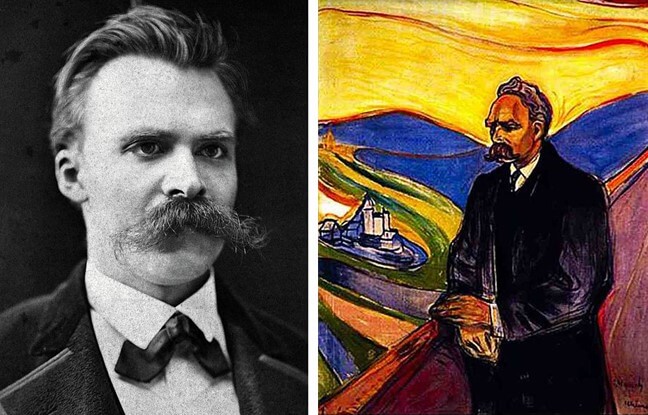
Europe is decidedly the epicenter of magisterial cultural brilliance. It is the continent that has bequeathed upon the world the most evocative of paintings, superlatively invigorating music and dazzlingly triumphant literature. Yet, the home of Michelangelo, Bach and Shakespeare is now at a crossroads that has been incited by a deeply lamentable waning of courage. The curtailing of Europe’s gallant essence has led to its almost total submission to American might, and an existentially catastrophic assault on its own immeasurably heroic history. The decline of Western Europe is the primary area of concern as nations in Eastern Europe, including Hungary and Poland, continue to proudly uphold a vigorous collective identity. In this uncertain march towards either renewal or cataclysm, a discerning existential diagnosis of modernity and some vitally invigorating solutions can be found in the life-affirming aspects of the philosophy of Friedrich Nietzsche. Whilst his ultimately impious worldview remains problematic, his work also channels an intellectual force that can once again redeem Europe towards a path of civilizational assertion by reviving the majestic artistic spirit that predicated the continent’s cultural achievements.
Art is the highest manifestation of the human will. Nietzsche opined in The Birth of Tragedy that “art is a redeeming, healing enchantress. She alone can turn these nauseous thoughts at the horror or absurdity of existence into ideas compatible with life.” Paintings, literature and music are all radiant personifications of the artistic drive, an impulse that supersedes mortality. Perhaps, there is no painting that more masterfully exemplifies the complexity of multifaceted human emotions whilst also affirming deep religious tradition than Leonardo da Vinci’s ‘Last Supper.’ Within a few years, Europe was bestowed with Raphael’s ‘School of Athens,’ a virtuoso Renaissance encapsulation of the Western Tradition that celebrated the constellation between classical thought and Christian wisdom. Europe’s art has shown the inimitable capacity to overcome impermanence, immortalize the ephemeral and ultimately, weave an allegory of the eternal.
Few poems can channel Lord Byron’s celebration of the human spirit and the limitless reaches of its passions as he proclaimed in Don Juan that ‘love will find a way through paths where wolves fear to prey.’ Tatiana Gnedich, a Russian translator, was so reverently enamored with Don Juan that she memorized the poem, which is more than 16,000 lines, by heart. After being condemned to the Gulag under the curtain of Stalinist repression, she secretly translated the entire poem into Russian on paper she secured from a sympathetic guard over a period of a decade. Such is the profound endurance, valour and defiance that Europe’s poetry has the power to evoke.
Music is an intensely formidable force that can permeate the human psyche more deeply than the most stirring of words and furthers the search for the sacred by bridging the chasm between the spiritual and the sensual life. Nietzsche emphatically pronounced that “without music, life would be a mistake.” In turn, Europe has charmingly advanced the human condition through its distinguished tradition of musical masters, from Beethoven and Mozart to Chopin and Handel, who channeled the sublime through virtuoso notes and bedazzling melodies. As Roger Scruton continually emphasized, it is imperative to preserve and amplify a culture’s rich heritage and social values; the ongoing leftist-spawned resentment over the past is antithetical to European progress. China and Russia have no qualms about zealously embracing their respective histories and traditions. Neither should Europe if it is to reclaim a sense of global prestige and purpose. Nietzsche warned that “when I don’t hear any music, everything seems dead to me.” If educational institutions do not bequeath upon the youth the unparalleled grandeur of the music and cultural accomplishments Europe has produced, then perhaps this continent will inexorably lose its once famed voice. With that, it will hurl towards inextricable irrelevance in a world that is ripe with ruthlessly assertive rivals.
A continent-wide initiative to reposition artistic accomplishments as the fulcrum of Europe’s greatness is the antidote to the existentially pernicious nihilism that has regrettably caused younger generations to become disengaged from the cultural achievements of their ancestors. Art serves as the most graceful and galvanizing emblem to instill a civilizational respect within the youth and in turn, the unwavering conviction that Europe is a civilization worth defending. The exaltation of the genius of the likes of Homer, Kierkegaard, Van Gogh and Liszt, should be the mantra that definitively supersedes the ruinous absurdities of decolonization and critical race theory that pervade Europe’s education curriculums.
Civilizational struggles are manifesting in the Middle East as exemplified by America and Israel’s efforts to defeat the brutal tyrants of Iran. Yet, in Europe, that profound predisposition to defend one’s nation and ultimately Western Civilization, seems to be in swift retreat. A survey by Ipsos last year found that 48% of Britons said that there are absolutely no circumstances where they would be willing to take up arms to defend their country. Such data emphatically illustrates that Britain, a nation that survived campaigns of conquest from the Romans, Spanish and Germans, now faces a harrowing question of erasure as a sovereign entity in the event of conflict. President Trump’s recent maneuverings over Greenland have demonstrated the geopolitical impotence and lack of civilizational self-confidence that Europe now grapples with. This is driven by a decades-long, systematic attempt to demoralize Europeans through dispiriting education systems and a cowardly political class that have sought to destroy the continent’s rich history. By elevating Europe’s artistic pedigree to a position of overriding importance within the national consciousness, new generations, from London and Paris to Munich and Madrid, will be emboldened to emulate the heroes of the past, to revere their country’s history and to make history of their own.
In February of last year, American Vice President Vance delivered a striking speech, prescient in its analysis of Europe’s near-terminal malaise, that rebuked the ruling elites’ ferocity in restraining free speech and warned that the greatest security threat to the continent emanates from untrammeled mass migration. Nietzsche’s On the Genealogy of Morals provides a philosophical foundation for the chilling diagnosis posited by Vance by delineating the implacable distinction between ‘master’ and ‘slave’ morality. ‘Master’ morality is predicated upon nobility and courage-the affirmation of life by way of heroic deeds and superlative artistic endeavors. In contrast, ‘Slave’ morality is the antithesis to a salubrious existence; it promulgates ressentiment-a will to the denial of life through ghastly pessimism and grievous chastisement rather than audacious aspiration towards the achievements of those who have attained profound successes. Unfortunately, Europe has been afflicted by the subversion of its highest echelons of power by the ressentiment-fueled purveyors of ‘Slave’ morality.
Nietzsche forewarned that ‘the slave revolt in morality begins when ressentiment itself becomes creative and gives birth to values.’ Those values, from the paradigm of the Brussels bureaucrats, are rooted in the dissolution of borders, an assault on history and the embrace of socialist tendencies. It amounts to a calculated policy of enforced cultural amnesia. In his Munich Speech, Vance cautioned against “the retreat of Europe from some of its most fundamental values” as digital censorship enacted by the European Commission and the denigration of the religious freedoms of Christians serve as an affront to basic Enlightenment principles. A nation cannot exist without borders and freedom dies when peoples are denied the right to self-expression. Incessant mass migration of swathes of communities with views that are antithetical to the Western Tradition has raised the specter of not just a demographic reconstruction of Europe but also the irreversible permeation of dangerous ideals emanating from fundamentally intolerant cultures. The horrific stoning of Ghofrane Haddaoui in Marseille in 2004, the assault on the Bataclan in 2015 and the sickening attack on a synagogue in Manchester during Yom Kippur last year are among the myriad of atrocities that epitomize the fatal fault lines in multiculturalism. As the great Danish theologian Kierkegaard declared, ‘courage is life’s only measure’. It is incumbent upon European politicians to once more steer the continent toward a courageous path where heritage is honored, cultural achievements are not just preserved but augmented, and that esteemed centuries-old values are fought for rather than callously debased.
Christian principles serve as the moral foundation of Western Civilization. This very essence of the continent’s soul is now facing a vehement crusade from ultra-progressive ideologues, militant secularists, radical Islamists and all those who despise the West. From the Vatican in Rome to St Stephen’s Basilica in Budapest and Canterbury Cathedral in Britain, Europe is illuminated by astounding Christian monuments that epitomize profound spiritual depth as well as architectural brilliance. In Thus Spoke Zarathustra, Nietzsche wrote of the waning belief in God in Western Europe and characterized this phenomenon as the “death of God” for He no longer held a place in the hearts of most men. He opined that “by breaking one main concept out of Christianity, the faith in God, one breaks the whole: nothing necessary remains in one’s hands.” The ‘death of God’ proclamation was not by any means celebratory and rather alluded to a colossal crisis where the loss of faith would create a profound moral vacuum that was liable to being consumed by the most life-negating of forces in the form of nihilism.
In the pre-Christian period, moral rationale and human capacity for greatness were thought to be the virtues of the elite. Both the Greek and Roman Empires were sustained by radical inequality through their unabashed reliance on slave labor. It was Christianity that established that every individual is made in the image of God, venerated every man’s right to reason and established the dignity of the soul in the pursuit of the Beatific vision. In the Joyous Science, Nietzsche astutely envisaged the devastations to come as he presented the decline in Christian faith and the subsequent ‘death of God’ as a calamitous tragedy: “how shall we, the most murderous of all murderers, ever console ourselves? The holiest and mightiest thing that the world has ever known has bled to death under our knives – who will wash this blood clean from our hands?” It is no coincidence that as this loss of faith accelerated, the twentieth century would see the catastrophic emergence of Communism and Nazism, barbarous ideologies with cult-like followings that slayed millions.
Whilst Nietzsche’s solutions for the spiritual atrophy are in direct variance with Christian principles, his analysis of the dangers of the loss of Christian faith remains of immense pertinence to the state of European culture. Woke ideology and liberal progressivism are the culmination of the post-Christian order as they fill the God-sized spiritual void with heightening aggression and indiscretion. This has manifested in the form of outright desecration, such as the rave performed in the sanctified halls of Canterbury Cathedral in 2024, and a malevolently anti-human agenda that aspires to dismantle the nuclear family as revealed by the disturbing pronouncements at Socialism 2025. Europe’s governments must safeguard and nourish Christian values as they are what affirm the dignity of the human soul, serve as the bedrock of this continent’s achievements and are the only means of actualizing the sacredness of redeemed man amidst the chaotic maelstrom of civilization-despising crusaders.
Europe, particularly its Western frontier, stands at the fragile precipice between civilizational assertion and suicide. This is a continent with monumental and unrivalled artistic accomplishments. Deep appreciation of this profound culture must be bestowed upon future generations to foster respect for their national heritage and in turn, the unwavering determination to defend the country that they cherish. Elements of Nietzsche’s philosophy, through evocations of the beauty of heroism, courage and artistic mastery, can be an antidote for Europe’s malaise. The gauntlet now falls to Europeans. They face the choice between embracing the everlasting gallantry that lies in revitalizing the greatest of civilizations or the ignominy of enabling the descent of a cornucopia of Enlightenment into unsalvageable irrelevance.


Related Posts