Street Preacher at The Odyssey
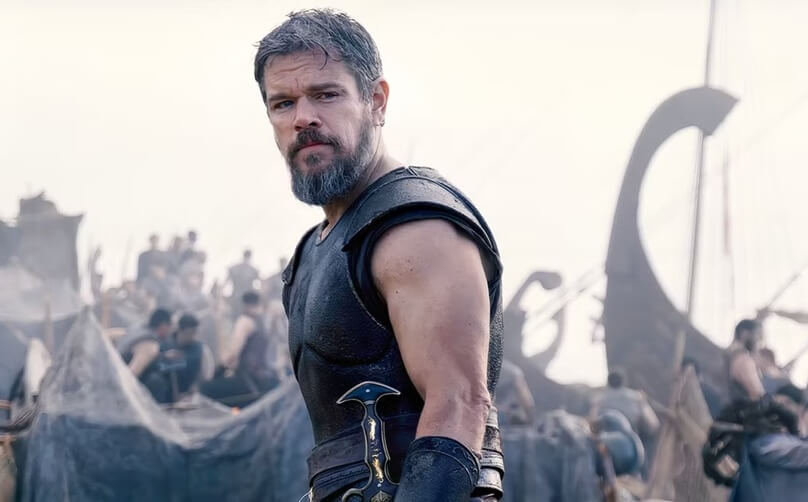
The Mennonite watches the enshadowed dark before them as it is reflected to him in the mirror over the bar. He turns to them. His eyes are wet, he speaks slowly….He’ll ain’t half full. Hear me. Ye carry war of a madman’s making onto a foreign land. Ye’ll wake more than the dogs.
But they berated the old man and swore at him…and how else could it be?
~ From Blood Meridian by Cormac McCarthy
What do you think about the street preacher? About the prophet who looks out of place, bedraggled maybe, living in a space without time though walking this world that is rhythmed by time. Those who deliver truth and those who sell lies often appear to be similar. And at times they are treated similarly: ignored, disregarded as being failures at their own message; “berated…and swore at.” Even when the street preacher says what is true, an uneasiness rises like a high tide or a flash flood about me. Perhaps a comparable uneasiness brushes up against you in the same situation. Such an uneasiness gathered around me as several family members gathered around me in the movie theatre lobby to hear my answer to the question, “What did you think of the movie?”
The movie in question was Christopher Nolan’s The Odyssey. Had the film been drawn from an original screenplay the film would have landed better with me. Like most adapted films, though, most viewers haven’t read the primary work from which the screenplay and the movie are derived. This is not a criticism of those viewers. That’s a topic for another time. But Nolan’s cinematic Odyssey, as readers here will know — and as many others viewers know — is born from another text.
Much has been said regarding the adaptation. Paul Krause and Elijah Weaver’s essays supply readers with keen observations. Krause pays homage to the film itself, claiming how well Nolan depicted Hades, and both Krause and Weaver demarcate, as with arrow-sharp precision, the richness of the ancient, epic poem by Homer against the shallow distortions of that old work by Nolan. Over at World magazine, Colin Garbarino’s movie critique for The Odyssey seems sharpened by the same whetstone with which Krause and Weaver honed their perspectives.
Before reading these pieces I was on vacation in South Carolina with my wife’s family, and one afternoon a group of us ventured into a theatre with plush, red leather recliner chairs that sounded like velcro being pulled apart whenever you reclined or inclined the seats. Our group, twelve in total, occupied an entire row of seats and portions of another row. My daughter sat beside me. She and I are, at the time of writing this piece, the only people in our fellowship who have read The Odyssey. I agreed with Krause’s take on the depiction of Hades. Like Garbarino, I couldn’t stomach the role of adult Sinon as it was cast. What a disrespect to that storyline.
But when the film entered its third act, the sails shredded into pieces and the ores snapped in half. It wasn’t long after that, and the entire production was swept up in shadows because the captain and its crew were lulled by a siren’s song tuned according to modern sentiments. The answers the movie provides are drawn from what it laid down in the beginning, so it is a resolution logically derived from its premise. But when the premise is revealed, when Odysseus confesses the epiphany that struck him at the fall of Troy, I saw what Nolen aimed to do with this film. What Nolan intended to do with his adaptation was the primary question I had when sitting down to watch the movie. Why make this movie now? What angle will the adaptation take? The questions answered, I found myself praying to God that I wouldn’t stand up when the credits rolled and declare the movie’s errors. I prayed too that I would keep my perspective to myself unless asked directly, and even then, temper the response because for those who’ve not read the book, or benefited from the writings of Thomas Wise and Christopher Groffos, the movie would be sufficient. It is a visual masterwork. However, films shouldn’t be measured only by their imagery. Their arguments matter. Nolan’s claim that hospitality is the bedrock of civilization has its merits. The argument, though, falls far short of the complex exploration found in the primary source. Given the audience’s dissociation with the primary source, though, I wanted the audience to enjoy the movie adaptation. The group did not need my post-movie analysis.
The credits rolled, and we filed out of the screen room, and some of us stood in the lobby, while a few others hit the restrooms. While we waited in the lobby, the question was asked to me: “What did you think of the movie?”
It was a face-to-face conversation. In-person. A public audience. Not a literary journal or conference. Not an online post or vlog. The bodies, the eyes, the souls of us were assembled together in spaces where social distancing did not exist.
The main objection I focused on was the distortion of Homer’s theme of homecoming. And that theme I partitioned into two elements. First, homecoming is difficult. Nolan said that much. But along with the dangerous encounters involving starvation, storms at sea, Cyclops, and Circe the witch, Nolan rooted his theme in a slight-of-hand with the original text. Homer says coming home is no easy task, and when one returns home there’s still work to do. Those who know the book know that Athena doesn’t accuse Odysseus of breaking the law of hospitality or diligently persuade him to confess his sins. She chooses him to survive the journey from Troy to Ithica. She inspires him and his son Telemachus in their slaughtering of the suitors. And she stays Odysseus’ hand when he would have given chase to those suitors and, again, gone away from the very home he struggled to reach. Athens led him home. Helped him reclaim his home. And persuaded him to remain at home, to be again with his wife and son. Homemaking is a cornerstone of civilization, and it is a mighty adventure to undertake. What culture can survive without it? Nolan does well with Penelope and Odysseus’s devotion to one another, and their sailing away together addresses a concern I have with Tennyson’s poem, “Ulysses.” In that poem Ulysses (Odysseus) compares the barren crags of Ithica to his aged wife, and he abandons wife (and son) for more campaigns with his mighty men. Though spangled with the sunshine of risk and high adventure, it is a dark poem about one man’s narcissistic discontent, a major sin which will not attend to a home’s needs. Second, the Father-Son relationship. Homer grants the son an entry into manhood by way of joining his father in something for which the father is well-known and honored: his warcraft. But in the Father-Son relationship of the film adaptation, Nolan relegates Telemachus into a fumbling bout against one villain only, after which Telemachus looks on as Odysseus slays all the other suitors himself.
My brief speech was briefer than the above paragraph. Yet I felt my own eyes on me as though I was a street preacher akin to the Mennonite in McCarthy’s novel Blood Meridian. Some of the family members I glimpsed seemed tolerant but ready to head back to the house because the speech wasn’t what they paid for, and what they paid for was good enough without knowing the source material. However, one voice made a remark indicating that he had been persuaded.
But we needed to get back to the house for dinner. We vacated the movie theater, took a group photo in front of the marquee, and caravaned to the house where a breakfast spread was nearly ready for us. Before we ate, though, while the final touches were being put on the meal preparation, I sought out one of the family members who’d asked me what I thought of the movie, and I repaid the favor and listened to what he said. A good conversation took place just before we broke bread together.
Sometime after that I told my wife my concerns with the after-movie speech. Her criticisms and her compliments have weight because they’re honest. Her corrections over the years have been the stuff Aristotle would say bespeaks a friendship of virtue. She assured me that I was on point. She was glad I didn’t rave or stand up on the concession counter when delivering my movie review. She was also glad that I took time to hear out the family member before dinner.
Two nights later, back home in West Virginia, the family member who in the theatre lobby commented in a way indicating that he’d accepted my review of the movie texted me a screen shot of the Garabino essay in World magazine with the caption: “Your post movie analysis nailed it.”
Had no one in our group been interested in the original Odyssey, had no one in our group been interested in what I had to say, the truth of the primary text and the failings of the film adaptation would still stand. The Mennonite in Blood Meridian is vindicated as the gang travels into Mexico; though no one in the band ever says so, they certainly “raise more than the dogs.” An artifact is a thing we should rightly interpret or adapt. But if not, the artifact remains what it is. Truth doesn’t return to dust and ash and then to nothing. It remains. And so places that labor to keep the truth are lovely places. And those in-person conversations, which for all of us who claim to love the word, the book, the truth, are worthwhile, lovely endeavors whereby, though perhaps more difficult, we can make for ourselves a place in the world where we are neither estranged from others, from ourselves, or from God.


Related Posts