Mircea Eliade and the Eastern Theologians
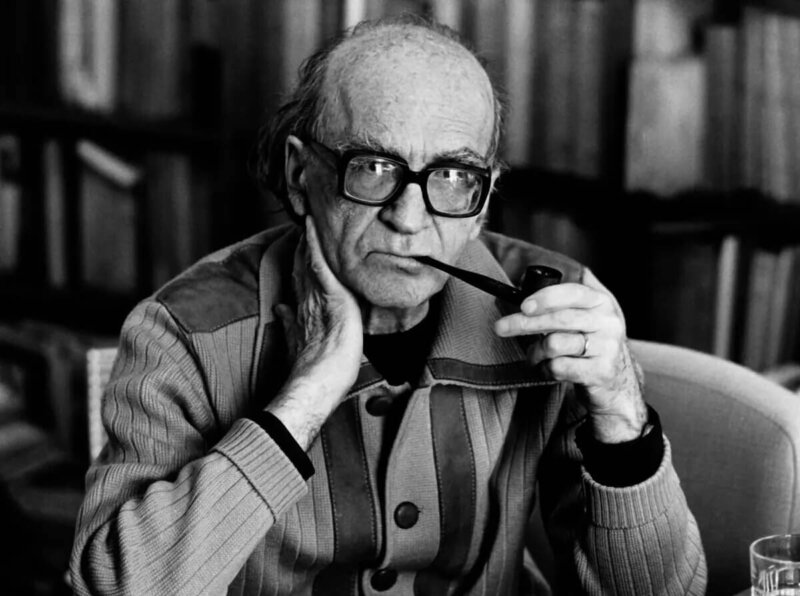
Animated by a restless intellectual curiosity, the author of Traité d’histoire des religions (Patterns in Comparative Religion—1949) frequented most of the major intellectual circles of Europe and America, becoming acquainted with many of the twentieth century’s outstanding scholars and thinkers. Among them, Christian theologians occupied a special place. Eliade approached them eclectically, with no particular concern for their denominational affiliation. His Journal and Memoirs, together with his other autobiographical writings, preserve countless traces of such “admirable encounters,” as the logician and historian Anton Dumitriu would have called them.
Despite the eclecticism of this author from Eastern Europe, it is inevitable that the earliest Christian theological sources of Mircea Eliade’s work should be sought within the circle of the highly controversial intellectual Nae Ionescu. This university professor, who was also a journalist of considerable political influence in interwar Romania, was the most admired model for the generation of the 1930s. His lectures on metaphysics frequently addressed the central problems of Christian theology, among which the doctrine of the Incarnation occupied a prominent place. Naturally, all these debates influenced Eliade, as he himself repeatedly acknowledged:
“I was fascinated by mysticism and, like many of my generation, I followed the revaluation of medieval philosophy that was triumphing in France with Gilson and Maritain and which Nae Ionescu discussed in his lectures, though without accepting it in its entirety. (…) Nae Ionescu regarded Saint Paul as the most important Christian thinker—not because he possessed greater philosophical genius than, say, Saint Augustine, Origen, or Saint Thomas Aquinas, but because he had shown in what sense one could think philosophically, in a creative manner, after the Incarnation. I do not know how much he managed to write of his Commentary on the Epistles of Saint Paul, but I saw and discussed the outline of this book during the winter of 1940, together with several of his former students (Mircea Vulcănescu, Dinu Noica, and others), at our weekly meetings in his house in Băneasa.”
Through his conversations with Mircea Vulcănescu, Stelian Mateescu, Paul Sterian, Sandu Tudor, and Gheorghe Racoveanu, Eliade had the opportunity to become acquainted with and assimilate the “absolute presuppositions” (Robin Collingwood) of Eastern Christian theology, while at the same time becoming aware of his own ignorance in these matters:
“Only through my conversations with Mircea Vulcănescu and Paul Sterian did I realize how ignorant I was of Eastern Christianity and Romanian religious traditions, not to mention the ‘Orthodox experience,’ of which I had none at all. Orthodoxy seemed precious to me for Romanians because it was there, and had long been there, forming part of Romanian history and culture. Personally, although I felt drawn to this tradition, I did not live it. At the age of twenty, I had only just freed myself from the consequences of the scientism and agnosticism of my adolescence.”
In Șantier (Work in Progress), we also find several valuable testimonies that bear witness to the author’s encounter with Orthodoxy, understood not so much in a confessional sense as in its essential, universal dimension, one open to Catholicism:
“When I discovered Orthodoxy—through Ignatius of Loyola, through the misguidedly conceived ‘apology of virility,’ through Nae Ionescu and Mircea Vulcănescu—it seemed to me the only doctrine consistent both with the Absolute I was seeking and with a collective, historical experience. That is why I threw myself body and soul into Orthodoxy before my time. Hence the reactions and criticisms of the last two years. Now I think I know the path I must follow. And I am astonished to realize that I shall have to preserve much, very much, of Orthodoxy.”
Indeed, Eliade retained much from Orthodoxy, frequently reflecting in the pages of his books published in exile on the “cosmic Christianity” characteristic of the Eastern Christinity and on the mystery of the sacred’s camouflage within the profane. His interest in this universal Christianity reached its peak around the early 1930s, when he and his friends resolved to publish a theological journal:
“I often met with Stelian Mateescu, Paul Sterian, Mircea Vulcănescu, and Sandu Tudor. Together we planned a journal of religious philosophy, for which Sandu Tudor had found the title Duh și slovă (Spirit and Letter). The journal was intended to replace and continue the two issues of Logos that Nae Ionescu had published in French, with the collaboration of several Russian theologians who had taken refuge in Germany and Paris. In Logos I had published my first studies written (poorly) in French: the long critical article on the Greco-Oriental mysteries and Orphism, and La vision chrétienne by Ernesto Buonaiuti. But after only two issues, Logos ceased publication. Mircea Vulcănescu and Sandu Tudor believed it was our duty to resume this initiative by publishing a journal in Romanian, addressed especially to young people.”
Unfavorable circumstances meant that not a single issue of Duh și slovă (Spirit and Letter)—the intended successor to Logos, Nae Ionescu’s journal—ever appeared in print. Nothing is now known about the fate of the manuscripts collected by Mircea Vulcănescu. What is worth noting, however, is the distinctly theological character of many of the young Mircea Eliade’s intellectual concerns.
A high point of these—let us call them—“theological” preoccupations was the heated controversy sparked by Nae Ionescu’s preface to Mihail Sebastian’s novel După două mii de ani (For Two Thousand Years), a debate conducted largely on the plane of the theology of religion. Eliade subsequently published several articles in Vremea (The Time), giving us the opportunity to appreciate the scope, breadth, and depth of his religious knowledge and convictions. Here we need only record the theological “profession of faith” occasioned by his polemic with Gheorghe Racoveanu:
“I am not a theologian,” Eliade modestly declared, “and the little theology that I dare believe I know, I learned from my teacher Nae Ionescu. But Professor Nae Ionescu directed me to the genuine sources: Macarius, Peter Mogila’s Orthodox Confession, the Eastern Church Fathers, and the solid works of Catholic exegesis. It would therefore surprise me greatly if I were so mistaken, knowing the authority of my sources.”
A perceptive assessment of the theological culture of the two protagonists in this debate is offered by Marin Diaconu, drawing upon his familiarity with the entire dossier of the controversy:
“In reality, it was a theological controversy between a graduate of the Faculty of Philosophy, enriched by his experience and studies in India but not yet sufficiently familiar with the field in which he confronted his ‘opponent,’ and a graduate of the Faculty of Theology who was a thorough specialist in his own discipline.”
Mircea Eliade cannot be regarded as an Orthodox theologian in the full sense of the term, like Vladimir Lossky, Gheorghe Racoveanu or Father Dumitru Stăniloae. As we have seen, he himself acknowledged the limits of his knowledge of Eastern Christianity, a point he would later reiterate in his interview with Claude-Henri Rocquet:
“I did not know my own tradition, Eastern Christianity, very well. My family was ‘believing,’ but, you know, in Eastern Christianity religion is something learned through tradition; it is transmitted rather than systematically taught, and there are no catechism classes. What matters are the liturgy, the liturgical life, the rites, and the sacraments. Like everyone else, I took part in them. But it was not something essential.”
This does not mean, however, that Eliade was unfamiliar with Orthodox theology. Quite the contrary. His encounters with Nae Ionescu and the latter’s disciples provided him with the opportunity to acquire a substantial body of theological knowledge, which, as he later acknowledged, contributed significantly to the formation of his own ideas. In this respect, it may justly be argued that Eliade’s entire contribution into the field of history of religions would not have assumed the profile by which it is known today without the influence of theologians such as Mircea Vulcănescu, Sandu Tudor, Paul Sterian, and Gheorghe Racoveanu. Their influence, together with that of a number of earlier and more recent Western theologians, fostered the development of certain theological themes within Eliade’s writings and gave his work its distinctive character.
Much later, Eliade noted in his journals his desire to write a work that would make explicit his own “philosophy” and “theology.” He never succeeded in carrying out this project. Yet the intention was by no means gratuitous. For beyond the historical and phenomenological concerns that dominate his writings, there exists in Mircea Eliade’s work a philosophy—and indeed a speculative theology—that can be discerned, at least in part, through careful and attentive reading.


Related Posts