Saying Goodbye to an All-American Hero
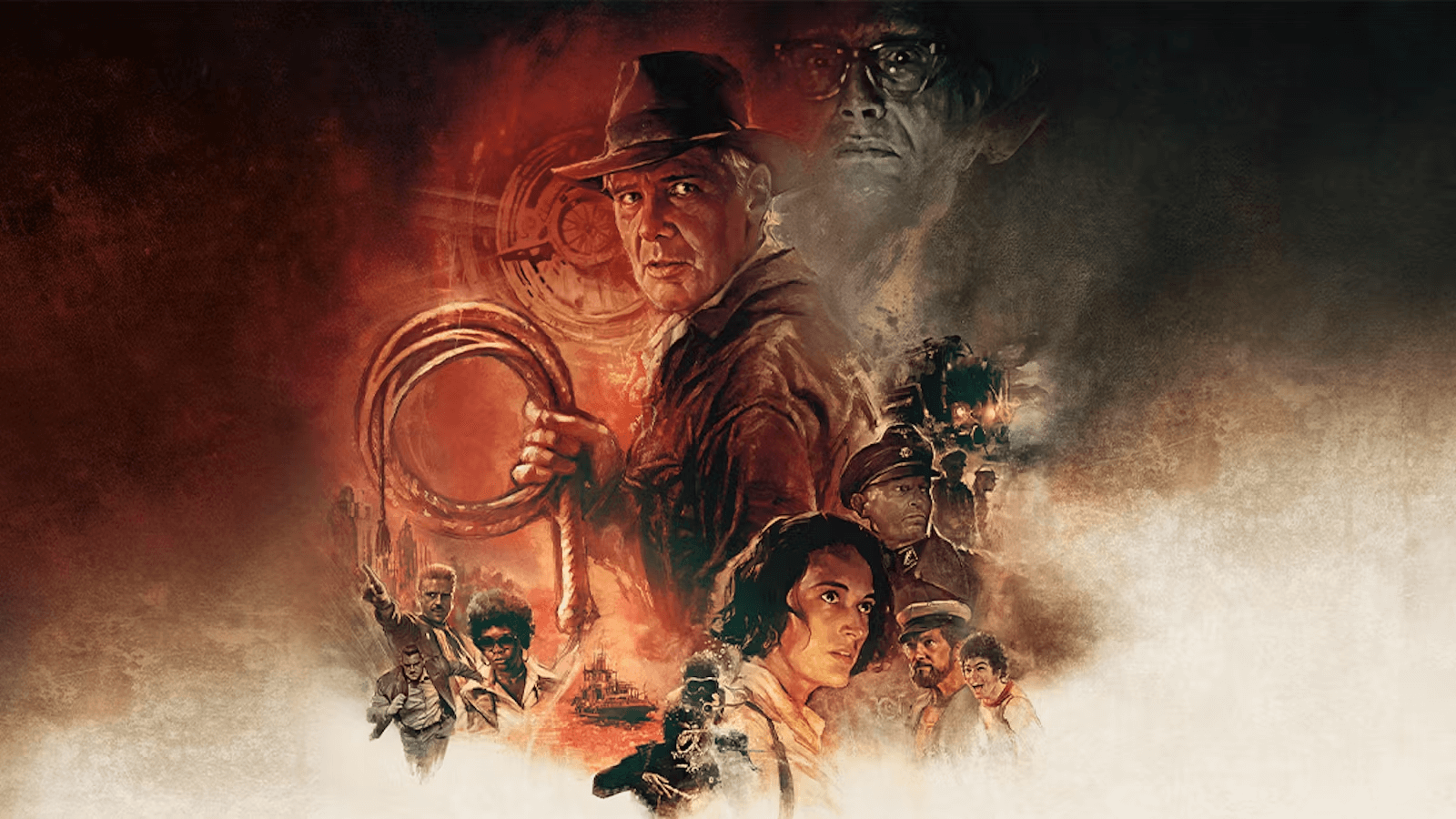
Indiana Jones is an All-American hero. He is the embodiment of everything America dreams about itself: suave and sophisticated with an adventurous, romantic, and individualistic spirit. He also is the embodiment of good in a constant fight against evil. Plus, he’s good-looking too! Indiana Jones is the man every boy wants to become and the man every girl wants to have.
Jones’s rise to cultural stardom came in the 1980s, a decade of (re)emerging American confidence after the wounds of the 1970s. Steven Spielberg gave the United States, and the world, a larger-than-life figure played by the equally All-American actor Harrison Ford (fresh off his Star Wars success). Raiders of the Lost Ark brought new life to the aging and tired western cowboy epic—remade as a quasi-World War II adventure epic blending a little bit of John Wayne, T.E. Lawrence, and James Bond into a mesmerizing film with a supernatural twist. Temple of Doom and The Last Crusade (my personal favorite) would follow and consummate Indiana Jones’s cultural immortality.
Director James Mangold and Writer David Koepp begin Indiana Jones and the Dial of Destiny strongly, returning Jones to his iconic era of daring heroism: World War II. It is as if the opening of the newest Indiana Jones film acknowledges part of the audience dissonance with The Crystal Skull: “Is this really Indiana Jones?” The Indiana Jones we grew to know and love was America at its best: fighting Nazis and trying to save supernatural relics associated with the Bible and the Christian religion from devious totalitarians trying to use instruments of a loving God by turning them into tools of hatred, oppression, and world domination. As we meet Indy once again, we are not in the 1950s like The Crystal Skull but in the midst of the struggle for the liberation of Europe in 1944 where Jones and his friend, an Oxford archeologist Basil Shaw, are trying to prevent the Nazis, led by Jürgen Voller (played by actor Mads Mikkelsen) from capturing the Holy Lance (the Lance of Longinus).
It is at the end of the first act that things begin to take a turn toward the WTF? conclusion, even if only obliquely. The Holy Lance is a fake. That’s okay. After all, we knew it had to be unimportant given the title of the film. Voller and his supporting cast of soldiers have found a new ancient artifact that will help the Nazis in the battle for world domination, the Dial of Archimedes, the “Dial of Destiny.” Jones and Basil manage to retrieve the Dial from Voller and escape in quintessential Indiana Jones fashion: explosions, jumps, and punches with a touch of comedy all included.
Fast-forward, now, to the 1960s. World War II is over. We’re in the Cold War era. America is embroiled in the Vietnam War (where Mutt, Indiana and Marion’s son played by Shia LeBeouf in The Crystal Skull, has died) and engaged in the space race with the Soviet Union. Dr. Jones is being run into retirement because of old age; he is also disheveled, overweight, and an alcoholic. He has no more zest for life which has defined him. Even in The Crystal Skull there was zesty pop of life and spirit in our hero. Suddenly, Helena Shaw (played by Phoebe Waller-Bridge)—Basil’s daughter and Jones’s goddaughter—appears, telling the aged Dr. Jones about the danger the world is in because the Dial still exists undestroyed.
Voller’s shadow suddenly reappears. He has new henchmen trying to repossess the Dial for his own use. The not-so former Nazi is now a respectable NASA scientist and university professor living and working under a new identity (“Schmidt”). The second act, featuring the struggle over the Dial, takes us through an Apollo 11 parade in New York City to the markets of Tangier in Morocco, returning Jones to his natural environment and reacquainting us with some old friends from films past. And oh, he’s still fighting Nazis too in an effort that clearly takes us back to the 1980s Indiana we all know and love. The film tries hard to recapture the 1980s magic but what we’re left with is not nostalgic romanticism but a CGI-fest that doesn’t feel quite right.
Intertwined in this pursuit of an ancient Greek artifact in the market streets of Morocco with an aging Indiana Jones, his Lara Croft-like goddaughter, and a Nazi well past his own prime is a black, female, CIA agent named Mason. Sadly, Mason just seems to be filler in the overall plot. Sent by the US government to dispatch Voller now that the moon landing succeeded (and Voller is off fighting his own personal crusade), we quickly witness the CIA is no match for a battle-hardened Nazi which means Indiana Jones, Helena, and some other friends and former lovers must save the world.
So far the film is okay, at least if you just want some, and I stress some, exciting fun with chases, punches, and the cinematic imagery of Indiana as he was in the 1980s despite being played by an actor in his late 70s (at the time of the filming) with a gruff voice who appears like he doesn’t want to be involved in an adventurous quest for an ancient artifact in North Africa while being lectured by his goddaughter. So what is this convoluted third act I’ve alluded to that our return to North Africa brings? Voller plans to use the Dial to transport himself back in time to kill Hitler—not to prevent World War II but in the hope that a Hitler-less Nazi Germany can win the war. Instead of 1930s Germany, though, our heroes and villains end up transported back to, you guessed it, the Siege of Syracuse in 213 BC during the Second Punic War between Carthage and Rome. And as you would expect, Indiana Jones will have to save the world like he always does—this time, however, in the third century BC…
If one doesn’t expect a Raiders of the Lost Ark or The Last Crusade, and if one is willing to overlook some obvious absurdities that even the original trilogy didn’t have with its supernatural elements, audiences will find highs and lows (unfortunately, the lows are very low) in this near 2½ hour scattershot of an epic finale. The first act is the best when we get a nostalgic blast and see the Indiana Jones we know well. Some of the chase scenes, punches, and overall conflict in New York City and Tangier in the second act cause us to reminisce about the romantic adventurer we love. The problem is we envision the young Indiana Jones and not the aged and exhausted Indy who is on the screen. Then there’s the concluding third act, and, well, it is what it is. In the end our All-American hero had his better farewell when reconciled with Marion in a church with their son nearby at the conclusion of The Crystal Skull than the sentimental redo in this film, even if the ending does have a good (implied) message.
Indiana Jones and the Dial of Destiny gives our star one last ride. There are moments of fun and exhilarating nostalgia in this final adventure, mixed with head-scratching and laughable (not in a good way) moments that take us far from the Indiana Jones we know and love. Indy’s last ride was one that was ultimately unnecessary, and unfitting, for our beloved icon.


Related Posts