The Victorian Author Who Predicted Our Woke Future
When Edmund Burke penned his famous Reflections on the Revolution in France, he accosted the militant excesses of the revolutionaries for bringing death and destruction to a formerly beautiful (though imperfect) society. The Jacobin terror wrought ruins, carcasses, and a zealous press advancing its cause in its wake. Burke called the revolution the most astonishing event that had ever happened in human history.
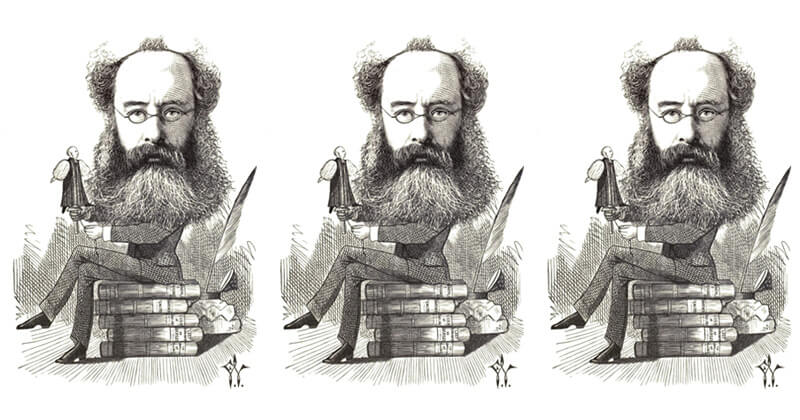
Anthony Trollope was one of the greatest Victorian novelists. In his lifetime, Trollope rivalled Charles Dickens. While Trollope may not be as recognizable as the man who brought forth immortal characters like Scrooge, Pip, and David Copperfield, he does remain a fixture in English literary circles and widely read. A friend of mine, as we had lunched and I brought up Trollope, informed me that he had read him as a freshman in university. Yet Trollope’s works are just as deep, if not deeper, and every bit as eternal as Dickens’ works. The “Chronicles of Barsetshire” include six of his most successful novels set in a fictional westerly county “remarkable for the beauty of its cathedral and the antiquity of its monuments, [more] than for any commercial prosperity.”
The Warden transports us to this county of old England, Little England, where we are soon caught up in the maelstrom of church politics, media frenzy, and overzealous “reformers.” The Reverend Septimus Harding is a kind English gentleman cleric. He is a lover of music, a precentor and, recently, the new warden of a hospital that serves the working poor. We also meet his loving and devoted daughter, Eleanor, who is yet to be married. We also meet the Jacobin next door, the revolutionary clothed in the veil of reform, the obnoxious surgeon and humorously titled Mr. Bold.
Trollope packs so much into his small novel of just over two-hundred pages (the edition that I own). Morality, righteous sentimentality, and the politics of reform all intertwine in the perfect storm that leaves the reader adrift in the same storm of emotion, moral outrage and sympathy, and character assassination. In the midst of this storm are the issues of duty, loyalty, and the famous private-public distinction.
Mr. Harding is a man who is quiet and doesn’t step on anyone’s toes. He’s well-respected in the community. But Mr. Harding, as Trollope earlier informed us about the financial situation of Barchester, never made much money—not that money was ever much a concern for him. When the previous philanthropist of Hiram Hospital (an ancient institution founded in the fifteenth century) dies, leaving Mr. Harding a considerable income (all things considered) in his role as Warden, the politics of investigation and media denunciation begins. Mr. Harding’s peaceful and tranquil life is disturbed by the very man whom his daughter is planning to marry.
If Mr. Harding is the quintessential quiet and polite English gentleman, Mr. Bold is the obnoxious and upstart bourgeois radical. He is surgeon. He also belongs to the newly ascendant but little respected middle-class. Trollope gives us no illusions that the middle-class “reformer” is nothing short of a revolutionary when he is described as zealous as Danton and the French Jacobins and the Revolutionary Terror:
John Bold is a clever man, and would, with practice, be a clever surgeon; but he has got quite into another line of life. Having enough to live on, he has not been forced to work for bread; he has declined to subject himself to what he calls the drudgery of the profession, by which, I believe, he means the general work of a practising surgeon; and has found other employment. He frequently binds up the bruises and sets the limbs of such of the poorer classes as profess his way of thinking — but this he does for love. Now I will not say that the archdeacon is strictly correct in stigmatizing John Bold as a demagogue, for I hardly know how extreme must be a man’s opinions before he can be justly so called; but Bold is a strong reformer. His passion is the reform of all abuses; state abuses, church abuses, corporation abuses (he has got himself elected a town councillor of Barchester, and has so worried three consecutive mayors, that it became somewhat difficult to find a fourth), abuses in medical practice, and general abuses in the world at large. Bold is thoroughly sincere in his patriotic endeavors to mend mankind, and there is something to be admired in the energy with which he devotes himself to remedying evil and stopping injustice; but I fear that he is too much imbued with the idea that he has real mission for reforming. It would be well if one so young had a little more diffidence himself, and more trust in the honest purposes of others — if he could be brought to believe that old customs need not necessarily be evil, and that changes may possibly be dangerous but — no, Bold has all the ardour, and all the self-assurance of a Danton, and hurls his anathemas against time-honoured practices with the violence of a French Jacobin.
Mr. Bold, the young upstart surgeon, begins his investigation into the supposed financial abuses of the hospital by pinpointing his prospective father-in-law as the man of gross negligence. In doing so he blurs the line between what should remain private and what is meant to be public. Mr. Bold insists that since Mr. Harding is a public servant, and that all of his actions should be subject to public scrutiny and justice, he is justified making the accusations public. Mr. Bold claims to be fighting for justice and on behalf of the poor and sick tenants of the hospital; as we shall see, though, those poor and sick tenants whom he enlists to help his vanity-laced spirit of reform are mere cogs used by Mr. Bold and his allies in their fight against ancient institutions to inflate their own egos and feelings of self-righteousness. They care not for the poor, but for their own self-righteous image in the public’s eye.
The good relationship between Mr. Harding and Mr. Bold withers away. Eleanor is caught up in the storm as she loves John Bold but loves her father more—in two touching scenes between her and the Jacobin masquerading as reformer, she informs him that she will always side with her father and implores him to drop the court case again her father. But Mr. Bold, the sophist that he is, always conjures up excuses and deflections. He insists that he is not attacking Mr. Harding personally but merely doing his public duty and serving the interest of justice. Mr. Bold insists, though the reader hardly buys it, that he holds no animosity toward Mr. Harding and merely wants to redress what he sees as negligence in taking an undisclosed but seemingly large income that could be, in Mr. Bold’s eyes, better used on the hospital patients.
As the battle between ancient institutions and their inheritances comes to a fore with zealous “reformism,” Mr. Bold enlists the media to support his cause. Trollope, for a nineteenth century man, seems like a twenty-first century man who predicted the rise of the fake news and ideologically driven media machines that dominates our world. The Jupiter, the novel’s stand-in for a liberal and reformist newspaper, gleefully joins the battle and publishes article after article denouncing Mr. Harding and the Church of England. When Mr. Harding conferences with archdeacon Grantly, who is married to Mr. Harding’s other daughter, he presciently says, ‘[A]nd does not everyone know that [the Jupiter] would take up any case of the kind, right or wrong, false or true, with known justice or known injustice, if by doing so it could further its own views.’” How true!
Here, Trollope reveals to us the insightful reality of the media that we have forgotten: The media doesn’t care about truth or facts; the media only seeks to advance whatever agenda it has. Those who opine for a “neutral” or “objective” media seem to forget that there never has been such a media. The first newspapers were established by political parties and their benefactors. Their intent was not so much to report on events as it was to report on events with the intent to sway public opinion. And sway public opinion the Jupiter does.
Tom Towers, the editor of the newspaper, fancies himself the most powerful man in Europe. Towers attacks Harding personally in his scathing editorials. The viciousness of the personal assaults on Mr. Harding may be cruel and untrue, but as Dr. Grantly correctly stated earlier, it matters not since the intent of the Jupiter is not truth but the advancement of its own agenda. The new middle-class media aligns with the middle-class radicals who hold the old gentry and ancient institutions in contempt; their hatred for the old guard, not concern for the poor, is what truly motivates them.
To make matters even worse, Mr. Popular Sentiment, the novel’s in-situ popular novelist (Charles Dickens), has also just written a new novel taking the Barchester hospital affair as its foundation. The Almshouse, which Mr. Bold reads when he begins to have misgivings about his actions toward Mr. Harding, helps reinforce the image that the Jupiter has been promoting and cleanses the guilty Mr. Bold is having. The evil clerical clergyman of the novel, meant to be Mr. Harding, is a priggish and haughty individual swimming in wealth while the poor hospital patients wallow away in misery. In describing how Mr. Popular Sentiment is so popular and powerful, and how he has always destroyed whatever institution his novels set their sight on, Trollope informs us through Mr. Bold it is because of his portrayal of the rich and powerful as evil and cruel and portrayal of the poor as good and thoroughly so, that Mr. Popular Sentiment has become so popular and powerful—feed the masses what they want and gain their popularity even if that means no truth is ever spoken.
Mr. Bold is horrified but still concludes at least the book makes no direct mention of Mr. Harding which eases his guilty conscience. Here, media manipulation is something that Trollope is very much aware of and critiquing within the pages of his novel through irony and satire. Truth? The truth doesn’t matter, and only fools think the media is concerned with truth instead of propaganda and their own ideological causes—‘[D]oes not everyone know that [the media] would take up any case of the kind, right or wrong, false or true, with known justice or known injustice, if by doing so it could further its own views.’”
The constant media attacks take their toll on Mr. Harding. When Eleanor implores Mr. Bold to stop and leave her father in peace, the zealous doctor—the sophist that he is—says that it is now out of his hand and that he, himself, is not the one attacking Mr. Harding. Mr. Bold wishes to wash his hands clean as if he had nothing to do with the deteriorating health and well-being of the father of the woman he loves. Revolution has come to Little England in the guise of reform and the man aptly named Bold who claims that his zealous destruction of ancient establishments is in the name of public justice. Yet Mr. Bold is superseded as the engine of revolution—he unleashed the media and now the media cannot stop even when he wants to stop. The mob has now been unleashed thanks to Mr. Bold’s initial posturing and zealous fervor for change.
The wisdom and profundity of The Warden is in how it handles, and details, the ever-present realities of media manipulation, social justice warriors, and the destruction of tranquility that this maelstrom brings. But Mr. Harding endures like Christ. He insists to Eleanor that Mr. Bold means him no harm and that their love should not suffer because of these new circumstances. Mr. Harding teaches that love is more important than politics. Mr. Harding teaches that love truly trumps hate. Yet more and more people are like Mr. Bold and fewer and fewer are like Mr. Harding. This would startle Trollope if he were alive today. Trollope wanted us to be more like Mr. Harding and less like Mr. Bold, yet the revolutionary media of today wants us to be more like Mr. Bold and less like Mr. Harding. (In fact, by today’s woke standards, Mr. Harding is probably evil incarnate, being English, Christian, and male!)
Anthony Trollope’s novel is as every bit important today as when it was written. Trollope reveals the nature of those we now call woke social justice warriors. Mr. Bold is a social justice warrior; or in Trollope’s plain words, he is a revolutionary who masks his revolutionary intent under the name “reform.” Trollope reveals the true spirit of the media and the venom it spews; moreover, he also reveals how the media is driven by ideology and isn’t concerned with character assassination irrespective of how much damage it does. Trollope also reveals the tragedy of ancient institutions which do so much good, but, when threatened, become reactionary and concerned with only maintaining its power instead of fulfilling its public and humanitarian duty. The road to destruction is often paved with good intentions—however ignorant or naïve the accompanying spirit is.
In the end, Mr. Bold does drop his suit against Mr. Harding, Barchester Cathedral, and Hiram Hospital. John Bold’s love for Eleanor, and Mr. Harding’s gentle kindness, quench the zealous fire consuming Mr. Bold as he arrived at Barchester intent on destruction in the guise of reform. Indeed, his ways are changed after marriage to Eleanor; marriage saved Mr. Bold and gave his life the meaning he earlier sought through tearing down ancient institutions and their supposed injustices. The damage, however, cannot be undone despite Mr. Bold’s resurrection to new life through marriage. Mr. Harding resigns and the hospital, which flourished under his stewardship, falls into ruin thus fulfilling Tom Tower’s response to Mr. Bold when the young overzealous surgeon informs the powerful newspaper editor he is dropping the suit, ‘The fire has gone too far to be quenched.’”
Peace returns, at least temporarily, to Barchester. Mr. Harding is able to walk the streets again with his pleasant smile. But the fire of revolution has already brought forth its destruction. In this sad and tragic tale of old England being passed over by the zeal of modernity, Trollope details for us the issues that are still paramount today: overzealous “reform” and its destructive side; media manipulation; and the destructive ramifications of false public attacks upon individuals. There is nothing new under the sun at Barchester Towers after all.


Related Posts