Thomas Hardy, Trust, and Technology
A few days ago, I came across a Guardian article titled, “Making Deepfake Images is Increasingly Easy—Controlling their Use is Proving all but Impossible.” This pessimism around the issue of deepfakes is becoming all too familiar. Meanwhile, it seems like every other week I see another newspaper editorial proclaiming the death of the college essay given the supposed impossibility of determining whether students are using forbidden AI tools to do their writing assignments. The more I contemplate these messages about our apparent helplessness before the newest capabilities of artificial intelligence, particularly in the hands of bad actors, the more convinced I am that there has never been a better time to re-read Thomas Hardy’s A Laodicean (1881), a novel that brings its central characters into contact with daunting and potentially threatening technological advancements. Hardy, it turns out, has a lot to say about how to live in a moment of change and amidst threats to our ability to believe and trust one another.
This may seem counterintuitive to those who think of Hardy only as a writer of pastoral novels depicting rural, English folkways, occupations, and traditions that were already becoming antiquated during his lifetime. As an author preoccupied with timeless tragedies of human life, he is often assumed to have been far less interested than authors like Wilkie Collins or Sir Arthur Conan Doyle in the topical issues of the day and the newest scientific advancements. Hardy’s reputation might seem to make him one of the last novelists one would look to for wisdom and insights about life in a rapidly changing world and about the problems presented by new technologies. While there is some truth in this conception of Hardy, it can easily be overstated. Hardy’s novels and poems depict and engage with societal, cultural, and technological change more than one might expect.
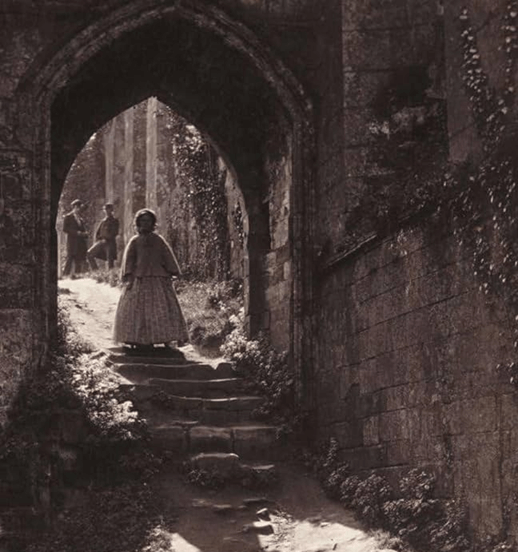
To be sure, A Laodicean is in many ways rather unique among Hardy’s works. While a little more than half of the novel is set, like most of his novels, in a fictionalized southern England, it also contains scenes in Monte Carlo, Genoa, Strasbourg, Baden, Karlsruhe, Koblenz, Cologne, and Normandy, a range which is quite atypical for Hardy. The setting of much of the English part of the novel, an old Castle with a telegraph wire connecting it to the nearby town, is simultaneously antiquated and immediate, embodying the contrast implied by the novel’s subtitle, “The Castle of the De Stancys: A Story of Today.” In the opening pages, the novel’s main character encounters a church which he observes must have been built sometime in the 1870s, indicating that the events of the novel take place very close to the year in which it was written. The characters use the telegraph with regularity, and the novel’s villain, William Dare, uses such contrivances as fake telegrams and doctored photographs to achieve his ends.
Hardy recognizes and explicitly draws attention to the awkwardness of the juxtaposition between the telegraph wire and the castle given what the two things represent:
[T]he modern fever and fret which consumes people before they can grow old was also signified by the wire; and this aspect of to-day did not contrast well with the fairer side of feudalism—leisure, light-hearted generosity, intense friendships, hawks, hounds, revels, healthy complexions, freedom from care, and such a living power in architectural art as the world may never again see.
Hence is the complicated world in which the characters find themselves. The heroine, Paula Power (facetiously referred to as “Paula Steam-Power” by one of the other characters) and her friend, Charlotte De Stancy, occupy two very different positions in this world. Charlotte is a member of the great but now impoverished De Stancy family, for whom the castle is named, while Paula is the daughter of the recently deceased railway contractor who purchased the castle. Charlotte has very little interest in ancestry while Paula not only takes an avid interest in the De Stancy family, but frequently wishes that she herself were descended from such a family. She is told by her architect and lover, George Somerset, that she represents “the march of the mind – the steamship, and the railway, and the thoughts that shake mankind,” but she feels very ambivalent about this identity and at times sensitive about it, particularly when dealing with suspicion on the part of locals that her intended restoration of the castle may not be historically faithful. As she walks among the effigies of the De Stancys, she laments, “It is very dreadful to be denounced as a barbarian. I want to be romantic and historical.” Charlotte, meanwhile, sits nearby “innocently prattling to Mrs. Goodman, quite heedless of the tombs of her forefathers.” The friendship between these two characters is remarkably strong, and Somerset in particular finds it highly praiseworthy that the two women have “broken down a barrier which men thrice their age and repute would probably have felt it imperative to maintain.”
The young architect Somerset falls in love with Paula while exploring De Stancy Castle. While she gradually begins to reciprocate his love, their budding romance is continuously threatened by the intricate and sophisticated schemings of William Dare, an amateur photographer and the illegitimate and unacknowledged son of Captain De Stancy, Charlotte’s older brother. Dare plots to stir up a romance between Paula and his father in hopes that the two will marry, presumably with the intention of gaining access to Paula’s money. Thanks to a fortuitous combination of successful schemings carried out by Dare and extraordinary luck on the captain’s part, Paula eventually agrees to marry Captain De Stancy, but shortly before the wedding Charlotte becomes aware of Dare’s tricks and reveals them to Paula. Captain De Stancy confesses that Dare is his son and Paula calls the wedding off. She proceeds to track down Somerset and the two are soon reconciled and married.
The continuous schemings of William Dare are a significant part of what makes the novel so strange and captivating. Dare is a sophisticated and calculating villain; he takes an avid interest in probability theory, flashing on several occasions his copy of Abraham de Moivre’s The Doctrine of Chances: or A Method of Calculating the Probability of Events in Play (1718), and he puts his own theories into practice at the gaming tables with varying degrees of success. His aptitude at calculation makes him a particularly daunting antagonist. He is, as the novel’s narrator puts it, a man who “without a settled plan in his head, could arrange for probabilities.”
He is also very technologically savvy. While it is never made clear whether there is any truth to his claim to have “invented a new photographic process,” his technical capabilities in the art of photography are certainly very advanced. His ability to manipulate a photograph in such a way as to give what looked like “a perfect likeness” of Somerset “the distorted features and wild attitude of a man advanced in intoxication” is sufficiently ahead of his time that Paula and Charlotte are utterly incapable of suspicion that there could be anything inaccurate or misleading about the image placed before them. Even the local photographic artist Mr. Ray, from whom Charlotte learns that such manipulation of photographic images is possible, claims he would not have been aware of the possibility had he not himself recently encountered “a young man. . . who was very ingenious in these matters.” It is not surprising that a man so advanced in the art and science of photography also figures out how to use the deceptive capabilities of the telegraph to his advantage by sending a fake telegram to Paula purporting to be from Somerset and claiming to have lost all his money gambling.
The sheer recklessness and unscrupulousness of Dare’s crimes and treacheries even upsets his co-conspirators. When Paula offers Somerset the job as her architect, he hesitates to accept unequivocally. Not wanting to displace her father’s architect Mr. Havil without giving him a fair chance to earn the job, he recommends Paula allow him and Havil to submit plans to the Royal Institute of British Architects and allow the Institute to decide which plan is better. Dare then seeks out an alliance with Havil, seeing that they have a common interest in wanting to get rid of Somerset. The two men break into Somerset’s studio late at night, in spite of Havil’s moral qualms, so that Havil can plagiarize from Somerset’s plan in order to enhance his own. For a moment, this scheme appears to have worked. The three judges declare a tie, leaving the decision to Paula who feels bad for Havil following his wife’s death and decides to give him half of the commission, which would help Dare and De Stancy by getting Somerset out of their way for many months. However, it ultimately backfires because Havil feels so guilty about having cheated that he turns down his half of the project, giving the job in its entirety to Somerset.
Captain De Stancy is likewise shocked and disgusted by the lengths to which Dare is willing to go in order to eliminate Somerset as a rival for Paula’s love, even though he does these things on De Stancy’s behalf. The fake telegram trick simply makes him feel bad for Paula and Somerset (and for himself). He occasionally claims he regrets ever owning Dare and frequently wishes that the boy would change his ways. In the end, he blames Dare for the plan’s failure, claiming that “base attacks on a man’s character never deserve to win” and that the end to which they have arrived “is the direct result of evil conduct and nothing else at all.” It is hardly surprising that when he is first made aware of the fact that Dare is in town (by being given a picture of him by the constable) he becomes very pale, as if he rightfully senses that his son’s presence in his life will do him no good.
But Dare’s ideology is almost as troubling as his actions, and it is not difficult to see how the way he views the world shapes those actions. Dare is the ultimate determinist. He often attempts to absolve himself of responsibility for his character and defends his actions by suggesting that it was inevitable for him to turn out the way he did. When his father expresses disappointment with him, Dare responds, “I have acted according to my illumination. What can you expect of a man born to dishonour?” In another scene he claims, “I am what events have made me.” By his appeals to pure fatalism, he suggests he has no choice but to be as he is. If nothing is truly a choice, there is no basis for restraint or remorse.
He is also a staunch believer in an unjust world and in the ability of villainy to achieve its ends. He declares at one point, “it is the true men who get snubbed, while traitors are allowed to thrive!” When Havil expresses his doubts about his own ability to help Dare as Dare has helped him, Dare replies that “A man who can contrive to get admitted to a competition by writing a letter abusing another man has any amount of power,” recalling an anonymous letter Havil had written to the local paper complaining about Paula’s plans for the castle.
In accordance with this ideology, and much to the disappointment of his father, he is decidedly not a believer in hard or honest work. His poor work ethic is most apparent during the brief period in which he is employed by Somerset as a surveyor and draughtsman. When asked how his measuring is coming along, he responds, “Badly in the morning when I have been tempted to indulge overnight, and worse in the afternoon, when I have been tempted in the morning!” On examining Dare’s work and finding that he has made almost no progress, Somerset decides to write him his last check and tell him that his services are no longer required. Much later in the novel, when the two men meet at Monte Carlo, Dare is offended that Somerset would refer to the money he uses for gambling as “wages” as opposed to “means.” “Wages,” Dare seems to think, are beneath him. It is not clear where Dare’s money actually comes from. He is said to conduct himself like one who does not require employment, and he claims that he does not pursue the art of photography “at the base dictation of what men call necessity.” However, the only ways he ever obtains money in the novel are by gambling and by borrowing from his father, who often has little to spare.
In spite of his aversion to labor and his unwillingness to apply himself to any serious occupation, there is one thing, aside from his wicked schemes, to which Dare devotes impressive energy: gambling. In some ways, Dare is never more himself than when he is gambling; during the scene in Monte Carlo, he is described as resembling “one turned into a computing machine which no longer had the power of feeling.” The vigor with which he approaches his gambling resembles that with which he approaches his scheme to get Paula to marry his father. His obsession with this scheme, while it suffers “no abatement,” is at this moment temporarily “overwhelmed by a rage for play.” It is important to note that this rage does not come from an avid love of play for its own sake. He is engaged in the intense pursuit of a strategy to make money, a strategy developed from studying probability theory.
As gambling and chicanery are the two things that Dare takes seriously, it is fitting that Paula’s acceptance of Captain De Stancy only comes about because of a combination of highly sophisticated chicanery and extraordinary luck. It is an incredibly serendipitous circumstance that, seemingly out of nowhere, Paula’s Uncle Abner, who had long been presumed dead, appears back in her life and decides to take her on a trip abroad, which both removes her from Somerset and gives Captain De Stancy more opportunities to spend time with her. Abner also strongly favors the captain over the architect and is determined to exercise whatever influence he might have in the captain’s favor.
However, even given this seemingly miraculous advantage, and even after Dare’s ingenious tricks have succeeded in blackening Somerset’s character to such an extent that Paula makes up her mind to try to forget him, it does not seem that the captain is any closer to winning her. She still actively discourages him from entertaining any hopes in that direction. Fortunately for him, Uncle Abner briefly changes his mind and tells her not to marry him until he has looked into some things (having suspected Dare’s connection to De Stancy), a request which influences the independent-minded Paula in the captain’s favor. Then Charlotte becomes extremely ill, which draws Paula and De Stancy closer by creating an “ease between them as nothing else could have done.” But even then she still adamantly refuses him until a telegram brings news of the death of his father, at which point she finally gives in and says “yes.” Dare’s scheme very nearly succeeds because of this incredible run of luck, but unfortunately for him and his father the luck runs out hours before the match is officially made.
George Somerset, the man whose reputation Dare tries to destroy, could not be more different from Dare. Somerset has his flaws and the novel suggests that in many ways he is a product of his time. He is eclectic and a bit of a contrarian and has that “modern malady of unlimited appreciativeness” that caused him to take longer than he should have to settle down into a profession, returning to architecture only after a failed attempt to make it as a poet. He is said to have done a fair amount of drifting both in his artistic vocation and in his religious convictions. The first time he meets Paula she is astounded at his “profound scholarship” and “the thoroughness of [his] studies in divinity” after he engages in a long theological argument with the minister for no other reason than “a sudden impulse towards a mild intellectual tournament” and “an exercise of his wits in the defence of a fair girl.” This argument causes Paula to mistake him for her new curate, not realizing he is actually the architect she was looking forward to meeting, and Somerset soon regrets upsetting the minister over a matter on which he himself has so little real conviction.
But for all that, he is thoroughly honest and industrious. In the opening scene of the novel, he is busy measuring and copying the doorway of an English village church, and he continues this work past sunset. Throughout the novel, neither his growing attraction to Paula nor his anxiety that he has a rival distract him from the diligent pursuit of his work as her architect. In fact, this work is something he learns to take pride in independently of whether he succeeds as her lover, “To be her high-priest in art, to elaborate a structure whose cunning workmanship would be meeting her eye every day till the end of her natural life, and saying to her, ‘He invented it,’ with all the eloquence of an inanimate thing long regraded—this was no mean satisfaction, come what else would.”
In contrast to Dare, Somerset is a firm believer in meritocracy. And fortunately for him, so is Paula. When Havil and Somerset get into an argument about the castle and its chronology, it becomes clear to her that Somerset is by far the more knowledgeable of the two and that Havil’s ignorance could be a liability if he were entrusted with the task of restoring the castle. For this reason, she offers Somerset the position as her architect. Yet, Somerset still goes out of his way to give Havil a fair chance to earn the job over him by proposing that she have both of them submit plans to the Royal Institute and allow them to decide which is superior. Even though there are moments when he later regrets this decision, it speaks to his confidence in his ability to earn the job and his discomfort with the idea of taking it from another man without giving that man a fair chance to earn it.
The question that the novel implicitly poses is, can a man like Somerset succeed in a world where men like Dare have unforeseen powers of deception? Is modernity making it easier for cheaters to prevail? Moreover, can love survive the “fever and fret” of this new age as represented by the telegraph? And for much of the novel, the answer to these questions is not obvious.
The telegraph plays a central role in the novel, to the point where it is said to possess “almost all the attributes of a human being at Stancy Castle.” The first time that Somerset sees the castle’s telegraph, he is watching Charlotte receive a message from Paula about himself. In response to Somerset’s surprise that Paula knew he was there, Charlotte mentions that she sent Paula a message earlier that morning when she saw that he was coming. The speed of this machine is clearly not to be underestimated. Neither is the strangeness of it; for Somerset, there is “something curious in watching this utterance about himself, under his very nose, in a language unintelligible to him.”
When Dare and the Captain think they have successfully removed Somerset from the picture for the foreseeable future by helping Havil win half of the architectural job, they suddenly hear Paula using the telegraph and wonder what she could be doing with it. Dare does not like the machine very much at this moment; “That wire is a nuisance, to my mind,” he complains, “such constant intercourse with the outer world is bad for our romance.” He is right to recognize that there is something distinctly unromantic about the telegraph and its ability to allow for rapid communication across long distances, and it is not surprising that both suitors at one time or another find their pursuit of Paula threatened by it.
The telegraph turns out to be very useful when the characters in the novel are putting on a performance of Love’s Labour’s Lost. Knowing that Paula is playing the Princess of France, Captain De Stancy takes the part of the King of Navarre at the last second, and during the play he begins substituting in Romeo’s lines from Romeo and Juliet for the King’s lines. Paula decides she will no longer play the Princess of France after this and sends a telegram to a theatrical agent looking for an actress to come and play the part. The scene in which she sends out this telegram and proceeds to negotiate the payment is another reminder of the speed and convenience of telegraphic communication, but it also broaches the issue of anonymity. While negotiating the actress’s required payment as it goes from twenty-five guineas, to forty guineas in consequence of the distance, to fifty guineas in consequence of the short notice, it occurs to Paula that she is not actually sure whether it is the agent or the actress herself who keeps raising the price. Although in this scene the question merely provokes Paula’s “curiosity,” the inability to know for certain who is actually responsible for the words coming in becomes a real problem later when she receives the telegram falsely claiming to be from Somerset.
It is during Paula’s trip abroad that the telegraph comes to represent the “modern fever and fret which consumes people before they can grow old.” Before leaving to go abroad, Paula tells Somerset to only contact her about business and suggests that they communicate by telegraph while she is away, because it is faster. However, the possibility of such quick communication and its ability to come at any moment causes Somerset a great deal of anxiety. For the first two weeks after her departure he constantly watches the machine in eager anticipation. When a message from her finally does come, it is frustratingly brief and business-like. He soon becomes impatient and, going against her request to only communicate when he has work-related updates, begins writing letters to her complaining that she treats him poorly by not communicating with him more during her time away.
The relationship between Paula and Somerset thus appears strained even before Somerset decides to leave the castle to visit them in France, and it is after Somerset leaves England that the fake telegram and manipulated photo more or less eliminate him from her consideration. Where the love and faithfulness of Paula and Somerset is not quite enough to survive all of this, what ultimately saves it is Charlotte De Stancy’s steadfast love and devotion. It is because of the kind of person Charlotte is and how she decides to act that the marriage between Captain De Stancy and Paula is broken off at the last minute and that Paula and Somerset end up reconciled and married. What makes this all the more admirable is the fact that Charlotte is in love with Somerset herself, a fact which Paula never quite discovers.
It is a testament to Charlotte’s integrity that she does not become a co-conspirator with Dare and De Stancy. When she mentions Somerset to her brother for the first time, he can immediately tell she loves him by the way that she blushes. While he sees this as an additional reason why she ought to help him interfere with the romance between Paula and Somerset, she cannot bear to hear such an idea. The mere thought of doing Somerset a wrong frightens and distresses her, even if she and her brother would both benefit from it.
It is significant that Charlotte is the one who does not want to believe the fake telegram and that her own “uncritical” love of Somerset is not impacted by it. Though no alternative explanation for the telegram seems to occur to her, she still feels inclined to give him the benefit of the doubt when Paula criticizes him. To the reader, who knows the truth of things, her suggestion that “perhaps it is not all as we suppose” seems quite wise.
Not long before the wedding, Somerset encounters Charlotte on a train, and though he is at first inclined to be taciturn about the matter of him and Paula, he changes his mind because he figures there is no reason not to be open with “so genuine and sympathetic a girl as Charlotte De Stancy.” Her kind nature is what encourages Somerset to have the conversation that makes her suspect foul play, and during this conversation she discovers that he never sent any such telegram as the one they received from him. Knowing this makes her wonder if she should not also suspect the photograph, and this suspicion makes her decide to visit Mr. Ray. Following this visit she more or less understands what happened. The only thing she still does not understand is why Dare should have wanted Paula to marry one man instead of the other.
Even after this realization, she still feels conflicted, and it does not help that Paula’s aunt Mrs. Goodman, in whom Charlotte first confides, suggests waiting until after the wedding to tell Paula. But “good principle prevail[s]” and Charlotte immediately tells Paula what she has learned.
Afterwards, she does not regret acting as she did:
In the turmoil of her distraction Charlotte had the consolation of knowing that if her act of justice toward Somerset at such a moment were the act of a simpleton, it was the only course open to honesty.
Thomas Hardy is sometimes thought of as a very pessimistic writer, but there is a powerful optimism apparent in his decision to have the honest simpleton bring about the defeat of the evil genius. Dare’s steadfast belief in an unjust world and his belief in villainy to achieve its ends are undermined by the novel’s conclusion. The love and trust of Somerset and Paula for one another were strong, but not quite strong enough to survive distance, modern technology and the schemings of villains on its own. It is Charlotte De Stancy’s love for and devotion to both of them, as well as her loyalty and her sense of justice, that prevents them both from being victims of what cutting-edge technology can do in unscrupulous hands. In the strange new world of the 1870s, the strange new friendship of Charlotte and Paula proves the best protection against unforeseen dangers. While Hardy classifies “intense friendships” as belonging to the fairer side of feudalism, the novel suggests that they are indispensable to survival in a time of rapid change.


Related Posts