Toward a Critique of Non-Aesthetic Judgement
The following reflection on Joshua Foa Dienstag’s 2016 article in Perspectives on Politics—“On Political Theory, the Humanities, and the Social Sciences”—comes from out of a relatively longstanding engagement—not to say argument—I’ve had with the thought of Hannah Arendt. My inquiry focuses partly on representation and whether this concept really “connects” aesthetics and politics in the way that Dienstag desires. I’m using scare quotes here because I take the author’s point about interdisciplinarity—at least I find this point congenial, even if I remain uncertain as to how precisely to articulate it. If “interdisciplinarity” means temporarily connecting two clearly distinct fields of inquiry, I agree it is illegitimate. Aesthetics and politics, for example, may be equally concerned with all of “the true, the beautiful, and the good,” as Dienstag claims, so it is not at all clear whether and how these fields ought to be separated to begin with.
But my focus here is on the concept of representation, not interdisciplinarity. What interests me the most in the author’s characterization of aesthetic representation, and what I was a little shocked to have stumbled across in this short article, is that it may be seen in terms of a distinction I tend to make between being and doing. The following claim occurs during discussion of the documentary film series Up, specifically of the participants’ dissatisfaction with how they’ve been represented in the film despite having so much control over the editing process, etc.: “There is an unbridgeable gap between the speaking and acting that the camera records and the thinking and feeling that is the actual experience of who they are.”
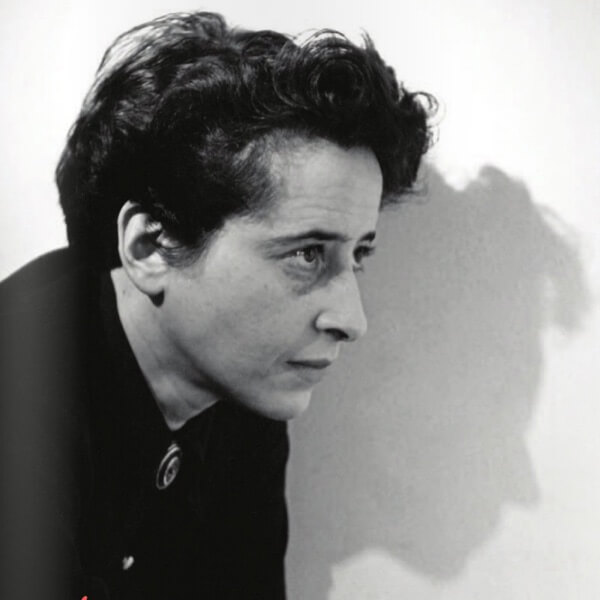
It was through arguing with Hannah Arendt’s “daimonic” conception of selfhood—developed in The Human Condition—that I have arrived at an orienting principle for everyday life, namely that humans are irreducible to their words and deeds. This seemingly obvious premise—that there is a difference between what I say and do and what I am, that I might have acted or spoken differently and it would still have been me who was doing the speaking or acting, etc.—encounters resistance, I have found, owing to a legitimate but confused concern for accountability. The obvious need for accountability doesn’t render the equally obvious distinction between being and doing any less true, and actually the disavowal of this distinction exacerbates and multiplies the problems that accountability itself is intended to address, namely preventing harmful forms of behavior, up to and including actual crimes.
I have claimed that it’s crucial to separate the act from the actor (or speech from the speaker) when passing judgement—so as to unbind the “perpetrator” from what they have said or done. I’ve said, in an article for instance published by VoegelinView, that this applies to good behavior, the agent of which should be humble, as well as to bad behavior the spectator (or indeed victim) of which should be charitable. I’ve said further that humility in this context means affirming that my doing well or good isn’t tantamount to my being good, and charity that their doing bad or badly isn’t tantamount to their being essentially bad.
Political representation, to me, occurs strictly at the level of doing as opposed to being. These representatives do not attempt to portray who their constituents are; they rather act on their constituents’ behalf because they have the power to do so. Their constituency credits them with this power and they discredit themselves as representatives (but not necessarily as people) when they abuse or neglect this power. One can think of the distinction I am attempting to draw both in terms of what in each case is being represented and again in terms of credit.
Aesthetic representation (specifically in the author’s example of the Up series) aims to represent the being of the subjects it portrays as characters in the film. Political representation, if it is creditable, transfers power from ordinary people to the politicians who must act on their behalf. In the first case, the actions of one and the same subject are supposed to align with their being, with who they essentially are. In the second case, one subject is supposed to act in the interest of a multitude of subjects.
Aesthetic representation is discredited when it fails to adequately reflect who its subjects essentially are. It necessarily does so. Political representation is discredited when it fails to act in the material interests of its constituency. And it too necessarily does so.
The fact that these failures are necessary, as Dienstag himself claims, ought to be affirmed. One can do so only aesthetically. Aesthetic judgement is a form judgement that recognizes the intrinsic impossibility of adequate representation. Aesthetic representation is judged aesthetically when we, in passing judgement, refuse to simply read back from a subject’s words and deeds into their nature or essence, as I have formulated this thought again for VOEGELINVIEW.
Political representation is judged aesthetically in a different way. The being of the political representative is not at stake (nor is that of their constituency). We don’t discredit them as a consequence of the perception that our essential goodness is not reflected adequately in the actions of our representatives. What’s at stake is the transfer of our collective power to act. This transfer has a legitimate premise: that the newly and temporarily powerful politicians will act in such a way that benefits the common good. We credit them for the sake of this collective material benefit, and we withdraw this credit when such benefits are not forthcoming. What’s at stake here is power.
Credit with regard to aesthetic representation pertains to a “benefit” as well—if you like, “the benefit of the doubt.” We witness a stupid action on the film and forgive the actor for it—perhaps in keeping with Arendt’s own understanding of forgiveness. We release them from the stupid act, we don’t tie them to it, we don’t call them stupid for it: we don’t force them into thinking of themselves as essentially stupid. The being—stupid or otherwise—of political representatives and their constituency is not at stake, on the other hand. Only their ability to act for our collective benefit is. Discrediting them—replacing them with some other politician—is not a way of passing judgement on who they are, if only because it merely returns them to the constituency they were once, for a time, tasked with representing, but no longer are. They become absorbed back into the people once more instead of standing apart from us, presuming to represent us, which mean presuming to wield power on behalf of us.
What I’ve called Arendt’s “daimonic conception of human selfhood” argues, on my habitual paraphrase, that who a person essentially is is implicit in everything they say and do, but is visible and accessible only to others and not to oneself.
It may seem that it’s owing only to this last clause that I use the term “daimonic,” adopting Arendt’s own interpretation of this Ancient Greek concept. What was daimonic for the Ancient Greeks, Arendt claims, is that my being—my true nature—is essentially subject to (or perhaps even formed by) the judgments of others, because they can see me in a way that I constitutively cannot see myself. In this, Arendt is iterating a dissymmetry that Joan Copjec says in “The Fable of the Stork and Other False Sexual Theories” has often been noted by philosophers, but she’s doing so in a particularly insightful way.
I don’t know that documentary film can be taken as representative of aesthetic representation in general. I’ll bracket this question provisionally and focus on the fact that the participants in such a film are enabled to see themselves in precisely the same way other viewers of the film see them. This might seem to cancel the “daimonic” aspect of selfhood for these participant-observers, except that the feeling remains of being non-sovereign (to adopt another of Arendt’s terms) with respect to one’s own being, and this is the crucial thing. What’s truly daimonic is that other people tell me who I am. Documentary film enables participants to adopt the perspective of these others who are viewing the same “evidence”—but they are still “being told” who they are. Of course, they have privileged access to their own motivations and intentions—the memory of which may work in the service of justification or rationalization of one’s behavior in this small court of opinion among other viewers of the film. But it’s equally true that cinematic access to one’s own behavior may more forcefully demand submission to the opinion of others since the evidence is no longer disputable—except, on one line of thought, by unpersuasive appeal to the “intentions” of the actor or speaker.
It’s in this way that documentary film—and the Up series in particular—helps to clarify that the first clause with which I paraphrased Arendt is actually just as crucial to the definition of the daimonic as the second. This is because what’s really at stake is the feeling of being tied to one’s past behavior—of being so “tied” even to the extent that every word uttered and every deed committed is believed to reflect the true nature of the actor or speaker. The crucial thing is not simply that other people see me in a way I cannot see myself. When I watch a documentary film about my life, this difference is overcome. What isn’t overcome is the belief that my doing defines my being. But I claim that whereas aesthetic representation cannot overcome this belief, aesthetic judgement can.


Related Posts