Voegelin and our Technological Moment: “Don’t Immanetize the Eschaton—Technologically”
If Americans recognize the name Eric Voegelin, it is probably for his critique of utopian political visions, encapsulated in the phrase, “don’t let them immanentize the eschaton.” The heady saying was emblazoned on political buttons worn by the Young Americans for Freedom in the 1960s. William Buckley actually coined the phrase after reading Eric Voegelin’s The New Science of Politics, which stated that “a theoretical problem arises . . . when Christian transcendental fulfillment becomes immanentized.” Since then, the phrase has taken on a life of its own, finding a place in publications ranging from National Review to Huffington Post.
But what Voegelin had in mind was much more than a political “gotcha” soundbite for conservatives to deploy against progressives. The concept was part of his broader and lifelong project to better understand the intersections of history, politics, and religion. Part of that project included analyzing how mass communications and technology impacted culture, especially in democratic societies. What he saw in embryonic form in the burgeoning age of newspapers, radio, and television, we now experience at a scale and pace previously unimaginable. His warning against immanentizing Christian transcendental fulfillment is as relevant as ever in our digital age of techno-optimism and transhumanist hopes. I’ve written at greater length about life in the digital world and what it means for our humanity with co-author Robin Phillips in Are We All Cyborgs Now? Reclaiming Our Humanity from the Machine. In what follows, I’ll tease out a few of Voegelin’s insights that are especially applicable to our digital age.
Mass Communication as Intoxicant
In an essay entitled “Necessary Moral Bases for Communication in a Democracy,” Voegelin describes three types of communication:
One can, first, distinguish communication in the substantive sense, that is, communication that has its purpose in the unfolding and building of personality. In a second usage, communication is a technique for inducing people to behave in such a manner that their behavior will agree with the communicator’s purposes, as for instance political or commercial purposes. This second type may be called pragmatic communication. A third meaning appears when the term is used in connection with media of mass communication, such as film, radio, or television. While such media are very energetically used for the advancement of pragmatic purposes, and while occasionally a valiant attempt is made to use them for the substantive building of personality, their primary function, on the fulfillment of which rests their mass use, is that of an intoxicant.
Voegelin goes on to argue that “communication has become a highly organized business with vested interests” and “all too often the result will be that men at large are induced to…buy a piece of industrial junk that they never would buy if their good sense had not been destroyed by skillful advertising.” Such an intoxicating stream of constant exposure to information and advertising “may seriously damage the personal organization of a man’s life…under the constant stimulation of anxieties and passions.” This places “the agents of communication…in the morally dubious position of destroyers of their fellowman’s order.” This critique of 20th-century media could be just as easily applied to social media as done by Tristan Harris in The Social Dilemma.
Already in the mid-twentieth century, Voegelin concluded “that certain procedures of communication in our time are unfit for the achievement of moral purpose, or even destructive of morality….The development of communication as an industry for pragmatic and intoxicant purposes is certainly a symptom of moral crisis…[and has] an impact on the functioning of contemporary democracy.” The political philosopher puts his finger on the impact our media ecology has on the development of human desires and morality and how the technological environment taking shape around him was not leading to virtuous outcomes. Humans need more than titillation and pleasure jolts—intoxication, as Voegelin puts it. But that takes work; we must refine our tastes and desires toward what is truly good, true, and beautiful.
Gnostic Technologies
Voegelin’s extensive exploration of Gnosticism also has connections to our technological moment. Though Voegelin’s use of the term is creative and generalizing, to be sure, he frequently targeted Gnosticism in his intellectual cross-hairs because he saw it as one of humanity’s perennial tendencies. Michael Franz explains that Voegelin used the term Gnosticism in a general sense “to signify the belief that it is possible for human beings to escape or eliminate the evils and hardships that afflict our existence by means of the power conferred by a special knowledge.”
While Voegelin was not claiming that the 20th century saw a revival of ancient Gnosticism precisely, he was arguing that a similar view of the world was at work, whether in ideological movements or in religious shifts from transcendence towards immanence. Voegelin saw this as a long outworking of trends since the Middle Ages, away from a transcendent God with an ordered creation, towards an immanent universe with no destiny outside of human existence, what Charles Taylor calls a “closed immanent frame.” “The City of God,” as Voegelin puts it, has metamorphosized “into the City of Man; the apocalyptic into the ideological millennium; the eschatological metastasis through divine action into the world-immanent metastasis through human action.” Voegelin concludes that the result is “self-salvation,” where “man assumes the role of God and redeems himself.”
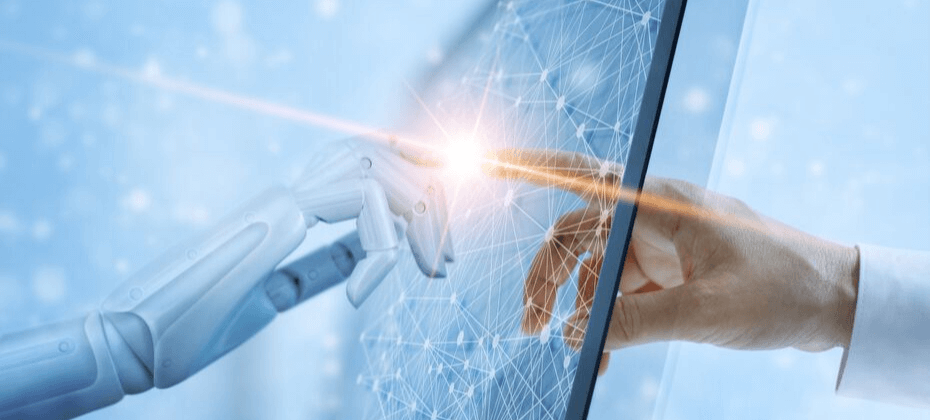
All of this fits hand-in-glove with the glowing promises of technological progress. Paul Kingsnorth offers this stinging critique of the “increasingly obvious religious vision of the Silicon Valley crowd, with their transreligions and AI Gods and pursuit of silicon transcendence.” Kingsnorth isn’t making this up; there are people pursuing forms of immortality digitally. The Terasem Movement seeks to achieve “transferred consciousness,” where a “conscious analog of a person may be created by combining sufficiently detailed data about the person (a ‘mindfile’) using future consciousness software (‘mindware’),” then it is “downloaded into a biological or nanotechnological body to provide life experiences comparable to those of a typically birthed human.” Similarly, Lifenaut is a “web based research project that allows anyone to create a digital back-up of their mind and genetic code. The ultimate goal of our research project is to explore the transfer of human consciousness to computers/robots and beyond.” Kingsnorth continues, “add it all up and we can make out the dim shape of the second religiousness in what passes for the cultural mainstream: self-creation in a Godless, genderless, borderless, natureless world of tattooed, disposable people and all-seeing living machines. Behold the silicon paganism of the 21st century.”
The De-Divinization of Man
Another area of Voegelin’s thought that applies to our technological moment is his perspective on the loss of human dignity. He argues, “the loss of dignity comes about through the denial of the participation in the divine, that is, through the dedivinizing of man.” In his view, there is some sense in which human beings—as made in God’s image and remade in Christ—share “participation in the divine.” For Voegelin, this “participation in the divine…essentially constitutes man.” While theological precision is not Voegelin’s expertise and his actual theological positions are frequently foggy and heterodox, he seems to be on to something. When the Imago Dei—which grounds each person’s inherent value—is overshadowed, human dignity tends to get overshadowed, too. As Voegelin puts it, “dedivinizing is always followed by a dehumanizing. One cannot dedivinize oneself without dehumanizing oneself—with all the consequences of dehumanization that we shall still have to deal with.”
When we no longer have a sense of the sacredness of human beings, we become more susceptible to mistreating others and misunderstanding ourselves, even considering our own bodies as just shells or something to be transcended. And our technological surroundings train us further towards disembodiment, as if our real identity is separate from our bodies—as if the body were just a meat suit, as if we were just flesh robots, what Mary Harrington calls the era of “meat lego Gnosticism.”
Don’t Immanetize the Eschaton—Technologically
Applying Voegelin’s thought to life in the digital age is a fruitful area of exploration, and offers a new twist on his most quotable phrase. In our digital age, we have encountered additional temptations and avenues for immanentizing the eschaton. The perennial hopes of immortality and participation with the divine in the New Kingdom have been flattened into the 1s and 0s of binary code, collapsed into disembodied promises of digital existence in a distorted form of Christian eschatology. And, perhaps more subtly, we have come to model ourselves—our thinking and our acting—on the cold computation of the machine. In so doing, we stand ready to reject the twofold essence of our very humanity—the sacredness of the Imago Dei, and the goodness of our bodies.


Related Posts