A Soaring Adventure
In the poem ‘Mythopoeia,’ which critics speculate is addressed to C.S. Lewis, J.R.R. Tolkien makes the case for mythology as a means to understand reality:
He sees no stars who does not see them first
of living silver made that sudden burst
to flame like flowers beneath an ancient song,
whose very echo after-music long
has since pursued. There is no firmament,
only a void, unless a jewelled tent
myth-woven and elf-patterned; and no earth,
unless the mother’s womb whence all have birth.
Tolkien argues that mythos — the ability to see that a star is not mere gas and chemistry but an angel in action — enriches life, is necessary to understanding the world, and brings joy to life by putting humans in touch with some of the most elemental truths. This level of imagination, which is the ability to see the world as more than mere matter, requires cultivation of the mind and spirit, and the best way to cultivate the mind and spirit is through story.
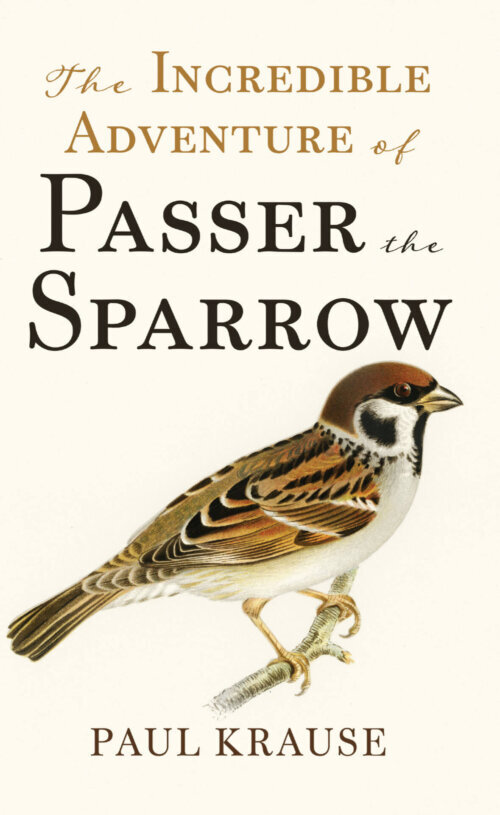
Paul Krause’s debut novel The Incredible Adventure of Passer the Sparrow revives a lost tradition of beast fables, going all the way back to Geoffery Chaucer’s brilliant “The Nun’s Priest’s Tale” in the Canterbury Tales. He tells the story of a young sparrow named Passer, who must journey to receive the counsel of a wise old owl in order to save his family. Through this story, he illustrates a picture of courage, fatherhood, and a changing world. In Passer, Krause initiates us into a mythic world brimming with life and danger and love and wisdom all found in the humble body of a sparrow.
Although this is a fairly straightforward story — the reader does not need to search for long before uncovering the moral — the beast fable tradition allows for the telling of “basic” morals in a low fashion. Because the characters are not humans, it lowers the stakes of the story, allowing for the virtues to rise to the surface. Krause’s book does not venture into allegory but instead uses the animals desire for life to inspire a similar desire in human readers. The prose style allows for the story to breathe. Krause does not try to muddy the waters with too much complexity, and the effect is that you just enjoy the story and what the story is trying to tell you. It immerses you in the world and allows you to breathe it in and live in it. Reading The Incredible Adventure of Passer the Sparrow requires the reader to make use of their imagination, to suspend reality for a brief moment in order to learn something about reality.
Take Passer’s relationship with his talking, ancestral home and best friend. Old Birch, ironically an oak tree, embodies strength and wisdom, and Passer often goes to share his hopes and fears with him while also seeking advice. The simple fact that the tree towers over the landscape and is home to the animals is enough to give it authority. Birch has been alive for a long time, and this age gives him wisdom to recognize what certain signs mean. He identifies the moving sign outside of Farmer Henry’s house and interprets it for Passer. There’s a strange factual existence to this tree; as a tree he cannot move. He stands by and watches the world change, his entire life a monument to the changing of the seasons and cycles of life. In that experience and wisdom, he is able to help shelter Passer and his family, but also to recommend other wise creatures, such as the owl.
After Passer’s harrowing journey to reach the owl — a fearsomely shadowy character that lives deep in the forest in an abandoned barn — he is told that he must move. But why did he need to journey to hear this message from the owl? Birch tells him the same story, but he still left his family for a short period to find Ash, the owl? The answer lies in Passer’s dream. He dreams of the apocalypse; something so brutal and unknowable that Birch, for all of his life experience, lacks the understanding to discern. Ash, on the other hand, does. He’s set up after the fashion of a hermit: he lives in a shadowy place, in isolation, with airs of danger surrounding him. Ash possesses the experience, but it’s implied that his isolation and wisdom comes from an ability to hold big topics and wrestle with them. There’s a hierarchy of authority in Krause’s fable. Birch’s advice and Ash’s are both necessary, but in order for Passer to receive the guidance he needs, he needs experience and understanding.
The last piece of this hierarchy is Passer’s dear friend Kaw. Kaw the crow joins Passer on his journey early on and provides strength and encouragement. He knows a bit more about the world, and he shows him the way to Ash. This relationship is much more of equals: Kaw helps save Passer and his family, while Passer helps to save Kaw in a battle with a hawk. And yet, the friendship, for a true friendship it is, allows Passer the encouragement and camaraderie to complete his quest. The beauty of Passer is that Krause creates all of these relationships and lets them exist within the fable so that the reader comes to implicitly understand and appreciate them. It’s not spelled out; it simply is. And that’s the beauty of a beast fable.
In addition to depicting the value of authority and friendship, Krause is also offering a profound defense of a way of living. His sparrows and robins and crows flee into the woods — to the wilderness — to escape a rapidly urbanizing world and return to something simple and clean. The great Tree of Life is the foil to the orange monsters that seem to only destroy the natural world and replace it with something artificial. In the great Tree, animals live simply contributing to something greater than themselves. It’s a place where all kinds of animals live harmoniously, a kind of Garden of Eden. Society and technology exist — when Passer and Crow get to the tree they stay in a motel and eat at a restaurant — but the difference is the environment and heritage of the place. The Tree of Life is literally an ancient tree. Its foundation is as a place of refuge and peace, and the animals that live there are committed to preserving that ideal.
When Passer moves his family into the woods, they begin to live free from the threat of a rapidly industrializing world, but they also are able to live in community, which is not something that they’d been doing previously. This way of life is what Krause is seeking to promote. The escape from the “yellow monster” construction vehicles leads the beloved birds into further community in a place where that community can flourish. He provides a glimpse not just into living well, but in how to live well.
Ultimately, this is a children’s book. Its simplicity and clear sense of right and wrong are critical to educating children whose sense of right and wrong cannot handle the increasingly gray morality that much of the mainstream modern produces. I can’t wait to read The Incredible Adventure of Passer the Sparrow to my daughter, and for her to read it herself. Then why did I, an adult, whose child-like sense of wonder and the world has been tainted, get so much enjoyment from reading this tale? That, I believe, is the true value of this remarkable little tale.
The Incredible Adventure of Passer the Sparrow
By Paul Krause
Eugene, OR: Resource Publications, 2015; 94pp


Related Posts