Augustine in the Shadow of Eve
“Augustine’s significance within the Western intellectual tradition is, in part, due to his lasting practical value.” More than any other patristic theologian, Saint Augustine remains a staple of western cultural and intellectual study and discourse; both as a figure held up as a positive example for our contemporary problems and as a figure guilty of reinforcing issues that we are trying to overcome. In the field of gender and sexual studies and relationships, Augustine holds an odd place – he was, more than any other theologian before him, important in developing the doctrine of imago Dei articulating the view that to be made in the image of God meant that humans possessed rationality and desire; we are made in love for love and in wisdom for wisdom because God is Love itself and Reason itself. This, naturally, must include male and female. Yet at the same time, he was guilty of upholding Roman patriarchal prejudices, so much so, some scholars assert, that he unintentionally paved the way for a misogynistic theology of female inferiority once Augustinian theology was fused with the sexism of Aristotelian philosophy in the medieval period.
In Augustine and Gender, leading Augustine scholars around the world take the nuanced view that Augustine’s complicated legacy toward gender and sex still merits important study and opportunity for fruitful advancement in the age of #MeToo and increasing gender polarization. The scholars in this volume offer a careful reading of Augustine, one that doesn’t shy away from his apparent male preferential theology and anthropology, but also acknowledges and even praises his flashes of revolutionary brilliance concerning the potency, power, and agency of women and the spirit of love that implies an equality between the sexes.
*
I shall focus, principally, on but a few of the chapters which discuss the most practical realities of Augustine’s view on gender and sex: the nature of men and women, their relationship with each other, and the evolving view of sexual relations that the bishop of Hippo developed over his life.
If Augustine’s view of sexuality is remembered, it is wrongly remembered as a dismissive critic. Augustine, as this interpretative tradition asserts, was disgusted by sex and sex is ultimately a sinful activity imposed on humans after the fall of Adam and Eve and meant only for the procreation of children and nothing more. This interpretative tradition distorts and misrepresents two essential threads of thought in Augustine. Patricia Grosse Brewer, in her great chapter “Sex and Love in the World that Was,” reminds readers that, “Sex was possible and permissible in Eden—Adam and Eve would have had full control of their bodies in such circumstances. Augustine describes prelapsarian sex as not only possible but likely.” Quoting the eminent Doctor of Grace in his The Literal Meaning of Genesis, ‘I do not see what could have prohibited them from honorable nuptial union and the bed undefiled (torus immaculatus) even in Paradise.’” Augustine did, later in his life, amid the theological controversies dealing with Manichaean heresy, affirm the reality of sex in the Garden of Eden and even considered it as immaculate prior to the Fall. Sex was not an imposition of punishment but something so tremendously immaculate it is an expression of the life of grace if grace covers up our mortal natures.
Because love of another is part of what it means to be made in the image of God, Augustine defends the goodness of human passions against the critics of pathology: the Manichaeans and the Stoics. This does, however, come with the caveat of human passion being rightly ordered (Augustine’s famous phrase ordo amoris). Human rationality must order to our passions to the highest good, God, and Augustine does privilege male rationality as superior to female rationality. Thus, Augustine does develop the right use of sex in marriage: for the procreation of children. Nonetheless, as Brewer points out, Augustine’s view of marriage doesn’t entail the eventual Scholastic view of marriage for just the procreation of children. Sex in marriage, for Augustine, is meant for that; but marriage, being separated from just sexual desire, in Augustine’s view, is primarily about fidelity to the beloved and not necessarily for the procreation of children. Loving faithfulness to one’s spouse is the highest reality of marriage. Here, too, does Augustine’s reflections of human love as being a means to love God make sense in De Trinitate:
This word is conceived in love of either the creature or the creator, that is of the changeable nature or unchangeable truth; which means either in covetousness or in charity. Not that the creature is not to be loved, but if that love is related to the creator it will be no longer covetousness but charity…the lower creature should be used to bring us to God, the creature on a par should be enjoyed, but in God.
In other words, when you recognize God in others, loving them is a means of loving God. And that is a beautiful and rapturous reality for human relationships.
So if sex wasn’t a punishment for the Fall but something immaculate in our prelapsarian existence, and if fidelity to one’s spouse is the highest calling of marriage, Brewer articulates a subversive genius within Augustine’s theology of male-female relationship. Turning to the Confessions, Brewer picks up on a thread of thought implicit in Augustine’s reflections on his common law wife, whom Garry Willis named Una because she was “the one” according to Augustine. Brewer notes, “Augustine’s wife was neither overcome by concupiscence of the flesh (she is said to have returned to Africa vowing celibacy) nor overwhelmed by the concupiscence of the heart: compelled by desire and love, she makes what seems to be the right choice, which Augustine clearly envies: she is a better Adam.”
In fact, I would go further and say that implicit in the narrative arc of the Confessions is Augustine’s personal Edenic story, with him as Adam and Una as Eve. And he does conclude that Una was his superior, and also Adam’s better, in choosing rightly ordered love (fidelity) amid their non-sacramental union. Augustine does periodically acknowledge the superiority of women to men, something that was scandalous in the ancient world – just read Aristotle’s view of women to see that contrast.
Far from just seeing sex as a repulsive reality imposed as a punishment after the Fall, Augustine does have an implicitly exalted view of sex even if in limited applications. As something immaculate in our prelapsarian existence, it is, in gift, a gift from God. Furthermore, while he does often promote and speak of male superiority to female uncontrollability, this is upended by some of his own writings where he does acknowledge females being better than men: Una to him and Monica to Patrick (his father). There is room, as Brewer notes, for Augustine to be a friend and ally to the pain and sorrow of women (this too is true in Augustine’s complicated defense of women raped by the Goths in Alaric’s sack of Rome and his declaration that Lucretia was free of any wrongdoing when raped by Sextus Tarquinius). Augustine is capable of great sympathy for the plight of women and, occasionally, exonerates them against male accusations and sexual violence and even thinks some women are the superior to their male counterparts. Augustine isn’t the big bad baddie of male misogyny that he is often proclaimed to be.
Carrying on this theme that Una was conceived by Augustine as his better, Richard A. Lee Jr. explores the role of women in the Confessions and whether or not the feminist scholarly assertions that Augustine erases them and their agency is an accurate presentation of the Doctor of Grace. Lee acknowledges and painstakingly shows why this reading of the Confessions is not altogether wrong. Augustine is the star of the Confessions. The few women who appear are left nameless, except for Monica. He does erase their agency by ascribing either God’s will or his own lustful heart as overriding the actions of the women around him (such as when he credits God, not his nurses, with feeding him in his infancy or by denying Una agency in their relationship). Yet this singular portrait is a misleading picture for it fails to recognize the remarkable ending with Una.
In her recent book Queens of a Fallen World (which I have reviewed at The University Bookman), Kate Cooper offers a sympathetic reading of the women in the Confessions and argues that one of the reasons why so many women might be left nameless is because Augustine sought to protect their identity from what he clearly came to realize was his own wrongdoing. This helps us make sense, then, why Augustine ascribes his own agency over Una, effectively erasing her agency in their sinful non-sacramental union. She is actually blameless of any sin. Augustine is guilty. The female is free and pure. The man is guilt and impure.
When female agency does emerge amid its burial by Augustine, it is, admittedly, a most remarkable moment. Returning to the last episode of Una and Augustine’s time together, Lee writes of this most astonishing moment that we can detect in a careful reading of the Confessions:
Her desire is multiple. It is for the happiness of Adeodatus, and probably of Augustine, but it also toward the love they had together. ‘I will never know someone as I know you’ is probably the proclamation of faith that founds any relationship that is worthy of the name ‘love.’ In this, she, the one, Augustine’s spouse, has the final agency that he cannot recuperate: We loved, now vow! And Augustine failed.
Lee recognizes what other recent scholars, myself included, see in the complicated construction of Una in Augustine’s Confessions. In their final moment together, Augustine exonerates her of wrongdoing and gives her the final say: she is his better. Moreover, as I think is evident once this relational narrative is understood, Augustine is wrecked by the guilt that she is his superior and he alters the common patristic view of marriage entailing procreation to mean fidelity. Why? Because Una was always faithful to Augustine whereas Augustine was not faithful to her. Una’s virtue was her loving fidelity, something that Augustine never forgot. And when Augustine attacks the Stoic and Manichaean dismissiveness toward human passion and proclamation of self-sufficient (rationalist) virtue, he drew upon Una’s loving faithfulness to articulate a philosophy of virtue based on love rather than pure human intellect.
This takes us to the final chapter I wish to discuss in this review, Eileen C. Sweeney’s discussion of Augustine’s view of gender and emotion in relation to his conflict with the Stoics and Manichaeans. Again, one of the older interpretive traditions about Augustine’s view of emotions and gender is that he promotes “female weakness” in contradistinction to male “strength.” As with Augustine’s view of sex and male-female relations, this is too one-sided as Sweeney shows.
Sweeney doesn’t back away from the moments of Augustine’s slippage into the male superiority complex where rationality is generally viewed as male and the inability to control one’s emotions and passions is associated with female danger (and often, temptation), but this reading fails to recognize the profound change in Augustine’s articulation of a moral pathology and psychology which does, in fact, uphold human emotions and passions as something good and something that makes us fully human. As Sweeney states, “[Augustine] criticizes the Stoic position on the passion and virtue, strongly endorsing emotions, both positive and negative, as part of a fully human good life.”
Augustine’s sometimes contradictory psychology of the passions, nevertheless, helps him to produce an important shift in our understanding of human emotion and the virtuous life: “the language of love,” Sweeny writes in assessing Augustine, “has in effect superseded the language of virtue.” Quoting Augustine in highlighting this point:
Temperance is love offering itself in its integrity to the beloved. Fortitude is love easily tolerating all things on account of the beloved. Justice is loving serving the beloved alone and as a result ruling righteously. And prudence is love that wisely separates those things by which it is helped from those by which it is impeded.
If love defines us as humans, and if love is the true cause of any virtues we may acquire, then the logic of female pathology must include the possibility of their virtuousness. This, it seems to me, is something Augustine took from his relationship with Una and his mother, Monica, both of whom are superior to their male counterparts: Augustine with Una and Patrick with Monica. Furthermore, in reevaluating the ancient world’s sexual psychology of active (male) and passive (female) soul, Augustine doubles down with Origen that the nature of the Christian soul, and the church, in relationship to Christ, is female: God acts first and we, the bride, receive God in the person of Jesus Christ.
Sweeney concludes that “Augustine rejects male self-sufficiency but cannot escape his discomfort with feminine passion, reverting to its need to be mastered by the male reason.” All true. Yet, in Augustine’s treatment of Lucretia and Dido, we find the spirit of sympathy and not condemnation or contempt (again, he exonerates Lucretia of wrongdoing and considers her pure and still immaculate despite being raped by Sextus Tarquinius, and he weeps for Dido and doesn’t identify with the stoic manly hero Aeneas when reading Virgil). Augustine’s inability to control his own passions might make him more like the women caricatures penned by Aristotle, the Manichaeans, and even caricatured by Augustine himself in other writings—and thus this becomes a target of his failures and guilt—yet he routinely sympathizes with women more than men: Monica, Una, Dido, and Lucretia. He may be another failed Adam, but he also sees the plight of women like few other male writers of late antiquity. In those moments of sympathetic identification, Augustine does shine very brightly in a world where women were usually blamed and condemned for everything.
*
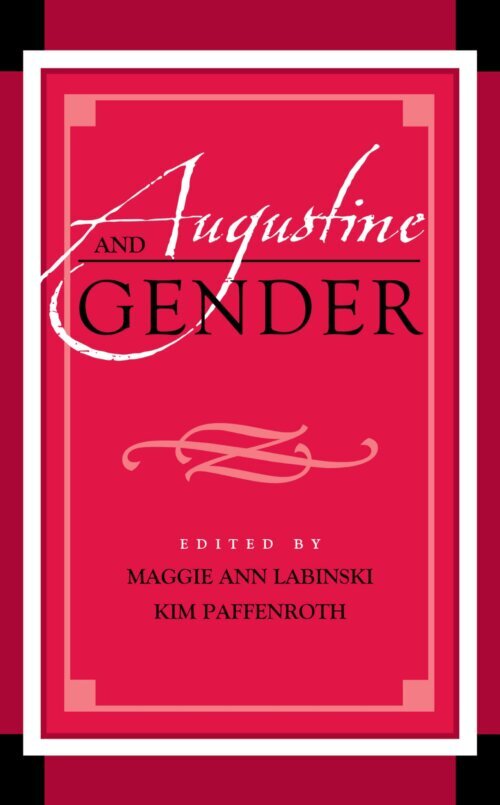
Augustine and Gender is a remarkable accomplishment of scholarship, a work that will serve students and scholars and even general readers of Augustine extremely well as they navigate the waters in which the bishop of Hippo swam. While I have focused on this review the first part concerning “Desire and the Passions” with its relevance to understanding the gendered relationships men and women all live with—the other sections dealing with sex and marriage, Augustine’s use and treatment of female imagery and language in his writings, and how we might read Augustine in the world of twenty-first century education are generally superb inclusions. Of exceptional note is Jennifer Hockenbery’s chapter dealing with Augustine’s positive use of female models and language to describe God, Christ, and female empowerment through teaching. Overall, this book helps to steer us back to a nuanced, even implicitly positive, account of Augustine’s writings on sex and gender. Yes, Augustine is a product of his world. But even in that world, he offers brilliant glimpses, even if only briefly and never consistently, of a what our relationships with each other could be when based on the love and fidelity, sympathy and sorrow, that he often explored even if he was incapable of freeing himself from the Roman world he walked in. As Anne-Marie Schultz and Michael R. Whitenton conclude in the final chapter of this thought-provoking tome, “Augustine stands uniquely poised to help navigate these contemporary waters. He can speak to both conservative elements of Christian communities that are resistant to full inclusion and to students struggling to find belonging.” Reading Augustine carefully does reveal that he periodically, and brilliantly—albeit always briefly—breaks through the patriarchal, misogynistic, and sexist world of late antiquity offering a vision of a more equitable and equal love that is the divine reality of love offered in God.
Augustine and Gender
Edited by Maggie Ann Labinski and Kim Paffenroth
Lanham, MD: Lexington Books, 2024; 326pp


Related Posts