Eric Voegelin’s Philosophy of History
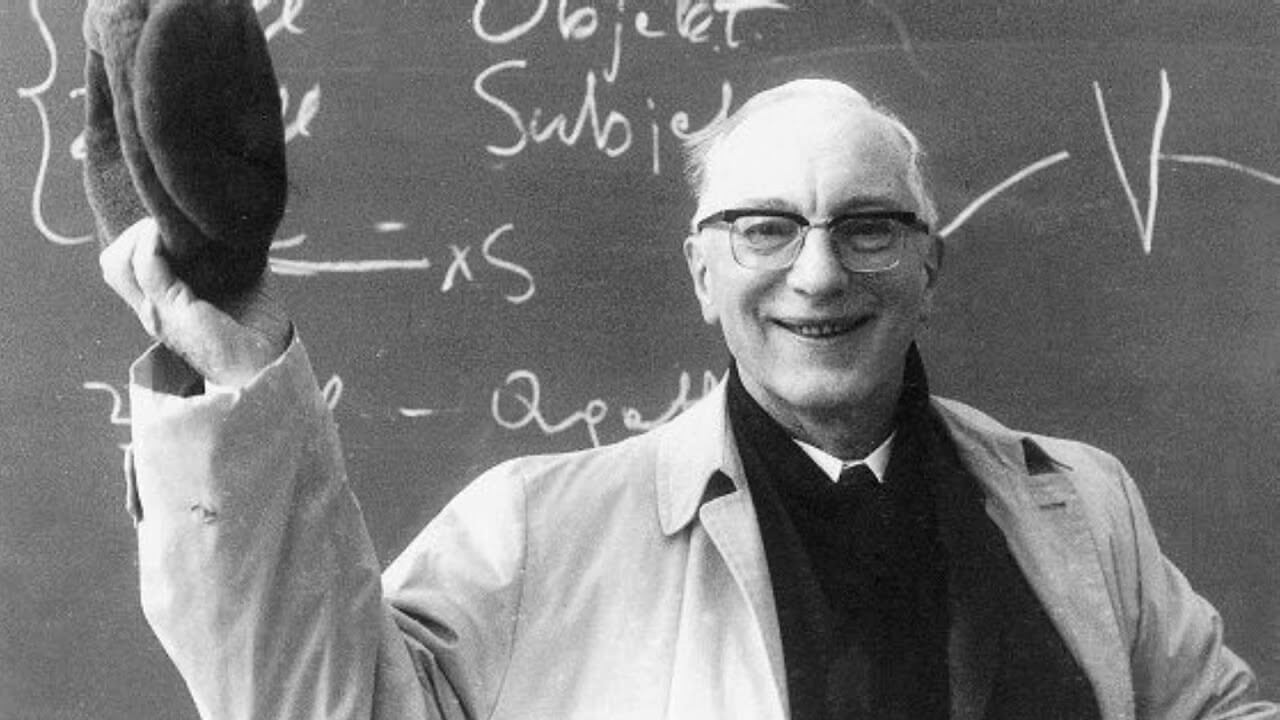
Writing about Eric Voegelin’s philosophy of history will undoubtedly expose a contradiction. Throughout his life, Voegelin intellectually rejected the project of the philosophy of history that French and German Enlightenment philosophers began to pursue in the 18th century. For him, these attempts to design a unified history of humanity from its prehistoric beginnings to a future universal end were ideological undertakings that not only had to fail because of the historical plurality of known civilizations, but also because they missed their spiritual substance. Yet Voegelin himself occasionally used the concept to characterize his own research interests in his major work Order and History (1956-1987). However, Voegelin ‘s ‘philosophy of history’ differed radically from the Enlightenment projects of Condorcet, Turgot and Kant via Hegel to Marx and Comte and their epigones. Among his contemporaries, it was only Arnold Joseph Toynbee who, with his twelve-volume A Study of History (1934-1964) was accepted by Voegelin as an interlocutor because he emphasized the plurality of civilizational processes and their spiritual and religious dimensions alongside the institutional ones. While Voegelin shared aspects of Toynbee’s position, their conclusions differed. In my 1967 dissertation on Toynbee’s A Study of History, supervised by Voegelin, I characterized his position as follows:
“The question that Toynbee pursued in his assessment, imposed by the world political scene of the 20th century, was: is there a telos of history that can be traced from the beginning of the parallel sequences of several generations of civilizations? Toynbee avoids unambiguous constructions in which history is described as an immanent process of human perfection, which reaches a final climax in the interpreters’ visions which assert that they are gifted with the knowledge of salvation. His world empire is not identical with the ‘empire of freedom’ that the ‘Illuminati’ of the Enlightenment prophesied as the final act of an apocalyptically staged historical drama. A transcendent eschaton remains, which gives meaning to human history beyond the rise and fall of civilizations and the emerging unitary civilization. In the seventh volume of the Study, beginning with the introduction of the Universal Churches as a Higher Species of Society, he restructures the original plan for the Study and offers a solution for the problem of the ‘meaning of history.’ He transforms the notion of the two citizenships in Augustine’s The City of God, the civitas Dei and the civitas terrena, into a universal, no longer specifically Christian symbolism. In Toynbee’s Study, Augustine’s universal history, which is punctuated by creation and fall, incarnation and parousia, last judgment and resurrection, is expanded to include the dates of salvation from all ‘ Higher Religions.’ The one mankind corresponds to the ‘One True God’ as is revealed in the world religions’ epiphany chain: “Yet the unity of mankind can be achieved only as an incidental result of acting on a belief in this unity of God and seeing this unitary terrestrial society sub specie aeternitatis as a province of a Commonwealth of God which must be singular, not plural, ex hypothesis.”[1]
This depiction of a goal-oriented history of mankind, whose unity is manifested for Toynbee in the equivalent symbolic expressions of the search for a transcendent ground, is shared by Voegelin, even if his formulations are more reserved and less definite. There is an interesting moment, however, in his Montreal talks in 1976 where he discusses the fourth volume of Order and History. He talks about the multi-civilizational character of the ecumenic empires and touches on the equivalence issue when he asks, without definitively answering his question, whether Buddha, Confucius and all the other exceptional prophets and visionaries “… have all experienced the same Divine Reality and there is only one god who manifests and reveals Himself, in a highly diversified manner all over the globe for all these millennia of history that we know .”[2] Voegelin’s formulation could be dismissed as a rhetorical provocation in the context of a discussion on the philosophy of history, but I don’t think that does justice to his own intellectual intentions, to which I shall return.
Voegelin’s interest in historical knowledge was already evident in his first book, On the Form of the American Mind (1928), which he published after a two-year research stay in the USA. This historical perspective became strengthened in the 1930s, although he continued to publish articles and reviews extensively, primarily in legal journals. Studies on the self-understanding of the Mongol rulers Genghis Khan and Timur, on the political thinking of the humanists, including Machiavelli, and finally the essay The Political Religions (Vienna 1938; Stockholm 1939), in which he presented the substitute religious motives of the totalitarian movements indicate that the legal scholar Voegelin had undergone an intellectual transformation to become a political philosopher. This metamorphosis was then sealed professionally after his escape to the USA in April 1938, when he began to give lectures at universities on the history of western political ideas.
Lectures at Louisiana State University in Baton Rouge, where he taught from the early 1940s until his move to the University of Munich in 1958, gave him the opportunity to delve into the history of Western political ideas and plan the publication of a work on this topic. The manuscript of such a book began to grow massively, but he never published it. The amazing intellectual productivity of these years was reflected in the manuscript, which was published after his death (1985) in eight separate volumes of his Collected Works. The concept of this history was originally guided by the notion that these ideas represented the lines of thought of western civilization. However, the longer he worked on this history, the clearer it became to him that it had no coherent structure of meaning, since the ideas that had been spread over the centuries lacked any reference to reality. This reference could only be gained by recourse to the experiences on which the ideas were based.
While he was working on this history of ideas during the war years, which for the USA, unlike in Europe, did not begin in September 1939 but on December 7, 1941, with the Japanese bombardment of the American fleet in Pearl Harbor, he also maintained extensive correspondence with old friends from Vienna, who like him had all fled to the USA. One of them, the sociologist Alfred Schütz, became the recipient of twenty anamnestic “experiments” in which Voegelin tried to reconstruct for himself the primary experiences of his childhood. In a way, these “experiments” were also motivated by his work on the history of political ideas and the insight that ideas do not have an independent reality status, but rather reflect social experiences. These “experiments,” which he carried out in less than two weeks from late October to early November 1943, followed an encounter with Schütz in New York, which resulted in an intensive exchange on Edmund Husserl’s phenomenological approach, which Schütz defended and Voegelin criticized, as can be seen in a long letter from Voegelin (September 17, 1943) in Baton Rouge to his friend in New York. In this letter he refers to Husserl’s essay, “Crisis of the European Sciences,” and at the same time indicates his own approach, which he would actualize in his main work, Order and History. He calls Husserl’s view of history “Victorian” and describes it: “The relevant human history consists of Greek antiquity and modern times since the Renaissance. Hellenism, Christianity, the Middle Ages – a not insignificant period of no more than two thousand years – are a superfluous interlude; the Indians and Chinese (placed in quotation marks by Husserl) are a slightly ridiculous curiosity on the periphery of the earth disk, at the center of which Western man stands as man par excellence. Man is a rational creature.” Voegelin cites Husserl’s other highlights in this story, consisting in the Cartesian re-foundation of philosophy and Kant’s critiques, to conclude with “the new foundation in Husserlian transcendentalism.” Voegelin did not hide his critical surprise when he wrote: “I don’t think there is much that can be said in defense of this impoverished picture of the intellectual history of mankind…”[3]
The letter to Schütz with the sarcastic comment on Husserl’s Eurocentric reduction of human history suggests that he was beginning to encounter insurmountable difficulties in his work on the history of Western political ideas. In the Autobiographical Reflections, based on interviews Ellis Sandoz conducted with him at Stanford in the early 1970s, he explained: “So I had to give up the ‘ideas’ as the object of my historical inquiry and in contrast set the experience of the – personal, social, historical, cosmic –reality as the reality that had to be researched historically. However, these experiences could only be examined by analyzing their articulation in symbols.” This insight was groundbreaking for him: “The reality of experience is self-interpretative. People express their experiences in the form of symbols, and the symbols, in turn, are the key to understanding the experiences expressed.” The history of political ideas had now been replaced by an attempt to write a comparative history of human civilizations based on the self-interpretation of symbolic texts in which the structures of meaning of the respective society manifested themselves. When he dropped the history of ideas and began to conceive his new project, which would become his main work, Order and History, he decided, as he told Sandoz: “(That) Order and History must begin with the kingdoms of Mesopotamia and Egypt and their cosmological symbolization of personal and social order.”[4] In the first volume of Order and History he did not only analyze the cosmological empires and their mythical self-interpretations. Voegelin began to describe ancient Israel’s spiritual exodus from Pharaonic Egypt as a pneumatic incision of consciousness.
Karl Jaspers was working at that time on his historical-philosophical work, On the Origin and Goal of History, which appeared in 1949 and introduced the “Axial Age” discourse that has since been adopted by many scholars comparing civilizations.[5] Jaspers wrote: “The Axial Age becomes the ferment that brings humanity into the one context of world history. For us, it becomes the yardstick against which the historical significance of the peoples for the whole becomes clear. It is the deepest division between peoples in the way they relate to the great breakthrough.” A “leap” took place in these peoples, and through it established “the spiritual nature of man and his actual history.” He identified Chinese, Indians, Iranians, Jews, Greeks and their societies as having successfully completed this “leap” from the cosmological to the high cultures.[6]
Even if Jaspers mentions the cosmological cultures that predate the intellectual breakthroughs in the various societies, in his historical account he does not attempt to come closer to their reality through an interpretation of their mythical self-understanding. As Jan Assmann notes in his introduction to the first volume of the German translation of Order and History, they juxtaposed in a “crass black-and-white painting.”[7] Jaspers, unlike Voegelin, was not interested in understanding the cosmological meanings of reality, while Voegelin did so at great length when attempting to make sense of the difference between the Mosaic and Hellenic experiences. He described this difference in the introduction to the first volume: “Only when the gulf in the hierarchy of being that separates divine from mundane existence is sensed, only when the originating, ordering, and preserving source of being is experienced in its absolute transcendence beyond being in tangible existence, will all symbolization by analogy be understood in its inadequacy and even impropriety.”[8]
Elsewhere he reconstructs the consciousness of the young Plato, who experienced the leap of being: “Plato was not a priest who lived on traditional beliefs. His soul was young because he was sensitive and open to the reality of his present and he mastered the ‘serious play’ with symbols old and new that would later celebrate his participation in the drama of a cosmos illuminating itself through the nous. There is more to reality than the process of things coming into being and passing away; the cosmos is divine, and the thing called man rises above the rhythm of decay and duration, in whose psyche the divine reality can become theophany. To live in the present with a young soul is to live as a human being who responds actively, not to beliefs, but to the movement of the divine presence; and it means allowing the soul to become the site of the revelation event. Then the history of man is more than just the listing of things past and present; it takes place in an uninterrupted present as the actual drama of theophany.”[9]
In a letter to Leo Strauss on April 22, 1951, who had already left Germany before Hitler came to power and who contributed even more than Voegelin to the rediscovery of classical political philosophy in the USA, he wrote about the difference between the pneumatic revelation and noetic revelation experience of the ground of being: “Plato propounds no truth that had been revealed to him; he appears to not have had the experience of a prophetic address from God. Therefore, no direct announcement. The myth of Plato seems to me to be an intermediate form – no longer the polytheistic myth that, because of the concentration of his soul, had become impossible; not yet the free diagnosis of the divine source of the knowledge of order. God does not speak unmediated, but only mediated through Socrates-Plato. Insofar as the place of God as the addresser is taken by Socrates-Plato as the speaker in the dialogue, the fullest expression of the ‘theomorphic’ polytheism seems to be the final reason for the dialogue form, the divine and the human are not yet completely separated.”[10]
Voegelin adopted the concept of the Axial Age, albeit expanding it in two ways. Jaspers had explained: “This axis of world history now appears to be around 500 BC, in the spiritual process taking place between 800 and 200. There lies the deepest cut in history. The human being with whom we live to this day. This time is briefly called the ‘Axial Time’.”[11] For Voegelin, the exclusion of Christ and especially Paul from the Axial Age was unacceptable. Despite his critical attitude toward Hegel’s philosophy of history, he countered Jaspers’s thesis on the “absolute epoch”: “Hegel’s absolute epoch is marked by the epiphany of Christ. The appearance of the Son of God is ‘the hinge around which world history revolves’ because God revealed himself through the incarnation as the ‘spirit’. ‘That means nothing other than: self-awareness had risen to those moments which belong to the concept of spirit and to the need to grasp these moments in an absolute way.’”[12] For Jaspers, Jesus did not qualify for the Axial Period either, since he was the founder of a religion, but not a visionary, prophetic figure. The same applied to Paul, whose theophanic experience was of religious-historical importance for him but had no essential pneumatic significance. In his criticism of Jaspers, Voegelin defends himself against the devaluation of visions: “The assumption that visions of revelation are ‘irrational,’ that they can only be believed in whole or not at all, is another misunderstanding resulting from the hypostasizing alienation from the reality of experience. Paul . . . was well aware that the structure of a theophanic experience extends from a pneumatic center to a noetic periphery.”[13] Jaspers’ anti-religious prejudice also probably explains why Mohammed and Islam are not part of the ‘ Axial Age’ because of time boundaries and why Moses falls out of the Axial frame as a ‘political leader’ as well.
The fact that Paul grew up as a Jew in the civilization of Greek philosophy and could not or did not want to withdraw from its spiritual impact is occasionally emphasized by Voegelin in the interpretation of the Pauline letters and also confirmed by the successful mission outside of Palestine, which was supported by the infrastructure of the Roman Empire with its extensive system of highway. He was viewed with the utmost suspicion by the leadership of the Jerusalem community which was dominated by the Family of Jesus. It is not clear whether this leadership was responsible for his arrest and transport to Rome in the mid-50s. But Paul was prepared, so to speak, by the noetic ‘ leap of being ‘ of Greek philosophy for the interpretation of the vision that overcame him on the way to Damascus. His letters confirm this double effect.
The other crucial difference to Jasper’s ‘Axial Age’ is that Voegelin includes the historical transition from the cosmological to the ecumenical empires in his understanding of spiritual breakthroughs. As he writes: “As a question of empirical historiography there can be no doubt that the age of ecumenic empires is also the age of spiritual eruptions which has been called the ‘axis age’ of mankind; nor can there be any doubt that eminent thinkers, Jewish, Stoic, and Christian, have perceived the simultaneity of ecumenic empires and spiritual outbursts not as mere coincidence, but as a preordained coincidence of events significant to the spiritual condition and salvation of men. And yet, by its very nature of repetition, the succession of structurally equivalent symbolisms destroys the finality of the meaning that each member of this series claims for itself…”[14]
The ecumenic empires that create the social environments in which not only in the Middle East and the Mediterranean the cosmological myths of legitimacy become replaced by new meaning narratives are the result of traditional conquests by power-conscious rulers who, starting from their ancestral domains, invade, conquer and occupy neighboring regions. The question of whether the profanity of power, for example in the case of Alexander, had acquired an ecumenic dimension through his six-year education by Aristotle belongs to the two-thousand-year-old Alexander legend, which was fed by forged letters between the conqueror and the philosopher.
Voegelin, who had mocked Husserl’s Eurocentric world history, points to this causality in the case of the Chinese empire, established in 221 BC by the Ch’in ruler after a long period of wars between the various regional rulers without any knowledge of Western developments.[15] The legitimating role that the texts of Confucius played at the beginning of the Han dynasty in 207 B.C. in China was as little connected with the founding of the empire as was the fact that Christianity became the exclusive religion of the Roman Empire in 393 A.D. After all, the visionary Jewish founders of Christianity, Jesus and Paul, had been condemned and crucified as troublemakers by the Roman occupying power in the first century. Much the same can be said of the influence of the Buddha’s teachings, which predate the imperial visit of Alexander and his army in the fourth century B.C. on the Indian subcontinent and the following creation of the Mauryan empire, which was inspired by the example of Alexander, in the third century B.C.
Voegelin ‘s thesis of the four ecumenic regions — the Middle East, the Mediterranean, India and China – which he presented in the fourth volume of Order and History, connected in a non-causal way their emergence with the breakthroughs to transcendence, and relegated all speculation about the meaning of a unilinear history to insignificance. Despite this universal openness to the civilizational plurality of human history, Voegelin insists, as he did in the introduction to the second volume of Order and History, that the philosophical reflection of this history and the articulation of the order it produced is a primarily Western phenomenon. He concludes these reflections in 1957 with a provocative admonition: “In dealing with the great question of Eurocentrism, it is therefore advisable to distinguish between its phenomenal and its philosophical aspects. While the phenomenal limitation of the historical horizon to the societies of the Middle East, the Mediterranean area and the West must be abandoned in the face of increased historical knowledge. The philosopher of history must not abandon the Eurocentrism of position and standards, for there is nothing he states that could take his place. History is made wherever people live, but their philosophy is a Western symbolism.”[16]
In the same introduction, however, he emphasized that the “philosopher of history” must always be aware “that the past and future of mankind is a horizon that encompasses every present, even if it is only the leap of being that raises it into consciousness.” However, he has to beware of the “fallacy of transforming consciousness from an unfolding mystery into the Gnosis of a progress in time. The study of order is not intended to reveal the primitiveness, naivety, lack of logic, or general derangement of bygone eras; on the contrary, it should show people who are of the same nature as us and who struggle with the same problems as we do, albeit under the conditions of more compact experiences of reality and correspondingly less differentiated symbols.”[17]
In the last years of his life Voegelin became interested in the Neolithic and monuments such as Newgrange in Ireland, Catal Huyuk in Turkey, petroglyphs in Hawaii and, the prehistoric petroglyphs on the Isle de France near Paris, which he visited accompanied by the historian Marie Koenig. He was particularly concerned with finding constant patterns of imaginative human consciousness in these artifacts and representations, in order to demonstrate larger pre-ecumenic connections and contexts. He was not interested in discovering prehistoric illustrations for a new universal history of mankind, or even in changing his Eurocentric historical-philosophical perspective.
Even if this late prehistoric interest is not discussed in the final volume of Order and History, In Search of Order, published after his death in 1987, it answers at least one complaint of Jan Assmann in his critical account of Voegelin’s position in the Axial Age debate, namely, that he was not, like most participants in the Axial Age discussion, interested in the pre-cosmological societies. The chapter in Assmann’s book on Achsenzeit is entitled: “Eric Voegelin: An Apostate of the Axial Age Discourse.” Assmann regrets that Voegelin did not concern himself with the pre -cosmological societies. Why he calls Voegelin a “apostate” is not entirely clear, because in his introduction to the first volume of the German edition of Order and History Assmann writes regretfully: “The questions raised by Voegelin were not taken up by the relevant disciplines, and a discussion about his theory never got off the ground. His attempt to correlate political order, cultural semantics and social structure can be seen as a groundbreaking step in the direction of a cultural-scientific analysis, which is now being demanded everywhere, especially in Germany. It therefore seems vital to make Voegelin ‘s main work accessible to a German audience and to include it in the cultural studies debate that has been lively in recent years on topics such as monotheism, political theology and the emergence of historical consciousness.”[18]
Why Voegelin’s intellectual work did not find greater resonance may have to do with the strange image he had especially in Germany, but to some extent also in the USA, of being a political theologian. This image is also peddled by Assmann when he compares him to the Catholic theologian Hermann Krings, “who, in his doctoral thesis Ordo, published in 1941, vehemently described a “relational interpretation of the Ordo concept of Augustine, Albertus Magnus and Thomas Aquinas (i.e. Voegelin ‘s special household saints).”[19] If Voegelin had “special household saints”, as Assmann suspects, they were Plato and Aristotle, about whom he wrote the third volume of Order and History. But he was certainly not a Catholic ordo-ideologue like Krings, because his experiences of the Nazi collaboration by the Catholic Church and the Protestants before the annexation of Austria and his flight in 1938 were responsible for the fact that the non-practicing Lutheran Voegelin kept a distance from Christian churches of all denomination in the US and Germany until his death in 1985.
The image of the ‘political theologian’ that followed him while he was teaching in West Germany from 1958 to 1969 involved additional reasons to being confused with a Thomist. He critiqued modernity as a gnostic age whose foundations stretched back to the medieval sectarian movements. He included the intellectuals of the French Enlightenment and German philosophy from Hegel, Marx to Nietzsche in this indictment and the culminating manifestation in the totalitarian regimes of the 20th century. This wholesale critique of modernity colored him as a conservative ideologue. Yet this image did not deter Max Horkheimer, the leader of the Frankfurt School who certainly knew Voegelin’s arguments on this topic from his New Science of Politics (1953), to invite him to the University of Frankfurt in 1956 to lecture in the fall semester on themes from the first volume of Order and History: Israel and Revelation, that had been published that year. The fact that another philosopher, Hans Blumenberg, dominated the cultural scene in 1966 with the book Die Legitimität der Neuzeit and understood his work as a refutation of Voegelin’s gnosis thesis, which he had developed in an article in the Philosophische Rundschau in 1953, and which Blumenberg cites as the main source for his gnosis argument, did not escape the notice of the Frankfurt philosophers.
Crucial to the disregard for Voegelin in the German cultural scene of the 1960s, however, was the suspicion that the influence of one of his two doctoral supervisors at the University of Vienna (1922), the cultural sociologist Otthmar Spann (the other was the liberal legal theorist Hans Kelsen) and his romantic organological thinking had left traces in Voegelin ‘s understanding of modernity. The fact that Spann was intellectually linked to Carl Schmitt, one of the legal theorists of the Third Reich, fueled these suspicions circulating in the West German cultural scene and were reproduced by Assmann in his book on the “Achsenzeit.” He writes: “While Jaspers in the years 1945-1949 saw the need of the hour as overcoming nationalistic ideologies and the foundation of ‘boundless communication,’ which he believed to be the first emergence of the Axial Age, Voegelin sought salvation from the crisis of modernity in the reflection on the specifically Western, and for him that meant Christian values, whose first and decisive representative he saw in Augustine. His position thus approached the political theology of Carl Schmitt, with whom he agreed at least in his assessment of modernity. Schmitt understood the Enlightenment as man’s self-empowerment but was skeptical about the humanistic concept of humanity and a pessimistic anthropology. As much as Voegelin would have resisted this assessment, one cannot entirely spare him the accusation of cleric-fascism’ that Habermas leveled against Schmitt.”[20]
Of all the books by Voegelin that Assmann cites in his bibliography, the one that could have corrected his odd and biased account is missing, namely Hitler and the Germans. These semester-long lectures in the summer semester of 1964 at the University of Munich were not published in a German edition until 2006,[21] although an American translation appeared as early as 1999 in his Collected Works.[22] If these lectures had been published by the Piper-Verlag in Munich in 1964 as contractually stipulated, his image in the West German cultural scene would have changed dramatically. Voegelin’s book would have appeared in the same year as the German edition of Hannah Arendt’s Eichmann in Jerusalem and two years before Karl Jasper’s provocative book, Where is the Federal Republic Driving? These were books that provoked dramatic public reactions. The publisher of Arendt’s and Jasper’s books, Klaus Piper, had found on visits to managers of bookstores in Germany that the Voegelin title, Hitler and the Germans, would resonate similarly. Voegelin, however, was not interested in becoming a public intellectual in West Germany through his book and insisted on the publication of a theoretical volume, Anamnesis (1966), before the Hitler book was to appear. When he returned to the USA in January 1969, he lost all interest in publishing the Munich lectures.[23]
The timely publication of the book could have led to an intellectual rapprochement between Voegelin and Habermas as well. Reading the first volume of Habermas’ monumental work (2019), Also a History of Philosophy: Volume I, The Occidental Constellation of Faith and Knowledge, in which he not only comments on the topics of the debate about the Axial Age in astonishing breadth, but also examines in detail the materials that have been processed by the participants in the debate, including Voegelin, one suddenly recognizes a knowledge interest shared by both, Voegelin and Habermas. Habermas read Voegelin’s The Ecumenic Age, since he refers to the fourth volume of Order and History and the “interpretation of Christian epochal consciousness.”[24] Furthermore, this shared knowledge interest between the Frankfurt School and the Institute of Political Science at the Munich University headed by Voegelin was always recognized by the Berlin philosopher of religion, Jacob Taubes, who frequently visited Voegelin in Munich and participated in the lively discussions of his graduate seminar.
NOTES:
[1] Manfred Henningsen, Menschheit und Geschichte. Untersuchungen zu Arnold Joseph Toynbee’s ‘A Study of History. Munich: List 1967, p. 66.f
[2] Eric O’Connor (ed.), Conversations with Eric Voegelin. Montreal: Thomas More Institute Papers, 76, 1980, p. 64.
[3]Eric Voegelin, Anamnesis. Zur Theorie der Geschichte und Politik. Munich : Piper 1966, p.22 f.
[4] Eric Voegelin, Autobiographical Reflections. Ed. Peter Opitz. Munich : Wilhelm Fink Verlag 1994, p. 100.
[5] Robert Bellah, Religion in Human Evolution. From the Paleolithic to the Axial Age. Cambridge/Mass./London: Harvard University Press 2011 and also Jan Assmann, Achsenzeit. Eine Archäologie der Moderne. Munich: C. H. Beck 2018.
[6] Karl Jaspers, Vom Ursprung und Ziel der Geschichte. Frankfurt/ Hamburg: Fischer Buecherei 1955, p. 58.
[7] Jan Assmann, “Introduction” to Eric Voegelin, Die kosmologischen Reiche des Alten Orients – Mesopotamien und Ägypten. Munich: Fink Verlag 2003, p.20.
[8] Ibid, p.48.
[9] Ibid., p. 84.
[10] Eric Voegelin, Alfred Schuetz, Leo Strauss and Aron Gurwitch, Correspondence on ‘The New Science of Politics. Ed. Peter J Opitz. Freiburg/ Munich : Karl Alber 1993, p. 44.
[11] Ibid ., p. 14.
[12] Eric Voegelin, Das Oekumensche Zeitalter. Weltherrschaft und Philosophie. Ed. Manfred Henningsen. Munich: Fink Verlag 2004, p. 183 (= E. Voegelin, Ordnung und Geschichte, Vol. 9).
[13] Ibid., p. 105.
[14]Ibid., p. 69 f.
[15] Ibid., p. 144 ff.
[16] “Humanity and History”, in: Eric Voegelin, Order, Consciousness, History. Late Scriptures – one selection. Ed . Peter J Opitz. Stuttgart: Klett Verlag 1988, p.77.
[17] Ibid., p. 51.f.
[18] Jan Assmann, Eric Voegelin, Ordnung und Geschichte. Vol. 1: Die kosmologischen Reiche des Alten Orients – Mesopotamien und Aegypten. Ed. Jan Assmann, Munich: Fink Verlag 2002, p.22.
[19] Ibid. p. 246.
[20] Ibid., p. 253.
[21] Eric Voegelin, Hitler und die Deutschen. Ed. M. Henningsen. Munich: Fink Verlag 2006.
[22] Eric Voegelin, Hitler and the Germans. Ed. D. Clemens and Br. Purcell. Columbia/ London: University of Missouri Press 1999 (+ Vol. 31 The Collected Works of Eric Voegelin).
[23]Eric Voegelin, Hitler und die Deutschen. Ed. Manfred Henningsen. Munich: Fink Verlag 2006.
[24] Juergen Habermas, Auch eine Geschichte der Philosophie. Vol. I: Die okzidentale Konstellation von Glauben und Wissen. Frankfurt: Suhrkamp 2019, p. 513.


Related Posts