Augustine’s Humility of Preaching
Saint Augustine is the towering figure who looms over western theology. Almost all people are familiar with his name through the Confessions, his semi-autobiographical work. Others know he wrote a big book called The City of God, even if they haven’t taken the adventure of reading that monumental tome. Others also know him as the Doctor of Grace, the theologian who confront the Pelagian and Semi-Pelagian crisis of the early fifth century and articulated a salvific theology where God’s grace acts and moves first in all human life. Yet Augustine the theologian was, for most of his Christian life, Augustine the preacher—a man who would preach to his congregation in Hippo as much as three times a day, surrounded not by the educated and elite audience his liberal arts education trained him but a more plainspoken and common people of farmers, fishermen, and slaves.
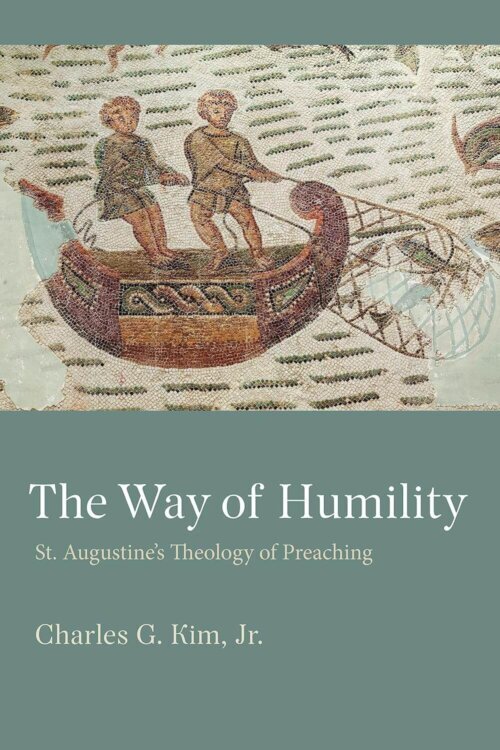
Augustine’s theology of preaching, in comparison to his other contributions, remain understudied. Charles G. Kim Jr., an assistant professor of theology and classical languages at Saint Louis University, tries to correct this problematic hole in Augustinian scholarship with his latest work, The Way of Humility: St. Augustine’s Theology of Preaching. While there have been some studies on Augustine’s preaching in the past, Kim is keen to point out that our reliance on dated scholarship is problematic. Even the great Peter Brown, Augustine’s preeminent biographer and historian of late antiquity, falls into the trap of thinking Augustine’s primary congregational audience was a more educated middle-class in Hippo rather than a poorer and more commonfolk audience that becomes apparent when carefully studying the language and metaphors of Augustine’s surviving sermons.
In the Confessions and City of God, Augustine, though indebted to the Platonists for helping him move closer to Christ, accosts them for their pride—their lack of humility. This is especially true when Augustine turns his focus to the Neoplatonist Porphyry in the latter half of the first half of the City of God. Augustine argues that the Platonists cannot accept Christ as the Mediator between God and man and therefore the embodied wisdom that they seek because of their self-love, their pride, which they jealously protect: I and I alone am the discoverer of truth. It wasn’t until Augustine was humbled through his encounter with the scriptures coupled with the infant Christ speaking to him in Milan: Tolle Lege, Tolle Lege, that he was able to throw off his intellectual pride and submit himself to the humility of a Galilean carpenter and fisherman who was also the incarnate Deity, the only mediator between God and man.
“Humility,” Kim says, “both in word and deed, is central to the preaching of Augustine.” In fact, “it is impossible to think of Augustine’s theology of preaching without considering the virtue of humility.” What follows in The Way of Humility is a tremendous examination of Augustine’s preaching style and what it reveals about him and the theology communicated in his surviving sermons. Kim asserts that Augustine understood his role as a preacher was as a teacher, not to showcase his intelligence and education as a teacher, but to serve as a humble servant of the Saving Teacher, Christ, “Augustine recognizes that he is an example for his congregation as their preacher. He wants that example to be drawn from the bible witness of Paul and of Christ.”
Augustine recognizes, in his role as preacher, he must reach his audience so that they can understand how to love God and love their neighbor, rather than remain confused or puffed up with their own special understanding when pitted against fellow Christians. “The preacher must speak so that he is understood in a manner closer to the indocti (the unschooled), rather than following the rules of the docti (the learned).” This helps Kim explain why Augustine often uses metaphors and symbols that would be more relatable to the agricultural and fishermen population of Roman North Africa. These are not just biblical parables—they are relevant to the actual lives of the primary audience attending the basilica that Augustine was preaching in. As Kim explains, “Augustine needed to be able to connect and communicate with his people where they lived and worked.”
Augustine’s preaching emphasizes humility, not just the humility of the pastor who is the visible witness for the congregation to emulate, but also a humility for the congregation to understand and translate into their lives: love of God and love of neighbor. The problem of pride, the same pride promoted by the Roman liberal arts program which pedestalized the eminently prideful (self-serving) Cicero as its model, is that it focuses solely on love of self rather than love of others as an expression of love of God. If the preacher merely loves his own eloquence, he reveals himself as a proud soul unconcerned with the spiritual well-being of his parishioners. If parishioners love the fact they think they know the secrets of salvation while so many others are left confused, they reveal themselves prideful in closing off their hearts to their fellow Christian brothers and sisters, thereby erecting an unnecessary division within the Christian family. The good preacher inculcates the spirit of love between all, a willingness to aid and assist everyone in whatever struggles they may be in, learned and unlearned.
Kim convincingly argues we see this in Augustine’s preaching. When he preaches to the unlearned craftsmen and workers of Hippo, his preaching style is different than when he is preaching to the wealthy and educated. Augustine’s Latin also reflects an attempt to reach the commoners in his sermons rather than the more eloquent Latin of the Confessions and City of God, written for a more learned audience. Augustine was keenly aware that his own spiritual humility was a byproduct of his willingness to engage with the audience at hand. This is exactly the witness of Christ in the New Testament.
Advancing, then, Augustine’s Christology, Kim implies that the bishop of Hippo’s preaching reveals his understanding of the incarnation and the meaning of Christ’s earthly life and ministry: humility. God became man in the form of a servant to minister to the lowly and unlearned. Christ was not a Senator. Christ was not a general. Christ was not a Neoplatonist philosopher. Christ the Servant was a teaching servant meant to teach us how to love and serve others as the will of God. Christ’s humility reveals the humble love of God. Augustine, in realizing this, altered his preaching style to conform to the reality of the humble love of Christ so that his congregation could walk in the same path that Christ walked.
The Way of Humility is an important work that advances a much-needed hole in Augustinian scholarship. In doing so, it also advances scholarship relating to Augustine’s Christology, ecclesiology, and soteriology. It is also a good reminder to scholars and writers that they too should be humble in their works, reaching as broad an audience as possible. Kim’s work, scholarly as it is, remains accessible and readable to anyone interested in the life and work of Saint Augustine.
The Way of Humility: St. Augustine’s Theology of Preaching
By Charles G. Kim Jr.
Washington D.C.: Catholic University of America Press, 2023; 206pp


Related Posts