Beyond Armies: How Culture Shapes Global Power
I warmly recall the morning when I watched Wim Wenders’ Kings of the Road (1976) for the first time. During the film, one of the characters says to another, ‘The Yankees have colonized our subconscious’. This phrase summarizes American influence in a post-war Germany divided by the Iron Curtain, and it illuminates what political scientist Joseph Nye would call soft power in the early 1990s. However, soft power is not a recent invention; it has always existed, and predictably, it will carry even more weight in the future. Although less overt than military force, it is no less effective; rather than occupying territories, its ambition is to colonize the very voice of thought, as Wenders anticipates.
Unlike hard power, soft power relies in the ability to ‘get others to want what you want’ without coercion. Power thus arises from attraction, prestige, and credibility. Initially conceived as a complement to economic and military force, soft power is now almost indispensable in an interdependent world of multilateralism and intense global cooperation, where brute force is more costly and often less effective. Soft power fills the gaps left by hard power: it shapes imaginations, fixes desires and produces consensus that can serve the interests of others unnoticed. Ultimately, its advantage over occupation is that it penetrates thought and legitimizes power from within.
The problem lies in the comparison. Claiming that soft power ‘matters more’ than armies is misleading because it suggests that a novel is more powerful than a Eurofighter. Realists would deny this, recalling Thucydides: ‘The strong do what they can and the weak suffer what they must’. In immediate crises, military primacy is difficult to dispute. However, in the gradual establishment of power and the formation of alliances, soft power can be pivotal: it may not replace armies, but it often determines which causes are endorsed and which orders are considered legitimate.
Before Nye coined the term, US foreign policy had already grasped this logic, particularly in its efforts to promote liberal, democratic values during the Cold War. The establishment of the U.S. Agency for International Development (USAID) in 1961 was partly in response to this objective, namely to transform aid and cooperation into instruments of influence. Eisenhower quickly recognized the Cold War as an ideological dispute and the importance of culture. In the late 1950s, for instance, the State Department sent musicians abroad to counter Soviet propaganda about American racism and showcase the merits of the free world.
The Americanization that took place after World War II, referred to by Wenders’ character, is perhaps the most visible example of soft power. Following the collapse of the Soviet Union, this process accelerated, becoming more intense alongside globalization. The mechanism is sophisticated: unlike classical imperialism, which relied on occupation and imposition, today’s order is driven by a cultural imperialism so effective that nations no longer feel coerced. Instead, they actively seek to integrate into a U.S.-centered world order. Hegemony is no longer primarily imposed by force, but by seduction, which confirms that Machiavellian idea that power is ultimately intangible.
This is why, unlike military force, soft power is difficult to measure or to quantify in terms of impact. This opacity also explains why some still doubt its effectiveness. Nonetheless, cultural hegemony does not lose strength by spreading ideas, habits and values; quite the opposite, in fact.
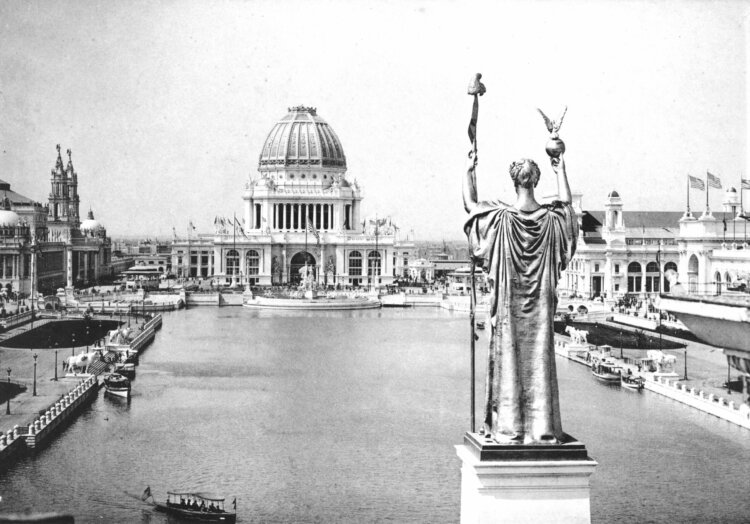
Although the United States is the most visible case, it is not the only country to exercise soft power. During the Cold War, the Soviet Union attempted to seduce the world with the ideal of the New Soviet Man and the prestige of its revolutionary promise. In his book When the World Spoke French, Marc Fumaroli also discusses how culture and diplomacy were closely linked in the 18th century and how international world’s fairs in the 19th century were functioning as soft power avant la lettre.
The British Empire was then the dominant global power, exporting the rule of law, the English language, and a literary culture spanning from Dickens to Kipling. However, despite the UK’s subsequent attempt to rebrand itself through ‘Cool Britannia’ in the 1990s, it has not regained the systemic reach of the soft power it wielded at its imperial peak.
Long before that, Alexander the Great realized conquest could not be sustained by weapons alone. To consolidate power, a common language and an education system rooted in classical Greek culture that incorporated the vanquished were needed. Athens’ symbolic prestige as Europe’s cultural capital fueled philhellenism, later helping mobilize support for the Greek Revolution of 1821 against the Ottoman Empire. This shows that, while culture cannot replace armies, it can create the moral framework in which intervention becomes conceivable and acceptable.
More recently, it is hard to imagine that the American occupation of post-war Japan would have been as effective without the export of American baseball, beer and Hollywood. In this sense, I recall Yasujirō Ozu’s film Good Morning (1959), in which two children in Tokyo find themselves in hot water for absconding from their English lessons to view baseball on the recently inaugurated television. Over time, Japan has also managed to recast its global image, effectively displacing the darker shadows of the Second World War through a strategy of cultural prestige associated with ‘Cool Japan’, supported by anime, pop culture, and global brands such as Nintendo. Those who still doubt the effectiveness of soft power need only recall Shinzo Abe, the former Prime Minister of Japan, dressed as Mario at the closing ceremony of the 2016 Olympic Games in Rio.
In an era where political leaders, government agencies and large media corporations are deliberately exercising soft power, few would argue that a country’s foreign ministry is more influential than global cultural platforms such as Paramount, Disney or Netflix. However, whether this matters more than an army depends ultimately on a misunderstanding of what we mean by power in geopolitics. The real question is not whether culture replaces weapons, but what kind of power determines obedience and shapes the collective consciousness: the power that imposes, or the power that persuades?


Related Posts