Confronting the Gnostic Cosmos: Understanding Eric Voegelin
On March 12, 1938, German soldiers began crossing the border between Germany and Austria. It was an invasion. The Austrian government was in total disarray. Pro-Nazi sympathizers greeted the German invaders with open arms and the small, disorganized, and poorly equipped Austrian army didn’t resist the invaders. When Adolf Hitler’s 4,000-man bodyguard arrived with him in Linz, the rapturous crowds caused a change of plan in Hitler’s attitude to Austria, the country of his birth that he abandoned in favor of Germany. Austria was directly annexed into a Greater Germany instead of becoming a puppet state. The fall of Austria under Nazi rule imperiled many of its dissident intellectuals, one of those intellectuals was Eric Voegelin.
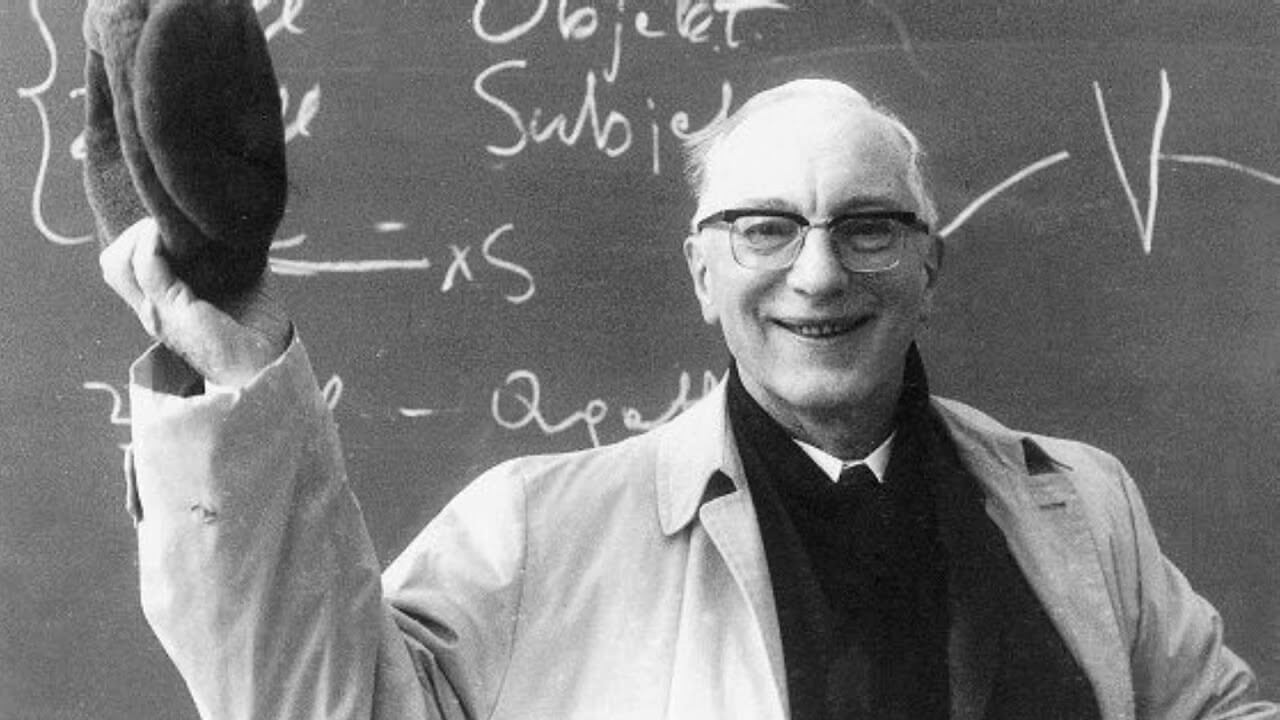
During his life, Voegelin was a respected political philosopher, a German emigree who fled the persecution of the Nazi regime as it set up shop in Austria in the 1930s and found his way to the United States in a story that mirrors that of several other German emigree intellectuals like Leo Strauss and Hannah Arendt. Voegelin spent much of his academic career at Louisiana State University, now the home of the Eric Voegelin Institute which is dedicated to preserving and disseminating his intellectual contributions. Later in his life, he was a research fellow at the Hoover Institute having secured his reputation as a “conservative” thinker owing to his opposition to progressivism, fascism, and communism (it should be noted, however, Voegelin never applied the term to himself). Most famous among his works is his idea of Gnostic revolution and totalitarianism as part of the irrepressible conflict within human nature for political symbolism and representation wrestling with the tripartite nature of the soul: thanatos (death), eros (love), and dike (justice).
“Political science is suffering from a difficulty that originates in its very nature as a science of man in historical existence,” Voegelin famously wrote. Following the eminent Greek philosophers of the anthropological epoch of human consciousness, Voegelin accepted the fact that humans are political creatures; but he also went beyond the mere political animus of Aristotle. As political creatures in relation with others in some form of political society, the cohesion of society and the lives we live are based on illuminated symbols of representation—symbols that help humans understand the cosmos they live in and the lives they are living. It would be more accurate to say Voegelin understood humans as symbolic creatures: we live and die by the symbols and their representative meanings which give our own lives meaning.
This is patently made clear in Voegelin’s statement that mankind is “illuminated through an elaborate symbolism, in various degrees of compactness and differentiation—from rite, through myth, to theory—and this symbolism illuminates it with meaning so far as the symbols make the internal structure of such a cosmion, as well as its existence as a whole, transparent for the mystery of human existence.” This symbolist existence to which politics itself embodies is a variation of what Leo Strauss called the “theologico-political” problem, or what Voegelin and other scholars would come to understand as civil theology (following the writings of Varro and then its metamorphosis in Saint Augustine and, more recently, Thomas Hobbes and Jean-Jacques Rousseau). Political symbolism achieves the unity of all disparate strands within society which makes life palatable, and, ultimately, united in a common goal. Humanity’s metaphysical impulses are directed toward symbols of representation which guide self-understanding, this is also always translated into political society through various ways.[1] However, the force by which political symbolism draws people together also has a darker side too it.
Voegelin was an ardent anti-Nazi and anti-Communist on this account—opposition to the darker side of political symbolism and the fanaticism it elicits. He saw both Nazism and communism as acidic manifestations of Gnostic totalitarianism which threatened the unique civil freedoms of the West. Voegelin was, therefore, part of the long tradition of institutional and civil freedom that saw other prominent twentieth century thinkers like Michael Oakeshott defend against those revolutionaries who would destroy institutional order in the name of progress and destroy the relative freedom and openness that such institutions and civil laws protected. Voegelin was also acute to point out the “double game” played by Gnostic revolutionaries promising freedom but always enacting cruelty and oppression wherever they tread.
*
The crisis of modernity, Voegelin argued in his 1951 Walgreen lectures at the University of Chicago (anthologized in the book The New Science of Politics and further elaborated on through a series of essays now collected in Science, Politics & Gnosticism), was the crisis of Gnostic revolution and totalitarianism. This was a long time in the making, not something that suddenly emerged in the nineteenth century with the likes of Hegel, Comte, or Marx—though they all feature prominently as avatars of Gnostic revolution in Voegelin’s eyes. It goes back to the origins of political society itself; it goes back to human nature and the need for symbolism and representation in life. Here, Gnosticism is not merely the esoteric mystery religions of late antiquity but a condition of the soul in which representational symbolism provides meaning for existence—we are creatures of symbolism and representative meaning, and Gnosticism provides a symbol of meaning for political life to which we endeavor to manifest to assuage our restless anxiety. The early stages of this crisis played itself out in the civilizational and intellectual battles of antiquity and late antiquity, suppressed through the victory of “Augustinian Christianity,” before reemerging about a millennia later near the end of the Middle Ages and proceeding forward with terrible fury into the Enlightenment and modernity. For Voegelin, the root of Gnostic totalitarianism and revolutionism lies in (metaphysical/spiritual) alienation, hatred of the existing order of the world, and the desire to forcibly create a new (symbolic) reality to dedicate one’s life which will, in that feverish dedication, seemingly assuage the alienation at the heart of the Gnostic. The Gnostic fervor is the attempt to direct the disordered soul to symbols that promise meaning and order—two things that the soul seeks.
While at Yale, I undertook my thesis on Augustine and his criticism of Roman civil theology as a form of cultural criticism. Voegelin identified the crisis of the fragmentation of the Roman Empire in the west as one of the turning points in the development of Western society (the eastern half of the empire was absent from this crisis with contingent ramifications for the birth of Russian civilization still relevant to today’s world). To summarize ever so briefly, Augustine’s political theology in De civitate Dei brought about the de-divinization of the world and the individualization of human consciousness and society which suppressed the widespread symbolic belief of cosmic wholeness integral to the preceding symbolic representations of society: the symbols that governed Augustinian consciousness was the individual soul and heart in its love and pilgrimage to God—this is a symbol at once universal but particular to each person and their loves (a cornerstone of Augustine’s argumentation in The City of God) and therefore stood in radical contrast to the collectivist implication of cosmic wholeness common to Near Eastern political mythology, cosmic stoicism and rationalism in Greek philosophical thought, and the eternal imperial city of Rome and its ideology of Romanitas.
Prior to Augustine, this world—the civitas terrenna—was the plaything of the imminent eschaton, the emerging and emergent cosmos at the center of collective cosmic action. The empires of the Far East and Near East understood themselves and their societies as earthly manifestations of cosmic imminence and order; anyone deeply familiar with the cosmogonic theologies and literature of the Mesopotamian world understands this (it also serves as the backdrop to the Bible, especially the Old Testament, as Voegelin so keenly pointed out in his own writings). This cosmic symbolism underwent an alteration to the cosmopolis of the Greek philosophers, the now forgotten philosopher Isocrates being a prime example offering philosophical justification for a universal cosmopolitan imperium attempted by Athens, manifested ever so briefly by Alexander the Great, then reaching its apogee in Rome. The earth was the center of the action of heaven—the heavens needed their symbols brought to earth and political society was understood in a collective, organic, manner: one mirroring the cosmos and the gods as pagan cultic ritualism expressed. The centrality of the earth as the imminent horizon of heavenly action was also the true intellectual underpinning of the geocentric model (symbol) of the universe. The earth was the sacred reality upon which the symbols of heaven were manifesting themselves. The earthly kingdoms and empires of the world were the instruments of this manifestation. This constitutes the divinized political theology that interested Voegelin in his analysis and study of early human civilization.[2]
As Christianity slowly crept into the Greco-Roman world, this divinized political theology was carried forward by various church fathers; the most famous being Constantine’s court historian and theologian Eusebius. The contextual Christology of “Christ the Destroyer of Idols” so prominent in Eusebian theology and his hermeneutic of Romanist inclusion in Old Testament prophecies (especially in Deutero-Daniel) was the Christianized attempt at providing a civil theology for the newly emerging Christian Roman imperium. Another church father, Lactantius, in his Divine Institutes, was so confident of the divine sanction of Rome that he went as far as to claim that the eventually end of the Roman Empire meant the millennium was at hand, the disordering of Rome would coincide with the final disordering of the cosmos at the end of time out of which God would defeat Satan and his legions and restore order (the new heaven). In 410 A.D., however, Alaric’s sack of Rome and the crisis that this traumatic event unleashed—to both Christians and pagans alike—prompted the greatest work of Christian theology to be written. Augustine’s City of God, a work which would ironically have a profound impact in the shaping of the freedoms we enjoy in the West through its separation of cosmic and collectivist symbolism from politics and its reimagining symbolic life as relating purely to the individual soul, broke free of the cosmic divinized political theologies which had underpinned political meaning for thousands of years.
In The City of God, Augustine dispensed with idea of collective-cosmic civil theology, he spiritualized the eschatological millennium (effectively suppressing any such notion of a literal millennial kingdom on earth by arguing it was a spiritual reign in the hearts of believers), and he argued that this fallen world had no teleological purpose (only the individual souls of humans have a telos tied to Love itself, God). Augustine’s theology became the implicit guiding view for the West: this world, though good and beautiful and prefiguring the beauty and goodness of God, was not the be-all-end-all of life as it was for the ancient philosophers and poets. The transcendent God which calls individual souls to himself in love, whereby all existence becomes a symbol for the beauty and love of God, suddenly replaced the collectivist cosmic universalism of late antique political symbolism which had so pervaded the ancient world. Augustine’s de-divinization of the world, ironically, made possible the emergence of civil freedom, a separation of heaven and earth that was previously unified in the preceding imperial civilizations and only tentatively continued by illiterate observers of European Christendom unfamiliar with the divinized cosmogonic politics of the world before Christianity.
Augustine’s unintentional gift included an individualized understanding of society that displaced the collective and organic cosmic understandings of society. Society was, for Augustine, but a loose collection of individual souls with individual loves only loosely tied together by a weak civil authority as he famously argued in Book 19 of The City of God. The symbolism for Augustinian society was simple, based on the message of Christ: love of God and neighbor under the peace provided by the temporal ruler as part of the individual journey to God; nothing more, nothing less, no grand collective cosmic destiny or vision, just a sojourning lover with other lovers under the gaze of God inviting one to be beautified by the spirit of charity. This paved the way for the individualized societies we have largely taken for granted throughout the western world where a life of spirit (art, poetry, theology—what Augustine called true “romance”) on one side and the unexciting politics of pragmatic order and peace on the other coexisted on separate planes. As Voegelin mused, “the order of the ancient world [lost to the turbulence of cosmic imperialism and Gnostic dreaming] was renewed by that movement which strove the through loving action to revive the practice of the ‘serious play’—that is by [Augustinian] Christianity.” Augustine’s separation of spirit and politics allowed for the return of “serious play,” civil and societal freedom, and the emergence of festival artistry to arise without subjugation to the cosmic imperialism of Gnostic dreaming. Augustine’s de-linking of metaphysical-symbolic life from politics was the greatest achievement for the advancement of freedom in the history of the world. It is no surprise that Voegelin quotes Augustine as the frontispiece of his Order and History, “In the study of creature one should not exercise a vain and perishing curiosity but ascend toward what is immortal and everlasting.”
*
This de-divinized world birthed by Augustine, however, came under scrutiny during the high Middle Ages before erupting with violence during the Reformation. (It should be noted, here, that Voegelin was born to Lutheran parents and maintained a lukewarm identification with abstract Christianity but he repeatedly and emphatically recognized the more radical elements of Protestantism—Anabaptism, covenantal Presbyterianism, Reformed Calvinism, then non-conformist Puritanism—as the major vehicle for the return of Gnostic revolution which was eventually secularized by the French Revolution and carried forward by socialism, communism, and national socialism.) With the western world no longer in a state of crisis and decline (which aided Augustine’s argument for this world not being all too important for what mattered in life), by the twelfth century a new group of intellectuals arose that began to re-divinize the world and restore a sense of the collective and organic cosmic understanding of humanity and society just as the West was becoming energetically ascendant once again through a new representational symbolism for human and political life and destiny (Voegelin focuses on Joachim of Flora but he is just one of many medieval and Renaissance Gnostics).
This process of re-divinization, in the simplest sense, came to critique the existing world as evil, dark, and terrible—a world of “darkness that must give way to the new light”—and that the Gnostic prophet possessed the revelation of what the world of “new light” would be; this new world of a paradise on earth was also universal in nature, a return to the cosmic universalism common to the pre-Augustinian understandings of the self as part of a cosmic and collective whole. “The world is no longer the well-ordered, the cosmos, in which Hellenic [philosophers] felt at home; nor is it the Judaeo-Christian world that God created and found good. Gnostic man no longer wishes to perceive in admiration the intrinsic order of the cosmos.” Essential to the Gnostic vision is a bleak and terrible world in need of cleansing, purgation, and purification—the prerequisites for the reunification of heaven and earth, the final cosmic battle of the eschaton. “For [the Gnostic] the world has become a prison from which he wants to escape,” Voegelin famously writes. But to escape this prison meant the destruction of the present prison and its replacement by the new symbols of cosmic and heavenly perfection—the utopia dreamt by the Near Eastern empires of the Iron Age and their modern utopian descendants.
Thus was born the Gnostic phantasmagoria of eschatological revolution, one that cleaved the world in two in pursuit of realizing its world of “new light” that served as the basis for understanding human and political existence: “From the Gnostic mysticism of two worlds emerges the pattern of the universal wars that has come to dominate the twentieth century,” Voegelin writes. We are familiar with this dichotomy by second nature in all the manifold ways it manifests itself: progressive vs. reactionary; light vs. darkness; tolerant vs. intolerant; democracy vs. autocracy; enlightened vs. deplorable, and so forth. The bifurcation of the world into two, a quintessential aspect of Gnostic and Manichean mysticism, was the cleavage point for Gnostic revolution, it gave them the target of their ire but also provided the rhetoric for restoration—a reunification of the symbolic with the political through revolutionary, purgatorial, fire. Gnostic revolutionism, therefore, portends the re-divinization of the world under the old cosmic imperialism and collectivism of the mystic past that was lost through the vicissitudes of history but can be restored in the present day. Readers of Rousseau and Marx will realize how much they really do fit this Gnostic mold that Voegelin describes.
Seminal to this re-divinization was the ritualistic symbolism and metaphysical spirit which provided representation and classification for unity brought forth by cosmic conflict: The Gnostic revolution had its sacred text, its prophet(s), its salvific heroes, its saints; it also had its heresies, its false prophets, its demons and enemies drawn out from the binary world of antagonism it had crafted for itself. To underscore the point, though Voegelin concentrated on the Puritan in The New Science of Politics as the first violent manifestation of the Gnostic revolutionary, one could equally draw the line into the nineteenth and twentieth centuries; and Voegelin did—pointing out how the “Scripture” of Marx served the Gnostic Marxist as their sacred salvific text and the writings of various Marxist disciples became the “patristic literature” of supplementation which drew the boundaries of legitimate interpretation (one can think of Lenin, Trotsky, Adorno, and now, perhaps, Žižek as the continuation of this supplementary literature to the holy book; of noteworthy mention, here, is that this is something that Michael Oakeshott also detected in Rationalism and Politics). Moreover, deviation cannot be tolerated, thought and consideration outside the Gnostic system must be suppressed, “such persons [who ask questions] will have to be silenced by appropriate measures.” Sound and look familiar, doesn’t it?
The world was not made up of individual souls with individual loves, per Augustine, wrestling with each other through the drama of life on their pilgrimage to beautification (heaven) or uglification (hell) which had served for nearly a thousand years as the Western understanding of itself and the world (this is a view of life and the world that Voegelin deeply sympathized with). The world, according to the Gnostic revolutionary, was needing to be destroyed so the true heaven could arise on earth. The cosmic paradise must be brought (back) to earth just as the old empires of the ancient past believed. In reality, Marxism proclaims: Workers of the eschaton, unite! This has now become the dominant symbol of political representation in modernity. There are new, cosmic, collectivist symbols and visions to which we dedicate our lives (thereby providing us meaning) and that all the organs and institutions of politics and society must conform and actualize. Any dissent from this conformity to the new collectivist symbols of society must be punished if not eradicated. Sound and look familiar, doesn’t it?
*
What characterizes the Gnostic revolutionary is their slavish devotion to their revelatory symbol, how it was revealed in a special book (or, in other cases, a leader), and their refusal to consider alternative symbols to their book or prophet of salvation. This was quintessentially, for Voegelin, a byproduct of cultural Protestantism’s doctrine of Sola Scriptura and the cult of the preacher. Whereas in the Catholic epoch, though the Bible held prominence, the Catholic inclusion of the works of the Greek philosophers, patristic fathers, and synthetic writings of the scholastic theologians meant that there was a vast array of literature preventing singular reductionism to any one source of intellectual veracity. The many mysticisms of Catholic theology ensured plurality. This, coupled with the civil legal traditions of the post-Roman kingdoms—most famous being the Common Law of England—meant that an intellectual and societal plurality emerged which made the open and free life of the individual possible under that Augustinian symbol of the individual soul and heart seeking God. These alternatives, which Voegelin identified as belonging to the works of the classical tradition mediated by the Augustinian theological tradition, are now simply dismissed for all the reasons we here today why we shouldn’t bother with those works which threaten the monopoly of sacred revolution: those works are not the Bible; those works are written by dead and old white men; those works are avatars of oppression that created the “darkness” of the world we currently inhabit; those works exposit “Bronze Age” nonsense. Notice that all such arguments are logical fallacies, dismissive “not relevant” slight of hands meant to prevent one from engaging with material contrary to Gnostic imperialist universalism.
There is no serious intellectual consideration, from Voegelin’s point of view, given to those who challenge the Gnostic revolutionary and their special revelation—just deflection and dismissal alongside name-calling (we forget that labelling opponents as “Fascist” as a means of dismissing them was already widespread in 1951 as Voegelin points out and to which Leo Strauss would quickly coin the reductio ad Hitleram fallacy in 1953). In progressivist language, for progressivism is Gnosticism writ large: out with the old and in with the zeitgeist. In its mature manifestation according to Voegelin, Gnostic devotion to the salvific manual, “the Book” per Michael Oakeshott in Rationalism in Politics, leads to repression: repression of the soul, repression of the mind, repression of life itself. Deviation from Gnostic revelation is tantamount to apostasy punishable by excommunication or death, more often death as the examples of the twentieth century show. Life is made miserable for anyone who takes an alternative stance to the Gnostic dream world because this furthers the symbolic representation of unity by finding a “scapegoat” to attack, unity is restored through the assailing of the scapegoat who broke the collective unity by challenging the symbols that had previously united all. “[I]n Gnostic civilizations,” Voegelin writes, “the truth of the soul does not return to compactness but is repressed altogether. This repression of the authoritative source of order in the soul is the cause of the bleak atrocity of totalitarian governments in their dealings with individual human beings.”
For Voegelin, the Gnostic imperative through devotion to a special revelation carried with it serious ramifications that were necessary for those belonging to the non-Gnostic tradition to understand. Gnostic revolution would bring totalitarianism in its wake because its very nature demands it, and it would be the totalitarianism of horrific repression rather than a bland authoritarianism of command-control. The barriers against Gnostic totalitarianism were the thousand years of institutional and legal frameworks that had slowly emerged through vicissitudes of history and jurisprudence. Institutions, constitutions, and codes of law were not the mediums of oppression but the codified codes establishing rights and liberties within society (something that Gnosticized libertarians seem apt to always forget): freedom within the law, freedom within civil society, freedom protected by institutions. This tradition of civil and institutional freedom—imperfect, yes, but that’s the point: for no perfection is to be had in this world—took strongest root in England and then the United States precisely because the Puritan revolutions failed and the recovery of the classical tradition remained strongest in the universities salvaged from Puritan infiltration and ire. (This is made ironic since the Puritans founded America and its higher institutions but anyone familiar with that history knows that the histories of Harvard and Yale are not as Puritan as Puritan apologists or critics try to present.)
The Gnostic revolutionary, then, aims at the corruption and destruction of the institutions and laws that have prevented their lustful ambitions and violent millenarianism from taking hold. Educational institutions are their main target because educational institutions are the new seminaries that spread Gnostic ideals to create new disciples—the next generation of militant saints to do battle against whatever forces of darkness they identify (this is why the Puritans so desperately tried to seize Cambridge and Oxford and were enthusiasts for universal education, under their control of course). Once again, sound and look familiar? Further, Gnostic revolutionaries identify these institutions of civil liberty as the veils hiding the darkness of the oppression plaguing the contemporary world to which they will either eradicate in their most violent form or that they will purify in their professed moderate iterations.
What became clear in the seventeenth century from the dominance of Gnostic totalitarianism and its symbols of representation back to a collective cosmic vision of paradise come to earth was that the Augustinian symbol of individual souls only loosely united under the protection of a civil constitution wherein our ultimate destination is not paradise on earth but paradise beyond, was no longer tenable. The symbol of God, self, and neighbor unified through the loving heart had cracked under the weight of a new Western ascendancy which saw itself as the center of cosmic action bringing forth a new paradise on earth. Recognizing this problem, Thomas Hobbes—a first rate thinker and political psychologist according to Voegelin—emerged on the scene to fight against the universal Gnostic ambitions by offering the national leviathan as the compromise, salvaging the concept of Augustinian civil authority but sacrificing the individualism inherent to it and including elements of collectivized Gnosticism to form the blending of old and new as the synthesis to prevent further disordered revolutionism. From Hobbes, also, emerged the constitutionalism of the American Revolution which sought the same goal of holding back the passions of revolution. Civil authority (or the Leviathan) for Hobbes, the Constitution for Americans, was the new symbol of unity at the national level which sought to ward off the Gnostic temptation of transfiguring society writ large. The Leviathan or the Constitution must be the sacred symbol on which anti-revolutionary (anti-Gnostic) politics is oriented. “The idea of solving the troubles of history through the invention of the everlasting constitution made sense only under the condition that the source of these troubles, that is, the truth of the soul, would cease to agitate men,” Voegelin writes.
However, classical liberalism denies the summum bonum, the eschaton, and the soul because the original liberal architects—Hobbes foremost among them—perceived the immanentist and metaphysical lust of the Gnostic revolutionaries as the problem plaguing society and tried to solve the problem by denying the genesis of the problem at its axiomatic foundation, “Hobbes countered the Gnostic immanentization of the eschaton which endangered existence by a radical immanence of existence which denied the eschaton.” Additionally, “Death [becomes] the greatest evil; and if life cannot be ordered through orientation of the soul toward a summum bonum, order will have to be motivated by fear of the summum malum.” By denying paradise both temporally and transcendentally, Hobbes temporarily paused the lust for eschatological revolution, permitting that return to a bland, unexciting, pragmatic politics which gave rise to the ideology of Scientism promoted by Francis Bacon. This respite came at an insufferable price: the metaphysical impoverishment of the soul. Human nature’s yearning for transcendence and its metaphysical impulse for symbols could only be ignored for a short time. Liberalism’s failure is a failure in its not understanding the historical context of its own creation—as a temporary stop to the Gnostic eschatological revolution and chaos of the 1600s—and its refusal to recognize the metaphysical impulse, the soulful agitation, of humanity. Today, the liberal compromise that has dominated Anglo-American politics for the past 300 years has run its course as we witness its continued disintegration and its replacement by vigorous Gnostic alternatives with the energetic zeal of symbolist political revolution, for a lack of a better word: Woke.
In the Voegelinian picture, “classical liberalism” is, ultimately, the failed attempt to maintain a modus vivendi from Gnostic disorder and civil war by establishing the civil authority on the symbol of contractual representation to which we all assented to in the state of nature and are abided to submit to by virtue of birth. Properly understood, classical liberalism is thoroughly statist because it offers the state as the mediating influence preventing chaotic revolution stemming from metaphysical passion—the old decentralized system of townships, lords, and shires (specifically in the English context) were incapable of stopping the chaotic tide unleashed by the Gnostic Puritan revolution so a stronger, more powerful, centralized state had to replace the old system. Whatever problem occurs in society causes the state to always take on greater power and responsibility to diffuse the crisis. Eventually, that space of “serious play” offered by Augustinian Christianity is eradicated. Every crisis leads to the expansion of the state. The state now reigns supreme. The architecture advocated and built by the classical liberals necessitates the end of civil society as all problems in civil society are eventually resolved not by individuals but by the state!
Hobbes, here, was ahead of the curve by simply stating forthright the absolute Leviathan that Locke, Spinoza, and Mill’s political vision would invariably lead to through the march of time and the piling on of crisis after crisis after crisis. Lastly, Voegelin sardonically notes that those liberals who rediscover their metaphysical yearning will very quickly and easily make the transition to communism because liberalism is the perfect transitionary ideology for it: an ever-expanding state alleviating our temporal ills which is already the symbolic idol of our devotion in this life and because communism has a luster and allure of metaphysical implications that liberalism denies to itself making it ultimately insufficient for the metaphysically restless. Leo Strauss, as a complement to Voegelin here, also mused that it was liberals who, in rediscovering moral passion and a metaphysical desire, turned into the revolutionaries who unleashed the terrible totalitarianisms that swept across the twentieth century.
This agitation deep within human nature, however, doesn’t cease—no matter how much one is told about the forever constitution. The Hobbesian constitutional compromise, in all its manifold variable manifestations, cannot hold; it merely transferred metaphysical anguish and agitation to the psychology of fear and offered the Leviathan to assuage fear but the Leviathan cannot ultimately hold a society together because the Leviathan is not a Transcendent reality to which the soul and heart seeks rest. Voegelin, therefore, argues that those who follow the Hobbesian model, however ingenious and profound it was in its time (and successful in its time which prevented Anglo-American civilization from falling to Gnostic totalitarianism which could have been the reality had Cromwell succeeded), are woefully unprepared to deal with the implicit metaphysical and cosmological consideration that motivates Gnostic revolutionism even in its materialistic and so-called secular forms. This is now the crisis of politics and society in the twenty-first century. Let us briefly return to why Voegelin never accepted the term “conservative,” for himself: he thought American conservatives, influenced by Burke, had not properly understood the metaphysical restlessness of human nature, the symbolist political spirit that guides man, and, therefore, were incapable and unprepared to deal with the Gnostic onslaught defining modernity.
*
This now permits us to turn directly to Edmund Burke (a hero among those modern conservatives who Voegelin kept at a distance). Burke seemed aware of the problem of the Hobbesian constitution (as I even related years ago here). Burke was an opponent of the Forever Constitution, or “Originalism” in American discourse, because such an inflexible attitude to constitutionalism cannot solve the crisis of Gnostic revolution and the agitated soul that moves it. Precisely because Gnostics see no perfect order in the present (a perfection implied by forever constitutionalism or “originalism”), they do not care about the constitution which reinforces the supposed dark imperfections and cruelty of the world needing to be overthrown. The constitution in its current form and present order doesn’t matter to the Gnostic revolutionary—it never will. Those who think it can make a profound mistake because they fail to understand the basic reality of human nature: the restlessness and disorder of the soul and not its being a mere political animal.
Burke attempted to offer a new solution to the anxiety of human nature by offering a theory of historical-constitutional evolution moving ever closer, however slowly, to a more equitable justice thus giving room for the possibility of the Gnostic revolutionary to accept constitutionalism as a good political order. Nevertheless, Burke never truly turned to the real governing factor of historical troubles: the restlessness of the soul and its metaphysical yearning for love and order. Burke swapped the already decaying Hobbesian compromise by the time of the French Revolution with a new compromise of historical improvement but failed to see the revolutionary fervor as metaphysical in nature. Implicit in Burke, then, per Leo Strauss’s critique of the eminent Anglo-Irish statesman and philosopher taken with a Voegelinian twist, is that his idea of historical progression to perfection as the alleviation of metaphysical anguish is a soft Gnosticism that became the rightwing, so the speak, of Gnostic corruption and explains mainstream conservatism’s soft progressivism now famously derided as “David Brooksism” or “David Frenchism” (both men, it should be noted, are also admirers of Burke’s political philosophy). By placing heaven on the horizon, rather than here and now, Burke unintentionally revived a moderate Gnostic revolutionism in the form of historical progress. We’ll get the paradise on earth, just give it time, no need to revolutionize the eschaton today. Burke’s compromise was to vaguely restore a sense of the divine to the city of man, a perfect constitution that is soon to arrive, thereby shattering once and for all the Augustinian achievement of a de-divinized city of man which had long prevented the Gnostic revolution from appearing.
Voegelin concludes his lectures on the danger of Gnostic totalitarianism by imploring the forces of freedom and civilization to unite in all their moral will to confront the tyrannic spirit governing the Gnostic soul and to understand that a metaphysical, not merely political, understanding of man is the only path forward in confronting the totalitarian terror of cosmic Gnosticism. This is why Voegelin speaks of politics in metaphysical, theological, and cosmic terms rather than the empty and fruitless terminology of political science. This struggle, Voegelin says, “will require all our efforts to kindle this glimmer into a flame by repressing Gnostic corruption and restoring the forces of civilization.” The fate of free civilization hung in the balance in the 1950s and still hangs in the balance today.
Throughout Voegelin’s attention to the Gnostic revolutionary and the totalitarianism they represent, a return to the classical sources, the Augustinian Christian understanding of the soul and cosmos, and Common Law jurisprudence are constantly presented as the best means to confront Gnostic totalitarianism because these were then (in 1951)—and now (in the twenty-first century)—the target of Gnostic ire deemed necessary for destruction in order for their millennium to be manifested.
In the dramas of Athens, the theological writings of Christianity, and the juridical practices of the Common Law tradition, the tripartite soul which includes the spirits of thanatos (best represented by the Greek classics), eros (best elaborated upon by Christianity), and dike (the thousand-year tradition of Common Law jurisprudence) could be recovered and act as the alternative to the Gnosticized thanatos, eros, and dike that is always motivating revolutionary and totalitarian movements. Unlike Hobbes and Burke who offered temporary stopgaps to Gnostic revolution and totalitarianism in their refusal (or inability) to accept the metaphysical reality of human nature and its motivating impulse in Gnostic revolution, the classics (we might now say all art and literature more generally), Christian theology, and Common Law jurisprudence when taken in combination with each other offer the metaphysical restlessness of humanity a path away from the totalitarian eschatology of Gnosticism which permits a free and open society to emerge at the individual level in the individual pilgrimage toward the Good, True, and Beautiful that transcend this world. The symbol of the individual soul and heart in the cosmos, given to us by Plato and most especially and importantly by Augustine, Voegelin regularly and routinely implies, must be recovered if we are to avoid the collectivized cosmic totalitarianism of the Gnostic vision for the world which always exhausts itself in revolution, death, and destruction. All history, in fact, is a quarrel between the individual soul in the cosmos escaping the collectivized cosmos of the Gnostic totalitarian, a flight from the cave and an escape from the city of man to that realm which Saint Paul calls the “Jerusalem which is above [and] free.”
NOTES:
[1] Voegelin did not consider himself to be the first to have this understanding of man and society. He considered it implicit in Near Eastern literature, the Hebrew Bible, and, especially, Plato, then developed forward in Christianity.
[2] The one philosopher who really understood this problem, broke from it, and offered a new alternative to the disorder of the soul was Plato who would later become very important to the one Christian who allowed Christianity to break free from the parasitic Gnostic ideology that he himself was once enslaved to: Augustine.


Related Posts