For God, For Country, and For Yale: And Other Currently Unpopular Opinions
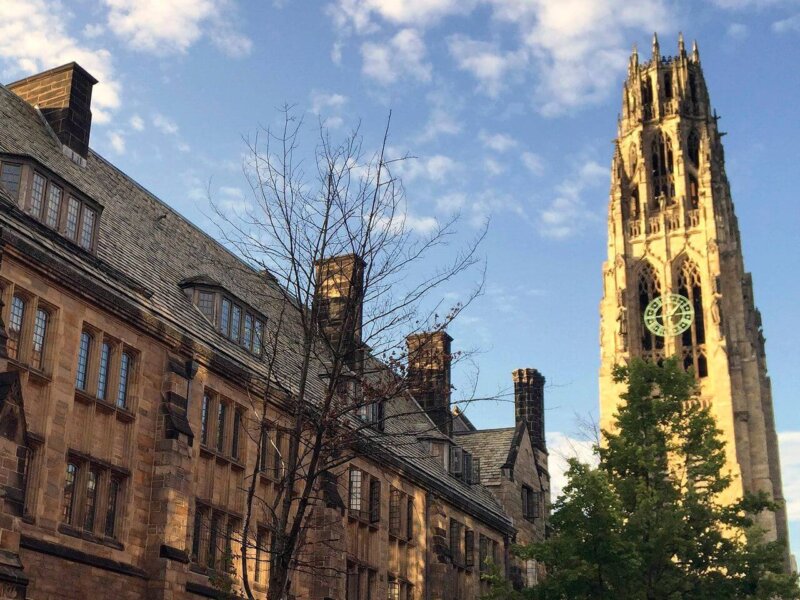
It is currently an unpopular opinion to be supportive of America’s institutions of higher education, especially the prestigious universities like Yale, Harvard, Princeton, Columbia, and others—especially in light of recent events. This is exacerbated by a rightwing media – peddled by individuals with no familiarity of the general tenor and coursework of these universities – that make it appear as if the university as a whole is just an echo chamber of the latest leftwing fad. This is certainly not the Yale I knew and remains unreflective of the general atmosphere of the students who attend these universities.
Anti-intellectualism is a dangerous thing as it encourages souls to fall down the rabbit hole of conspiracy theories and detachment from reality. An educator who interacted with me one time said I should not take any pride in my Yale education and asserted that Yale just indoctrinates all students in anti-Western ideologies that are destroying America. His evidence was that he reads The Daily Wire and sees videos of Yale students on Twitter. Funny, given that I’m a graduate of Yale and that wasn’t what I experienced in classrooms reading St. Ignatius of Antioch, Origen, St. Justin Martyr, St. Irenaeus, St. Cyprian of Carthage, St. John Chrysostom, St. Gregory Nazianzus, St. Athanasius of Alexandria, St. Cyril of Alexandria, St. Augustine, St. Gregory the Great, St. Benedict, St. Anselm of Canterbury, St. Thomas Aquinas, St. Bernard of Clairvaux, St. Peter Lombard, St. Bonaventure, Dante, Hildegard of Bingen, Julian of Norwich, Erasmus, John Calvin, Anne Bradstreet, and Jonathan Edwards, but I’ll digress on this point (yes, I read all of these apparently anti-Western revolutionary zealots).
What has occurred at our institutions of higher education is, for a lack of a better word, compartmentalization. We know from history that institutions like Harvard and Yale were founded by the Puritans as training grounds for seminarians and the Puritan clergy when the colonies were Puritan in nature and character and where these schools served as the heart of the Puritan elite and leadership class (and hatred of these institutions is a time-honored tradition too as even someone like Thomas Jefferson derided Harvard and Yale as “seminaries of despotism”). All who attended received an education in a universal curriculum which once included Hebrew, Latin, and Greek. Over time, as America became more diverse, and as education expanded to include the arts and sciences and not just humanities, these institutions expanded their educational offerings. Now, however, one doesn’t read the church fathers or Protestant reformers as part of the universal educational curriculum except in a religious studies department or at the Divinity School. Yet it is important to note that we who go through the halls of the humanities do not receive an education in the hard sciences that science students receive—no Newton, Kepler, Galileo, or Einstein for us. Is this really a terrible conspiracy theory as some would imply? No.
I have spent most of my educational life in the humanities except for my economics major as an undergraduate (I thought it a brilliant idea to major in three different subjects at my liberal arts university but am forever grateful for that experience which instilled in me an interdisciplinary and multidisciplinary love for learning). The humanities offer substantial benefits in forming the human heart and mind that other disciplines do not. It might shock conservatives to know that even at an admittedly very liberal institution like Yale that Sir Roger Scruton is on the reading list at Yale Divinity School! When I was studying with Roger at the University of Buckingham in the UK, I was in London at the National Art Gallery to meet a fellow philosophy classmate to give him a tour of the mythological and religious paintings in the museum. To my surprise I stumbled across former classmates at Yale who were there. We caught up in the spare time we had. When I told them I was undertaking a research MA in philosophy with Roger Scruton, their eyes filled with stars. “We read him in our aesthetics class!” one student said. “How is it actually studying with him instead of just reading his works?” “Amazing,” I responded, before talking about him and the program I was in and the work I was undertaking.
When I was in my last semester at Yale, Patrick Deneen, then becoming famous with his book Why Liberalism Failed, was part of a conversation with Professor Samuel Moyn—a very progressive and liberal history and law professor, now a chancellor at Yale—over liberal politics, the meaning of conservatism, and the future of America under the Trump Administration. The room that the conversation was happening in was filled from bottom to top. I went with a friend of mine who was a doctoral student in political science whom I got to know because we were both taking a seminar course on Augustine. We watched the entire conversation from the balcony seats. There were no disturbances, no protests, no disruptions.
It is true that the professorial and administrative staff and most low-level sponsored talks were very leftwing. But this isn’t a secret. This reality didn’t dissuade conservative, Republican, and evangelical young men and women from attending Yale. Most remained conservative, Republican, and religious upon graduation. It is equally true most students, coming from the upper echelons of America’s current elite, are also liberal and they constitute the bulk of students at universities like Yale (I remember being astonished when a Connecticut student didn’t know what a pierogi was when talking to him about foods I missed from Cleveland, Ohio—my brother then told me like it is, “that’s because pierogis are poor people food”). As we all know, many of these students self-identify liberal or very liberal. It is equally true that they proclaim radical rhetoric. Most, however, do not participate in the protests that garner media attention when those protests break out. Many of them are all bark and no bite.
The “liberal bias” that everyone thinks exists at these schools exists in the breakout sessions, the sponsored talks, and with the teaching assistants who provide discussion sessions for some classes on supplemental readings not discussed in the standard classroom lecture. In these sessions the additional readings assigned by professors often deal with the latest progressive ideals. After spending a week discussing and analyzing the literary form of the Book of Genesis as part of the normal classroom curriculum, we would then have those discussion sessions where the supplementary readings would be discussed—these would amount to “problematic” interpretations of gender, the sexism of the patriarchs, and so forth. The goal wasn’t to convert all students. Just convert a few. Those students, enamored and enraptured by the new critical theory of hermeneutics, would then become buddies with the professor, apply for a doctorate, get accepted, then become the doctoral candidate under the professor who assigned the supplemental critical readings. That’s more-or-less how the “system” works. It self-perpetuates among a select few as the broad majority of students graduate and leave academia for other pastures in life.
I know what I read at Yale unlike that very ignorant high school educator who said implied I was indoctrinated in anti-American and anti-Western propaganda. I read Sacred Scripture, cover to cover, in two years in the mandatory biblical studies courses. I read Origen’s On First Principles. I read Augustine’s Confessions and City of God, cover to cover, alongside cover to cover readings of De Doctrina Christiana and De Trinitate. I read some of his homilies and letters too. Augustine was featured in multiples classes I took: Early Christianity, Medieval Christianity, and an entire seminar devoted to his life and work taught by a respected Augustine and patristics scholar who was Anglican. I read Dante’s Divine Comedy. I read selection of St. Peter Lombard’s Sentences. I read selections of the Summa Theologiae and Summa Contra Gentiles. I read Erasmus’s Praise of Folly. I read the conciliar documents of Vatican II. I now possess nearly one hundred volumes of the church fathers, sparked by my reading of them at Yale. If you didn’t know better by looking at most of the courses I took, you would think I attended a Catholic university. I also read various selected writings of Jonathan Edwards, the famed Puritan preacher and pastor moving into Reformation history. I got to see the surviving draft of “Sinners in the Hands of an Angry God” at the Yale Library (alongside letters written by George Washington). I elected to write a thesis; it was on Augustine’s political theology. It received the mark of “excellent.”
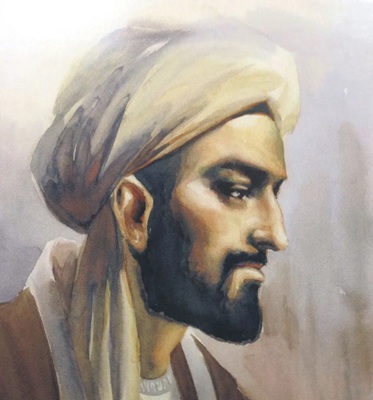
If you craft your graduate program with electives to benefit your personal interests, you might also read Averroes (Ibn Rushd), a tremendously important Islamic philosopher who held sway over the late medieval resurgence of philosophy. As you can tell, one can very much receive nothing short of an exceptional education with some of the world’s most respected scholars in classics, patristics, and Christian theology at Yale. Yes, there are classes that would make some aghast and confused like “Queer Theology” and “Religion and U.S. Empire” taught from a postcolonial perspective. But those classes do not dominate the curriculum and a student may very well go through their program without taking such a course even if they will hear about such courses. These courses are usually one-off and not mandatory (contrary to popular misperception) and stand alongside courses like “History of Early Christianity: Origins and Growth,” “History of Medieval Christianity: Learning, Faith, and Conflict,” “Averroes and Thomas Aquinas,” “Byzantine Art and Architecture,” and “Poetry and Faith” which draw a lot of student attention.
Yale did not merely offer me a quality educational introduction to biblical studies and the history of Christian theology—something that enriched my faith rather than diminished it and provided an important supplement depth to my undergraduate education in economics, history, and philosophy—it also brought me into a social network of intellectuals, academics, and writers that have been instrumental in my own life after graduation. Yale put me into contact with other professors and students around the United States and introduced me to the art of public writing; I got my start writing at The Imaginative Conservative while at Yale, altering essays I had written for class to be more amenable to their publishing standards. It put me on the path of studying with Roger Scruton just before his death. Why would I not be grateful for my time at Yale and the MA I received? Yale developed my now enduring relationship with Augustine, Dante, and symbolist interpretations of art and culture, paving the way for my recreation as an arts and cultural critic and essayist after graduating in 2018 which subsequently led to the publication of two books and a third forthcoming this summer. Yale, therefore, also paved the way for me giving back to others helping them place manuscripts, referring them to journals, magazines, and newspapers, and giving them opportunities to write for VOEGELINVIEW.
Yes, there are temptations at Yale. Everyone knows this. Yes, there is a sterile mechanical spirit of bland homogeneity at Yale when a couple hundred students all shout the same slogan and brandish the same signs during a protest. Everyone knows this. But it’s only the negative that gets published and promoted and not the good that still exists as all of us who walked Yale’s halls know. I know of former classmates who entered the world of classical Christian education—after studying at Yale! Not the kind of school you’d think would produce graduates going into classical Christian education, but they did. And many Yale alumni enter classical Christian education upon graduation, not just a few. Some who were Catholic entered Catholic education, diocesan and independent. Many students involved with the St. Thomas More Center at Yale did this including one who was a good friend of mine when studying there. Others continued on and entered academia; another good friend of mine, a devout Protestant whom I met during orientation, has since taught at Baylor and Houston Baptist University. But you never hear these stories. All you see, like that educator who said I was indoctrinated, are the protest videos and the obnoxious op-eds by very uninformed nineteen-year-old sophomores who think they can solve all the world’s problems in a one night thought session in their dorm.
Most of the people who hold a purely negative view of America’s institutions of higher education never walked in those halls, studied in those classrooms, read the assigned readings, and got to know the myriad of students who attend these institutions. Their hatred stems from an ironic de-personalized outlook, they do not know us who walked those halls and attended those classrooms. I know from personal experience that the most vicious attacks on me, and my education, come from people who have never taken a class at Yale, did not graduate from Yale, and openly admit they want nothing to do with Yale or any institution of higher education. Funny how that works! Worse is when it comes from people involved in education. It is always the ignorant and those at a distance who are the most vicious and critical and they are skeptical of anyone who actually attended the school they despise for whatever reason they have come to despise these institutions of education. It is, however, a perilous danger to spread this mentality across our society.
I also know from personal experience that many of my friends and colleagues who are not graduates of Yale would have enjoyed the readings I was assigned and some of the professors and fellow students I got to know. When chatting with them online over writing, graduate school guidance, and advice for a life in the humanities, they almost always acknowledge their surprised joy when I talk about my educational experience at Yale. If people want to talk about the necessity of gratitude, look no further than this author; and I will always have that gratitude while remaining a polite critic of some of the more nauseating aspects of Yale that bring undue and unfair harm to what remains, and is, a great institution with boundless opportunities for the students who grace its classes. “For God, For Country, and For Yale” is etched on many campus buildings. That’s not a bad motto to live by. And most graduates try to live by that motto.


Related Posts