Confronting Iran and Islamist Expansionism
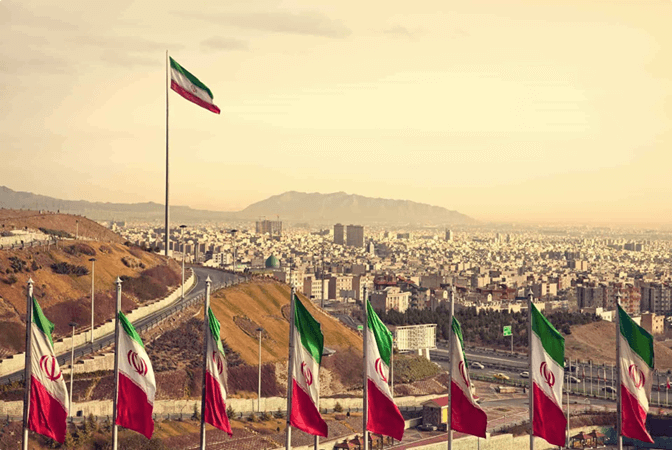
“Islam is communism with God,” as Maxime Rodinson described it; and just as communism was during much of the twentieth century, Islam is currently expanding. What does this imply in practical terms? During the Cold War, James Burnham argued that the prevailing strategy of “containment” was a flawed approach to countering communism and the Free World, led by the United States, ought instead to pursue proactive “roll-back” of the enemy. Of containment, Burnham wrote that “because the policy was purely negative, it had to win every individual engagement in order to work.” Since there was no plan for pushing communism back, any defeat was irreversible – and as Burnham knew, “it is impossible to win every time.” To continue the analogy, the best past example of “roll-back” in Islam’s case would perhaps be the Reconquista which liberated the Iberian Peninsula. In the future, as this article will discuss, a free Iran can perhaps assist in a non-violent Islamic “roll-back.”
One of the great ironies of Iranian history is that Islam, while plagiarizing from Persian culture in countless ways, also serves to keep the yoke of Arab cultural domination on Iran’s shoulders. As Antony Flew remarked, Islam is “best described in a Marxian way as the uniting and justifying ideology of Arab imperialism.” From the outset, Persia suffered gravely under this imperialism.
Defeat at the hands of the Arab invaders shattered Persia for many centuries. As Bernard Lewis has observed, it was Shah Ismail Safavi in the early sixteenth century who “brought all the lands of Iran under a single ruler for the first time since the Arab conquest in the seventh century.” Thus, it took nearly a millennium to repair Iran after its subjugation by the Arabs, which in Islam must be regarded as a positive event. Furthermore, Islamic scholar Ignaz Goldziher has noted that Arabs held a contemptuous view of Persians even before the advent of Islam. Arab poets frequently referred “to Persian life and to Persian manners which they naturally avoided with a genuine Arab haughtiness.” One such wordsmith even chose to insult an opponent by accusing him of leading a Persian lifestyle.
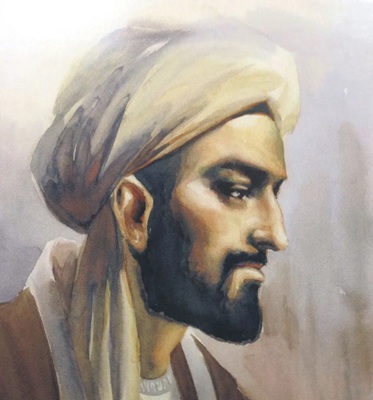
Even so, Islam could hardly have become the world religion it is today without exploiting that very same Iranian culture. The Islamic Golden Age was partially built on the backs of conquered peoples like the Persians (and the Byzantines). Having attained a high standard of civilization before their subjugation, they continued to produce impressive intellectual feats. Serge Trifkovic has argued as much, mentioning that the period was defined by “[t]hree speculative thinkers – notably all three Persians, al-Kindi, al-Farabi, and Avicenna.” Al-Farabi, Trifkovic maintains, was also a religious skeptic who sought to recover philosophy’s independence from theology.
Still, Islam continues to take credit for the grandeur of Iranian culture. Nor is this totally lost on that culture’s heirs. “Iranians rightly believe,” observes former intelligence officer Steven R. Ward, “that the high civilization of medieval Islam flowed largely from Persia’s influence.”
The great irony in all this is that, though independent, Iran is still stuck sacrificing its own national interests to advance a Pan-Islamic ideology born from their Arab conquerors. Hossein Salami, commander-in-chief of the Iranian Revolutionary Guard Corps, has essentially admitted as much. In 2014, during his time as deputy commander, Salami declared:
How is it that our slogans and goals are identical to the slogans and causes of the Palestinians? Why do we strive to become martyrs and risk our lives for the Palestinian cause? The answer is that the religion of Islam has designated this for us […] so that we, here, can muster all our energies in order to annihilate the Zionist entity, more than 1,400 kilometers away.
As Salami seems to have unabashedly acknowledged, the regime in Tehran believes that “all” Iran’s “energies” as well as the “lives” of its people are to be thrown into the meatgrinder of jihad, to battle a state “more than 1,400 kilometers away,” simply because “the religion of Islam” mandates it. Unlike the country’s theocratic leadership, many Iranians are fed up with the slavish subordination of their foreign policy to the dictates of Islam, and have taken to protesting the elevation of Palestinian jihad above their own well-being.
President Ebrahim Raisi’s demise on May 19 has brought the Iranian public’s hatred of the regime to the fore once again. Even before his death was confirmed, celebratory fireworks were set off within Iran, and Persian social media were filled with jubilation. Currently, analysts assert that the Islamic Republic’s international-relations posture is unlikely to change because of Raisi’s departure. However, the event may spark infighting among government bigwigs. It also underscores, and exacerbates, the theocracy’s shortage of able and reliable leaders. As one commentator puts it, “the regime is down to a small core. Like other revolutions, Iran’s has eaten its own.” Meanwhile, political scientist William Spaniel has suggested that the presidential election which will have to be conducted within 50 days of Raisi’s exit could trigger substantial unrest, as a previous election did in 2009. All this is not to encourage naïve hopes of the dictatorship’s impending collapse. However, it is to say that events surrounding Raisi’s abrupt end have showcased the ruling class’s fragility.
Theocracy has crippled Islam in Iran, perhaps decisively. This is a second great irony of Iranian history. Islamic practice has declined dramatically since the revolution of 1979, and in a 2020 survey, only 40% of Iranians identified themselves as Muslims. Iranian-American journalist Shay Khatiri sees ample anecdotal evidence to support this finding, describing “a population increasingly embracing the non-religious components of its national heritage.” Many Iranians who have left Iran have abandoned their Islamic faith under the freedom of religion offered by western countries.
Perhaps there will be a third great irony, and Iran, once abused as the first major stepping stone in Islam’s advancement, will lead the way to its abolition. In The God That Failed, Richard Crossman conceded some truth to the joke that “the final battle would be between the Communists and the ex-Communists.” Only close contact with communism, he wrote, fully equipped one to “understand the values of Western Democracy.” One hopes that Iranians, once free, will be as outspoken about the horrors of Islam as Eastern Europeans have been about those of communism.
Iran’s de-Islamicization could cast ripples throughout the Muslim world. At present, the country is home to over 87 million people. An estimated 16 million of those, mostly Azeris, speak Turkic languages. That is more than the whole population of Azerbaijan and equivalent to nearly a fifth of that of Turkey. Bearing in mind that Turkish and Azeri are fairly similar and many speakers are versed in both, this link could carry the anti-Islamic mood into Turkic regions.
Afghanistan’s lingua franca is Dari, spoken by 77% of its population. Dari is only minimally different from the Farsi spoken by Iranians. Tajik, spoken by the nearly ten million inhabitants of Tajikistan, is also nearly identical to Farsi. If linguistic kinship is any indication, cultural influences should spread quite easily from Iran into the wider Middle East and Central Asia. What happens in Iran might not be confined to just Iran.
Further, a free Iran would open a logistical gateway to Afghanistan. It has historically been difficult for foreign resources to enter Afghanistan and assist in the struggle against jihad. Access to the country has tended to depend on cooperation by the Pakistani government. Historian Michael Rubin has blamed this dependency for the rise of the Afghan mujahideen during the 1980s. Subsequently, the same problem hamstrung the Western fight against the Taliban. “U.S. policy largely prevented cooperating with the alternate route through the Iranian port of Chahbahar,” writes Rubin, so Pakistan controlled access to the theater of war “and charged a hefty price.”
There is surprisingly ample historical precedent for Iran as a balancing player in the Middle East which curtailed Islamic expansionism. Lewis cites Oghier Ghiselin de Busbecq, a sixteenth-century Austrian ambassador to the Ottoman Empire, as having warned that only the Empire’s need to defend itself from Persia prevented the Ottomans from overrunning Europe. Although Busbecq was certain that the Persians would soon be defeated, freeing up Turkish forces for the assault he feared, history thankfully took a different course. “The Ottomans and the Persians continued,” explains Lewis, “to fight each other until the nineteenth century, by which time they no longer constituted a threat to anyone but their own subjects.” In the meantime, though nothing much came of it, there were several suggestions that Christian Europe might join forces with Iran against the Ottoman foe – including one by a Persian Shah in 1523.
More recently, according to Ward, the United States’ partnership with Iran “seemed to be paying off” shortly before the 1979 revolution. In 1978, Iran possessed a more sizeable military than any other Middle Eastern country and was, in some respects, a leader in military technology. The country was becoming a powerful and salutary actor in the Middle East. After the revolution, much of that military might was lost to the ensuing war with Iraq, which the theocrats bungled and prevented Iran from winning – another in the long succession of calamities which Islam has brought Persia. Still, Iran possesses certain built-in advantages of geography which are conducive to its international power. For Ward, Iran is “a fortress” surrounded by mountains and other natural barriers and even partially shielded from enemy aviation by airborne dust.
Currently, Iran’s dictatorship stands behind terrorism across the Islamic world, its tentacles extending even into Sudan. Tehran also exercises substantial soft power globally through its propaganda and influence operations, including on behalf of Hamas. A free Iran should preserve such capabilities for opinion-making abroad. It could finally put them to work in its national interest, which will necessarily be anti-Islamic.
Iran’s de-Islamicization exposes as hollow the pessimism long espoused by even the most knowledgeable experts on the Muslim world. In 2002, historian Daniel Pipes argued that America should approach Islamism by containing it militarily and elevating Muslim reformers. Pipes used this perspective to argue against those who wanted a tougher policy. Islam is here to stay, his argument went, so all we can do is to fight extremists and support moderates. Twenty years on, that judgment seems overly cautious. By helping to bring down the tyranny in Tehran, and potentially collaborating with a free Iran, we may be able to precipitate the de-Islamicization of much of the Muslim world or finally achieve that moderation long dreamt of by western experts and scholars.
Even the mere fact of Iran’s official exit from the ranks of Muslim-majority countries would no doubt compel the Muslim world to a major re-evaluation of its role in history. Mark Durie has aptly written that “Islamic doctrine promises falah,” meaning “success,” to its adherents. This is even mentioned in “the daily call to prayer,” which contains the appeal “come to success, come to success.” This “success,” he adds, is mundane as well as metaphysical, and includes “conquest and rule.” Consequently, the pushback which Islamic expansion has received since about 1500 poses “a profound spiritual challenge” to the religion. The resultant identity crisis has spawned the Islamic radicalism of the twentieth century, which continues to the present day. If this solution of doubling down is itself discredited – a development Durie believes has begun in places like Iran – Muslims may find it necessary to reject Islam itself. Durie’s article was published a decade ago and the breaking point he foresaw does not seem to have occurred yet, but neither have we seen anything as monumental as the liberation of Iran during the intervening years.
Now more than ever, a hard line against Iran is crucial. Imagine an American president who would confront the regime in Tehran energetically enough to precipitate its collapse. That could kick off a great contraction of Islam throughout the region, if not the world. It is high time to strike such a blow. By 2050, both North Macedonia and Bosnia-Herzegovina are projected to have Muslim majorities. Both are headed for EU membership, and the former is a NATO member state. Nigeria might also become a Muslim-majority country. The time for decisive action has come. In light of the United States’ impending presidential election, the urgency of electing an Iran hawk becomes all the more apparent.
We find ourselves in a watershed moment. Iran’s regime could be the first of many dominoes to fall, and the Free World must not be afraid to give it a good, hard, push.


Related Posts