Iran After the War
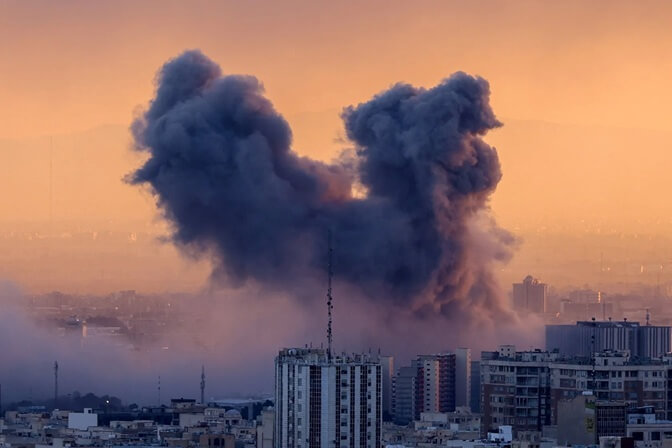
The war has come. The war will eventually end. But what kind of place will Iran be after the war ends is the question with which we should all be concerned.
Living in the age of social media is both exciting and nauseating. Exciting because of the new opportunities it portends to those courageous to dwell in its possibilities; nauseating because of the putridity often spewed that gets the most views. Let’s take pre-revolution Iran on X and TikTok. The anti-Revolution posts, mostly from Western accounts, would have you believe Iran was a feminist, quasi-western, and modern utopia. Videos and photos of men dressed like Europeans and young women in skirts flood the eyes of viewers.
While true, these posts miss the fact that the same women presented as free and liberated in the monarchy were also among the most fervent supporters of the revolution in 1979 only to be betrayed once the Mullahs took power and Ayatollah Khomeini brought about the Shia counterrevolution that dominates even into the waning hours of today’s Iran. The Iran before 1979 was no paradise. The Iran today is no paradise. But maybe the Iran of tomorrow, while not becoming a paradise, can be a freer, more prosperous, more open society. That’s the hope.
Hope.
Hope is a funny word. We live on hope even as the world oftentimes doesn’t feel hopeful. The doomsayers constantly preach the gathering of darkness and the apocalyptic struggle between good and evil. Count me old fashioned here: Good and Evil do exist and they do clash.
The war is here and while we can work and pray for the coming of peace, we should equally work and pray for a new Iran too. Returning to the status-quo antebellum would be a step back for everyone involved in the war, especially those within Iran who have been hoping for changes—incremental or structurally and substantial—since the reactionary regime of the Mullahs swept itself into power many decades ago.
Americans are a fickle people because they are hopeful. We can be hopeful for the Iranians, the countless multitude who live in Europe and America because they had fled the oppression and brutality of the revolutionary clerical regime and its not-so secret police. Their brief, but powerful, celebrations should be seared into the eyes and minds of all of us who really do take our liberty, equality, and opportunity for granted. Yet the hope of Americans to still see the best-case scenario despite two decades of failure should remain seared into our eyes and minds as well. Without hope that what we stand for and what we do will result in freer and better societies would turn us all into cynical curmudgeons.
Maybe that is the realist disposition that is true. But hope is more powerful than cynicism. That’s why we can remain hopeful that in the aftermath of the war, the destruction of the Iranian regime’s nuclear capabilities, and the disillusionment of the clerical leadership caste currently ruling the country, a new, free, and independent Iran can arise—one that is also free and independent of American and Israeli influence over it. Perhaps a strategic alliance can commence, but that would have to be a course a new Iran charts for itself.
When I was an undergraduate, studying a lot of Islamic history and the history of the modern Middle East with a fantastic professor who was also my history advisor, the books we read and the discussions we had really formed me despite the sentiment of failure having withdrawn from Iraq and the quagmire in Afghanistan which spectacularly imploded in 2021. The classroom critiques of western imperialism as we read Edward Said were par for the course and good thought-opening confrontations for someone who grew up during the hightide of the Global War on Terror. Yet other books and discussions presenting the dissidents from within and the hope for a better future were also powerful and empathetic moments. Reading Khaled Hosseini (though Afghan) and reading Azar Nafisi keep me hopeful.
Yes, the war will end. All wars do. What comes after should be our concern. An Iran energized for the future, led by a new generation that has seen through the lies and brutality of the current regime, offering greater opportunities for women, and reviving its own proud traditions should be what we’re also for. We should hope for peace. We should also hope a new, better, and freer Iran too.


Related Posts