Listening to the Capucon Brothers
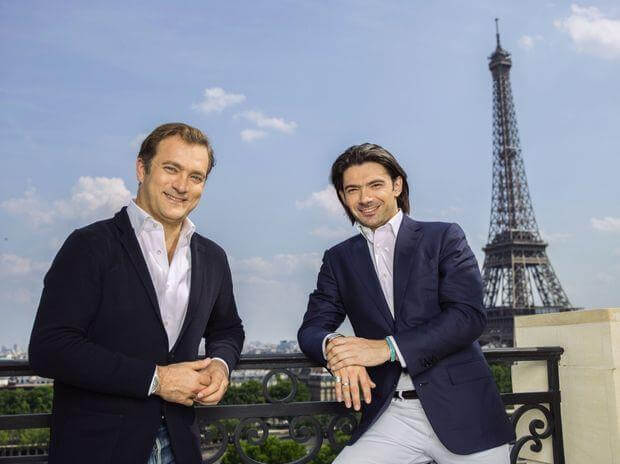
A quick Google search shows that the odds of being a musical prodigy are somewhere between 1 in 100,000 and 1 in 1,000,000. In other words, low. But prodigy siblings? There may not be odds slim enough to quantify that kind of chance. After all, there have been only a few sets of such siblings throughout history. Felix and Fanny Mendelssohn, for instance, or the Jussen brothers. The rarity of such siblings makes the singular talent and success of Renaud and Gautier Capucon all the more impressive. Renaud, the older brother, is among the best violinists in the world; his younger brother Gautier can make the same claim as a cellist.
Born in Chambery, France and educated at the Paris Conservatoire, the Capucon brothers each managed to carve out prolific international soloist careers by the age of twenty. As if that wasn’t enough, they record regularly and make frequent guest appearances at the world’s best music festivals. And both of them somehow find time to teach, give masterclasses, and run foundations dedicated to the development of young musicians. One could be forgiven for wondering if the Capucon brothers somehow have access to more than twenty-four hours each day. And in keeping with this tremendous rate of activity, Gautier Capucon has released a new album on the Erato label: the Elgar and Walton cello concertos with the London Symphony Orchestra (LSO) conducted by Antonio Pappano.
Is the Elgar concerto the most famous piece ever written for cello? If not, it can’t be far off. Few pieces have been more definitive for the English musical landscape. Capucon says that the Elgar concerto is about “deep emotions” and “passion.” I would have said the concerto is about nostalgia and love of home, but either way, Capucon’s playing is brilliant. He is at his best with lyrical lines (as is his brother), which soar or hesitate or surge as the music requires. There is a unique operatic quality to Capucon’s sound in these moments (again, like his brother) that is part-rapier, part-rose-petal, with a touch of glamor thrown in for good measure. And his natural ease with the lyrical passages is matched by his crystalline presentation of the running passages. You can almost hear the bite of the bow on the string in the split second before the sound appears.
As for the Walton, I will admit to having a certain lukewarm feeling toward the concerto. It’s always been a bit too piecemeal, even disjointed, for my tastes. And coming as it does after the intensity and depth of the Elgar, a piece that seems almost tailor-made for a cellist of Capucon’s disposition, the Walton concerto falls somewhat short here.
This is not to say that Capucon’s playing is lacking. Not at all. He easily captures the dreamy, ethereal nature of the piece and throws off the two cadenzas (devilishly hard cadenzas, both of them) with poise and bravado. His performance of the brisk second movement brings the same precision, the same sticky clarity, as the fast passages of the Elgar concerto. Perhaps my only wish would have been to hear fewer slides in the Walton concerto. In other words: a bit more 1950s England and a bit less 1830s Italy. But that is a minor point, one that is easily overshadowed by Capucon’s stupendous talent and maturity of his musical expression. In all, the album presents a generational talent performing two monumental cello concertos with a world-class orchestra. What more could we ask for?


Related Posts