Making Sense of our Political Uncertainty
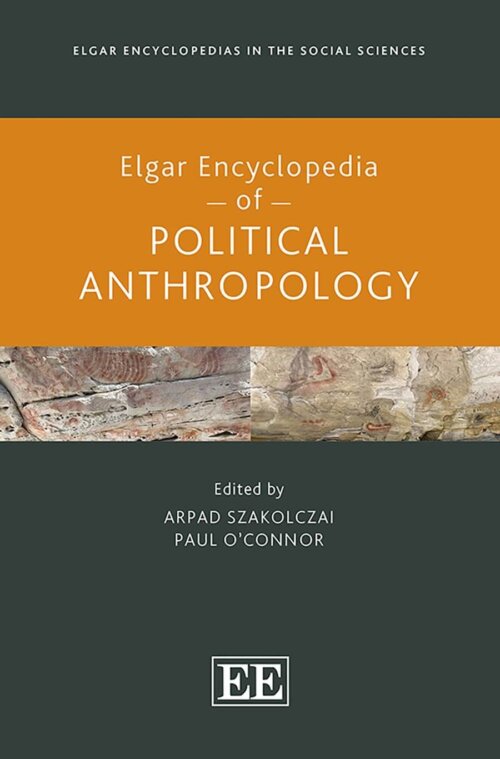
For anyone working to make sense of the uncertainty and disorientation bound up in this current global political moment, the Elgar Encyclopedia of Political Anthropology, edited by Árpád Szakolczai and Paul O’Connor, is an essential resource. Political anthropological thought offers vital insights into our current predicament by innovating pathways of understanding all modernity, and this ambitious volume delivers centuries of ideas by the field’s most influential thinkers, interpreted by the vanguard scholars of today. The editors begin by clarifying that political anthropology as understood in the Encyclopedia is not a subfield of anthropology but a way of exploring the anthropological foundations of politics, or the “pre-political” dimensions of social being. This approach challenges the prevailing methodologies of contemporary social and political science, particularly their reliance on rational choice theory, technocratic governance, and linear models of historical progress. These paradigms, the editors argue, reflect modernity’s own ideological constructs. When such frameworks are projected backward onto society and human experience, they obscure the symbolic, affective, sacred, extra-rational, highly emotional, and often absurd dimensions of political life. As they put it, “social enquiry becomes trapped in a hallucinogenic bubble of the near-contemporary” (1) rendering vast swathes of human experience invisible. This Encyclopedia offers what is sure to become a treasured alternative: an understanding of political life as inseparable from what it means to be human and a space shaped by memory, myth, ritual, and the search for meaning.
A distinguishing aspect of the Encyclopedia is its unique orientation. While the editors and scholars involved offer bold new insights, they crucially also highlight historically marginalized thinkers and ideas that for myriad reasons failed to make their way into mainstream scholarship (expanded below). Moreover, the volume eschews rationalist approaches, providing instead a set of invaluable tools – intellectual, symbolic, genealogical, literary – for navigating our contemporary human-political condition. In an age marked by epistemic inequality, ecological anxiety, and deep political fragmentation, the volume offers a rare combination of historical seriousness and conceptual openness. It is rigorous but accessible, inviting readers on a journey to think with the past, creatively, even nostalgically, but with utmost purpose and intention, comforting through intellectual companionship and shared inquiry across time and grounded in the belief that understanding remains possible even when resolution seems fleeting. This approach underscores political anthropology’s unique positionality as a framework for interpreting and coping with the structural disorientation of modern life.
Political anthropology emerged in the nineteenth century as an inquiry into the dynamics of stateless societies. In many early cases, the field was directly entangled with colonial statecraft: ethnographic studies often served the interests of imperial administrators by documenting political structures and cultural systems in ways that could be used to classify and control colonized populations, shaping and constraining the field with racial hierarchies and assumptions of European civilizational superiority. By the 1960s, however, political anthropology began to reorient itself, turning attention toward how states, institutions, and political cultures are experienced and contested by the people living under them. What followed was a shift from structural descriptions of stateless governance systems toward ethnographically grounded studies of writ large political life. Yet even this recalibration remained partially captive to modernist categories and disciplinary boundaries that, over time, have proven increasingly inadequate to describe the turbulence and symbolic, systemic complexity of contemporary political experience.
Since the late 1990s, political anthropology has been infused with renewed energy through the leadership of four scholars—Ágnes Horváth, Árpád Szakolczai, Bjørn Thomassen, and Harald Wydra—who together established the journal International Political Anthropology (IPA); each using extensively ideas from Eric Voegelin. Now in its seventeenth year of publication, IPA has helped define a new orientation for the field that resists disciplinary reduction, reaching instead across sociology, political theory, anthropology, history, law, archaeology, mythology, and the arts. The IPA’s founding was not buttressed by institutions or funders but animated by a conviction that modern political analysis had become dislocated from its human foundations. Alongside the IPA and numerous monographs, this same group of public intellectuals and their ever-expanding community has also produced the foundational publications Breaking Boundaries (2015, about liminality), From Anthropology to Social Theory (2019, a detailed discussion of ‘maverick’ anthropologists), the Elgar Handbook of Political Anthropology (2019), and Routledge’s Contemporary Liminality Series. The Elgar Encyclopedia is the most ambitious articulation of this intellectual project to date.
The Encyclopedia is organized around seven axes that define this contemporary interpretation of political anthropology. The first is genealogy, understood in the Nietzschean and Foucauldian sense, but also through Weberian historical sociology, as followed among others by Norbert Elias, Franz Borkenau, and Eric Voegelin (in his early works). Here the focus is on the long arcs of political development and the embedded structures that shape social and symbolic orders. The second axis is social or cultural anthropology, though approached through the work of intellectual outsiders and disciplinary mavericks – figures who emphasized the ritual, affective, and experiential dimensions of human life and the transmission of cultural meaning through embodied practice. The third is classical political philosophy, drawing not only on Plato and Aristotle, but also on pre-Socratic thought, Augustine and Aquinas, and (again) focusing on maverick philosophers such as Pascal, Vico, Kierkegaard, and Nietzsche, as well as the hermeneutic tradition. Here the perspective offered by Eric Voegelin’s later works was much relied upon. (Many of the Encyclopedia’s contributors also worked on or used Voegelin’s writings, for example, David Walsh, Giuliana Parotto, and John von Heyking, to name only a few.) The fourth axis is archaeology, with special attention to the longue durée and symbolic forms that predate written history, particularly cave art and burial ritual. The fifth axis is comparative mythology, which is treated as a central way of understanding the political through symbolic figures such as the trickster. The sixth axis is the history of art and literature, including the political and anthropological insights of major novelists. The seventh axis is theology, important both for classical philosophy and philosophical hermeneutics, and even modern ‘genealogists’ like Weber or Voegelin. The Encyclopedia employs these axes as deeply entangled and overlapping ways of grasping the symbolic infrastructure of political life.
The structure of the volume reflects these interrelationships. It contains 62 biographical entries on thinkers from across these axes, ranging from Aristotle to Agamben, Weber to Warburg, Mauss to Mumford, Vico to van Gennep. Political anthropology begins with thinkers, and understanding grows from journeying alongside them. Fortunately for readers, this rather magical journey is guided by the current generation of pioneers in political anthropology. It all amounts to what Evan Boyle describes in his entry on sustainability as “thinking through authors” (130). The second half of the Encyclopedia presents 74 topical entries, covering core political themes including nationalism, revolutions, charis, biopolitics, democracy, and globalization, while highlighting topics neglected in political study that remain central to lived experience, such as memory, ritual, secrecy, theatricalization, pilgrimage, magic, beauty, and home. While some classic political anthropological topics are embedded within biographical entries – for example ritual in van Gennep and Turner, gift relations in Mauss, sacrifice in Girard – each topical entry is also cross-referenced and linked to further reading. The citations are intentionally sparse, but the references suggested are rich and carefully chosen.
The Encyclopedia’s emphasis on an alternative intellectual lineage is one of its defining contributions. Many of the most central concepts in political anthropology – liminality, gift exchange, schismogenesis, imitation, participation – were not developed within mainstream academic departments. They emerged from the work of scholars like Arnold van Gennep, Marcel Mauss, Paul Radin, Gregory Bateson, Lucien Lévy-Bruhl, René Girard, and Victor Turner, among others. These were figures who often labored on the margins of their disciplines or were excluded entirely. Their concepts have endured because they capture something essential about how human beings create meaning, especially under conditions of rupture and uncertainty. The editors note that among these thinkers, only Turner held a stable position in a conventional anthropology department, and yet their ideas now structure the field in foundational ways. In recognising this, the Encyclopedia does more than reclaim their contributions; it argues for the necessity of thinking from the margins, particularly in an age when mainstream academic discourse often fails to address the depth of contemporary disorder.
A striking feature of the Encyclopedia is its inclusion of major novelists, doubtless inspired by Voegelin. Dostoevsky, Mann, Broch, Huxley, Orwell, and Camus appear alongside philosophers and theorists, reflecting the editors’ belief that literature offers a parallel and often deeper form of political insight. Voegelin treated novelists and poets as vital diagnosticians of modernity because they could register the collective spiritual disintegration resulting from political disorder and reflect this pathology back to readers, who are also often those living through the political maelstrom. As the editors note, “no book of moral philosophy can produce the cathartic effect of a novel by Dickens” (3). In this way, political anthropology accounts for the forms through which people actually live, suffer, and interpret their worlds. The increasing theatricalization of modern society and the expansion of performance into politics, media, and even memory and identity, as well as the nearly post-literate technologically driven world in which we now live, makes this dimension all the more relevant and indeed urgent. This point is enhanced by Tim Ingold’s postscript to the Encyclopedia, For a new humanism, which offers a powerful alternative to both the techno-utopianism of posthumanism and the exhausted legacy of Enlightenment universalism, repositioning the human as a “beating heart” (710) open to forms of political solidarity and shared responsibility for the natural world.
The Encyclopedia’s range is impressive, but its coherence is allowed to emerge gradually, through subtle repetition, cross-referencing, and resonance. The volume does not claim to be exhaustive, and indeed the editors are explicit about the entries they hoped to include but could not: Mary Douglas, Georges Dumézil, Mircea Eliade, Jan Patočka, Frances Yates, and several topical themes such as empathy, empire, homelessness, and transformation. These omissions do not detract from the volume’s value, but they do point to the richness of the field and the need for further expansion. One could easily imagine a second and third volume, particularly incorporating more from the Contemporary Liminality Series, which has produced outstanding work on post-truth, wonder, the anthropology of evil, foolery, and permanent liminality, among other compelling topics.
Like the discipline itself, the Elgar Encyclopedia of Political Anthropology represents scholarship that society can actually use to begin forging a more socially equitable and regenerative future. It is a reference piece, methodological statement, and conceptual map, gathering a constellation of pioneering thinkers and themes, some historically overlooked or misread, and bringing them into conversation with the often threatening and dehumanizing challenges of modernity. In doing all this, it provides a profoundly interesting way of studying the political. It also provides a path of return, a way of recovering our bearings and basic humanity in a world increasingly saturated with speed, spectacle, and disembodied forms of knowing. Against the seeming unreality of the present, it restores to us many real and true things.
Elgar Encyclopedia of Political Anthropology
Edited by Arpad Szakolczai and Paul O’Connor
Edward Elgar Publishing, 2025; 734pp


Related Posts