No Progress in Philosophy: Plato vs Positivism
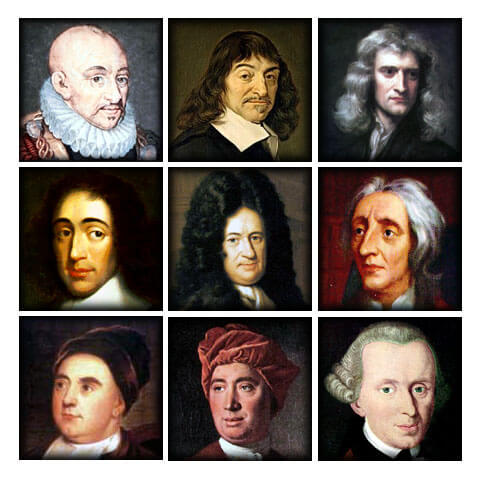
Given the paucity of knowledge we have about the Pre-Socratics, Western philosophy as we know it reached its pinnacle with Plato and has since largely been engaged in backward steps, artificially restricting the possible sources of knowledge and objects of contemplation, a jettisoning of the spiritual and transcendent, returns to naturalism already present at the time of Plato, and dead ends. We can learn from poetry, plays, film, TV, fiction, non-fiction, meditation, prayer, music, art, architecture, science, ordinary life experiences, spiritual epiphanies, conversation with friends and many other things. Innovation in philosophy has tended to be a repetition, distortion, a forgetting, and suppression of these things. Examples include Cartesian philosophy, Stoicism, empiricism, Kantianism, analytic philosophy, conceptual analysis, and post-modernism. None of these things represent “progress.” Stoicism, for instance, is Platonism on a budget; a subset of Platonic philosophy and entirely subsumed by it, but with a worse concept of God. Arguments against some of these other missteps will be forthcoming.
To dispense immediately with one of them, the innovation of empiricism is to restrict the gathering of knowledge to experience, which would be fine if there is a very expansive definition of experience, including the contents of one’s own mind, and even religious experience, but instead empiricists reduce experience to “sense data.” This is unhelpful. The phrase “sense data” suggests some kind of jumble of atoms of experience that our minds then assemble. At this point in time, the idea of perceptual inputs existing prior to conceptual interpretation has been roundly rejected by most. A richer and better alternative would be consciousness, relative to the environment, as a foregrounding of aspects of an inchoate background relative to purpose, mood, embodiment, and language. That matches our actual experience better than atomic inputs. No one would deny that we can learn from reading a book, but the idea of “sense data” seems strictly inapplicable to this activity. Ink patterns are the sensory input, but it is the meanings of words that are relevant. We communicate with friends using our senses but the source of the knowledge is the mind and thoughts of the friend not the medium used to communicate. The reductionism found in empiricism is not a discovery of a new means of gaining knowledge but an unhelpful restriction and focus on this notion of “sense data:” a term presumably selected to sound scientific. It is easy to see parallels with modern nonsense about brains being information processing devices and other pseudo-scientific terminology.
Analytic naturalistic philosophy, we will see, is not a fruitful innovation and does not represent progress. Its modus operandi in practice, trying to find naturalistic explanations for phenomena, was there at the time of Plato. It does not even try to address topics that do not lend themselves easily to analysis from this approach. Something like love and marriage, key factors in human existence, might as well not exist for all the attention paid to them by analytic philosophers. A fellow student in graduate school noted at the time that no explanation about the rise of analytic philosophy, nor philosophical defense of it, was ever offered in any courses. It was to be taken for granted as the correct approach of any right-minded thinker. As C. S. Lewis pointed out in The Screwtape Letters, defending anything by argument that one wants to be assumed is a mistake because it brings up the notion that a defense or argument is even necessary and provokes the idea in the interlocutor that legitimate alternatives might exist.
Both empiricism and analytic philosophy, assuming they can be meaningfully distinguished, seek to model knowledge on the natural sciences and impoverish it in the process.
There can be progress in technical matters such as logic, mathematics, game theory, etc., but since philosophy is the love of wisdom, these matters do not count as progress in philosophy per se. A Plato schooled in mathematicised logic or game theory would not be a wiser Plato.
What is so great about Plato?
There are several preconditions for a fecund philosophy which Plato provides. One is a Creator God who ensures that his creation is good. This is provided by Plato’s notion of The Form of the Good. Another is a Great Chain of Being hierarchy; body, mind, soul, and spirit, coinciding with Buddhism, which discovers these things through introspection. Plato’s Allegory of the Cave has the philosopher undertake an interior journey where each level is both within him and part of the structure of the cosmos. A cosmos is a concept of the universe as an ordered whole. It offers the hope that reality is intelligible, unlike Chaos. All these things provide the space in which the inquiring mind can roam instead of the cramped closet of analytic philosophy.
Plato writes the Myth of Er where Er, a soldier, is about to be cremated when he returns to consciousness and recounts a near death experience, that includes a place of judgment. The end of the Gorgias also gives descriptions of the fates of moral monsters, and the good and just, being sent to different destinations upon dying. Gregory Bateson notes that “mere purposive rationality unaided by such phenomena as art, religion, dream and the like, is necessarily pathogenic and destructive of life.” The dialogues are drama, not treatises. They are art and they contain myths and references to the gods. The Phaedrus and The Symposium are richly imaginative, expansive and religious. In the latter, love is looked at from multiple angles, some of them even self-serving assessments from flawed speakers that yet contain interesting insights and points of view.
When Socrates asks for conceptual definitions of justice, beauty or courage, rejecting mere examples of them, he shows that his interlocutors cannot provide them. An analytic philosopher might be tempted to conclude that these things are therefore incoherent and muddled. And, in practice, beauty and courage at least, do not feature particularly prominently in their examinations. The lesson that might be derived instead is that our understanding of these things is intuitive, partial, and experienced without amounting to articulated “knowledge” per se. Beauty and love are central to the human enterprise. They might be somewhat conceptually elusive, but we respond to, and yearn for them nonetheless.
Under Plato’s metaphysical scheme, being morally virtuous makes sense. Goodness permeates creation. Being good puts one in harmony with the nature of the cosmos. Moderation, courage, generosity and justice will provide the necessary ordering of the soul and action to flourish in such a world. Only a man with sophrosyne, self-control, is free. The libertine is the slave of his passions, chasing random desires that once fulfilled offer nothing of substance. This view of the nature of the cosmos offers the hope that the random distribution of rewards and punishments on earth will be rectified by a final reckoning with a postulated afterlife.
Socrates’ Sophist interlocutors, by contrast, picture an amoral nature where the strong dominate the weak. They contrast this physis with the nomos; the conventionality and artificiality of human laws. The strong man simply seizes what he wishes, shrugs off all restraint, and exercises tyranny and personal freedom while subjugating the many. Hedonism is to be his ethos. This view suggests a godless naturalistic picture of things. Cynical in the extreme; torture, exile and murder are extolled as tremendous abilities that every man ought to admit he desires. Laws, says Callicles, are there to protect the weak. The strong do not need them.
Modern naturalism, inspired by the success of science, ends up in a similar place to the Sophists. Science-loving thinkers repeatedly claim that we live in a godless indifferent universe where human existence is irrelevant, let alone of some crucial importance. There are no souls. There is no afterlife and consequently no day of judgment. There is no ultimate justice for the good and evil. Morality is a merely useful fiction. Matter is all that matters. Mind is treated as an epiphenomenon of the brain. Determinism is widely believed to be true. All this trends in the direction of nihilism. Philosophers seeking to emulate science even resurrected the hedonism found in Plato’s depiction of the Sophists, making it central to utilitarianism, one of the most popular philosophical inventions ever created and consequently, one of its greatest errors.
One can dispute some aspects of the Platonic vision. For instance, Plato argued that one could have no knowledge of something that is constantly changing, but Aristotle provides a system of alteration with his potential and actual forms, that is nonetheless intelligible. But, the richness and rewarding nature of Plato’s dialogues provide evidence of the expansive vitality of his vision. A similar picture will be necessary for all prospective philosophers who do not want to end the way of the naturalists; with its logic tending towards cynicism and nihilism – two ever-present temptations of the human condition.
Before philosophy there was mythology and poetry. If poetry is there to adjust one’s stance on reality and to provide a feeling-inflected insight, then good philosophy is poetry through other means – usually, but not always, employing premises supporting conclusions. Whitehead wrote, “Philosophy is the endeavor to find a conventional phraseology for the vivid suggestiveness of a poem.”
Both Plato and Aristotle thought that philosophy, the love of wisdom, begins and ends with wonder. So, neither had much truck with debunking modes of thought – though God knows Plato had plenty to feel cynical about with the execution of Socrates, Athenian overreach with the Delian League, the defeat of Athens by Sparta, Alcibiades’ betrayal of first the Athenians, and then the Spartans, among other things.
Modern science often stops with description, and defines things operationally; a force is that which does such and such. Traditional philosophy is speculative and wants to know “why?” The answer to “why get up in the morning” can be provisional, but arguably some kind of answer is needed.
Plato is the father of Western philosophy, though Aristotle made some worthwhile supplementary additions to Platonic philosophy, such as ideas about how to encourage children to be virtuous. Aristotle’s arguments against the possibility of the kind of moral theory that is supposed to give instructions for how to behave in dilemmas, and his doctrine not to expect more precision from a subject matter than is appropriate to it, are major contributions to thought. There is no reason to think that Plato would object to these ideas; quite the opposite. They are not innovations, just supplementary notions. However, Aristotle’s original idea of a purely “logical necessity” God who is not the creator, who F. M. Cornford correctly described as unlovable and an inadequate philosopher’s god, and his notion of moral luck are major deficiencies that should be rejected.
Plato was familiar with naturalism and gave sound reasons for rejecting it. Aquinas anticipated the key elements of Cartesian philosophy and, using, in part, Aristotelian philosophy, showed that they were misguided, rather than representing worthwhile innovations. René Descartes had wanted to restart philosophy ex nihilo on certain foundations. Nietzsche, too, had revolutionary ambitions with planned book titles like The Revaluation of Values. But, for the transvaluation of values, he reiterated sophistic arguments from Platonic dialogues, but omitted Socrates’ critique of the idea of “Master” (im)morality and the notion of the happy tyrant. Defenders of Nietzsche might argue that he was simply bracketing Socrates’ response to see how the arguments look without his interventions. The result was, arguably, not good at all.
Positivism and Descartes as putative major alternatives to Plato
The two major challenges to Plato and Neo-Platonism in the modern world have been positivism, and Descartes-inspired aspirations to a false certainty, and an unobtainable precision, the kind Aristotle warned against. Some relatively recent thinkers like to think that knowledge of science has given them a big advantage over earlier philosophers. Scientism is the derisive name given to a religious-like attitude to science with its derogation of all the aspects of life not covered by science, or touched on exceedingly inadequately; love, beauty, value, emotion, purpose, meaning, morality, God, the soul, and consciousness. Think about the contrast between what you know about any given person and what “science” might have to say about him or her. When we discover some lost civilization, it is all very well to know about its members’ diets, etc., but such things leave out what it was actually like to live in it and what kind of people they were. The Ancient Greeks invented theater and produced the tragedies which provide evidence for how they regarded things like the issues of life, war, parenthood, honor, jealousy, incest, hubris, scapegoating, divided loyalties, courage, the gods, and interacting with other people. Greek tragedies are such high culture and so sophisticated that Greek dramatists are practically philosophers turned playwrights. Then, we have their histories, their myths, and their philosophy to contemplate. Since science mostly concerns what is measurable, if that were all we had to go on, we might know the Ancient Greek GDP, or the average height of their people, but the Greeks would not have had the outsized influence they in fact had on the Romans and on us.
We will see shortly that the fashion for an atheistic, bland, debunking, skeptical, naturalism existed already at the time of Plato. We do not have to wonder what Plato would have made of this trend so prevalent in the modern era. In the Phaedo and the Phaedrus, Plato gives us examples of “scientific” style thinking and then explains what he thinks is wrong with it – contrasting it with a more adequate explanation in the Phaedo. In these dialogues, Plato reaches through the millennia and responds directly to positivistic thinking.
Plato, with his religiously-inspired philosophy, and reductionistic “science,” arguably represent the two main alternatives to most modern thinkers. The latter, with its inability to deal with value, inevitably ends with nihilism. Naturalistic approaches to ethics, for instance, can only debunk ethics and say that it is “really just” fictions invented to promote community or individual survival and functioning. If that were true, we could only refer to morality in the past tense – that-which-was-formerly-known-as-morality. If it is just lumped in with survival and functioning, it is no different in kind than house-building, and agriculture. Positivists cannot survive their own scrutiny on the rare occasions in which they bother to think reflexively. Their self-description is then as a poorly-functioning deterministic machine, and then the question arises as to why we should be reading, taking seriously, and paying attention to a robot.
The choice between God or science-inspired nihilism is right there at the birth of Western philosophy. The latter might be more popular among today’s ruling class, but, as Plato’s Socrates points out in The Gorgias, truth is not a popularity contest. When Socrates is arguing with Polus about whether someone should aim for virtue, or simply money and power, Polus says he could bring a thousand witnesses to attest that Socrates’ position is wrong. Socrates responds that he is arguing with just one man and it is his opinion that he cares about. Polus is engaging in the fallacy of popularity, and also in an attempted intimidation and threatened scapegoating. These imagined thousand spectators are a mob who can silence Socrates if they choose – which is indeed what happened in real life.
If philosophers engaged in tag-teaming of professional wrestlers, Plato might hand off dealing with Descartes, the father of “modern” philosophy, to Aristotle. Aristotle might in turn deputize his follower Aquinas. In Meditations on First Philosophy, Descartes rejects multiple candidates for the one indubitable truth upon which all other truths must be founded until arriving at “cogito ergo sum;” I am thinking, therefore I am. However, Aquinas had already given a version of this three-hundred years earlier, and rejected what later became Descartes’ contention that the person having this thought is “a thinking thing.” Since analytic philosophers look to Descartes as their progenitor, having a Neo-Aristotelian pre-empt and pre-debunk the center point of Cartesian philosophy is not good for them. Descartes’ quest for certainty was a wild goose chase.
Isn’t science just better than philosophy?
These days, science enjoys a prestige that philosophy does not. The fact that science can be used in the service of power and control, and money-making, is surely relevant. On top of that, science seems to progress. Philosophy does not. In fact, in the last few centuries, it has generally regressed, abandoning its interest in wisdom. This was nicely addressed in E. F. Schumacher’s 1977 book A Guide for the Perplexed which identifies this transition and argues in favor of something like the Great Chain of Being versus materialistic scientism. This contrast – progress versus no progress – can make philosophy seem distinctly inferior to science. The lack of progress raises the question of whether philosophy is therefore pointless. It seems to imply that philosophy “never gets anywhere.”
There is some debate about whether science progresses, and in what sense it does. If one scientific paradigm replaces another one, as Thomas Kuhn describes it, then certainly there is no merely linear or additive progression, i.e., just accumulating facts. Instead, the new theory is, hopefully, more accurate or explanatory view than the old. Facts are theory relative, so the old facts are either abandoned or reenvisioned in light of the new theory.
There are other reasons not to get too gung ho about science. There is the lack of agreement about what quantum mechanics implies about reality, the lack of experimental support for string theory, the apparent need for invisible dark matter as a postulate, the replication crisis, and the politicization of science.
Nonetheless, cellphones work and they rely on quantum mechanics, so we must be getting something right, whatever it means for the nature of reality, as described by physics at least. Transistors and semi-conductors, time-keeping and GPS, battery operation, sensors and MEMS, flash memory, and cameras, and OLED screens all employ quantum physics.
One of the most notable phenomena in philosophy in the last century or two has been a rise in atheism and materialistic scientism. While officially logical positivism was shown to be self-contradictory nonsense, failing to meet its own criterion for meaningfulness, unofficially, positivism remains popular. This is the view that only scientific truths are true; an unproven supposition.
Plato explicitly criticized naturalism
Materialism is a supposition, not a proven fact. Mathematics, so central to science, seems to exist in an intelligible realm of its own that is in conflict with materialism. While philosophers traditionally identified the Good, the True, and the Beautiful as different aspects of the one divine reality which they sought to explore and understand, scientistic philosophers have restricted themselves to the True without being able to explain their devotion to this single value while simultaneously denying that value has any particular reality since value, meaning and purpose are not regarded as scientific notions. While materialism and naturalism seem so modern, they were not news to Plato.
We tend to think of ancient philosophers like Plato as being unscientifically informed. Instead of science, front and center to Platonic philosophy is his beatific vision of the Form of the Good described in his most famous dialogue, The Republic, which seems to have had a transformative effect on him.
One need not wonder what Plato would have thought about many modern thinkers. He tells us. The rhetorical moves made by people like Robert Sapolsky and Richard Dawkins, seemingly vainly enraptured with their own cleverness and insight, Plato responded to many thousands of years ago.
In The Phaedo, Socrates says an account of why he is sitting in his cell waiting to be executed could be given in terms of bones and muscular contraction;
The reason why I am lying here now is that my body is composed of bones and
sinews, and that the bones are rigid and separated at the joints, but the sinews
are capable of contraction and relaxation, and form an envelope for the bones
with the help of the flesh and skin, the latter holding all together, and since the
bones move freely in their joints the sinews by relaxing and contracting enable
me somehow to bend my limbs, and this is the cause of my sitting here in a bent
position. (Phaedo, 98c,d)
Or, he says he could give the real reason, which is that he has been given a choice between exile and death and he has chosen death, saying that he regards it as more honorable to stay and face the penalty Athens has imposed on him.
If [Anaxagoras] tried to account in the same way for my conversing with you, adducing causes such as sound and air and hearing, and a thousand others, and never troubled to mention the real reasons, which are that since Athens has thought it better to condemn me, therefore I for my part have thought it better to sit here, and more right to stay and submit to whatever penalty she orders. Because, by dog, I fancy that these sinews and bones would have been in the neighbourhood of Megara or Boeotia long ago—impelled by a conviction of what is best!—if I did not think that it was more right and honourable to submit to whatever penalty my country orders rather than to take to my heels and run away. But to call things like that causes is too absurd. If it were said that without such bones and sinews and all the rest of them I should not be able to do what I think is right, it would be true. But to say that it is because of them that I do what I am doing, and not through choice of what is best—although my actions are controlled by mind—would be a very lax and inaccurate form of expression. Fancy being unable to distinguish between the cause of a thing and the conditions without which it could not be a cause. (98d-99b)
Bones, sinews, sound, air and hearing are necessary for Socrates to do what he is doing, but not sufficient. One cannot choose to sit without bones and muscles to make sitting possible, but they are not why one is sitting.
Even in Plato’s time, and before, there were those interested in debunking and engaging in what Iain McGilchrist calls “nothing butism,” noting that saying nature is nothing but senseless particles is damaging “physically, psychologically, morally, and spiritually.” Plato has Socrates complaining about those who try to give a naturalistic explanation for events in myths, pedantically postulating that when the gods speak, really it is the wind in the trees or the burbling of a river. Firstly, these “explanations” are purely speculative. Secondly, they betray a misunderstanding of what those who created the myth were doing.
In Phaedrus 229a-230a, Socrates complains about the “boorish wisdom” of those who use geographical or meteorological explanations of myth, such as proposing that in the myth of Boreas and Orithyia, Orithyia, an Athenian princess, was blown off a cliff by a north wind, rather than being carried off by the god Boreas, god of the north wind. This treats mythological narrative as though it were about physical events rather than in terms of poetic, imaginative, ethical or philosophical matters. Socrates imagines a lifetime wasted in such literal-mindedness instead of focusing on how to live your life.
Phaedrus, while walking with Socrates, asks, “Tell me, Socrates, isn’t it somewhere about here that they say Boreas seized Orithyia by the river?”
I should be quite in fashion if I disbelieved it, as men of science do. I might proceed to give a scientific account of how the maiden…was blown by a gust of Boreas down from the rocks hard by…
For my part, Phaedrus, I regard such theories as no doubt attractive, but as the invention of clever, industrious people who are not exactly to be envied, for the simple reason that they must then go on and tell us the real truth about the appearance of centaurs and the Chimera, not to mention a whole host of such creatures, Gorgons and Pegasuses and countless other remarkable monsters of legend flocking in on them. If our skeptic, with his somewhat crude science, means to reduce every one of them to the standard of probability, he’ll need a deal of time for it. I myself have certainly no time for the business.
Socrates plans to focus on “know thyself” instead.
René Girard, on the other hand, does see sacrificial victims as the origin of all myth. But, this view is not a debunking. The claim remains philosophically and ethically interesting and pertinent. Rather than pedantry, it postulates a real murdered person who is first reviled and then divinized as having brought peace to a conflict via a war of all against one, unifying the mob in its attack on the individual. This gives myth a blood-and-guts moral dimension rather than an explaining away.
Two recent examples of naturalist popular thinkers
Turning to modern debunkers, in Science and Meaning by Bo Winegard, Winegard quotes Yuval Noah Harari, author of Sapiens, as saying:
From a purely scientific viewpoint, human life has absolutely no meaning. Humans are the outcome of blind evolutionary processes that operate without goal or purpose. Our actions are not part of some divine cosmic plan, and if planet Earth were to blow up tomorrow morning, the universe would probably keep going about its business as usual. As far as we can tell at this point, human subjectivity would not be missed. Hence any meaning that people ascribe to their lives is just a delusion.
The obvious response is, so much the worse for “a purely scientific viewpoint.” Winegard quotes Robert Sapolsky expressing similar sentiments in Determined:
Maybe you’re deflated by the realization that part of your success in life is due to the fact that your face has appealing features. Or that your praiseworthy self-discipline has much to do with how your cortex was constructed when you were a fetus. That someone loves you because of, say, how their oxytocin receptors work. That you and the other machines don’t have meaning.
As Rupert Sheldrake points out in The Science Delusion, machines have designers and they have purposes. The machine metaphor that Sapolsky employs does not achieve the meaning and value vacuity he thinks it does. Nobody should mind that part of his success in life has some biological component. People are familiar with the role of looks in life, and may or may not know that they affect offers of employment, assessments of guilt in the courtroom, and so on. It is possible to notice one’s own reactions changing when confronted with unusually attractive or unattractive people. There are many aspects of life that are beyond our control. Notice that in the quotation Sapolsky’s claims get progressively more extreme – from “part of,” to “much of,” to someone loving you entirely because of how his oxytocin receptors work. The last claim is fanciful, unproven and untrue. This invitation to despair about the significance of love has no basis in fact. If that was all there was to it, he might have had a point. Romantic love includes regarding the beloved as sufficiently moral, funny, intelligent, good looking and interesting, and none of those things are oxytocin receptors. People have been reading Plato’s Symposium where each speaker gives an encomium to love, thereby exploring many many aspects and nuances of love, both romantic, metaphorical, metaphysical, corrupt, self-serving, and divine, for thousands of years. Sapolsky’s idea that the whole thing can be summed up by a single biochemical mechanism erroneously trivializes what it claims to explain as reductionism always does. Presumably, Sapolsky thinks we should stop reading Plato and start reading him. Given that Sapolsky’s work is based on his take on current science and is destined to be surpassed by later discoveries, we can guarantee that any interest someone might have in his writings will vanish in short order.
The comparison that comes to mind when this point of view of Sapolsky’s is adopted would be a similar debunking of human communication. It would go something like this: That thing you call “talking” and communicating your ideas to other people is “really just,” or “nothing but” vibrations in your vocal cords and constrictions and relaxations in your larynx coordinated with the outbreath from your lungs. In fact, Plato already imagined the naturalist trying “to account in the same way for my conversing with you, adducing causes such as sound and air and hearing, and a thousand others, and never troubled to mention the real reasons…” in the Phaedo quoted above.
In this reductionistic description, the mind that controls all that and is responsible for choosing the words and forming the sentences is entirely left out of the picture. The soundwaves produced in the process of speaking are a means to an end, transferring the thoughts or wishes of one person to another. And if you say that “mind” has no reality or significance, being the mechanistic productions of a brain, then that thought is itself just the mechanistic production of the brain. You cannot rely on a tool that you are simultaneously deprecating and employing to reach your conclusion.
The oxytocin to which Sapolsky refers is part of why and how we love, but love is enormously more complex than that. It is completely arbitrary to single that out as “the” cause. Richard Dawkins decided in The Selfish Gene that we are “lumbering robots” and simply a vehicle for our genes to reproduce. Plato has Socrates argue that reproduction is the closest thing mortals have to immortality. In that case, genes would be a means of facilitating that wish. This view has the advantage that it does not deny human agency and instead of denigrating reproduction, it links it with aspirations to the divine and eternal.
Descartes and modern philosophy
Analytic philosophers trace their most direct lineage and precursor to Descartes. At universities, Descartes is regarded as the beginning of so-called “modern” philosophy. They approve of Descartes’ attempt to start over; to reject Plato, and particularly Aristotle, with their outsized influence on Western philosophy. Descartes claims that he is going to create new foundations for knowledge, ones that are indubitable and sure. He will use “the method of doubt,” to temporarily treat anything dubitable as though it were false, to find the one thing that cannot be doubted. This skeptical frame of mind suits the disbelieving nature of most analytic philosophers who are atheists and materialists. It may be purely methodological doubt, but oh, how lovely it must be for them and what a good fit for their temperaments.
Again, however, the most significant moves of Descartes were foreseen long before he was even born, indicating, once again that “progress” in philosophy is largely an illusion. None of my professors mentioned this historical anticipation. Perhaps, they did not know of it. I only learned about it when a computer science student came to me to be tutored in philosophy decades ago. He had been assigned a reading from Thomas Aquinas, who was not taught at the University of Canterbury or at the University of Cincinnati, where I earned my graduate degrees.
One of the most pernicious influences of Descartes was his desire for certainty along with his bifurcation of the person into body and mind. Both things contribute to an overweening skepticism and an unachievable exactitude; the latter reinforcing the former. If the criterion of knowledge is made too extreme, i.e., it must be certain, then nothing is going to meet that standard. And if knowledge comes partly from the senses, but the body and mind are wholly separate (with “body” including all physical objects), then mind cannot know something with which it has no contact, ergo, one gets epistemic skepticism.
Aquinas’ criticism of key parts of Cartesianism
St. Thomas Aquinas, writing in the 13th century, anticipates and critiques some key Cartesian ideas found in Meditations on First Philosophy (1641) and Discourse on the Method (1637) such as methodical doubt, cogito ergo sum, and mind-body dualism. The basis for much of his criticism comes from Aristotelian metaphysics so how persuasive one finds it depends on one’s view of Aristotle.
In Meditations 1 and 2, Descartes uses radical doubt to question the reliability of sensory perceptions and even mathematics, saying he could be dreaming when he thinks he is sitting in his study in front of the fire and there is no sure way to distinguish dreams from waking life. Aquinas quotes St. Augustine in Summa Theologica, question 84, article 6, “whatever we perceive by the body, even when not present to the senses, may be present to the imagination, as when we are asleep or angry: yet we cannot discern by the senses, whether what we perceive be the sensible object or the deceptive image thereof. Now nothing can be perceived which cannot be distinguished from its counterfeit.” So, it turns out that Descartes’ supposedly revolutionary and “modern” train of thought can be found in Augustine who lived from 354-430 AD, more than a thousand years before Descartes, more or less exactly.
Descartes’ senses are also frequently wrong regarding the very small and the very distant and something that deceives you occasionally cannot be trusted, like a friend who you know sometimes lies to you. Doubting whether 2 + 3 = 5 and whether squares have four sides is harder, he writes, because those things are true whether he is awake or asleep. However, he says God, who is all powerful, could make him think these things were true when they are not. But, since this kind of deception is not consistent with the notion of a good God, he will imagine that an evil demon is doing it instead.
Aquinas anticipates and rejects this kind of skepticism in Summa Theologica (I, q. 84–85). He states that knowledge begins with reliable sensory experience with the intellect abstracting universals from particulars and “phantasms” (sense images), though there is more to the intellect than that provided by the senses.
Doubt arises from judgment errors, not the unreliability of sense perceptions. Illusions and dreams exist in relation, and in contrast to, prior perceptions and do not draw into question the external world. Illusions only exist in relation to non-illusions. They are remarkable or noteworthy precisely because they deviate from the norm. We are not lost in a sea of illusions and dreams, but mostly have normal reliable sense perceptions. If all were an illusion, we would not even have the concept.
In making these claims, Aquinas is rejecting the desire for certainty which later motivates Descartes. Something can be generally veridical, e.g., our eyes, without needing to be infallible. The fact of fallibility just needs to be taken into account. Since certainty is generally unattainable, though sometimes it exists in relation to falsehoods generated by contradictions, if certainty became the criterion of knowledge, then utter epistemic nihilism would largely be the result.
Aquinas grounds epistemology in self-evident principles, like the law of non-contradiction, and pre-reflective experience. We naturally start with the world’s reality without having to prove it. Heidegger’s formulation of the same point is that we are always already in the world. Thinking we are outside the world looking in is an error. The world is the context in which we philosophize. We do not philosophize the world into existence. Postulating an unbridgeable gap between us and the world creates a pseudo-problem that no theory is going to be able to bridge. It creates the mind-world dichotomy found in representationalism which leads to perceptual solipsism – looking at self-created images in our heads rather than objects in the world, and creating the so-called “veil of perception.” Our connection with context; the world around us, is intuitive. It is a direct felt perception that cannot be fully articulated because it is not word-thinking. It is just sensed. Losing this felt connection with quotidian reality means one has gone crazy. Following Aristotle, Aquinas posits hylomorphic (matter and form) unity. We are body-soul composites, not bifurcated substances, so the intellect and the senses are united in one functioning whole.
Later Thomists, like Étienne Gilson and Jacques Maritain, also point out that Descartes only pretends to doubt everything. He never doubts his ability to reason and thus logic. One can add that he just assumes also that he is not mad. At one point in Meditation I, he refers to madmen “whose brains are so damaged by the persistent vapors of melancholia that they firmly maintain they are kings when they are paupers, or say they are dressed in purple when they are naked, or that their heads are made of earthenware, or that they are pumpkins, or made of glass. But such people are insane, and I would be thought equally mad if I took anything from them as a model for myself.” Descartes can only maintain the pretense of absolutely thorough-going methodological doubt by ignoring the fact that he does not doubt his sanity or reasoning abilities in the process. Aquinas bypasses these problems by starting with experience rather than pure intellectual speculation, avoiding Descartes’ mind-body dualism and the epistemic problems it creates.
Cogito ergo sum, I am thinking, therefore I am, is Descartes’ indubitable truth. Even if he is deceived by his sense perceptions, dreams, and about mathematics, by an evil demon, he must still exist to be deceived. He then says that he knows this clearly and distinctly and thus that anything he knows in such a manner must be true. He goes on to say that he knows God is good clearly and distinctly and that this must then be true. If God exists and God is good, then he would not let Descartes be routinely deceived. This way of supposedly using the cogito to found all knowledge has always seemed strained and implausible. Students generally agree that the cogito makes sense, but demur when Descartes tries to make use of it in this manner as a general principle of knowledge. They do not agree that they know God is good clearly and distinctly and that this must therefore be true.
Aquinas anticipates this rhetorical move by Descartes in De Veritate (q. 10, a. 12. Ad 7). “No one can assent to the thought that he does not exist. For in thinking something, he perceives that he exists.” Self-existence is thus self-evident. One must exist to think. But, Aquinas does not go on to try to use this as a foundational truth. He uses the thought only as an example of something self-evident. This is so close to the Cogito and Descartes’ defense of it that it is a wonder that Descartes is not regarded as a simple plagiarist or why he gets so much credit for it.
In the Cogito, Descartes writes that when it comes to the nature of the self that exists, since he has not yet reestablished knowledge of the external world, the self he knows for sure exists is only “a thinking thing” (res cogitans). While Aquinas thinks the intellect can exist apart from the body, he does not think a person is a thinking substance separable from the body. Following Aristotle, he claims that the human soul is the form of the body. The substance of a human being is a combination of soul and body, so it is unnatural for the soul to exist without the body. Aquinas rejects the possibility of Cartesian dualism with the mind separated off like that. Hylomorphism means that body is informed by the soul. As such, self-knowledge requires sensory information, not just the intellect and introspection. While God is the creator and the source of the light of the human intellect, so all knowledge has some relation to God, Aquinas does not need to bring God in to unite what has been separated in the manner of Descartes or to guarantee the general reliability of the senses. Hylomorphic human unity postulates an embodied soul and one living already in the world. No special appeal to God is necessary in the manner of Descartes on this topic.
The I that exists for Descartes in the Cogito has been reduced to mind, thanks to methodological doubt. Aquinas can agree that he must exist to be deceived or to have a thought, but he has not put himself in a position to think that the self can be reduced to thinking; that the person is essentially a thinking thing alone. This self that exists for Aquinas is a unity of body and soul, not just soul. There is no substance dualism in the manner of Descartes.
The soul is immaterial, since the intellect needs to be universal, but it is not a complete substance. It is the form animating the body informing one being. The intellect operates through the body. The body is essential to human nature. When we die, we will continue as a soul/body amalgam, though this body will be incorruptible and more lithe. Christ and the saints have real, but glorified, bodies.
Descartes will have read Aquinas as part of his education by Jesuits. His supposed innovation, the Cogito, was lifted from Aquinas and his dreaming vs waking speculation comes from Augustine. Rhetorically, however, it would not serve his purpose at all to acknowledge this borrowing from the chief theologian of the Catholic Church. He could not maintain the pretense of a break with philosophical tradition and a new beginning if he admitted this. So, he does not. Aquinas, the originator of the idea, holds his version of the Cogito as not so remarkable and denies that it has any particular significance. Most modern readers of the Cogito find Descartes’ attempt to use it as an epistemic tool unconvincing. In truth, we cannot always trust our senses before and after Descartes’ Meditations. John Locke accepts the mind/body dichotomy that Descartes introduces but opts for the measurable “body” as the ground of knowledge. Compared with Plato’s wide-ranging interests and admission of multiple sources of knowledge, Locke’s approach, and the empirical school of thought that followed him, constitutes a big step backwards that cripples philosophical inquiry at the outset.
This introduces an unhelpful rejection of all other sources of knowledge with an emphasis on just one, and thus empiricism is born. Once again, rather than progress, we get a regression.
Nietzsche uses one part of Plato and suppresses the response
Nietzsche too is regarded as an innovative philosopher, but his changes relate directly back to Plato. He attempts to use the arguments Plato attributes to his sophist characters in The Gorgias and The Republic in order to criticize Christianity – bearing in mind that he is not criticizing the most sophisticated versions, but rather the strict and perhaps rather joyless Lutheranism of his family, with his father and grandfather being Lutheran ministers. Rather than promoting a positive and detailed vision of Master morality, The Genealogy of Morals is more concerned with a critique of Christian-influenced morality. And when in Twilight of the Idols Nietzsche defends the poor treatment of the “weak” Untouchables Indian caste, it is remarkably unconvincing. After showing how execrably they are treated, he then responds, to paraphrase, “Great. Isn’t it?” In fact, wearing only discarded rags and only drinking filthy water that arises when cloven-hoofed animals walk through mud sounds terrible.
The rhetorical situation could be compared with describing a new method of plumbing where sewerage routinely backs up into the drinking water with all its smells and medical implications and then asking one’s interlocutor to endorse it. It smacks of bad faith. It cannot be proven that Nietzsche was being disingenuous, but to describe multiple horrors with no redeeming positive features and then to pretend to expect approval seems more about offending one’s sensibility than convincing anyone of the point at hand. Nietzsche is trying to be so compassionate, so accepting, such an unconditional lover of life, saying ‘Yes’ to life with all its negative sides, claiming to find no compassion in nature, that he endorses no compassion whatsoever. He is intent on embracing the worst life has to offer. The contradiction of being uncompassionate in the name of compassion blows up his philosophy. He forgets that moral aspiration, growth, and development are part of life, too, not just stoical acceptance. Mammalian mothers, and birds, dote on their young and nurture them into young adulthood as well. Nietzsche thought that Lutheranism was too concerned with the life to come, giving short shrift to the vitality and worthwhileness of the here and now. In his eagerness to challenge this tendency he tries to validate the worst life has to offer with what seems like a pretended glee.
If one finds Socrates’ rebuttal of Gorgias, Polus, Callicles and Thrasymachus convincing, then omitting their contributions to the discussion of Master morality is frustrating. Not every stage of every argument is good. Sometimes Socrates’ interlocutors agree when they should reject, but the general thrust seems correct. Two things are wrong with the idea that magnifying one’s desires to astronomic levels and then satisfying them makes one happy are that some level of self-control seems necessary for a good life and then wisdom is needed so that what one desires is actually good. Many things the fool desires he will regret if he gets them. The notion that the better rules the inferior turns out to be unintelligible when Callicles is made to actually define his terms. The “better” just turns out to be whoever actually rules. He has no identifiable superiority other than that. But, if the “weak” have tricked the “strong” into being subjected to their laws and rules, then the weak are the strong! What a mess.
If the Pre-Socratic philosophers’ writings were still extant we would see many Platonic precursors. Later philosophers have found Heraclitus, in particular, to be thought-provoking and interesting but since we only have fragments from these earlier philosophers it is hard to know what was prefigured and used by Plato and what was not. What we know of the Pre-Socratics are relatively short quotations attributed to them and collected under their respective names. So, we will never know, though someone could systematically go through what we do have and find similarities in Plato. Socrates did say, according to Plato, that he read these earlier philosophers and drew the attention of his friends to anything that seemed wise.
Is Whitehead correct that Plato would have benefited from familiarity with modern science?
Alfred North Whitehead commented that Plato was “an inexhaustible mine of suggestion” for later philosophers. (Nikolai Berdyaev is like this, too. Thomas F. Bertonneau even called him the Ungrund personified.) Whitehead thought his own philosophy of organism was something Plato might have arrived at if science had been more advanced at Plato’s time. Dewey and McGilchrist have also found the idea of an organism to be helpful in philosophical reflection. Organisms have teloses and purposes and at least some kind of proto-consciousness. Any organism of any kind, for instance, can be anesthetized, which is at least suggestive of this. Heraclitus’ philosophy of change, and Aristotle’s biological emphasis and interest in plants and animals would seem to feed into this view.
However, grouping human beings into the category of “organism” smacks of reductionist scientism again. What is wrong with being a person? “I married an organism.” “My best friend is an organism.” “My son and daughter are organisms.” Rhetorically, it is better not to go down that route. Granted that “organism” is a step up from senseless particles. Whitehead and Dewey are trying to defend us from the latter, but in the process they concede too much to a scientistic manner of thought. Thomas F. Bertonneau, who was one of the most erudite people on the planet, rigorously rejected any attempt to appeal to science to justify some philosophical position or other. He showed no interest in Iain McGilchrist and his examination of hemispheric differences seemingly because that would be the thin edge of the scientistic sword. Is one to abandon intuition, humor, feeling, etc. if McGilchrist turns out to be wrong?
A key foundational idea found in Plato worthy of eternal emulation is Plato’s Form of the Good, the Creator, as an attractor, pulling the philosopher out from his cave to witness its magnificence, symbolized by the sun. Truth and Beauty are encountered on the path to this God. Aristotle added all of nature striving for the perfection of God, moving from their potential form to their actual form out of love for the divine and its eternal nature. This image of God as the sun predates Christian imagery and symbolism connecting God with light.
It seems right to say that the philosopher is pursuing God and using Truth as a vehicle to get there and also that the philosopher is pursuing Truth and finds God along with the way.
Philosophy as communion with others and self-justification
Another motivation for the thinker to read philosophy is to find congenial minds who share many aspects of his sensibility. It is frustrating and alienating to be truly alone in the way one sees things. The anti-social genius is different, perhaps, in not caring. Maybe if one is a natural conformist, drawn to orthodoxy in all things, this need to seek out the like-minded is unnecessary and does not occur. Or rather, it is there, but a desire so easily satisfied that the desire is barely noticed, if at all. If one has more maverick tendencies and is more anti-social then one must shoulder one’s rucksack and go in search of communion with the few.
Iain McGilchrist points to studies that suggest that philosophical argument is doomed to fail. Ordinary experience seems to confirm this. If someone else shares your point of view, then no argument is necessary. Reasons must only be provided for something controversial. But, the existence of the argument means that a common sensibility between the interlocutors is missing, fundamental axioms will be different, and one has already lost before one has begun. The other person may be rhetorically pummeled into submission and be unable to respond, but his silence does not mean agreement. In fact, he is likely to feel resentful at this imposition of your sensibility upon him.
McGilchrist notes that F. H. Bradley thought most reasons are given to defend what we believe instinctively and are bad. But, Bradley also suggested that the urge to give reasons is itself instinctive. We want to justify ourselves to ourselves, also. One can say to the other, yes, our views differ, but mine are not insane. Gaze upon my reasons. In this way we try to deal with the disconcerting fact of differing intuitions. Hugo Mercier and Dan Sperber argue that this urge to justify yourself can push you into decisions that are easier to justify, not the best ones. A comparison could be made to trying to assess education outcomes using measurement; all that is immeasurable is ignored, such as harming or encouraging someone’s innate love of learning. Accountability using measurement is understandable but often counterproductive. In social work, for instance, in one situation encountered by my social worker mother, instead of focusing on the happiness and flourishing of state wards or foster children, the occupancy rate of available beds was counted by her non-social worker manager instead. One thing can be put on a spreadsheet, the other cannot. Since medical patients are not statistics and averages and diagnoses of particular patients is not algorithmic, doctors must use their expert intuition in difficult cases. If a patient insists on what is objectively measurable and on what can be clearly articulated to a lay person such as themselves, then the patient may well go untreated and die.
With reference to Plato, students are often surprised at how relevant the dialogues of Plato are to modern times and thus manage to commune with him. It should not be too surprising. The human condition has not changed and the human types Plato describes remain among us. Great authors write timeless classic works of literature, and poor ones write tracts that pertain to, and reflect a very specific period of time. Plato is part philosopher, part dramatist. His emphasis on being a good person rather than a scheming, Machiavellian scoundrel, seems as pertinent as ever.
One’s spirit is reflected in what one reads and enjoys
Having said that, not having lived in Ancient Greek society, there will be many aspects of Plato that are incorrigibly unknowable. JMSmith in Many Truths are Fictional selects two superb quotations from Goethe’s Faust. Each quotation is provided first in prose, and then in verse.
“As Dr. Faustus says to an eager young student who hopes by long study to discover the Truth in old books,
“My friend, the past ages are to us a book with seven seals. What you term the spirit of the times, is at bottom only your own spirit, in which the times are reflected.”
(Johann Wolfgang von Goethe, Goethe’s Faust, two vols., trans. Anna Swanwick (New York: Harvard Publishing, 1895), vol. 2, p. 466.)
The verse version:
“To us, my friend, the times that are gone by
Are a mysterious book, sealed with seven seals:
That which you call the spirit of ages past
Is but, in truth, the spirit of some few authors
In which those ages are beheld reflected,
With what distortion strange heaven only knows.”
(Johann Wolfgang von Goethe, Faust, trans. John Anster (London: George Routledge and Sons, 1886), p. 27.)
The two translations are oddly different, but both pertinent. In the first, what you see is just your own spirit in which the times are reflected. One reads Plato and says, “Yes, yes, yes!” But, only because in reading him one finds articulated truths lying in the depths of one’s soul. This notion is quite Platonic. One recognizes the Forms because inchoate knowledge of them is already within you, but temporarily forgotten, having passed through the River of Lethe (forgetfulness) in order to be reincarnated in this world.
The past is an unknown country
In the verse translation, the point instead is that the spirit of past times is really the spirit of a few authors who distort those times in ways unknown. Xenophon’s Socrates in The Memorabilia is quite different from Plato’s. One’s soul does not simply reflect one’s times, it remakes them in one’s own image. It is your take on the times in which one lives, just as an actor is not entirely removed from the character he plays. How he plays it is his interpretation of how it should be done and he must draw on something within him to do it.
Following cyclical views of history, someone from Vico’s The Age of Gods, or The Age of Heroes, or The Age of Man cannot possibly properly understand the other ages and certainly cannot live in accordance with them, e.g., deciding to try being a medieval peasant now. We have invented the term “cosplaying,” borrowed from costume parties dedicated to Star Trek, comic books, anime, etc., to refer to this kind of play acting. One cannot really be a Platonist thousands of years later. One can only be a modern man partially inspired by the idea of Platonism; an idea distorted and changed by a person’s age and sensibility.
Discovering one’s axioms
Wittgenstein has written that you discover your foundational truths in the course of living your life, rather than freely choosing them. “I do not explicitly learn the propositions that stand fast for me. I can discover them subsequently like the axis around which a body rotates. This axis is not fixed in the sense that anything holds it fast, but the movement around it determines its immobility.” (On Certainty, remark 152) Your most basic axioms are for you an immovable rock in the constantly moving stream. They are true for you, but not necessarily for others. Like these axioms, there are certain actions with a moral dimension that one finds a bridge too far. They are prohibited for you, but, again, not for others. Scott Adams once said that if the college to which you wanted to be admitted provided entrance and/or benefits to any race of people other than white men, then you would be fool to enter your race as white. Around 35% of white male students lie on their college application in order to take advantage of anti-white discrimination and use it to their benefit. Some can stomach such things, others cannot.
A foundational truth for me is that morality is real – moral realism. Some actions are evil, such as forming truth commissions to counter “misinformation” in order to promote your own biases and falsehoods. “Writer” in the movie Stalker forgoes going into the Room which grants all secret desires because he does not want the filth in his soul to infect others because all of reality must change for these desires to be realized. Unfortunately, this humane decision does not occur to those trying to censor conservatives. They are happy to spread the defilement. Others are good, such as helping one’s neighbor shovel snow.
Moral realism is thus axiomatic for me. Since moral realism requires a source of sacrality and intrinsic goodness for the world, and only God can provide that, then God too is taken to exist. I can imagine doubting God exists, but I cannot doubt good and evil exist because they are so rooted in experience and intuition. So long as I remain sound of mind, those things will not change.
JM Smith chooses this second quotation in which Faustus intends to correct youth’s delusion:
“Is parchment the holy well, a drink from which allays the thirst forever? Thou hast not gained the cordial if it gushes not from thy own soul.” (trans. Anna Swanwick)
Or, translated in verse,
“Are moldy records, then, the holy springs,
Whose healing waters still the thirst within?
Oh! never yet hath mortal drunk
A draught restorative,
That welled not from the depths of his own soul!” (trans. John Anster)
We can read the “moldy records” but what we find there is only restorative, allaying our thirst, because it “wells from the depths of our own souls.” We go in search of other’s thoughts and find our own. The scientists go to Solaris in the film to explore another planet and outer space, only to find their connection with Earth. Both connect to Platonic emphasis on remembering.
Each generation must philosophize anew
T. S. Eliot’s phrase, “a fresh understanding of what seems to be the same imponderables” describes the point of philosophy after Plato.
There is no progress in philosophy. Each generation’s philosophers must rediscover philosophical truths, both for themselves personally, and for their period in time, and debunk falsehoods while they are at it. The spirit of the times in which philosophical treatises are written die and cannot be communicated or fully understood. This is because we have just a sample of writers embodying that spirit, and because, by analogy, a modern Westerner cannot join an Amazonian undiscovered tribe and live his life unironically. He would be incapable of taking the same perspective on things. Our relationship with great art, for instance, takes place within a context of the travesty of modern fake art. We look at great architecture against the background of the ugliest buildings mankind has ever created. Whether this improves our appreciation or weakens it is unclear, but the experience is certainly different.
JM Smith makes the comparison in a comment on his article between the current generation of thinkers with living in and renovating old houses. We live differently and do different things in the bones of the old house. The house becomes useless and dysfunctional without these alterations. My house was built in the 1870s. The walls are hollow and were designed to suck coal smoke from the basement furnace and expel it through the roof. We now have a gas furnace. The fumes go out a chimney and we try to stop the walls from ejecting the heated air. One owner, an architect, did not cook, so the kitchen basically disappeared, only for it to be reintroduced by a later inhabitant. It does not work to try to live in the house as though it were still 1870.
I have been in a house of a probably similar vintage that was never renovated because it was jointly owned by many siblings, none of whom actually lived there. They just used it for short stays. It was horrible. The beds and couches belonged in museums. I half-expected to see a mummified body in one of the beds.
A modern-day fan of Plato cannot traipse with him off to join the Eleusinian Mysteries. Nor did Plato have to deal with machines that simulate human discourse which cause many of the young to imagine that they no longer have to learn to write well or, in fact, know anything.
There must be something sunlike in the eye to see the sun. The soul must be beautiful to appreciate beauty. And there must be murmurs of a transcendent reality in one’s own heart if it is to enjoy reading Plato. But, it will be a conception suited to our time and place and to our particular tendencies and dispositions.
All this emphasis on one’s unique sensibility and location in time, space and social world, suggests that philosophers must put up with partial or provisional truths. Keats wrote in a letter, “Negative Capability, that is when man is capable of being in uncertainties, Mysteries, doubts, without any irritable reaching after fact & reason — Coleridge, for instance, would let go by a fine isolated verisimilitude caught from the Penetralium of mystery, from being incapable of remaining content with half knowledge.” Keats is referring to poets here, but it applies to philosophers, too.
Context determines what needs to be emphasized in philosophy. When abstractions and hyperrationality dominate, the concrete, embodied, intuitive, creative, imaginative, humor, dreams, and feeling must be remembered. If the situation is one of frenzied emotion and ill-considered impulses, then a calm rationality might be just the thing. In a tyranny, freedom becomes salient. In chaos, order needs promoting.
If paintings can offer a new way of looking at what was there all along, sanctifying it in the process, then philosophy can do this, too. Just because some masterpiece has already done this, we do not put an end to painting.
There may be nothing, or very little, new under the sun. But, one’s position in cyclical history, Spengler’s Spring, Summer, Autumn, Winter, sets the context for philosophy. And then, though there are similarities between different instantiations of this social order, the Ancient Greek Age of Man (from Vico) and our own are quite different. The former was regarded as so significant that Western education emphasized studying Greek in order to emulate and learn from them, along with Latin and the Romans, also inspired by the Greeks.
Then there is one’s own disposition and temperament. Socrates’ question of how should we live and Plato’s question of “what is the nature of reality in which this living occurs” are related to one’s self.
Disconcertingly, some people claim to be atheists and even that they wish to believe but are unable to do so. Apparently, autistic people are especially inclined in this unbelieving direction. It is even suggested that atheism and theism have genetic causes with religious belief or disbelief being heritable from one’s parents. If God exists, has he made it as some form of punishment that there are those of his creation destined to remain unaware of his existence? This could make sense if reincarnation were true, but it is hard to know what to make of it if it is not.
Berdyaev noted that philosophy begins with an intuition of the divine, as seen in Plato and Heraclitus. Lacking this insight, atheists cannot be philosophers in the traditional sense. They have no higher and lower. They lack the metaphysical concepts that make ascending to the Good possible. The tendency of atheistic thought is for beauty to become a trivial product of subjectivity and something to be rejected as inherently conservative and retrograde, as we see in most of modern “art.” For a theist, beauty can be viewed as a visitor from another realm; a glimpse of the transcendent and the promise of a spiritual home to which we belong. Beauty is a special virtue partly because, as Plato writes, it is the only virtue (excellence) that is visible. And partly because the love of beauty inspires the pursuit of truth and goodness which the philosopher finds beautiful. If beauty has no special metaphysical status, if it is entirely in the eye of the beholder and whatever you say it is, then there is no real reason to care about it.
It is not that we can suddenly not agree about what is beautiful. It is that beauty is suspect precisely because of its associations with the divine, the superior, the non-egalitarian. It implies hierarchy. These Platonic things must be forgotten for the modern project to proceed. Analytic philosophers regard aesthetics as a relatively minor and even trivial aspect of philosophy; something to be offered as an elective if time permits.
Professional academic philosophers are mostly not philosophers in the traditional sense. They do not love wisdom. In fact, the word “wisdom” is not part of their self-description. Aspiring to the Good with a flattened metaphysics does not make sense. Plato’s Cave is many things. One is a description of reality. The cave and reality have four levels: body, mind, soul, and spirit, which correspond to those Buddhism identifies and are experienced as one progresses in meditation. Materialism, however, has room just for body. There is nowhere to go. No cave to leave.
Plato notes that for those stuck in the cave, being smart means being better than others at predicting what will happen next in the shadow play on the back wall of the cave.
Materialists and atheists continue to attempt to philosophize but only by ignoring what their metaphysics forbids. Thomas F. Bertonneau pointed out that John Dewey’s experiential realism was not something that Dewey’s atheistic worldview actually permitted.
There may be no progress in philosophy, but philosophize we must. Plato’s cave, his notion of moral aspiration, the inspiration of the Good/God, his interest in love and beauty, and the nature of reality not shorn of the divine, and Aristotle’s caveats about the limits of precision given the subject matter, the impossibility of moral theory, and his extension of concern into the natural world still provide a better and richer framework by which to philosophize than modern attempts to replace them. Each generation must rediscover philosophical truths and apply them to its own circumstances and in line with its disposition. “Which interpretation at this moment is the most fruitful and rewarding?” asks Iain McGilchrist. Philosophy is unavoidable, including for those who hate philosophy like Stephen Hawking. Not having studied it, they just do it badly.


Related Posts