Oswald Spengler’s Romantic Realism
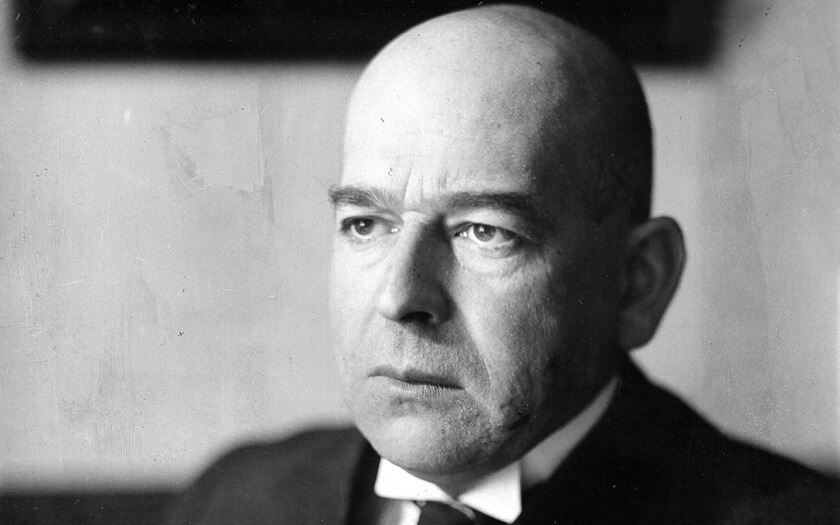
Oswald Spengler (1880–1936) stands as one of the greatest cultural philosophers of the modern age. His seminal work, The Decline of the West, became a spectacular success, and combined with his later writings had a profound influence on the interwar German Conservative Movement, while his last major work, Hour of Decision (1934) was banned due to its critique of National Socialism. Figures such as WW1 veteran Ernst Jünger, author of Storm of Steel, adopted many of Spengler’s ideas on the rise of technology, industry, mass production, and the peculiar nihilism culminating in Jünger’s later work, Der Arbeiter (The Worker).
One might find this article’s title strange, as Romanticism introduces itself with a Weltanschauung (worldview) of aestheticization, detached from concepts such as intrinsic reality, praxis, and rationalism—supplanting them instead with a stark poeticization of political matters. Isaiah Berlin remarks:
Romanticism is not exclusively an artistic movement but rather the first phase in Western history where art dominated every aspect of life.
The 19th-century German philosophical tradition was marked by the influences of counter-Enlightenment as a response to the radical societal changes brought forth by the French Revolution, and the wars of aggression by Napoleon later. It distanced itself from the analytical philosophical developments of the empirical Anglo-Saxon world.
Spengler, influenced by Goethe and Nietzsche, analyzes historical developments in a radically different manner than his counterparts. His approach is marked by tragedy, pessimism, and realism while embracing (unconsciously) elements of Romanticism. Lyrical poeticization is a common theme. Spengler adopts an “anti-rationalist” stance in his writings on the history of civilizations, which resonates with 19th-century German Romanticism. Yet he asserts a heroic realist stance to man’s fate within the cyclical rise and fall of civilizations:
Faced as we are with this destiny, there is only one world-outlook that is worthy of us, that which has already been mentioned as the Choice of Achilles — better a short life, full of deeds and glory, than a long life without content.
This blend of pessimism, grounded in the Homeric ideal of individual greatness, is even more evident in Man and Technics (1930):
This is the beginning of man’s tragedy—for Nature is the stronger of the two. Man remains dependent on her, for in spite of everything, she embraces him, like all else, within herself. All the great Cultures are defeats. Whole races remain, inwardly destroyed and broken, fallen into barrenness and spiritual decay, as corpses on the field.
Northrop Frye observes:
If The Decline of the West were nothing else, it would still be one of the world’s great Romantic poems.
This fusion of contradictory elements might seem at first glance strange ,yet it is a hallmark of the time for the various subgroups within German Conservatism before and after WWI .Spengler encapsulates the spirit of an 18th-century Prussian Junker[1]: militaristic, rural, hierarchical, and opposed to liberal capitalism. He yearns for the aristocratic era of the 18th century—a time of balance between urban centers and the countryside, as well as between tradition, mysticism, and rationalism. His distaste for imperialism, materialism, mass production, mass politics, and the megalopolis of the 19th and 20th centuries is evident.
In Prussianism and Socialism (1919), he goes to great lengths to analyze how the ideals of self-sacrifice, duty, obedience, and companionship for the attainment of the transcendent synthesize Prussianism. All those virtues come at great odds with the rise of liberal individualism. In the same book, he offers a socialist model based on Prussian virtues that starkly contrasts with Marxian socialism, later developed in Britain. For Spengler, Marxian socialists thought from the perspective of society rather than the state, labor was for them nothing more than a mere commodity, grounded in their pure materialism.
Indeed, Civilization is the offspring of high culture. Each civilization possesses its unique cycle and spirit, incommunicable to individuals from a different time-period. This is a similar view espoused by two other famous anti-enlightenment thinkers, Herder and Giambattista Vico. While we do not know if Spengler ever interacted with their writings (directly at least) they viewed history as relative rather than universal, rejecting the Eurocentric approach, instead history is an interplay of different cultural traditions that do not correspond to linearity. Values are thus relative to the civilization and their context. Members of a different Civilization cannot fully understand them and do not influence them in real terms. In our case, what we might call modern Western civilization[2] stems, for Spengler, from a Kultur that embodied the Gothic period and the Germanization of Christianity in the Middle Ages. It is this that gave birth to the “Faustian Western spirit,” an unending lust for change and power with a tragic urge toward the unattainable.
While this piece will not attempt to delve deeply into the Spenglerian theory of cyclical history, and its various technical concepts that lead to a fatal rise and fall, a basic understanding of this subject is necessary to grasp where his pessimism and realism stem from.
Spengler starts his theory with a key analogy between civilization and a flower, both of which represent an organic entity. Spengler thus, adopts a very similar approach to Vico in viewing the different cultural phases of history in terms of seasonality. Neema Parvini in his works, Prophets of Doom (2023), notes that Spengler’s analogy stems because Goethe (who had a profound impact on him) was on his part influenced by Vico. Culture, in that regard, is treated as a living organism—a plant which, depending on its seasonality Spring (grows), Summer (blossoms), Autumn (fade), and Winter (decay). Thus, it has its own life cycle.
During the Spring phase, a spark from the urge to create drives the emergence of a new culture. It is a byproduct of a deeply heroic epoch grounded in spirituality, religion, agrarianism, and a mythological worldview. The Faustian spirit is partly contained by the fear of death. A decentralized nobility and priesthood form the elite class.
Summer must now be understood as a revolt against the mythology and anti-rationalism of the spring phase. The Faustian creative spirit and its will to power culminate in the most innovative cultural phase of the cycle—the rise of the urban center. The mythos of the spring is rationalized, theory and intellectualism take over. However, tradition is still strong, and both the city and countryside exert influence. In other words, we have reached an equilibrium. Yet man’s appetite is never satisfied, for now, he has overcome the fear of death, a key feature of the early cultural phase. The conditions that gave summer its euphoric character must be taken to their logical development. Mysticism is combatted, the uncritical intuitiveness of the spring and its traditions is questioned, and rationalism now sterilizes the culture. The countryside, which was the lifeblood of culture, is emptied and eroded by big cities. Realpolitik and material concerns also see their rise. We have indeed reached the zenith of culture, its final stage, for it now must give way to Civilization and the Technic.
Every high civilization is a tragedy; human history in its whole is a tragedy. The sin and the fall of Faustian man surpass everything that Aeschylus and Shakespeare had ever imagined.
Spengler distinguishes between Civilization (Zivilization), Technic (Technik) and Culture (Kultur). The Technic encompasses the ancient human ability to shape its environment. It goes beyond a simple understanding of technology:
Technics is the tactics of living; it is the inner form of which the procedure of conflict—the conflict that is identical with Life itself—is the outward expression. Moreover, Technics is not to be understood in terms of the implement. What matters is not how one fashions things, but what one does with them; not the weapon, but the battle.
Driven by humanity’s predatory nature, i.e., being in a constant state of movement toward ever-growing expansion and domination of nature. Technik leads to the creation of machines that, with the Industrial Revolution, came to dominate life. Civilization must be understood as the inevitable destiny of a high culture—its most laborious and technical stage, representing its own Telos (end).
Improvements in production, consumption, and material well-being work as a double-edged sword against culture, as they degrade the organic roots of pre-urbanized societies. The fall of the old order in the name of economic matters, power politics, and mass production gives rise to a new elite class—merchants and bureaucrats. The leap from culture to civilization has now taken place, signaling the advent of Winter (decay). Faust’s creativity has been exhausted, and the ideas that questioned the spring follow their logical conclusion. Imperialism and globalization lead to uniformity, and money and utility replace the old heroic virtues. Spengler was convinced that the cultural domination of money did not produce anything worthy, while intellectual reflection just hastened the decline, a futile attempt to try and replace reality with ideals, for what mattered to this realism were only facts-no ideals, no truths but, only facts.
One can see the influence that Goethe and Nietzsche had on Spengler’s philosophy. His stoicism stands in firm opposition to the utopianism expressed by both liberalism and fascism at the time. His appeal to pessimism is used to combat the mass ideologies of modernity. The rise of mass democracy, as described by Panagiotis Kondylis, comes hand in hand with the manipulation of politics by money, and the once-omnipotent democratic institutions slowly degenerate. Faced with a societal crisis, the masses turn toward a Caesarian figure that can change the course of history—foreshadowing, at the time, the rise of totalitarianism in the 1920s and 1930s, the main reason why his works became popular in the first place.
Determinism is a constant theme in every major work of Spengler. No man, even a Caesar, could reverse the course of civilization and its fatal downfall.
Time does not suffer itself to be halted; there is no question of prudent retreat or wise renunciation. Only dreamers believe that there is a way out. Optimism is cowardice.
However, for those who remain yet with an unwavering fighting spirit and passionate romantics, instead of rose-colored progressive optimists, Spengler can offer a truly liberating and empowering path forward. By cultivating our inner strengths, we can overcome the decay around us, striving toward excellence without being consumed by despair.
An ethos centered around honor, adventure, discipline, intellectual and physical exercise is the antidote to societal breakdown. These virtues incentivize us to exploit our creative imagination, and possibilities that are available. If we allow ourselves to become part of a larger cyclical historical perspective—one beyond our control—then we can truly value every unique moment of our lives, living as passionately as possible. When an individual takes a realistic worldview, acting courageously with purpose, finding his inner “Being” (Das Sein) and “Becoming” (Das Werden), he can boldly confront and overcome the hedonism and nihilism of the modern age, making his life a self-created work of art. Ernst Jünger, in a manner that echoes Spengler, writes in his work Der Arbeiter :
The virtue that is sought is that of a heroic realist who is not shaken by the goddess of total destruction or the lack of hope.
This is a time when current political elites show their absolute disregard for popular opinion , while at the same time being unable to answer questions such as “What is a woman?” Law enforcement in Western countries is more interested in arresting people for “offensive,” online posts, rather than tackling serious crime, and young people seem more depressed, detached, and lonely than at any time before , compared to previous generations. Norms and de-facto intermediary social institutions ,that people took for granted in the past have ceased to exist in the name of a mass and faceless society. Improvements in efficiency, production, and consumption[3] have not come to fruition. Meaningless buzzwords such as progress, social justice, and equity have certainly not made us happier. Spengler’s views offer a stark reminder that a linear, cartoonish approach to history—where globalization drives GDP growth and everything else improves along with it—is nothing more than a mirage.
NOTES:
[1] Nevertheless, he sees the Junker class as also corrupted by the forces of 19th-century modernity, enabling the rise of mass urban centers with the downfall of the countryside
[2] Post-476AD, After the fall of the Western Roman Empire
[3] It is important to note that even those material improvements seem to be primarily concentrated in the USA and East Asia, as Europe is experiencing both a cultural and economic stagnation.


Related Posts