Pastiche and Schizophrenia in The Handmaid’s Tale
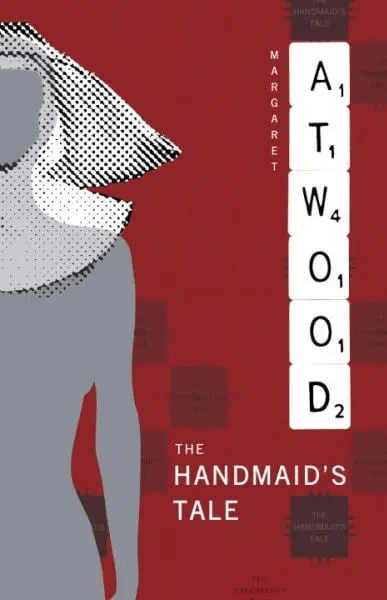
Postmodernism is a notoriously ambiguous term. Therefore, many theorists and critics have tried to give a simple explanation of its meaning, reasons for emergence, characteristics, and features. Fredric Jameson, a leading figure in postmodernist thought, explores the core concepts of pastiche and schizophrenia in his influential essay, “Postmodernism and Consumer Society.” He delves into their connection to the societal landscape. During the same period when the essay was published, Margaret Atwood, the Canadian novelist, also released a literary work, a dystopian novel titled The Handmaid’s Tale. This essay aims to prove how The Handmaid’s Tale is a postmodern novel by illustrating the presence of the main features of the latter, namely pastiche and schizophrenia.
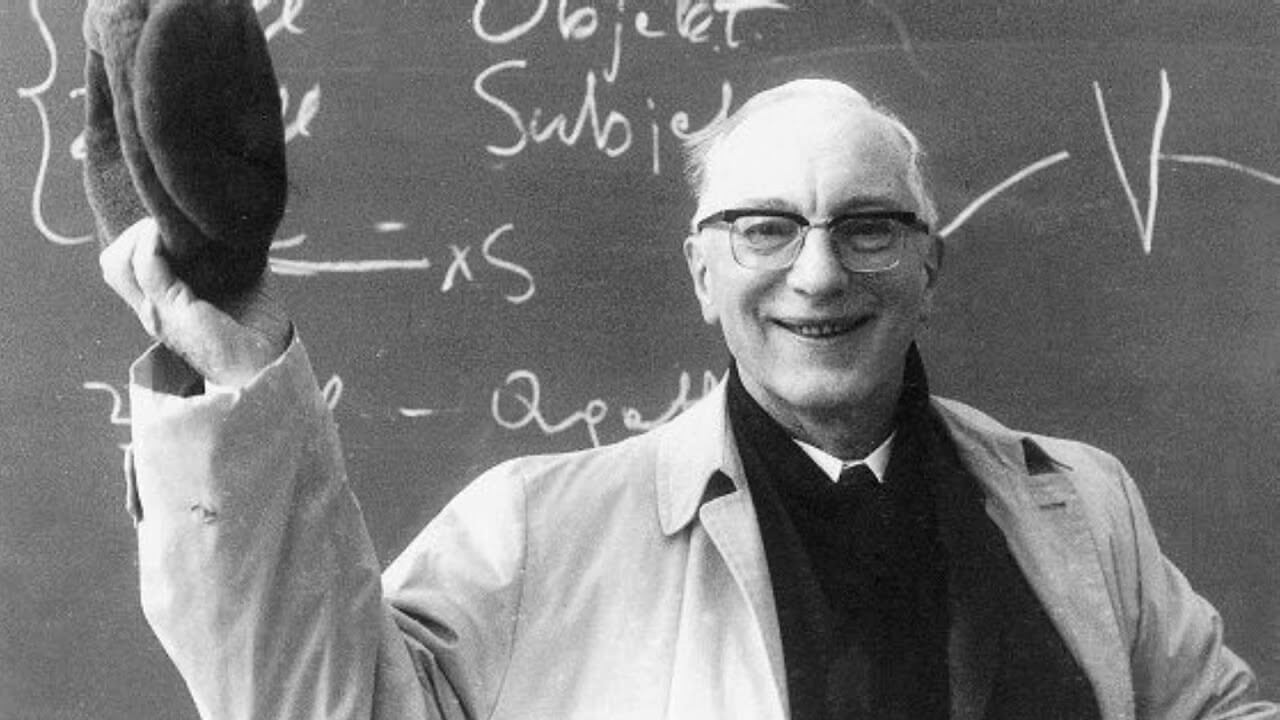
Fredric Jameson’s essay “Postmodernism and Consumer Society” begins with a very significant sentence, which is read thus: “The concept of postmodernism is not widely accepted or even understood today.” Just by reading this sentence, the reader assumes that postmodernism is surrounded by this aura of ambiguity, and this essay may be an attempt by Jameson to pave the way for readers to understand the concept. Indeed, his work serves as a lantern that lights the cave of this savage concept for any researcher. One can borrow the lens of Marxism used by Jameson to come up with the idea and understand that the emergence of postmodernism can be seen as a reaction or a targeted criticism and reaction of the principles and practices of high modernism, and the main purpose of the movement is to efface the key boundaries and blur the lines between high culture and mass culture. In Jameson’s words, “postmodernism expresses the inner truth of that newly emergent social order of late capitalism, but I will have to limit the description to only two of its significant features, which I will call pastiche and schizophrenia.”
Pastiche is an ambiguous concept that reflects the ambiguity of postmodernism itself. To simplify this concept for readers, the best method is comparison, because people tend to confuse pastiche with other terms that are quite similar but not the same. Parody is one of these terms that is linked to pastiche. Parody is the imitation of a peculiar, unique, or specific style of another artist or writer in order to make a comment on it, criticize it, or even mock it. So it creates this satirical or humorous commentary on the original work. On the other hand, pastiche is mimicking just to mimic. There is no sense of sarcasm or humor in pastiche; on the contrary, pastiche creates a new work based on an old work (or works) that is reminiscent of the original. The purpose of a pastiche, then, is to come up with a new work that is both familiar and original. Fredric Jameson argues that what gives birth to pastiche is the incapability of the artist today to create a new work because what he calls “individuality” is dead (the death of the subject). As he explains, “artists of the present day will no longer be able to invent new styles and worlds; they’ve already been invented; only a limited number of combinations are possible.”
It is well acknowledged that schizophrenia is a type of mental illness, a disorder that results in a sort of change in the behavior of the infected. So the schizophrenic suffers from this split of his personality and loses equilibrium, and he becomes unable to unite himself and his identity. Here, Jameson uses the term to indicate the breakdown of the relationship between signifiers and signified. This failure or deficit in connecting these two automatically brings about a loss of meaning and identity. For instance, people today cannot be separated from the virtual world. One of the manifestations of this concept in literature lies in the lack of chronological order in telling a story. If you take any novel or story from the Victorian era or before, Thomas Hardy’s novel Jude the Obscure, for example, begins with Jude as a kid of 11 years old and ends with Jude as an adult. The reader follows Jude and travels with him through his journey in chronological order and in a linear way, from his childhood to adulthood. Whereas the postmodern novel is characterized by starting from the middle of the story and sometimes from the end, then the narrator or the characters, using their memory and the technique of flashback, go back to the past, to the beginning of the story, and back again to the present. This travel in time and transportation creates a sense of discontinuity, and the story becomes fragmented. As a result, the reader finds himself responsible for connecting these fragmentations in order to understand the story as a whole.
In Margaret Atwood’s dystopian novel The Handmaid’s Tale, the heroine, Offred, finds herself occupied—as well as any fertile woman alive—as a maid in a totalitarian regime called the Republic of Gilead. In this oppressive regime, women are deprived of their essential human rights, and they are considered as ‘‘two-legged womb” as machines to use in order to give birth. The handmaids, like Offred, are doomed to live for one purpose only, which is to bear children for the ruling class. By using scripts from the Bible, the dictatorial regime maintains its full control over society and legitimizes its brutal essentialist system.
The Republic of Gilead is an obvious stimulation of the Puritan era. The totalitarian regime that has overthrown the old government by using religion in the United States in the story is based strictly on Puritan law. The handmaids, who are considered objects and whose only purpose and reason for existence is to bear children for the ruling class, and the unhuman condition these women live in, mirrors the treatment of females in Puritan society back in the seventeenth century. “This is the kind of touch they like: folk art, archaic, made by women, in their spare time, from things that have no further use. A return to traditional values. Waste not want not. I am not being wasted. Why do I want?”
Because of this inability to present the current and actual time for artists today, Atwood, in order to invent this dystopian world (a new world) that is both unsettling and familiar, imitated Puritan history.
The story is told through a series of flashbacks and non-linear events. Offred lives in this dualistic life. While she physically lives in the horrifying totalitarian republic of Gilead, her mind flees to the nostalgic past as she yearns for her previous peaceful life. “How I used to despise such talk. Now I long for it. At least it was talk. An exchange, of sorts.”
These reminders of the past emphasize her current state of oppression. Not just Offred, but the handmaids as well suffer from this constant surveillance and indoctrination, which, under the unescapable antifeminism ideology in the republic of Gilead, results in the effacement of their identity and leads the oppressed figures to lose their sense of the “self.” That and the lack of chronological order leave the reader in discomfort, with a sense of loss and an inability to process and connect the story in a clear way. The fragmented narrative reflects not only the fragmented and disordered life in the novel but, on a deeper level, the postmodern, contemporary life we live today.
Postmodernism has always been an ambiguous term, and it will always be so, for the concept is slippery and undergoing continuous change. Different critics and theorists have tried to explain it and give it their own touch. What Jameson has sketched in his essay may not be agreed upon by the other critics. But no one can deny that pastiche and schizophrenia are the main characteristics of postmodernism. Thus, The Handmaid’s Tale serves as a good example that illustrates Jameson’s view and thought of features of the concept.


Related Posts